
Three rounds in, the boxer was landing clean. Sharp jab to the body, tight cross to the head, textbook setups. Then the kickboxer threw a single low kick to the lead leg, and everything changed. The boxer’s rhythm broke, his footwork stuttered, and suddenly he was fighting a different fight than the one he’d trained for. That moment captures the whole boxer vs kickboxer matchup in one exchange: two athletes with overlapping tools but fundamentally different pressure systems, each capable of dismantling the other if the game plan is right.
This isn’t a “who would win” fantasy debate. It’s a practical breakdown of how each style applies pressure, what the other style genuinely struggles with, and how to train smarter if you’re working across both disciplines. Whether you’re a boxer who occasionally trains kicks, a kickboxer drilling your hands, or just a combat sports fan who wants to understand what’s actually happening in cross-style matchups, this is the tactical map you’ve been missing.

How the Boxer Applies Pressure
The boxer’s pressure game is built on four pillars: the jab, linear footwork, rhythm manipulation, and hand combinations. These aren’t independent tools; they’re a system designed to control distance, dictate tempo, and set up the right hand.
The jab is the boxer’s primary control mechanism. A sharp, accurate jab forces the kickboxer to respond defensively, which momentarily takes their weight off the lead leg, disrupting kick loading. Boxers who understand this leverage it constantly, using the jab not just to score but to make the lead leg unsafe to kick from. This is why elite boxers often look like they’re just “staying busy” when in reality they’re systematically denying kick setups.
Linear footwork is the boxer’s second pressure weapon. A disciplined boxer moves in straight lines, using in-and-out lateral shifts to control range. This is genuinely disruptive for kickboxers, who are more accustomed to managing circular movement. A boxer who can close distance fast, land a tight combination, and exit before a kick fires creates a nightmare rhythm problem for the striker.
Combination density is where boxers really impose. A 1-2-3 at boxing speed is faster than most kickboxers’ combinations, which need to account for kick loading time. Three punches in 0.8 seconds creates a pressure window the kickboxer has to respect. If that window doesn’t exist in a kickboxer’s mental model, they’ll get clipped while setting up their own offense.
Finally, the body attack. Good boxers know that hard body shots affect kick mechanics. A liver shot or solar plexus hit makes it harder to rotate the hips properly for power kicks. You don’t have to knock someone out with body shots; you just have to make them hurt enough that their rear low kick loses 30% of its power. That’s often enough.
How the Kickboxer Applies Pressure
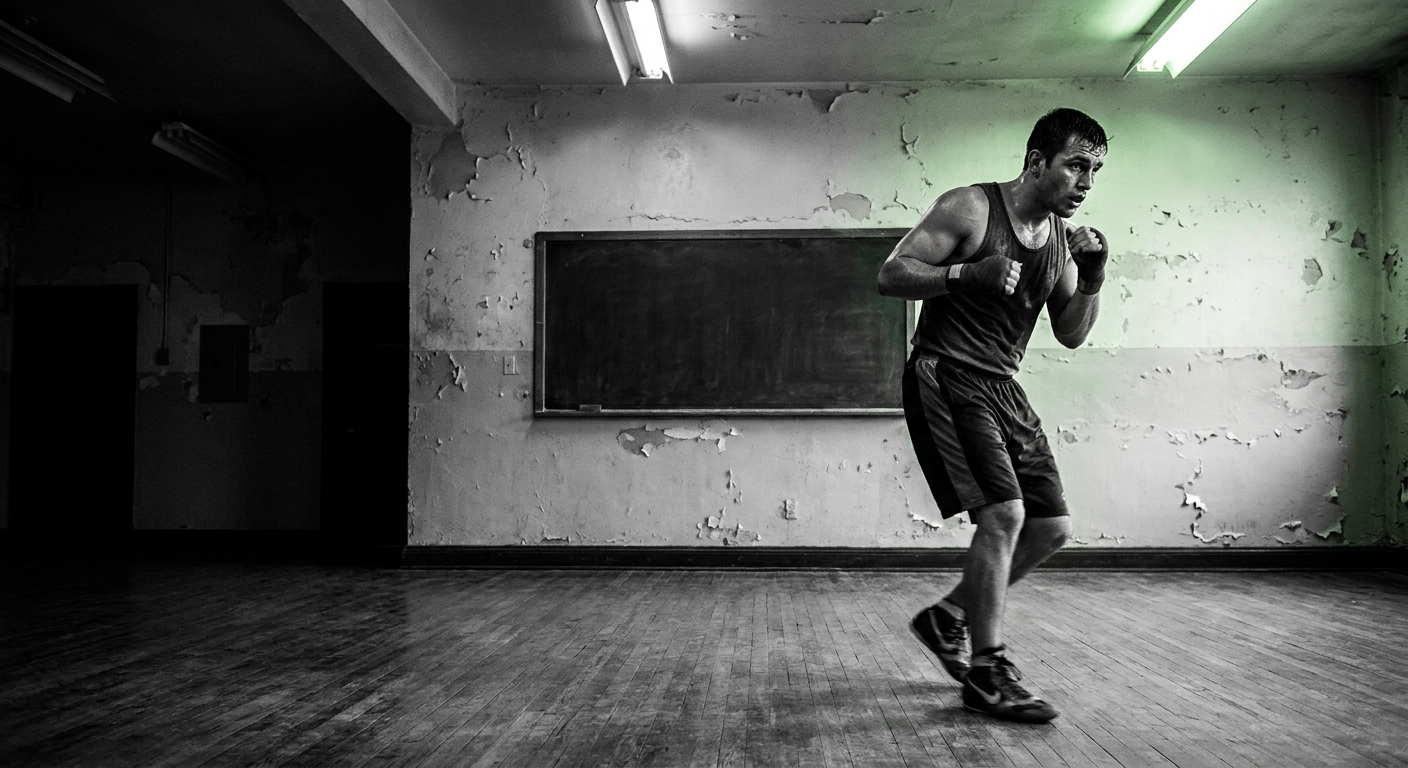
The kickboxer’s pressure game operates on a completely different axis: the threat of the low kick. Even if the kickboxer never throws a single low kick in a match, the boxer has to act as though one is always coming. That threat forces the boxer to keep weight more evenly distributed, reduces their ability to fully commit to lunging forward, and creates constant mental overhead that isn’t present in a pure boxing context.
The teep (front push kick) is the kickboxer’s distance management tool. Unlike a punch, a teep doesn’t require the kickboxer to close distance; it pushes the boxer back and resets the range. Boxers who rely on pressuring forward find the teep genuinely hard to deal with. It’s not that it hurts, it’s that it interrupts the boxer’s rhythm and physically resets the gap every time they try to close it. A boxer who gets teeped three times in a row starts hesitating before committing, which is exactly what the kickboxer wants.
The high kick changes the puncher’s defensive frame completely. A boxer’s default guard is chin-down, elbows in, protecting the jaw. This guard is genuinely vulnerable to well-timed head kicks, because the elbow raised to block can create openings for follow-up shots. Kickboxers who can credibly threaten the high kick force the boxer to rethink their entire defensive posture, which creates openings that wouldn’t otherwise exist.
Round kick angles are another pressure vector. The round kick can come from outside the boxer’s typical defensive awareness. Boxers train to defend against punches coming from the front quadrant, not from a 45-degree hip rotation. A well-timed body round kick, especially to the liver from the outside, is both painful and technically harder to see coming than a hook.

The real pressure, though, is cumulative leg damage. A single low kick is annoying. Five low kicks to the same spot start to affect movement. Ten and the boxer’s lateral footwork begins to break down. A kickboxer who can consistently land the lead leg low kick doesn’t need a knockout punch; they’re slowly removing the boxer’s ability to execute their own game plan.
Where Boxers Get Into Trouble
The most common mistake boxers make against kickboxers is treating the fight like a boxing match. They try to control range the way they would against another boxer: close distance quickly, land combinations, exit. The problem is that this exact approach walks them directly into teeps and round kicks, since the kickboxer’s offense is optimally calibrated for that entering range.
Boxers also tend to underestimate the mental load of leg kick defense. Checking a low kick takes timing and hip commitment. Catching a teep requires different body positioning than catching a jab. These micro-adjustments take up bandwidth that the boxer normally uses for combination planning. In a pure boxing match, a boxer can focus entirely on their offense because their defensive responses are automatic. Against a kickboxer, that automaticity breaks down because the threat types are different.
Another trouble spot: the boxer’s footwork against circular kicks. Boxers step to the outside to avoid the right hand and typically shift left to avoid the cross. But this same left shift walks directly into a rear round kick from a right-handed kickboxer. The footwork habit that’s protective in boxing becomes a liability against kicks.
Where Kickboxers Get Into Trouble
Kickboxers who face pure boxers often find that their hands simply aren’t fast enough to compete on the inside. A boxer who slips a punch and gets inside has a 0.5-second window to throw a 3-punch combination before the kickboxer can establish distance for a kick. At close range, kicks are largely off the table. Kickboxers who haven’t put in serious hours drilling purely hand-focused inside fighting get picked apart in that space.
The jab is also a persistent problem. A kickboxer’s jab is typically used for range finding or as a feint before a kick, not as a primary scoring and control tool. Against a boxer who jabs constantly with power and accuracy, the kickboxer’s jab looks amateur. This creates a fundamental imbalance: the boxer’s primary weapon outclasses the kickboxer’s version of the same weapon.
Kickboxers can also be predictable in kick setups. High-level kickboxers have dozens of setups, but mid-level practitioners often rely on the same 2-3 combinations to get their kicks off. A smart boxer who’s done his homework identifies those patterns and interrupts them. Using a constant jab to disrupt the setup is often enough to make the kickboxer’s most dangerous weapon temporarily unavailable.
Tactical Game Plans: If You’re the Boxer
The boxer’s best game plan against a kickboxer starts with jab volume. Throw the jab constantly, varying the range and height. You’re not trying to land every one; you’re trying to make the kickboxer’s lead leg feel unsafe. Every time they load the jab for a counter, they’re briefly weight-shifted, which reduces their kick loading ability.
Second, work the inside. The kickboxer’s power zone is the outside, where kicks can fully extend. Your power zone is the inside. Spend as much time as possible at close range, where their kick game is neutralized and your combination speed matters most. You don’t need to stay inside long, but every time you get there, make it hurt.
Third, check or catch teeps consistently. The teep disrupts your rhythm more than it hurts you. If you let it reset the range every time, you’ll spend the whole fight chasing. Practice catching the teep in training: it’s not technically difficult, and it gives you control of the leg for a brief counter window.
Finally, use head movement. The kickboxer’s high kick is devastating but slow compared to a punch. Head movement that would be appropriate in a boxing match gives you a good chance of making that kick miss. Slipping inside on a round kick also creates a counter opportunity that most kickboxers aren’t drilling for.
Tactical Game Plans: If You’re the Kickboxer
The kickboxer’s primary job against a boxer is range management. Use the teep relentlessly to prevent the boxer from establishing their preferred close-to-mid range. Every teep that pushes them back is a small win. You’re not trying to finish with the teep; you’re using it to control where the fight happens.
Second, commit to the low kick game early. Don’t wait until you’re confident to start working the lead leg. The sooner you start accumulating low kick damage, the sooner the boxer’s footwork starts breaking down. Even if early low kicks don’t land perfectly, they create doubt in the boxer’s mind every time they step forward.
Third, vary your kick placement. If all your kicks go to the lead leg, the boxer will eventually adjust. Mix in body round kicks, rear leg low kicks, and teeps to different heights. Variety forces the boxer to process multiple defensive threats simultaneously, which slows their offensive decision-making.
Fourth, don’t try to out-box the boxer at close range unless you’ve genuinely put in the hours. Use your kicks to prevent them from getting inside, and when they do close distance, clinch, reset, and get back to your range. There’s no shame in resetting; you’re winning the fight at your preferred distance.
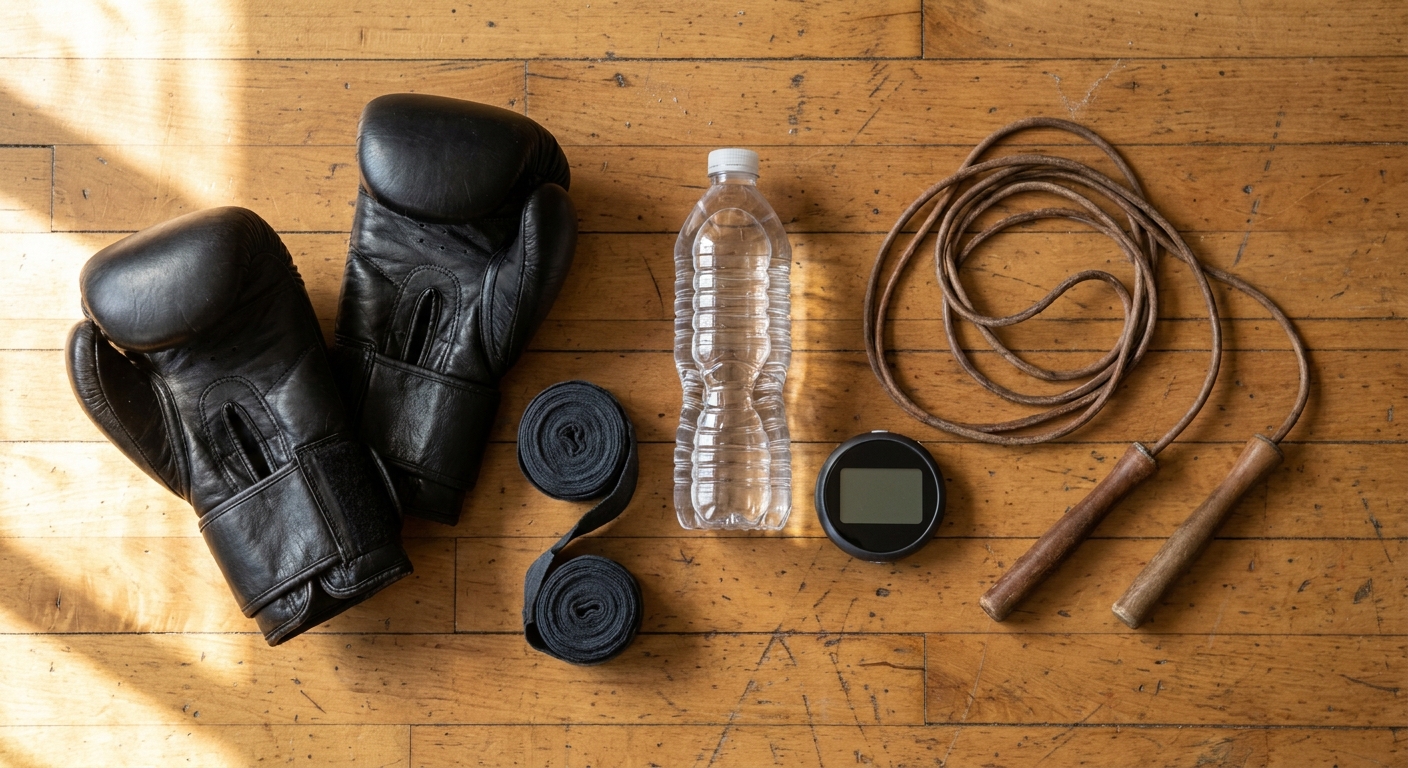
Structuring your rounds intelligently is a huge part of this game plan. A round timer that lets you set work intervals and rest periods lets you drill specific scenarios: 90-second kickboxer pressure rounds, 30-second reset periods, pure teep drill intervals. The free boxing round timer at heavybag.pro handles this cleanly, and you can build custom session structures without buying any extra hardware.
The Overlapping Skills That Actually Transfer
Despite the tactical differences, there are genuine overlapping skills that make cross-training between boxing and kickboxing unusually productive. As this breakdown on boxing vs. Muay Thai explains, the defensive concepts transfer more directly than most people expect.
Footwork angles transfer almost perfectly. Whether you’re boxing or kickboxing, stepping to the outside of the lead foot after a jab is good positioning. The difference is that in kickboxing, that outside step needs to be measured against where the rear leg kick is coming from, not just the right hand. Same movement, slightly different threat calculation.
Body punch mechanics also transfer directly. A good body hook in boxing uses the same hip rotation as a body round kick in kickboxing. Boxers who have drilled the body hook extensively often find that kick mechanics make intuitive sense to them in a way they don’t to non-boxers. The hip drive, the rotation axis, the weight transfer; it’s recognisable.
Guard transitions are where the real cross-discipline gains are. Learning to smoothly shift between a boxing high guard and an elbows-in kickboxing guard, depending on what’s coming, is a skill that genuinely takes years but pays off enormously. You’ll see this in the kickboxing vs. Muay Thai comparison post, where the defensive convergence at higher levels is striking.
Training Drills to Build Cross-Style Fluency
If you want to genuinely improve your ability to understand and counter the opposing style, here are the drills that actually move the needle.
For boxers drilling against kicks: Start with slow teep catching. Stand in your boxing stance, have a partner throw slow teeps, and practice catching and returning the leg. Build the habit before it needs to be automatic. Then move to lead leg low kick checking drills: check with the shin, not the foot, and practice immediately continuing your own offense after the check. The goal isn’t just to stop the kick; it’s to stay offensive through the defensive moment.
For kickboxers drilling against pure boxing: Spend two full rounds per session with your kicks taken away entirely. Shadowbox as a pure boxer, drilling the jab, cross, hook, body shot sequences that you’d see from a disciplined puncher. Feel how relentless a good jab really is from the inside. Then bring your kicks back and notice how the jab threat changes your kick setups. The simulation builds genuine empathy for what the boxer is trying to do.
For both: Drill the teep catch and counter sequence until it’s fast. This is one of those transitions that defines cross-style fights. The boxer catches the teep, steps in, throws the combination. The kickboxer throws a teep, sees it caught, immediately creates space. If both athletes have this exchange drilled, the fight becomes technically interesting. If neither has drilled it, it becomes clumsy and position-based.
Research from the Journal of Strength and Conditioning Research on combat sports athletes shows that lower limb plyometric conditioning significantly improves both kick power and lateral footwork speed, which is relevant for both boxers working on kick defense and kickboxers improving their angle-changing ability.

Reading the Fight in Real Time
The most underrated skill in a cross-style matchup is reading what the other person is actually trying to do, not just responding to what they throw. A kickboxer who sees a boxer start dropping their rear hand after combinations knows the right hook is coming. A boxer who watches a kickboxer consistently step their lead foot to 11 o’clock before a rear round kick knows the kick is loaded.
Pattern recognition in cross-style fighting takes longer to develop than within a single style because you’re reading a different vocabulary. But it’s the same fundamental skill: watch the feet, watch the hips, notice the micro-tells. The kickboxer’s shoulder dip before a teep, the boxer’s weight shift before the left hook. Once you can read these, you’re not reacting to attacks; you’re anticipating them.
Understanding how each style pressures the other also makes you a better analyst when watching high-level cross-style competition. Instead of just seeing exchanges, you start seeing the underlying game plans. Who’s winning the range battle, who’s dictating the tempo, which fighter is being forced to fight the other’s fight.
Apply It to Your Own Training
The tactical knowledge here is only useful if you can actually apply it in training. That means structuring your sessions around specific scenarios, not just general sparring. If you’re a boxer working on teep defense, build a 30-minute session that’s half boxing rounds, half teep-catching drills, with a clear timer structure. If you’re a kickboxer working on inside fighting, program pure boxing rounds with a specific “get inside and work” focus.
Structured round timing is what separates purposeful drilling from aimless sparring. The Heavy Bag Pro app lets you build exactly these custom session structures, with work intervals, rest periods, and optional audio callouts between rounds. It won’t replace the training partner, but it keeps your solo drilling honest and time-efficient.
Which Style Has the Edge?
At the end of this breakdown, the honest answer is: neither, unconditionally. The boxer pressures better at close range, with more combination speed, and more reliable body attack mechanics. The kickboxer pressures better at mid-range, with more threat variety, and the ability to accumulate damage through a dimension the boxer has no answer for in pure boxing training.
Cross-style fights tend to be won by whoever succeeds in imposing their preferred range and tempo. A boxer who keeps the kickboxer inside is winning. A kickboxer who keeps the boxer at teep range is winning. When neither succeeds, you get the most technically interesting exchanges in combat sports.
The practical takeaway for your own training is straightforward: if you primarily box, spend meaningful time understanding and defending kicks. If you primarily kickbox, put genuine hours into pure hand-speed and combination work. Not to become the other thing, but to stop being so surpriseable by it.