
You’ve watched the YouTube highlights. You’ve bought the gear. And now you’re standing outside the gym door and you realize you have no clue what’s actually about to happen. That equal-parts-excitement-and-blind-panic feeling is completely normal. Almost everyone walks in carrying it.
What actually helps is knowing what to expect before you walk through the door. Not because the surprises are dangerous, but because half the confusion in a first class comes from not understanding what’s standard practice versus what’s specific to that gym. This covers what to wear, what to bring, how class typically runs, and how to get through it without embarrassing yourself too badly.

What to wear to your first Muay Thai class
You do not need to show up in full Muay Thai gear on day one. Most gyms expect beginners to arrive in basic workout clothes and figure the rest out over the first few weeks.
The practical minimum is shorts you can kick in and a fitted shirt or tank top. Avoid basketball shorts that hang below the knee, they restrict knee raises and clinch work more than you’d expect. Compression tights under shorts work fine. Avoid anything with zips, buttons, or sharp metal of any kind; you’ll be on mats and occasionally in contact with other people.
Feet are always bare in Muay Thai. No trainers, no socks. If your gym has mixed flooring between a changing area and the mat, flip flops to the edge of the mat are standard, but you leave them there.
If you want to look prepared without overdoing it, bring a fresh pair of Mexican-style cotton hand wraps (3.5 to 4.5 metres). Most gyms loan out gloves for the first session, but hand wraps are personal items. They’re cheap, easy to carry, and signal you’ve done a little homework. Bring your own water bottle too, hydration between rounds matters, and shared water isn’t a thing at most gyms anymore.
What to bring in your gym bag
The gear list for a first class is shorter than most beginners assume:
- Hand wraps, cotton, at least 3.5 metres. Ask the gym if you’re unsure which to buy.
- Water bottle, a large one. You’ll go through more than you think.
- A change of clothes and a towel, you will sweat through everything you’re wearing.
- Flip flops, for the changing room and the walk to the mat edge.
- Athletic mouthguard (optional but smart), not required for most beginner classes, but worth having if the gym does pad work from day one.
Groin guard, shinguards, and your own gloves can wait. Most gyms have loaner gloves for new students, and beginner classes almost never require shinguards in the first session. Buy that stuff after a week or two when you’re certain you’re coming back.
For a deeper breakdown of what gear actually matters as you progress, the guide on best sparring gear for beginners covers the full upgrade path without overcomplicating things for your first few months.
How a typical first class actually runs
Muay Thai classes vary by gym, but there’s a structure most places follow, especially for beginner or all-levels sessions.
The warm-up usually runs 15-20 minutes and is harder than it looks. Expect skipping rope, shadowboxing, light jogging around the mat, and basic bodyweight movements like squats and push-ups. This warm-up tends to gas beginners out completely before the technical work even starts, which is both humbling and completely normal. Muay Thai cardio is built over months, not weeks.
The technical section is where you learn strikes, blocks, or footwork in isolation. The coach will demonstrate a technique, and you’ll repeat it solo, in shadow, or on a bag. In many beginner classes, you’ll start with the teep (front push kick) and the jab-cross combination. Don’t try to go hard, focus on position and balance, not power.
Pad work or bag rounds usually come in the second half of class. If there are pairs, you’ll hold pads for your partner and they’ll hold for you. Pad holding for a beginner means absorbing light strikes while following basic cues, you won’t be expected to call combinations yet.
The cool-down is typically 5-10 minutes of stretching. Hip flexors, hamstrings, and hip rotation matter enormously in Muay Thai, and gyms that take technique seriously spend real time here.
A round timer runs the whole class, usually in 2-3 minute rounds with 30-60 seconds rest. If you want to understand the rhythm before you show up, the free boxing round timer at heavybag.pro lets you simulate exactly that, set 2-minute rounds with 30-second rests and shadowbox at home to get a feel for working to a clock.
What will actually catch you off guard
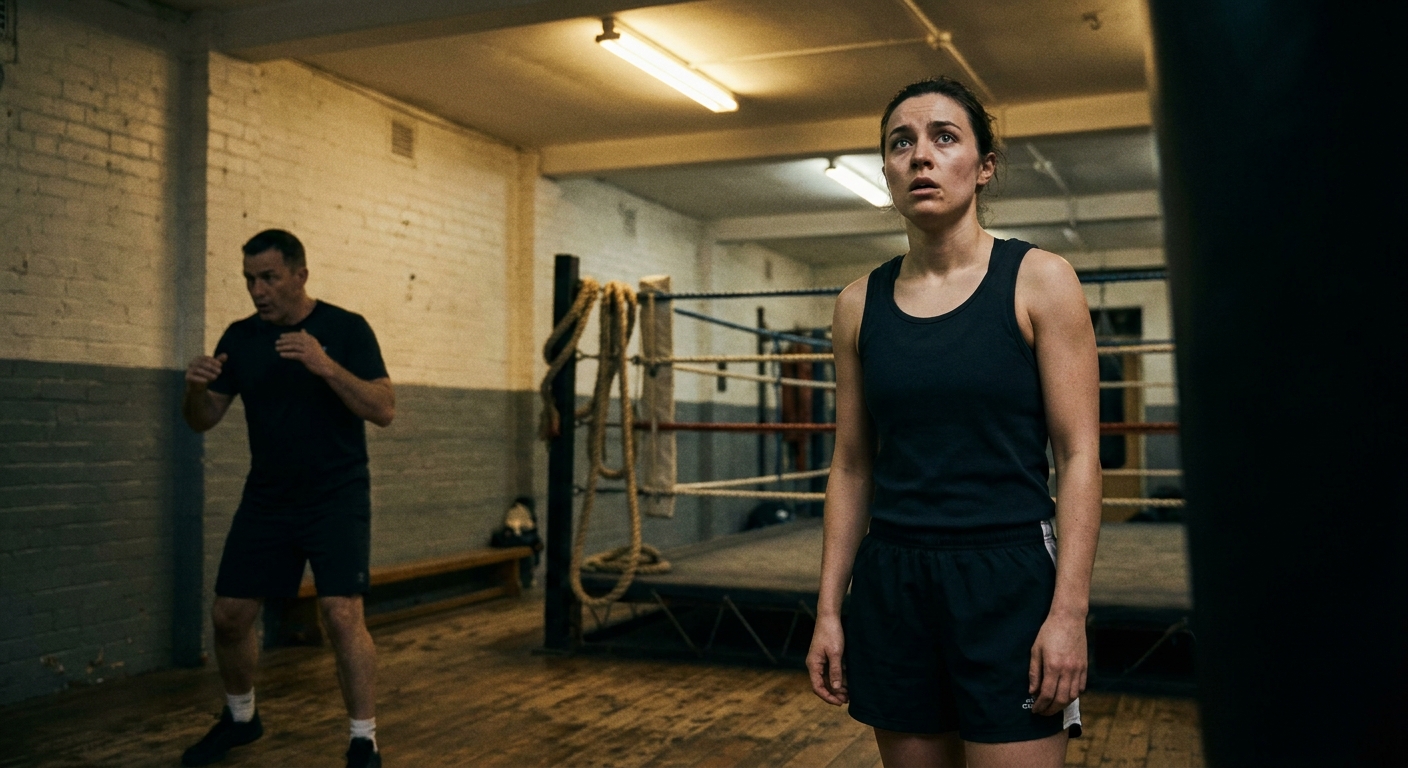
The gap between watching Muay Thai and doing Muay Thai is enormous, and a few things tend to catch beginners by surprise on day one.
Your balance is worse than you think. Throwing a round kick without a solid base sends most beginners stumbling sideways the first few times. This isn’t a strength problem, it’s a weight transfer and hip rotation problem. It fixes itself quickly with reps, but expect to feel wobbly.
The clinch happens fast. Even in beginner classes, coaches often introduce the basic Muay Thai clinch grip early. This involves head control, not choking. Beginners from boxing backgrounds sometimes tense up at the contact, it’s instinctive but counterproductive. Stay loose, follow the frame, and don’t yank.
Timing with a partner is harder than solo work. When you’re shadowboxing, you control the tempo. When you’re working with someone, even just holding pads, you have to read their rhythm. This coordination develops over time. Don’t overcomplicate it on day one.
You will get confused. Left-right confusion on jab-cross, forgetting to bring the kicking leg back, throwing the wrong combination after hearing the wrong number. Every beginner does this. The gym has seen it thousands of times. Nobody is judging you.
One of the most-told first-class stories on r/MuayThai involved a new student who ended up in an advanced wrestling class in the same building and only realised 20 minutes in when the grappling started. The entire gym found it hilarious. The point: even genuine disasters are survivable, and most gyms run on good humour when it comes to new students.
The mental side: managing expectations on day one
The biggest mistake beginners make is treating day one like an audition. It isn’t. Nobody at the gym expects you to move well. The coaches have seen thousands of first classes, your job is simply to pay attention, stay safe, and come back.
Pace yourself honestly. If you’re gassing out halfway through the warm-up, step to the side for 30 seconds and catch your breath. This is not weakness, it’s smart. Pushing through to the point of dizziness gets you nothing, and most coaches will tell you to slow down before you have to ask. Muay Thai cardio is very specific. Even fit runners and cyclists hit a wall in the first few classes because the sport uses your whole body in patterns it hasn’t been trained in.
Arrive early. Most gyms ask new students to come 10-15 minutes before class starts to pay fees, sign waivers, and meet the coach. Arriving right as class starts means you miss context, rush wrapping your hands, and start behind everyone else.
For people coming from a boxing background, the transition has specific quirks worth knowing. The guard is higher, the stance is wider, and kicks change everything about distance management. The article on switching from boxing to Muay Thai breaks down exactly what shifts in those first 30 days.
Gym etiquette you won’t find in any brochure
Muay Thai gyms have a culture that’s mostly unspoken, and breaking it as a beginner makes things awkward fast.
Wai before stepping on the mat. In Thai tradition, you press palms together and bow slightly when entering the mat. Not all Western gyms enforce this, but doing it never hurts and signals you’ve done your research.
Do not give advice to others. Even if you’ve trained another martial art for years. You’re new here. The hierarchy is clear, and offering technique corrections to anyone, especially more experienced students, is rude in most gym cultures.
Be vocal about your level. If the coach pairs you with a more experienced student, tell them it’s your first class. Almost everyone will dial back intensity immediately. The alternative, staying quiet and getting overwhelmed, helps no one.
Tap and communicate. If something hurts or you need to stop, say so. In pad work or any light contact situation, there is no shame in calling a pause. Ego-based silence is how minor niggles become real injuries.
After the class: what to do in the first 48 hours
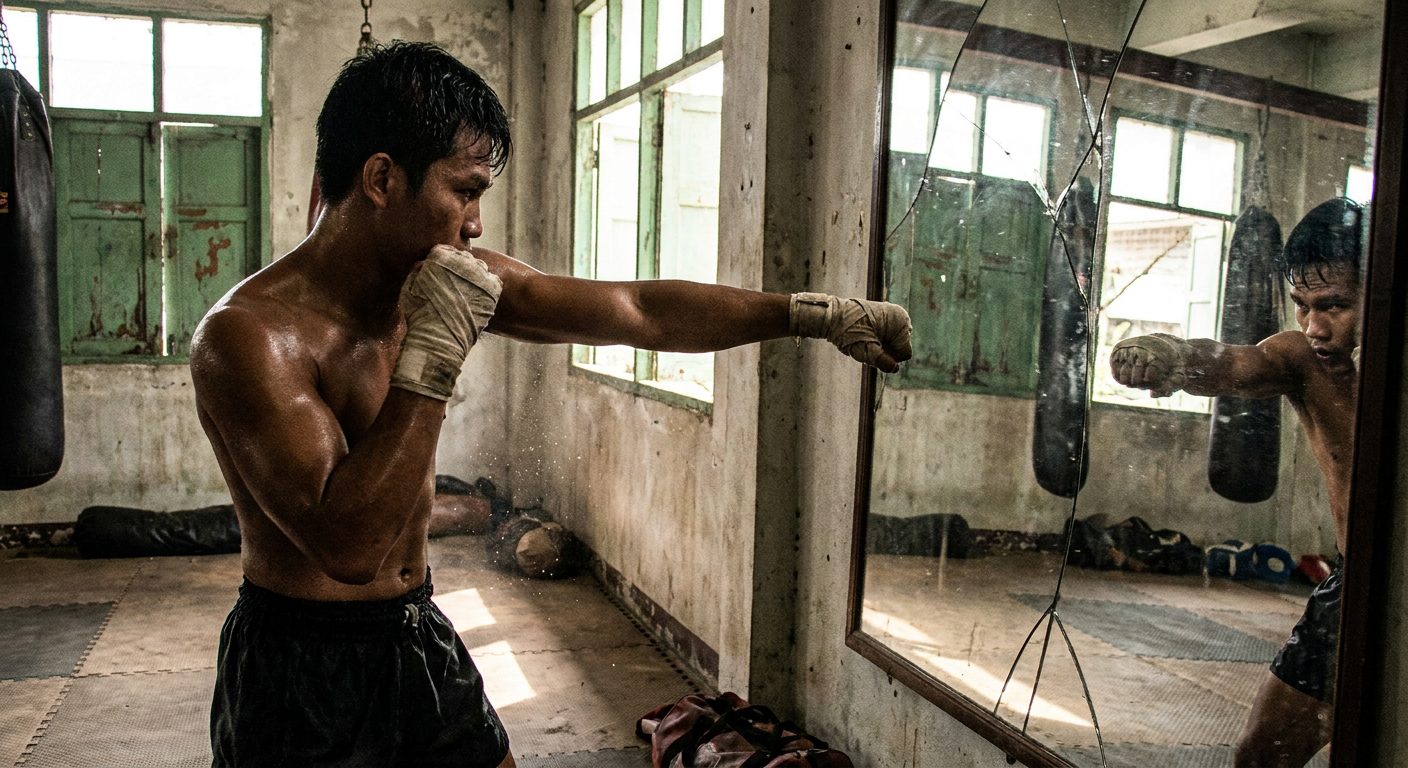
You will be sore in muscles you forgot you had. Hip flexors, adductors, calves, and lats all fire hard in a first Muay Thai class, and DOMS hits roughly 24-48 hours later for most people.
Two things matter most immediately after class: stretch your hips and quads before the soreness locks in, and eat something with protein within an hour. Both will make the difference between feeling wrecked on day three and feeling functional.
For your next session, whether that’s in two days or a week, bring your own hand wraps properly washed (they absorb a lot of sweat), and consider whether you need to pick up a mouthguard before pad work becomes a regular thing. A review published by the National Institutes of Health on combat sports injury prevention consistently identifies dental protection as one of the highest-value low-cost interventions for striking sports participants.
If you’re training at home between gym sessions to lock in the technique, the Heavy Bag Pro app has beginner-specific Muay Thai workouts with structured round intervals you can follow on a bag or in shadow, useful for reinforcing what you learned in class without guessing at timing or combinations on your own.

Deciding whether to go back
After a hard first class, almost everyone asks the same question: do I actually want to do this again?
You can’t judge Muay Thai on day one. The first class is almost entirely about survival. The technique, the rhythm, the satisfaction that comes from throwing a clean combination or a well-timed kick, none of that is available to you yet. It arrives somewhere around classes 5-10 for most people, and the sport changes completely once it does.
The beginner curve is steep but not infinite. Within a few weeks, the warm-up stops destroying you. The combinations start feeling natural. You begin to see the geometry of it, why footwork matters, why the low kick lands after a jab, why defence is built on reading patterns. That’s when Muay Thai becomes genuinely fun instead of just genuinely hard.
Give it six classes before deciding. One class is not a fair sample.
A practical day-one checklist
- Shorts you can kick in (above the knee)
- Fitted tank top or training shirt
- Hand wraps (3.5-4.5 metres, cotton)
- Large water bottle
- Flip flops for the changing area
- Arrive 10-15 minutes early
- Tell the coach it’s your first class
- Pace yourself in the warm-up
- Ask questions during water breaks, not mid-drill
- Stretch hips and quads immediately after class
If you want to reinforce what you learn between gym sessions, structured round timers make solo training more productive. A structured round timer like the one at heavybag.pro/boxingtimer/ handles the clock so you can focus on movement and technique rather than watching your phone. Go to class. Pay attention. Come back.