
Would you know a good boxing coach if you were standing in their gym right now? Plenty of people don’t. They pick the closest place, the loudest personality or the one with the nicest ring, and then spend a year wondering why their jab still looks the same.
Below are eight signs that separate a coach worth your money from a guy who owns a bell. Check them in the first two weeks, before you pay for a long membership.
1. Do They Watch You, or Just Count Rounds?
Stand at the bag for one round and look at where the coach is. A good one is within earshot, eyes on your feet and hands. A bad one is on the phone, or yelling the same line at the whole room.
Real coaching is specific. “Your back foot is dying on the cross” beats “Pivot!” every time. Emanuel Steward ran the Kronk gym in Detroit for decades and trained Thomas Hearns and Lennox Lewis, two fighters who could not have looked more different. He did not give them the same fighter. He worked with what each one had.
Test it. Ask one question about something you just did. If the answer names your body, your timing or your distance, keep going. If it is a slogan, move on.

2. Can They Explain Why, Not Just What?
Anyone can show you a hook. Fewer people can tell you why your elbow flares and what it costs you when the other guy is faster. Ask “why do we do it this way?” at some point in your first month.
A confident coach likes that question. An insecure one hears a challenge and gets short with you. Pay attention to the tone, because you will be taking corrections from this person for years.
Teddy Atlas, who has trained fighters since his teens and now works as a commentator, built a career on being blunt and direct about mechanics. You do not need a famous name. You need someone who can say what is wrong in a sentence you understand, and then show you the fix with your own body.
Good explanations are plain. No jargon wall, no mystery. If you walk out of a class and can repeat one idea to a friend, that coach taught you something.
3. Do Beginners Get Taught, or Just Survive?
Watch the newest person in the room. Is someone showing them how to stand, how to hold their hands, how to breathe? Or are they dumped on the bag to copy the room?
Some gyms run on survival. The ones who stay are the ones who were already athletic, and the coach takes credit. That is not coaching, that is filtering.
Look for a clear path for a new person: stance, guard, jab, then combinations. Our beginner gear guide covers what you actually need to walk in with, so you are not buying equipment before you know what the gym expects.
4. Is Sparring Controlled and Earned?
This is the big one. Ask how sparring works. Who decides when you spar? Who picks your partner? What happens when someone goes too hard?
A good coach matches people by size and skill, stops the round when it turns into a brawl, and keeps new people out of hard rounds until they can defend themselves. Sparring should teach you something. If every session ends with somebody hurt, the coach is running a fight club, not a gym.
Ask to watch a sparring day before you join, even if you plan to stay out of it. See whether partners touch gloves, whether the pace drops when someone is clearly outmatched, and whether the coach steps in. Notice what happens afterward too. Do people talk through the round, or just go home?
Brain health is the reason this matters most. Read our piece on CTE and boxing if you want the honest version of the risk. Then watch how your prospective coach talks about head contact. Someone who brags about “wars” in the gym has told you what you need to know.
5. Do They Have Credentials You Can Check?
Experience matters, but so does proof that someone has been vetted. In the United States, USA Boxing expects coaches to register each year, complete SafeSport training and pass its online Green certification, with Bronze, Silver and Gold levels above that for coaching at bigger events. The archived page may not match the current rules in every detail, so ask the coach what they hold now.
A coach with nothing to hide will tell you straight away. Ask if they have worked a corner at amateur shows, and whether they have a first aid and concussion plan. Those are fair questions for someone who holds a stranger’s safety in their hands.
Outside the US the bodies differ, but the idea does not. There is usually a national federation and a certification path. Ask which one.
6. Do Their Fighters Look Different From Each Other?
This is a quiet tell. Watch a few of the gym’s regulars shadowbox. If every one of them throws the same looping right hand with the same bounce, the coach is cloning himself. Good coaches build on what a person already does well.
Freddie Roach has been known for years for his mitt work at the Wild Card gym in Los Angeles, and the fighters who came through his hands did not all box the same way. The pads were the tool. The fighter was the point.
Different bodies need different games. A tall person with long arms should not be coached like a short pressure fighter. If the coach adjusts, you will see variety in the room.
7. Is the Gym Safe, Clean and Honest About Money?
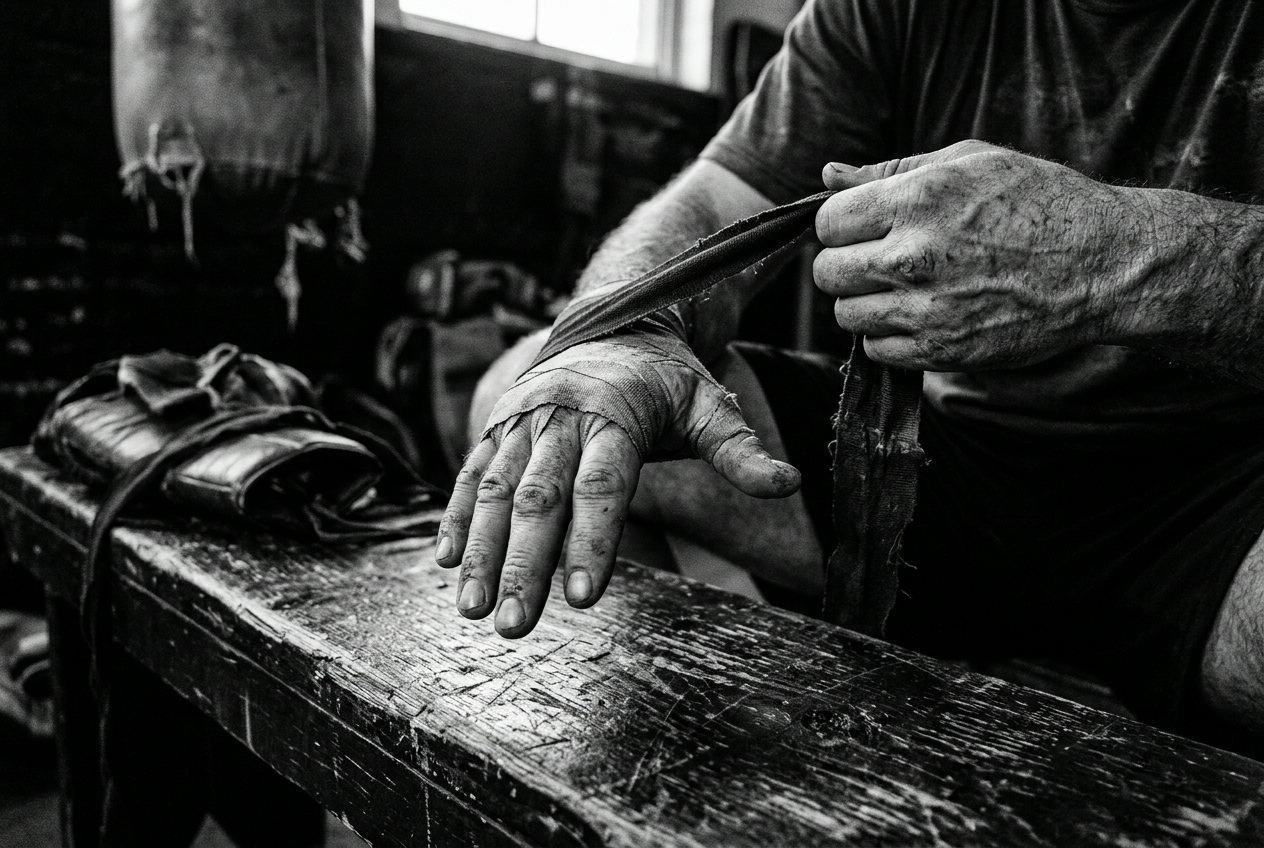
Look at the floor. Look at the bags. Torn gloves with foam spilling out and a filthy mat tell you what the owner cares about. The old-school gym with a worn ring can be perfect, as long as worn does not mean neglected.
Money is part of it too. Be wary of anyone who pushes a long contract on day one, or who treats private lessons as the only way to get attention. Group classes should teach too. Ask for a trial week, and ask what is included before you hand over a card.
Ask about the schedule as well. A gym that only runs classes at hours you cannot make is not your gym, however good the coach. Consistency beats intensity, and you will only train steadily at a place that fits your week.
Also ask whether the gym expects you to compete. Some do. If you want fitness and technique, you want to hear that fighting is optional, and that nobody will sneer if you never step into a ring.

8. Do You Leave Better Than You Arrived?
Skip the pep talk and use a plain test. After a few weeks of sessions, can you name one thing you do better, and one thing you now understand about why? If the answer is no, the coach is not the right one for you, however famous the gym is.
Notice how you feel about corrections. Good coaching can sting, and that is fine. But it should feel like the coach is on your side. If you dread walking in because you expect to be humiliated, leave.
And take the long view on the person, not the résumé. A former champion who cannot teach is worth less than a patient club coach who can. Neck and hips and footwork all take patient teaching. Our article on why pros train the neck is a good example of the kind of detail a thoughtful coach will bring up before you do.

What If There Is No Good Coach Near You?
It happens. Some towns have one gym and one choice. Then your job changes: take what the gym gives you and supplement it on your own.
Solo work is not a second-best option if you do it with a plan. Rounds on the bag, shadowboxing in a mirror and footwork drills fill the gaps between classes. The free boxing round timer at heavybag.pro gives you the rounds and rest periods with bell sounds, and the Heavy Bag Pro app has 1000+ boxing, kickboxing and Muay Thai combos with audio callouts if you want guided bag work between sessions.
A Short Checklist to Take With You
Print this, or keep it on your phone for the trial week.
- The coach watches you and gives a specific correction.
- Questions get real answers.
- Beginners are taught, not dumped.
- Sparring is controlled, matched and earned.
- Credentials are real and the coach will say what they are.
- Fighters in the room do not all look the same.
- The gym is clean and the pricing is clear.
- After a few sessions you know something you did not.
Fail a couple of these and keep looking. Fail the sparring one and leave. A good coach is the best thing that can happen to your boxing, and it is worth a few weeks of shopping around to find one.