
More than 60 million households watched Jake Paul fight Mike Tyson on Netflix, and Netflix said the stream peaked at about 65 million concurrent streams. Nobody counts those numbers and then tells you the sport is on life support. Yet the “boxing is dying” take shows up every few months, usually after a bad fight or a bad press conference.
I wanted to see what the evidence says when you separate three different things: who watches, who trains, and who runs the business. They move in different directions.
Who keeps saying boxing is dying?
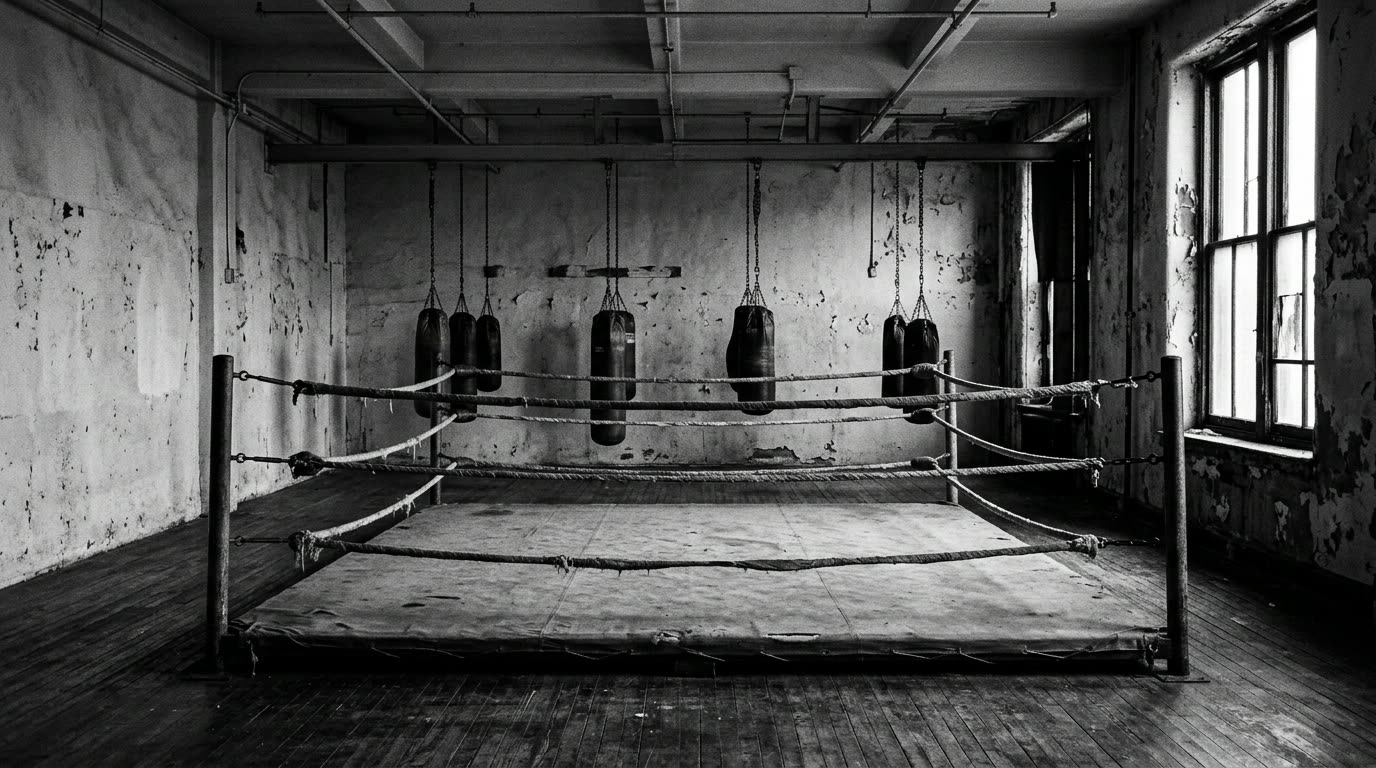
Mostly people who grew up with a particular era. If your boxing memories are Saturday nights on HBO and a single heavyweight champion everyone could name, the modern sport looks broken. Four major sanctioning bodies, a dozen streaming platforms, and a fighter you need three subscriptions to watch. That frustration is fair.
It is also a complaint about packaging, not about participation. Boxing writers have been declaring the sport dead for as long as there have been boxing writers, and the funeral notices tend to land right before a fight pulls in the biggest crowd in years.
So the claim is really a bundle: television is worse, the belts are confusing, the stars are fewer, and the gyms are emptying. Each part deserves its own check. Start with the loudest one, because it is the easiest to test.
Is the audience shrinking?
Not on the big nights. Netflix put Paul against Tyson in front of one of the largest live sports audiences a streaming service has reported, and the company has kept building boxing cards since. Terence Crawford beating Canelo Alvarez in Las Vegas drew mainstream attention far beyond the usual boxing crowd. Fury against Joshua has been announced for Cardiff in December, again on Netflix.
Now the catch. Netflix reports its own audience numbers, and a one-off spectacle with a celebrity name attached tells you how many people will tune in for an event, not how many care about the sport on a quiet Tuesday. Treat any single number as a ceiling, not an average.
What the numbers do prove is that demand for a good fight has not gone anywhere. The old pay-per-view wall priced people out for years. Put the same fights in front of a monthly subscriber base and the audience shows up.
The hard beat for anyone selling the “dying” story: the sport lost a gatekeeper, not an audience.
Are fewer people actually walking into gyms?
This is where I expected to find bad news and mostly did not. USA Boxing’s own annual membership deck for 2025 lists the largest membership numbers in boxing history, counting clubs, boxers and non-athletes. That is the amateur system, the one that feeds Golden Gloves brackets and Olympic teams. It is growing, not shrinking.
Fair warning: the organization has a stake in saying so, and the charts in that deck do not translate into a clean text figure I would quote. Amateur registrations also cover only the people who want to compete, which is a small slice of everyone who laces up gloves.
The other slice is fitness. Studio boxing classes, rubber-floored cardio rooms, a bag in the corner of a regular gym. I could not find a trustworthy public count of how many people hit a bag each week, and the market-size reports I came across disagree with each other by wide margins. Be suspicious of anyone who hands you a precise figure for this. They are guessing or selling something.
My read from watching how people train: the casual crowd is not leaving, it is changing where it trains. Some leave the studio and move to a home setup. Some keep the membership and train alone on the bag anyway.
Walk into any old-school gym on a weeknight and count the heads. Then count how many are there for a fight and how many are there to sweat. Both belong, and the second group is the one the “dying” argument forgets.
Does it matter that boxing now lives on a streaming service?
It matters a lot, and not only for the money. A fight that sits behind a pay-per-view paywall reaches the people who already love boxing. A fight inside an app that hundreds of millions of people already pay for reaches a nurse in Ohio who has never watched a round and now has an opinion about a jab.
Women’s boxing is the clearest example of the change. Katie Taylor and Amanda Serrano headlined at Madison Square Garden, the first women’s main event in the building’s history, and the fights have since moved onto Netflix cards. A bout that would have been a footnote on a Saturday undercard now gets a main-event slot and a primetime audience.
Some of those new viewers go looking for a gym the next morning. That is the part no ratings chart captures, and it is the reason broadcasters and trainers should be on the same side.
The trade-off is obvious. Streaming rewards spectacle, so celebrity matchups get funded first and the best fights between lesser-known champions wait in line. Keep that in mind when you read the next headline about audience records.
What is genuinely broken in the sport?
Plenty. The belt situation is a mess, and casual fans cannot follow who is champion of what. Oleksandr Usyk beating Tyson Fury in Riyadh to become undisputed heavyweight champion showed how good it can be when the right two men are forced into the same ring. The fact that it was news tells you how rarely that happens.
Matchmaking is the other wound. Fans want the best against the best, and promoters and networks keep protecting records and contracts. Fighters age out waiting for a fight that never gets made. Safety is a third issue, and it is not going away. If you want the honest version of that discussion, our piece on CTE and boxing does not soften it.
None of that is the sport dying. It is the sport being badly managed, which is a different diagnosis with a different cure.
When a fighter sits out two years because two promoters could not agree on a split, ask who lost. The fans lost, and the fighter’s best years went with it.
Why does home training keep growing?
Because the barrier to entry dropped. A decent hanging bag, a stand or a ceiling mount, wraps and a pair of gloves cost less than a year of studio membership, and the combinations that used to live in a coach’s head now sit on any phone. Our guides on boxing at home for beginners and on building a cheap home gym in a spare bedroom are written for exactly that person.
I cannot give you a market-size chart for it that I trust. What I can tell you is what the conversation looks like in boxing forums and comment sections: how to hang a bag from a garage beam, how to keep it from swinging in an apartment, what to buy first. Nobody agonizes over mounting hardware for a dying hobby.
There is a catch, and coaches will tell you the same. Training alone is easy to start and easy to quit. Without a round clock, a rest bell and a plan, the session turns into twenty minutes of punching until your arms are tired. That is exercise, not training.
Think of any Muay Thai camp in Thailand or a Dutch kickboxing gym. Nobody there decides how long a round lasts. The clock decides, and it does not negotiate.
How do you spot a junk boxing statistic?
Because the “dying” argument runs on numbers, learn to read them. Ask who is counting. A governing body counts its own members. A broadcaster counts its own viewers. A market research firm counts whatever its model says, and two reports on the same market can disagree wildly without anyone noticing.
Ask what is counted, too. “Participation” can mean a licensed amateur, a person who took one cardio boxing class, or someone who owns a bag. Those are three different populations with three different trends, and a number that blurs them is selling a story.
Then ask what is missing. Nobody publishes a reliable tally of how many people hit a bag in a garage on a Wednesday night. That silence is why the home-training boom is so easy to doubt and so hard to disprove.
Whenever a stat arrives without an author, a method or a date, drop it from the argument.
What should you do with a heavy bag and an empty evening?
Borrow the structure of a real session. Three-minute rounds with a one-minute rest are the standard in amateur and professional boxing, and nothing stops you from copying them at home.
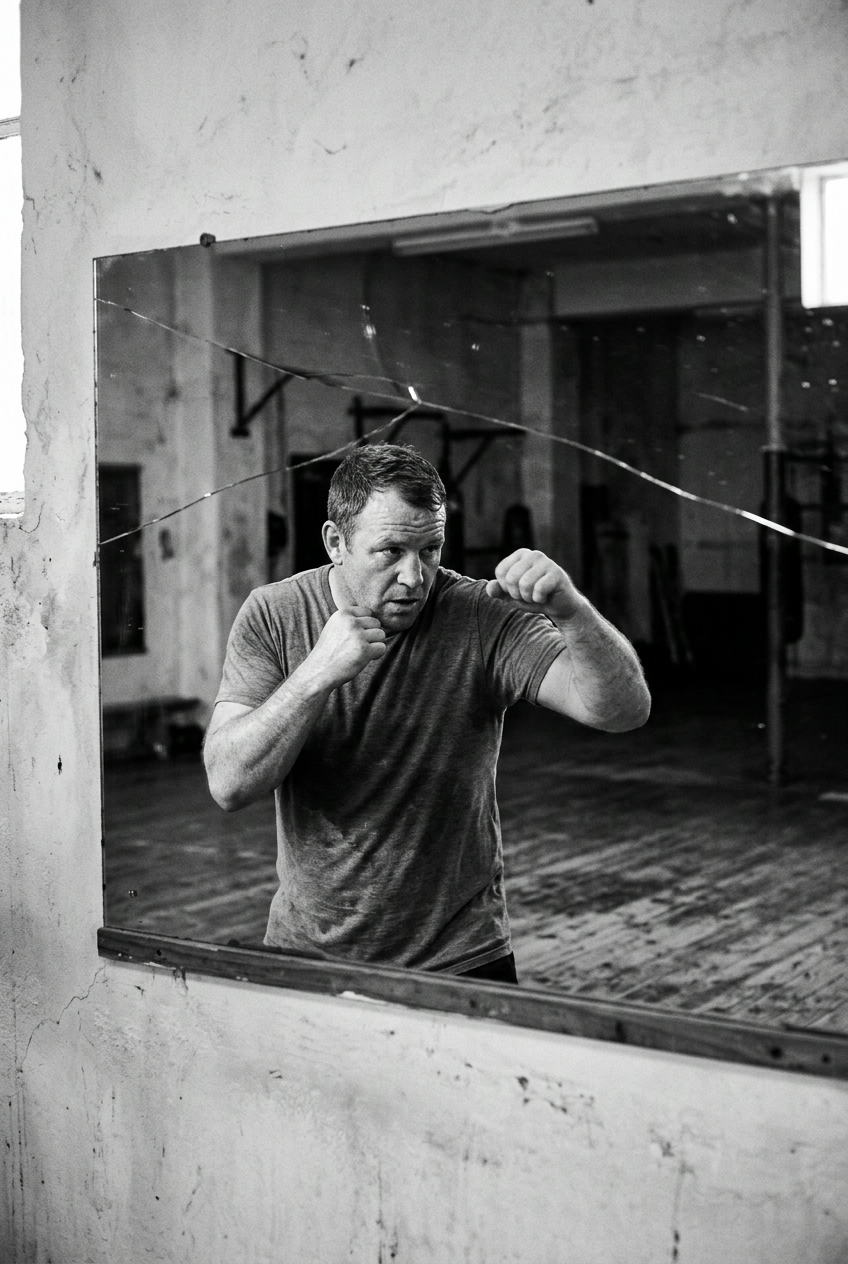
Start with two rounds of shadowboxing in front of a mirror. Move your feet, slip an imaginary jab, reset. Then work the bag for four rounds: one on the jab and cross only, one on adding the hook, one on footwork around the bag, and one where you stay relaxed and breathe out on every punch. Finish with a round of whatever your technique needs most, slowly.
Write down which round you rushed. Next session, start there.
If you want a clock that rings the rounds for you, the free boxing round timer on heavybag.pro handles the three-minute rounds and the rest periods with bell sounds, so you can keep your eyes on your hands.
So, is boxing dying?
No. A badly run business is not a dying sport. The audience shows up when the fight is good, the amateur system is reporting record membership, and the practical conversation online is about hanging bags, not leaving the sport.
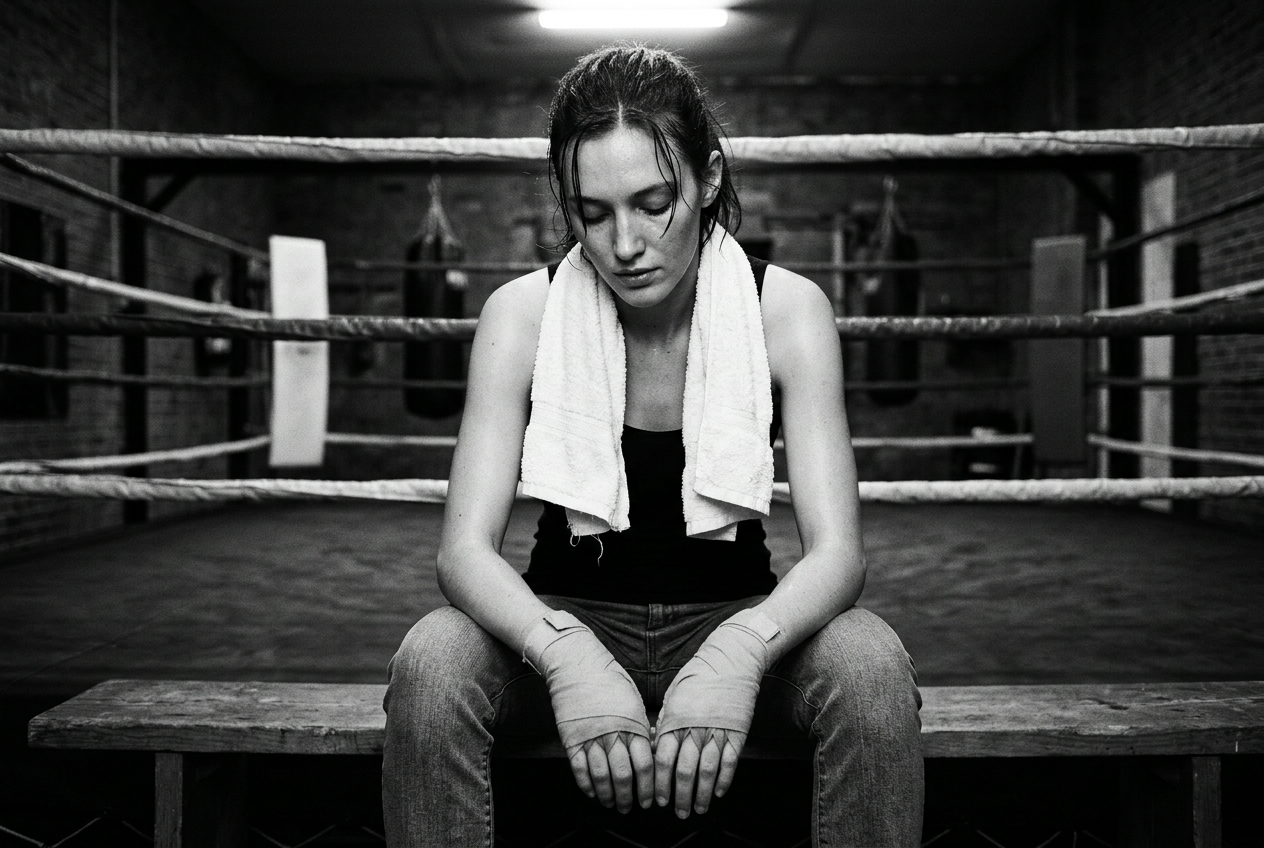
What is changing is where the sport lives. Less of it happens in a ballroom and on a Saturday night schedule, more of it happens in garages, spare bedrooms and corners of regular gyms. That is a shift, and shifts get mistaken for funerals by people standing in the old building.
Go hit the bag. The sport will be fine.