
Eleven Stanford basketball players were told to spend at least ten hours in bed every night for five to seven weeks, and their 282-foot sprint times dropped from 16.2 to 15.5 seconds. Free throw accuracy went up 9 percent. Reaction times got faster. Nobody changed their lifting program or hired a new coach. They slept.
Boxers should read that study twice. Basketball and boxing ask for the same raw goods: quick hands, fast reactions, legs that still move late in the game or the fight. If you train four nights a week and sleep six hours, the cheapest upgrade in your whole routine is sitting next to your bed, and it costs nothing.
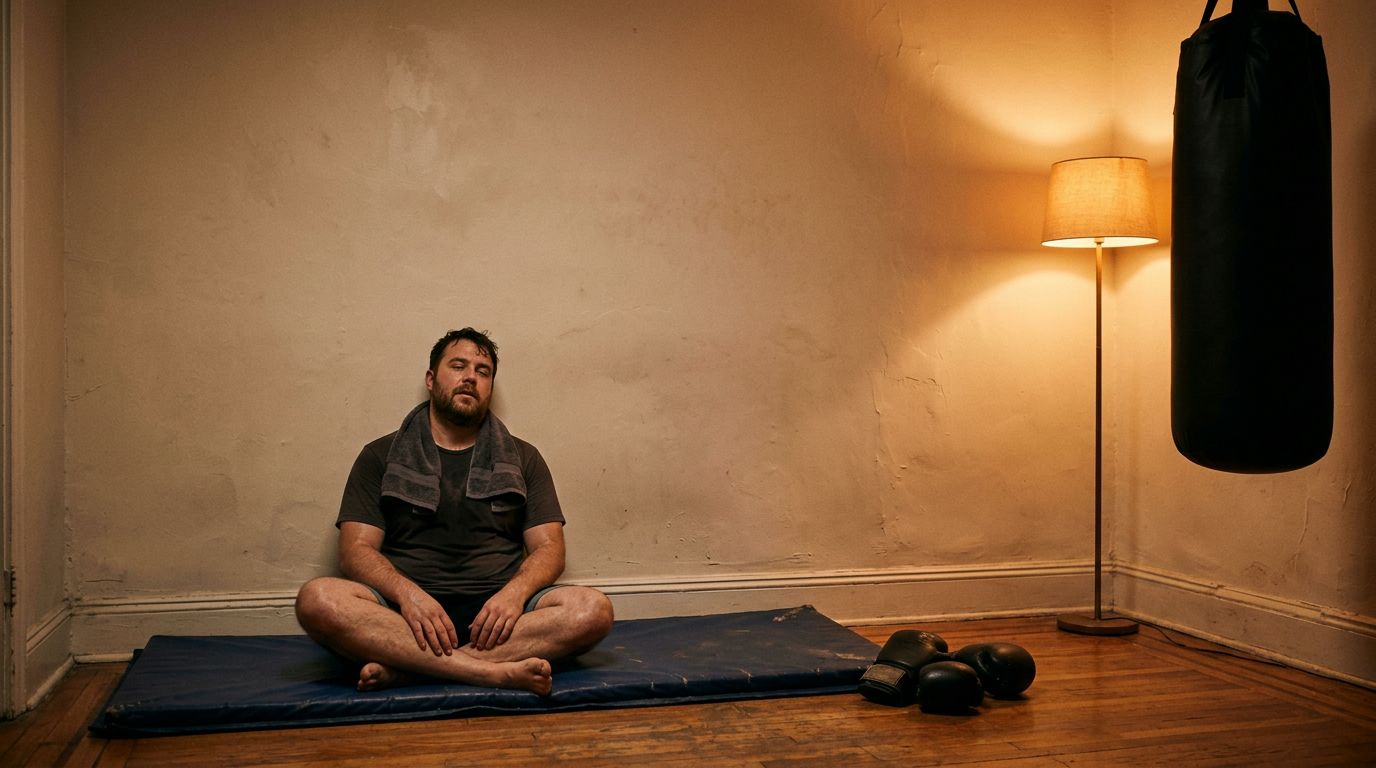
How Much Sleep Does a Fighter Need?
Start with the floor. The CDC and the sleep medicine societies put the adult minimum at seven hours a night, and that figure was built for people who sit at desks. You are not sitting at a desk. You are throwing hundreds of punches a session, absorbing impact, and asking your nervous system to learn new timing.
The Stanford group is a useful benchmark. Their actigraphy showed them sleeping under seven hours at baseline. During the extension phase, with a ten-hour window in bed, they averaged close to eight and a half hours of actual sleep. Then the gains showed up. Nobody in that study was a fighter, so treat it as a strong hint rather than a law. Still, the direction is clear.
My blunt rule: if you need an alarm every morning and two coffees before noon, you are short. Some people do fine on seven. Few people who spar twice a week and hit the bag on the off days do. Want a number to aim for? Copy the Stanford players and give yourself an eight and a half hour window in bed and see what your body takes.
Do not guess at your current total. For a couple of weeks, write down when you got into bed, roughly when you fell asleep, and when you got up. Use a paper notebook by the bed. Then compare the worst weeks of training against the worst weeks of sleep.
Should You Train After a Bad Night?
Usually, yes. Just not the session you planned. One rough night does not wreck your fitness, but it does slow your reactions and make your judgment sloppier, which is exactly what you want to avoid in hard sparring.
Here is how I split it. After one bad night, swap sparring and all-out intervals for technical work. Slow shadowboxing in the mirror. Light bag rounds where you focus on one combination and clean footwork. Skipping rope at a pace you could hold while talking. You still get the reps, and you skip the part where a tired brain lets a right hand through.
Two or three bad nights in a row is a different situation. Take the rest day. Our rest day guide for boxers covers how to tell normal soreness from the kind of fatigue that needs a full day off, and short sleep almost always pushes you into the second group.
A concrete case: a Golden Gloves entrant whose nerves kept him up before his first bout. The morning after a win, he wants to celebrate by hitting the bag hard. Wrong call. He has another bout coming in the tournament, so he walks, stretches, eats, and goes to bed early. The bag waits.
What Should Change in the Hour Before Bed?
Evening training is the problem most hobby fighters face. The 7 p.m. class at a London amateur club ends with hard rounds, you get home at nine thirty, eat fast, and lie awake at midnight with your heart still going. Sound familiar?
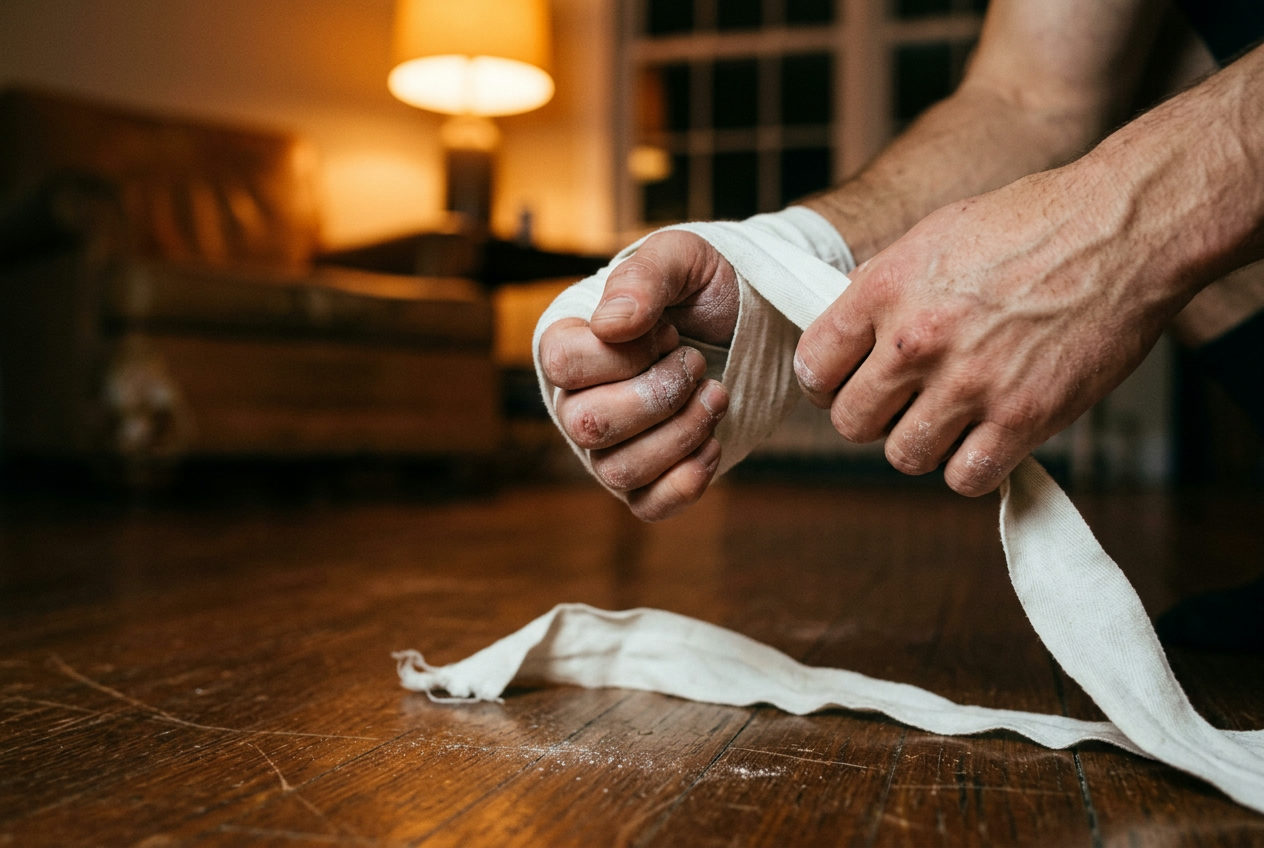
Build a cool-down that starts in the gym. After the last round, do a few minutes of slow shadowboxing where you barely move your feet, then breathe through your nose until your breathing settles. Unwrap your hands slowly. Shower warm, not scalding.
Caffeine is the usual offender. Plenty of pre-workout powders carry as much as a couple of strong coffees, and if you drink one at 6 p.m., some of it is still in you at bedtime. Switch to a stimulant-free option for evening sessions, or skip it. Watch the afternoon coffee too, because it stacks with whatever you drink before class.
Eat a real meal after training, at the table, not a huge plate in bed while scrolling fight clips. Dim the lights. Put the phone across the room and read something on paper.
Pick one change this week and make it stick before adding another. The caffeine swap is the easiest place to start.
Do Naps Help or Hurt?
Go to a Muay Thai camp in Thailand and the answer is obvious. The standard day runs two sessions, a morning run and pads, then another block of training in the afternoon. Between them, the fighters eat and sleep. Camps go quiet in the heat of the day. Lumpinee-level fighters have trained on that rhythm for generations, and nobody there treats a midday nap as laziness.

Your life probably does not look like a camp. You have a job, maybe kids, and training happens after work. Naps can still help if you keep them short, well under an hour, so you do not wake up groggy. Timing matters too. A nap in the early afternoon is fine; one at 6 p.m. on the couch will cost you the night.
If a nap leaves you staring at the ceiling at night, cut it. Night sleep wins every time. And set an alarm for the nap, every time.
What Happens to Sleep During a Weight Cut?
It gets worse, and fighters rarely plan for it. Dehydration, hunger and late-night sweat sessions all make it harder to fall asleep and stay asleep. Sauna suits and hot baths the night before a weigh-in push your body temperature up exactly when it needs to come down for sleep.
Amateur tournaments often weigh in on the morning of the bout, which means the last night of a cut is also the night before the fight. Pros with day-before weigh-ins have a different problem: they rehydrate and eat late, then try to sleep on a full, bloated stomach. Either way, the cut steals sleep at the worst possible moment.
The fix starts weeks before fight week. Walk around closer to your competition weight so the cut is small. Body composition work in the off season matters here, and that is where a structured core and conditioning plan helps. Abs Pro gives you short core and conditioning sessions you can fit around bag work without adding another long gym trip, which makes it easier to keep weight steady between fights instead of crashing it at the end. A smaller cut means fewer nights of lying awake hungry and thirsty.
Fight week itself needs a plan for the night after the weigh-in. Eat food you know well, finish the big rehydration early in the evening rather than right before bed, and keep the hotel room as dark and cool as you can. Bring your own pillow if you sleep badly away from home. Fighters travelling to regional tournaments learn this the hard way the first time, lying awake in a strange room with a stomach full of electrolyte drink and rice.
If you are not competing, do not cut at all. Hobby fighters who copy pro weight cuts for a club smoker are trading sleep for nothing.
What Does a Pro-Style Recovery Night Look Like?
Here is the routine I would hand any fighter who trains in the evening. It is built from the pieces above, put in order. Adjust the times to your life.
- Finish the last round, then do slow shadowboxing and nasal breathing until your breathing settles.
- Unwrap, hang the wraps to dry, wipe down your gloves. Small rituals tell your body the session is over.
- Warm shower. Eat a proper meal with protein and carbohydrates at the table, not in bed.
- Drink water through the evening, but taper off later so you are not up three times to use the bathroom.
- Lights down, phone out of reach. Read, stretch on the floor, or sit quietly.
- Same bedtime and same wake time on training days and rest days, weekends included.
That last item is where most people fall apart. They sleep well Monday to Thursday, stay up late Friday and Saturday, then wonder why Monday sparring feels slow. Pros in camp keep the schedule fixed because a fixed schedule is the easiest way to get consistent sleep, and the Stanford players held a set bedtime for weeks to get their numbers.
Keep a rolled-up towel and a small ice pack ready for sore knuckles, so you are not digging through the freezer at eleven. Set the bedroom up cool and dark. Then go to bed.
Where Does the Bag Session Fit?
Plan the week so the hardest sessions land on the days after your best sleep. If Thursday night is always short because of work, Friday is a technique day, not a conditioning day. Put intervals and hard bag rounds on mornings or early evenings when you can.
When you train at home, control the timing so a quick session does not turn into a ninety-minute grind at 10 p.m. Run your rounds and rest periods on our free boxing round timer, and use Heavy Bag Pro’s custom workout builder to save a shorter, lower-intensity bag session for the days after a bad night, so you are not inventing one while tired.
Watch for the pattern where short sleep and hard training stack up for weeks. Irritability, flat sessions and a loss of interest in the gym are classic signs, and our article on burnout recovery for combat athletes walks through what to do when you are already there. Tonight, set the bedtime. Tomorrow, train.