
When did you last train a muscle you can’t see in the mirror? For a lot of people who hit the bag four nights a week, the honest answer is never. Their chest, shoulders and arms get plenty of attention, and the whole back side of the body, from the calves through the hamstrings, glutes and up the spinal erectors to the lats, gets whatever is left over. That leftover approach shows up late in a session. Hips stop driving, the lower back rounds over on every hook, and the right hand turns into an arm punch.
This is a plain plan for fixing that without turning you into a powerlifter. It assumes you already box or do bag work most of the week and you have one or two days you can give to lifting.
1. Check Your Hinge First
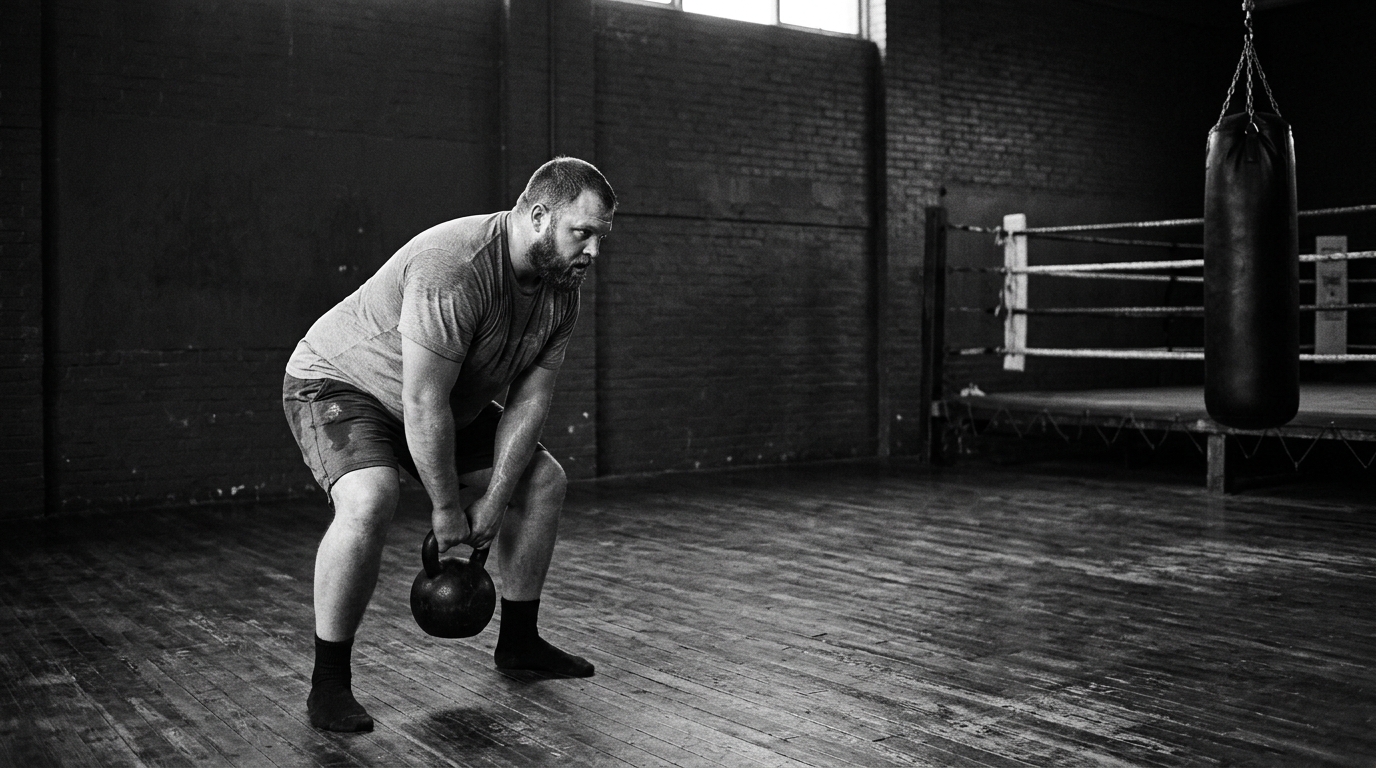
Before you load anything, find out if you can hinge. Stand with a broomstick along your spine so it touches the back of your head, your upper back and your tailbone. Push your hips back like you’re closing a car door with your backside. Keep all three contact points on the stick. If the stick comes off your head or your tailbone, you’re bending at the waist instead of the hips, and loading that pattern is how boxers end up blaming the bag for a sore back.
For a lot of people it clicks the moment they feel the stick move. Do a few sets of slow broomstick hinges at the start of every strength day until it feels boring. Then move to a kettlebell deadlift, where the bell sits between your feet and you just stand up with it. No swing, no speed. If you train in an old-school gym like the ones that fed the Golden Gloves for decades, there’s probably a dusty kettlebell in the corner nobody uses. Take it.
One more test. Lie on your back and do a single leg glute bridge, holding the top. If your hamstring cramps before your glute burns, your glutes are asleep. Fix that before you add weight to anything.
2. Put One Heavy Pull on Strength Day
Pick one big hip hinge and make it the main lift of your week. For most boxers that’s a trap bar deadlift. The handles sit at your sides, your torso stays more upright than with a straight bar, and it’s easier to learn without a coach watching every rep. A Romanian deadlift with a straight bar or dumbbells is the other good choice, and it hits the hamstrings harder through a long stretch.
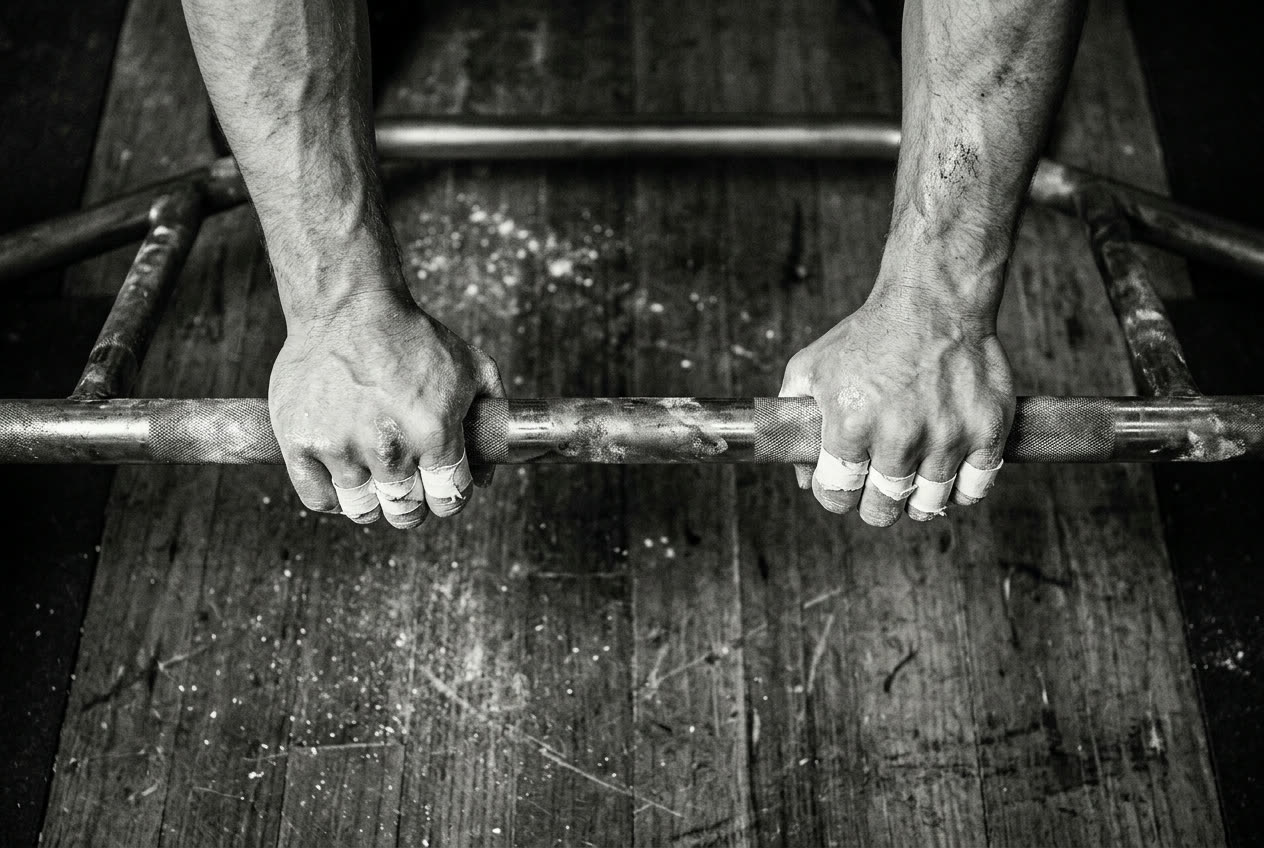
Keep reps low and the bar speed honest. A few sets of three to six reps, stopping with a rep or two left in the tank, is plenty. You’re after force, not a pump. Grinding out ugly max singles has no place in a boxer’s week, because the cost shows up in your legs at the next bag session and the benefit for punching is small.
Where does it go? First in the session, after your warm-up and hinge drills, while you’re fresh. Our older piece on gym exercises that complement boxing covers the other lifts that fit around it if you want a full menu. Don’t add a second heavy hinge on the same day. One is enough.
Southpaws and orthodox fighters both load one leg more than the other all night, so add one single leg hinge after the main lift. A B stance Romanian deadlift works well: most of the weight on the front leg, the back foot just a kickstand on its toes. It shows you fast which hamstring is the weak one. Usually it’s the rear leg, the one that drives your right hand if you’re orthodox. Two or three sets per side. Keep the dumbbells moderate and the hips square, because the minute the hip on the free side opens up you’re turning a hamstring exercise into a balance contest.
3. Row Like You Throw Hooks
Everyone thinks about the back helping the trunk turn into a punch. Fewer people think about what brings the hand home after it lands, and that’s mostly your lats and the muscles around the shoulder blade. Ignore the return trip and your hands come back slow and low, which any amateur coach on the London circuit will point out within a round.
Rows cover it. A one arm dumbbell row with a knee on the bench lets you rotate slightly at the top, which feels closer to boxing than a strict seated row. Chest supported rows take the lower back out of it entirely, useful if you deadlifted earlier in the session. Do both across the week if you have two strength days.
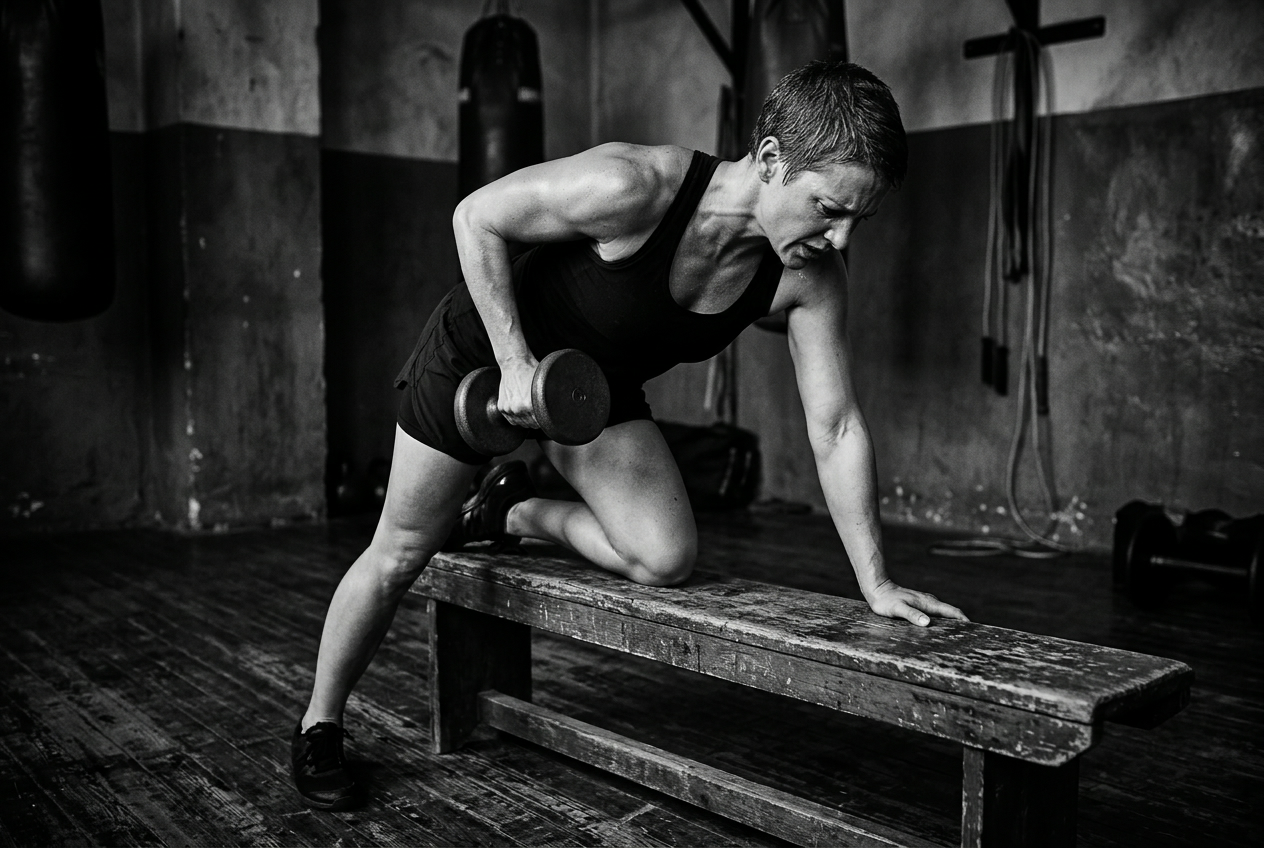
Keep the reps higher here, somewhere in the eight to twelve range, and pause with the shoulder blade pulled back at the top. Face pulls with a band or cable at the end of the session are cheap insurance for the shoulders. If your rotator cuff has been grumbling, the slow tempo matters more than the weight. Pull the elbow to your hip, not to your ear.
4. Train the Back to Hold Still
Here’s where boxers waste time. They do endless back extensions and supermans to “strengthen the lower back”, when the real job of the lower back in a punch is to stay still while the hips and upper body turn. A spine that bends under load is a spine that leaks force. You want stiffness, not range.
Stuart McGill’s lab at the University of Waterloo has measured this kind of thing for years. One of their studies on kettlebell swings and loaded carries looked at back and hip muscle activation and low back loads, and it’s a good read on why the swing works the posterior chain hard while asking the spine to stay braced. The takeaway for a boxer is simple. Train the swing and the carry, skip the crunch your back into a banana stuff.
Pick two of these and do them after your rows:
- Suitcase carry, one heavy dumbbell in one hand, walk without leaning.
- Bird dog with a slow pause, opposite arm and leg, no hip rotation.
- Side plank, both sides, holding until your form slips and not a moment longer.
- Kettlebell swing, hips snap, arms just hold on.
The front of the trunk matters too, because it’s the other half of the same brace. For a structured core plan you can run on the days you don’t box, Abs Pro lays out a 30 day abs program with short daily sessions, and it pairs well with the anti rotation work above. Keep the carries heavy. Light carries are just walking.
5. Fit It Around Bag Days
The plan only works if it doesn’t wreck your boxing. A few rules keep it from doing that.
Never lift heavy legs the day before your hardest bag or sparring session. If Tuesday is your long bag session with hard rounds, deadlift on Saturday or Sunday, not Monday. Lifting after boxing on the same day is fine and often better, because you’re already warm and your boxing gets the fresh legs. Lifting before boxing usually means slow feet and a wide stance by the third round.
Here’s a simple week for someone who trains five days:
- Monday: bag rounds and footwork.
- Tuesday: hard bag session, then rows and carries.
- Wednesday: rest or light roadwork.
- Thursday: technical bag work and shadowboxing.
- Friday: easy bag rounds.
- Saturday: strength day with the heavy hinge, rows and one carry.
- Sunday: off.
That’s two days of back work and only one of them is heavy. If you want the bigger picture of how strength fits into a training week, the punching power guide goes through the full chain from the floor up. Move things around for your job and your gym timetable, but keep the heavy hinge two days clear of your hardest boxing.
6. Use the Bag as Your Test
You don’t need a lab to know if this is working. Watch your last rounds. Does the lower back still round when you throw the hook to the body late in the session? Do your hips still turn on the right hand when you’re tired, or does the punch start from the shoulder? Those two things are the scoreboard.
Film the last round of a bag session from the side once a month. Compare clips side by side, same angle, same time of day if you can manage it. Posture holding up longer into the round is the first sign; more snap on rear hand power shots usually comes after.
To keep those test rounds consistent, run them on a fixed structure. Heavy Bag Pro has 1000+ boxing, kickboxing and Muay Thai combos with audio callouts and a round timer with rest periods, so your last round this month looks like your last round next month.
7. What to Take Away
Strong posterior chain work for a boxer comes down to a short list. Learn the hinge before you load it. Do one heavy pull a week, early in the session, with clean reps. Row every strength day and finish the rep with the shoulder blade back. Train the lower back to resist movement with carries and swings, not to bend with endless extensions. Keep the heavy lifting away from your hardest bag day.
Start this Saturday with the broomstick test, five minutes before anything else. If the stick falls off your head, that’s your first job.