
About 70 percent of apartment leases in the US include a clause about “structural modifications” or “alterations” that require landlord approval. The boxers I’ve talked to had no idea this applied to drilling into their ceiling joists until the moment their deposit check bounced. One guy I know spent four months training with a bag hanging off a doorframe before his landlord knocked and asked what the thumping was. He thought he was being clever. He was being loud.
Mounting a heavy bag in an apartment is solvable. I’ve looked at what actually works, what causes noise problems, what damages floors and ceilings, and what myths spread because people are repeating advice meant for house owners. The answers surprised me a little.
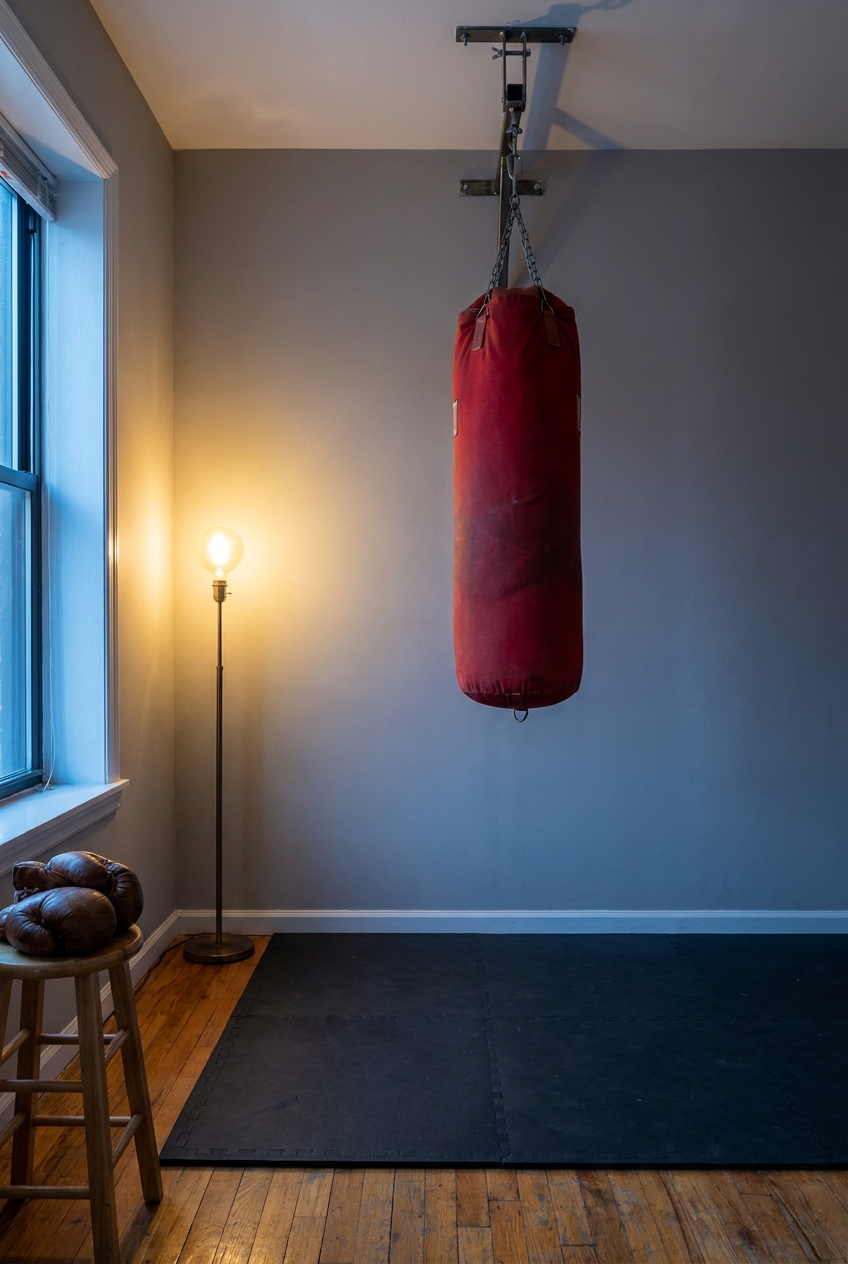
Ceiling drilling works.
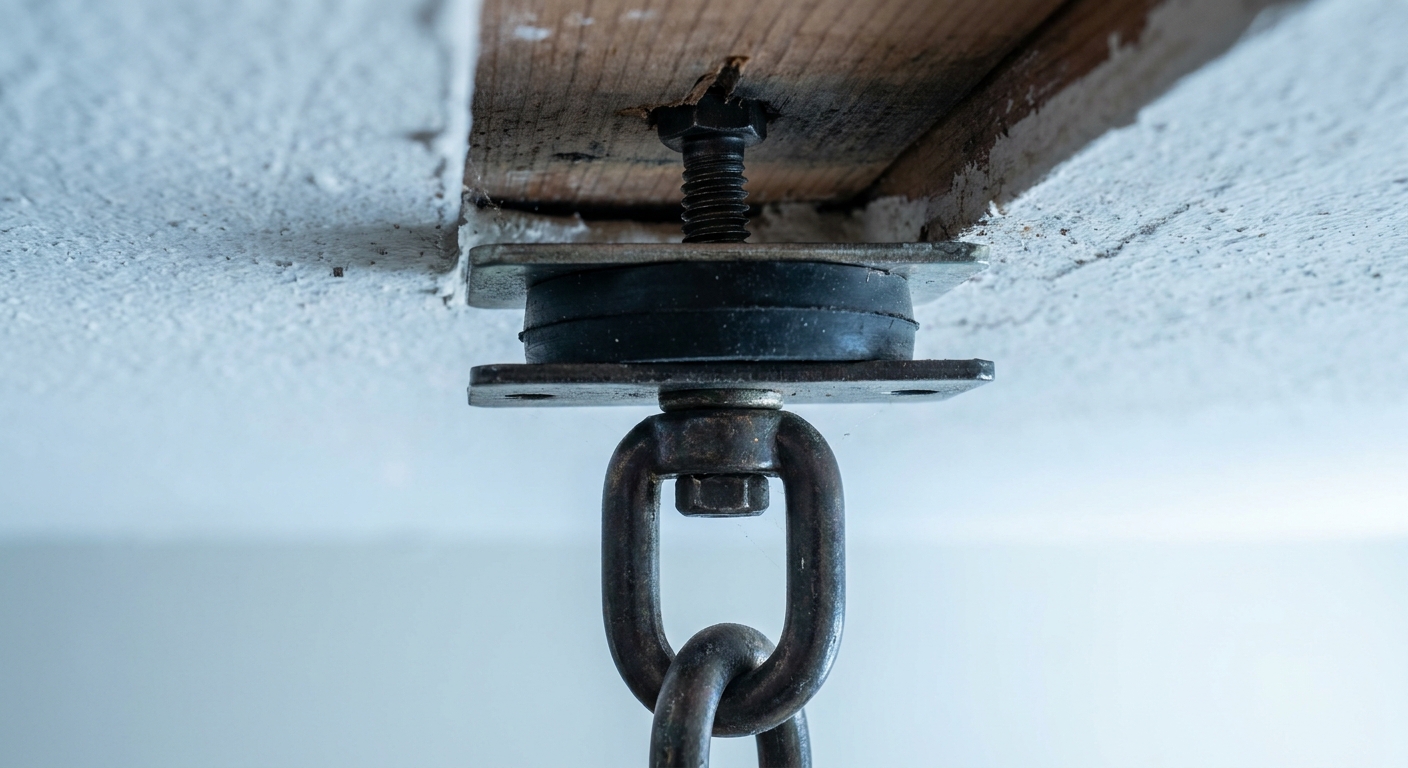
A lot of apartment dwellers assume they cannot touch the ceiling. Legally, in most rentals, you do need permission for any modification that involves drilling through structural elements. But “you need permission” is not the same as a flat no. Many landlords say yes, especially if you’re using a properly installed lag bolt through a ceiling joist with a quality swivel mount. The damage is two small holes. You patch them with filler when you leave, same as you would a picture hook.
The structural question is worth asking, though. Ceiling joists in modern apartment construction typically handle far more than the dynamic load of a 70-pound heavy bag, but you want to confirm you’re hitting a joist and not just drywall. A stud finder handles this in thirty seconds. If the joist is there and you use a 3/8-inch lag bolt sunk at least two inches into solid wood, the mount itself will hold. The bag will swing, yes. More on that in a moment.
The bigger issue is not structural. It’s acoustic. Always. A ceiling-mounted bag transmits every impact as a low thud directly into the floor above, or into the unit below yours if you’re on anything but the top floor. That’s the real landlord problem. Not the holes.
Doorframe mounts are quiet.
They are not quiet. This is probably the most repeated myth in apartment boxing forums. Doorframe-mounted bags use tension and friction against the door casing to stay in place. Every punch sends vibration through the casing, into the surrounding wall framing, and outward. The sound character is different from a ceiling-mounted bag, but it’s not lower. In some apartments with shared walls, it’s worse.
There’s also a damage angle that people skip over. The constant pressure and micro-movement of a doorframe mount wears paint off the casing. Over time, it can compress and dent softwood trim. Some renters have walked away from this setup with trim damage that cost more to fix than a proper mount would have. If your apartment has hollow-core doors or cheap pine casings, I’d avoid doorframe mounts entirely.
They do work tolerably in certain cases: thick solid-wood door frames in older concrete-and-brick buildings, with a light bag (50 pounds or less) and controlled technique. But as a quiet, low-impact solution? That’s the myth.
Free-standing bags solve the noise.
Partially. A free-standing bag on a base sits on your floor. It doesn’t transmit impact through wall or ceiling framing. The vibration goes down, not out. For the neighbor below you, this is actually worse than a ceiling mount in some cases, because the base thumps and scrapes against the floor with each combination. For the neighbor beside you, it’s better. Net result depends entirely on your building layout.
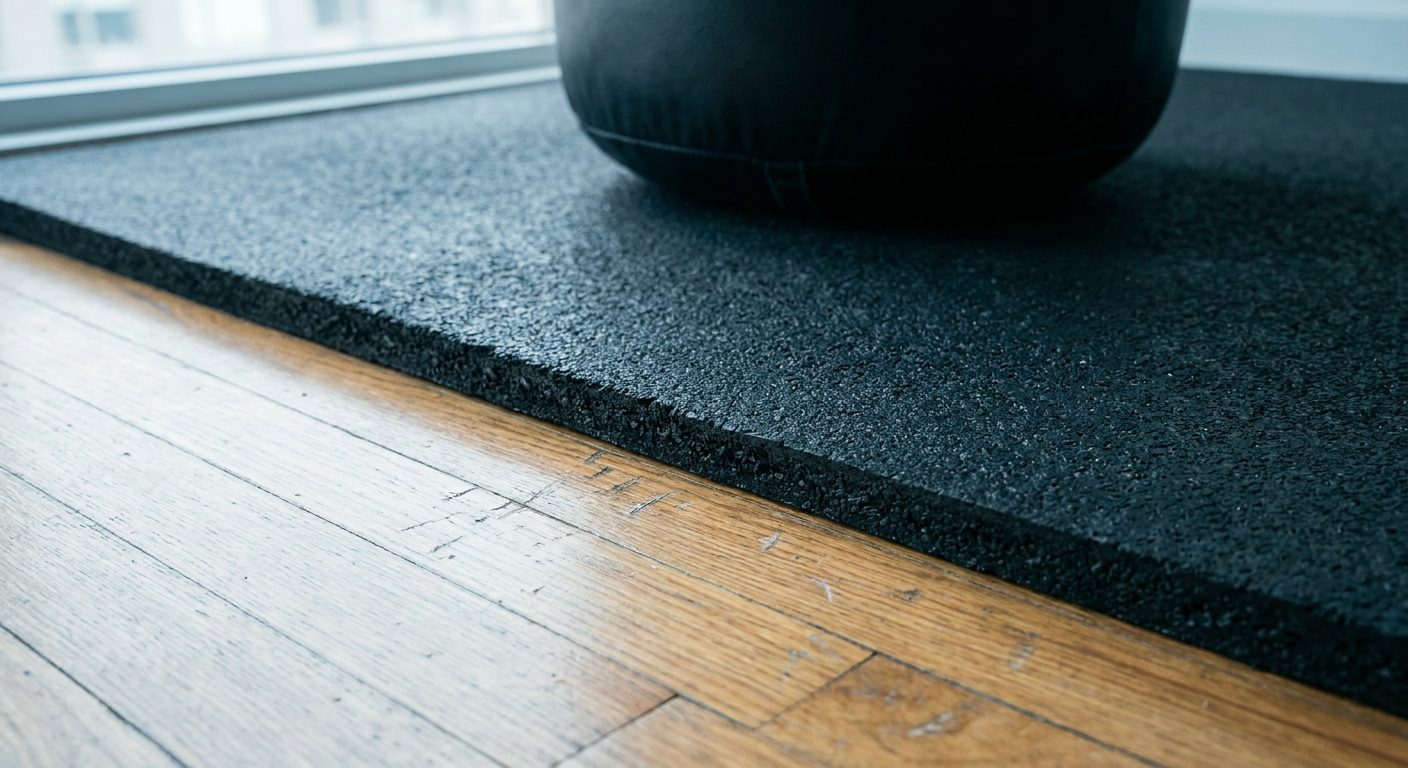
The floor protection question matters here. Hardwood apartment floors are not rated for repeated point-load impacts from a heavy-bag base. A half-inch rubber mat under the base helps, but it doesn’t eliminate the problem. You need at least a 4×6-foot horse stall mat (the cheap ones from farm supply stores run about $40 and handle this job well), placed under the base and extending far enough that your footwork doesn’t clip the edge mid-round. Without it, you will leave marks.
Free-standing bags also wobble and walk. After a few rounds, your Century Wavemaster or Everlast PowerCore has migrated two feet and is leaning against your bookshelf. Filling the base with water instead of sand reduces this slightly. Filling with sand reduces it more. Neither eliminates it. You learn to reset.
If you want a more stable alternative for apartment training, the full breakdown of bag types and their apartment compatibility covers free-standing models alongside wall mounts and wall-mounted brackets that work with studs you’re allowed to use.
Wall mounts are safer than ceiling mounts.
The appeal is obvious: you’re not attaching to the ceiling above someone’s head, you’re attaching to a wall. Wall-mounted brackets for heavy bags put enormous lateral stress on the fasteners. A ceiling joist handles load in compression. A wall stud handles lateral load much less efficiently. The standard 90-degree L-bracket or extending arm mount transfers the bag’s dynamic swing into a bending moment on the bolts.
This doesn’t mean wall mounts fail. Properly installed into solid studs with the right hardware, they hold fine. But they are not automatically safer than ceiling mounts. I’ve read plenty of accounts of wall brackets pulling studs when someone used drywall anchors instead of actual studs, or used a bag that was too heavy for the arm length. The longer the arm, the greater the leverage against the wall fasteners. Keep the extension short and the bag under 70 pounds if you go this route.
The acoustic profile is also different. Wall-mounted bags swing toward the wall with every shot, creating a rhythmic thump against the bracket on each backswing. Some mounts have better isolation than others. Look for rubber-padded brackets specifically designed for apartment or gym use, not construction-grade L-brackets from a hardware store.

Training after 10pm is fine if you’re quiet.
No. Time matters less than people think, but the specific cutoffs matter a lot. Most apartment noise ordinances start at 10pm or 11pm depending on municipality and building rules. But heavy bag training produces impact noise, not just airborne sound. Impact noise travels through building structure and is measured differently than ambient sound. A 60-decibel punch on a bag may register as structural vibration that breaches noise ordinances even at 9pm, depending on how your building was constructed.
The practical answer: concrete and steel buildings absorb structural impact far better than wood-frame construction. If you’re in a 1970s-era poured-concrete apartment complex, you have much more latitude. If you’re in a wood-frame building from any era, structural noise is your main problem at any hour. Rubber mats under your bag setup and rubber-soled shoes for footwork help. Bare feet or socks on hardwood amplify the stomp of movement training and send it straight down.
I’d also flag that reaction timing varies by neighbor. Some people work nights, sleep days. Some have kids who nap. Time-of-day guidelines from a building’s lease are a floor, not a ceiling. Talking to your immediate neighbors before you start a regular bag session is worth doing. It costs thirty seconds and usually prevents every complaint you’d otherwise get.
You need a heavy bag to train effectively at home.
This one deserves a longer answer because it determines whether the whole mounting question matters at all.
Heavy bags are excellent. There is no argument from me there. But shadowboxing, resistance band work, pad work with a willing partner, and structured interval training give you a serious cardio and technique workout without anything mounted, drilled, or filled. Fighters like Lomachenko trained extensively with resistance bands for shoulder endurance before many of his title defenses. That’s not an argument against bags. It’s a reminder that the bag is a tool, not a prerequisite.
If your apartment situation makes a bag practically impossible (shared walls everywhere, neighbors below, concrete ceiling, strict landlord), the training itself doesn’t stop. You adapt. A 20-minute shadowboxing round with a structured round timer from Heavy Bag Pro gives you real conditioning work. The timer enforces the interval discipline that bag work naturally provides. You don’t lose much by swapping bag rounds for shadow rounds if the fundamentals stay sharp.
That said, for anyone who can make a bag setup work in their space, the feedback from hitting something solid matters for power development and combo timing. Shadow work supplements it; it doesn’t replace it fully.
Noise-dampening spring mounts are a cure-all.
Spring and chain mounts with rubber isolators reduce high-frequency vibration transmission. They help. They are not magic. The low-frequency thud of a clean power shot still travels through any spring system because the mass of the bag transmits momentum that the spring cannot fully absorb without letting the bag travel far enough to dissipate it.
What spring mounts do well: reduce the sharp crack of the mount hardware vibrating against the attachment point, soften the noise signature of lighter technique work, and protect the hardware from fatigue over time. For a technique-focused session with combinations in the 3-to-5 punch range, a spring-and-rubber-isolator ceiling mount makes a real difference compared to a rigid chain.
What they don’t do: eliminate the thud from the bag itself landing against your fist at power, or the secondary thump of the swinging bag reaching the end of its arc. If your apartment building has thin floors and close neighbors, a spring mount buys you courtesy, not immunity.
The most effective acoustic solution I’ve found described in various DIY boxing forums is layered: spring isolator at the mount, chain shortened to limit swing arc, rubber mat under your footprint, and shoes on during the session. Each layer removes a different type of noise. None alone is sufficient. All four together change the sound profile substantially.
Getting your landlord to say yes.
This isn’t a myth to bust. It’s a step that gets skipped because the assumption is rejection before anyone asks.
Write it out in a short email. Say what you want to install, what hardware you’ll use (a 3/8-inch lag bolt ceiling mount or a stud-anchored wall bracket), and confirm you’ll patch and restore on move-out. Offer to show photos of the mount type. Most landlords who receive a specific, professional-sounding request from a tenant they haven’t had problems with say yes. Most landlords who receive “hey can I put a punching bag in my apartment?” from a text message do not. The framing changes the answer.
If your building has a property management company rather than a direct landlord, go to the lease addendum route. Ask for a written permission letter that specifies what you’re allowed to do. This protects you from a future property manager who wasn’t there for the verbal agreement.
For the full setup picture once permission is sorted, the home boxing gym setup guide covers floor protection, bag selection, and gear storage for apartment-scale spaces. And if you’re weighing whether to mount a hanging bag at all versus going free-standing, the free-standing bag comparison gives you honest tradeoffs without a recommendation agenda.
Once you have a bag in place, setting up your rounds is the last piece. The Heavy Bag Pro app handles interval structure, rest timing, and round tracking for apartment sessions where you’re working within a narrow noise window and want every minute used well.