
A regulation boxing ring costs between $1,500 and $8,000 before shipping. The platform alone weighs close to 400 pounds. Assembly takes a full day with two people who know what they’re doing, and that’s before you’ve figured out where to put it. For most people training at home, that’s where the conversation ends.
But it shouldn’t. Because “boxing ring” covers a huge range of setups, from competition-spec platforms to basic rope squares on padded flooring, and the gap between “serious sparring space” and “I need to drain four grand” is bigger than most people realize. The question isn’t really whether to get a ring. It’s what you need, for what you do.
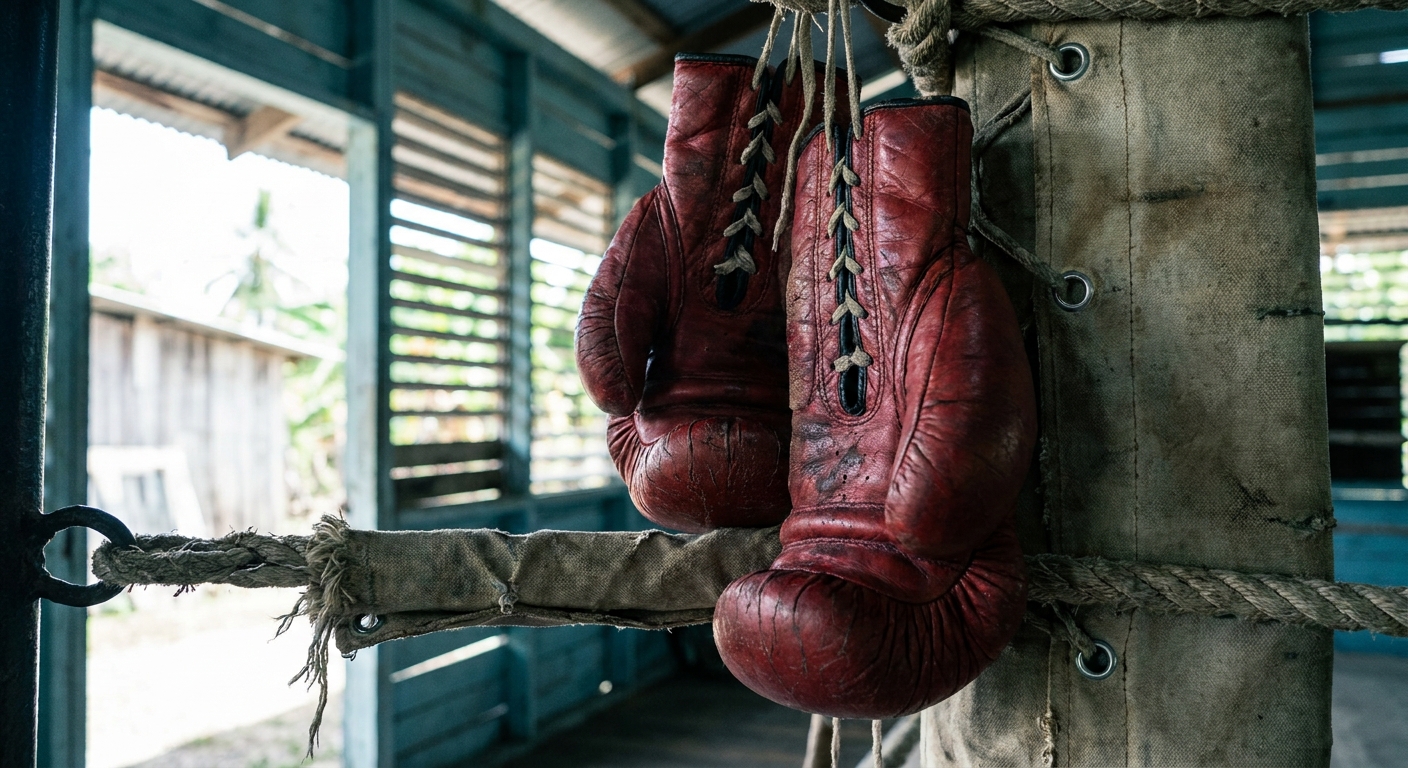
The real cost of a home boxing ring
Full competition rings run $3,000 to $8,000 for anything worth sparring in. That price covers a sprung wooden platform, corner posts, turnbuckles, multiple rope strands, and canvas covering. Professional-grade ones from Ringside or Combat Sports are built for daily commercial gym use. They’re also sized for gyms: a 16-foot ring with the platform needs a 22-foot footprint once you factor in the apron and corner clearances.
That’s a lot of floor. If you’re working with a two-car garage, you’re probably fine. Anything smaller and a full-platform ring is going to dominate the space so completely that you won’t be able to do anything else in it. No jump rope, no shadowboxing, no bag work around the perimeter.
The more realistic option for home training is a rope-and-post setup on padded flooring, without the wooden platform. You set four posts into base plates or bolt them to a concrete floor, run the ropes at regulation height, and use layered foam mats or interlocking rubber under your feet. This drops the cost to roughly $400 to $900 for decent quality posts and roping, plus whatever you spend on flooring. Combat Sports sells a mid-range post set around this price point. Ringside has a similar option.
The ropes matter more than beginners expect. Cheap elastic bungee-style ropes feel nothing like the real thing and won’t hold up to someone being driven into them. You want three-strand or four-strand twisted rope at proper tension. If your sparring partner goes into the ropes and the post tips over, that’s a training-ending problem.
Space requirements: the real numbers
A competition ring is 16 to 20 feet between the ropes. At home, a 12-foot interior is the smallest practical sparring space, and even that feels tight once two people are in it. You’re not trying to recreate a pro fight environment. You’re trying to have enough room to work footwork, set traps on the ropes, and practice cutting off the ring without your partner running into a wall on every circuit.
Jay Deas, the coach who worked with Deontay Wilder for most of his professional career, has talked in interviews about how much small-space training reveals about a fighter’s range management. When you can’t circle freely, you learn what happens when lateral movement stops being an option. That’s exactly the kind of work a home ring is good for, even a small one.
Measure your space before you do anything else. Mark out the interior dimensions with tape on the floor and shadowbox in it for a round. If you’re constantly reaching the boundary, the ring won’t work. If you have comfortable room to move, you’re fine.
Floor surface and padding
This is where most people cut corners and pay for it later. A wooden platform ring has a sprung floor with canvas on top, designed to give slightly under footwork and absorb impact from falls. Without it, you’re standing on whatever your garage or basement floor is made of.
Concrete is not acceptable for sparring. Rolled rubber flooring in 3/8-inch thickness absorbs almost nothing. For actual sparring, you want at least 1.5 inches of high-density foam under your rubber surface, which brings you to either gym-grade EVA foam tiles stacked two layers deep or a purpose-built wrestling/boxing mat like the ones from Dollamur or Z-Athletic. Dollamur’s Flexi-Connect mat system is the most common choice in serious home gyms, running around $8 to $12 per square foot installed. For a 14-foot square, that’s $1,100 to $1,700 for flooring alone.
It’s not optional. A hard takedown or a slip on a ring apron without adequate padding is how training stops for three months.
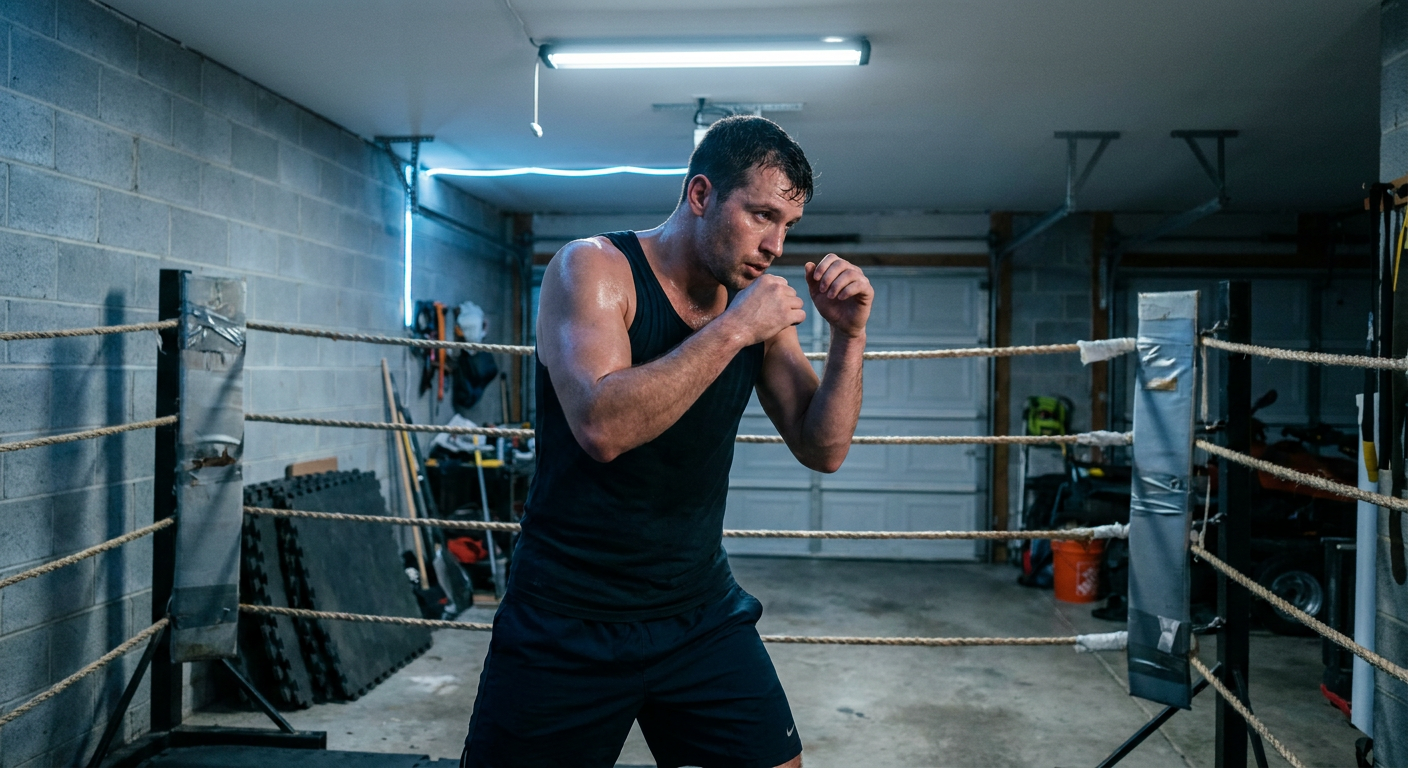
When it’s actually worth it
A home ring makes sense if you’re doing regular sparring with training partners who come to you. Not hitting the bag, not shadowboxing. Actual sparring, where the rope work and corner pressure matter for skill development.
If you’re sparring twice a week with the same two or three partners, a proper home setup pays off inside two years compared to gym memberships and commute time, depending on your local gym costs. The ability to run a structured sparring session at 6am or 10pm, on your own schedule, is worth real money if your training schedule gets crushed by work and family.
It’s not worth it if you’re primarily a bag trainer who occasionally visits a gym for padwork. You can get everything you need from a good hanging bag, a structured round timer like the one at heavybag.pro/boxingtimer/, and enough floor space to move. The ring adds nothing to solo training that marked tape on the floor wouldn’t also give you.
It’s also not worth it if your sparring partners won’t commit to coming to you. A home ring that only gets used for shadowboxing is a $2,000 obstacle in your garage.
Gear for sparring prep at home
Whether or not you build a full ring, the gear list for home sparring doesn’t change much. Headgear is mandatory. Mouth guard. Chest protector if you’re sparring hard. 16oz gloves minimum for most partners. You also need someone to hold pads on your off-sparring days so your distance timing doesn’t rust between sessions.
The underrated part of home sparring prep is the conditioning side. Your work capacity has to be high enough that you can spar three to five rounds and still have something to show for technique in the final round. If your cardio crumbles in round two, the ring setup doesn’t matter. See our article on building a complete home boxing setup for conditioning gear that pairs well with ring work.
Round management is different when you’re running your own sessions at home. You’re the timer, the coach, and the fighter. Structured round intervals with proper rest periods matter more without a gym clock on the wall. The Heavy Bag Pro app handles this free, with customizable work/rest intervals for sparring rounds, padwork, and drills.
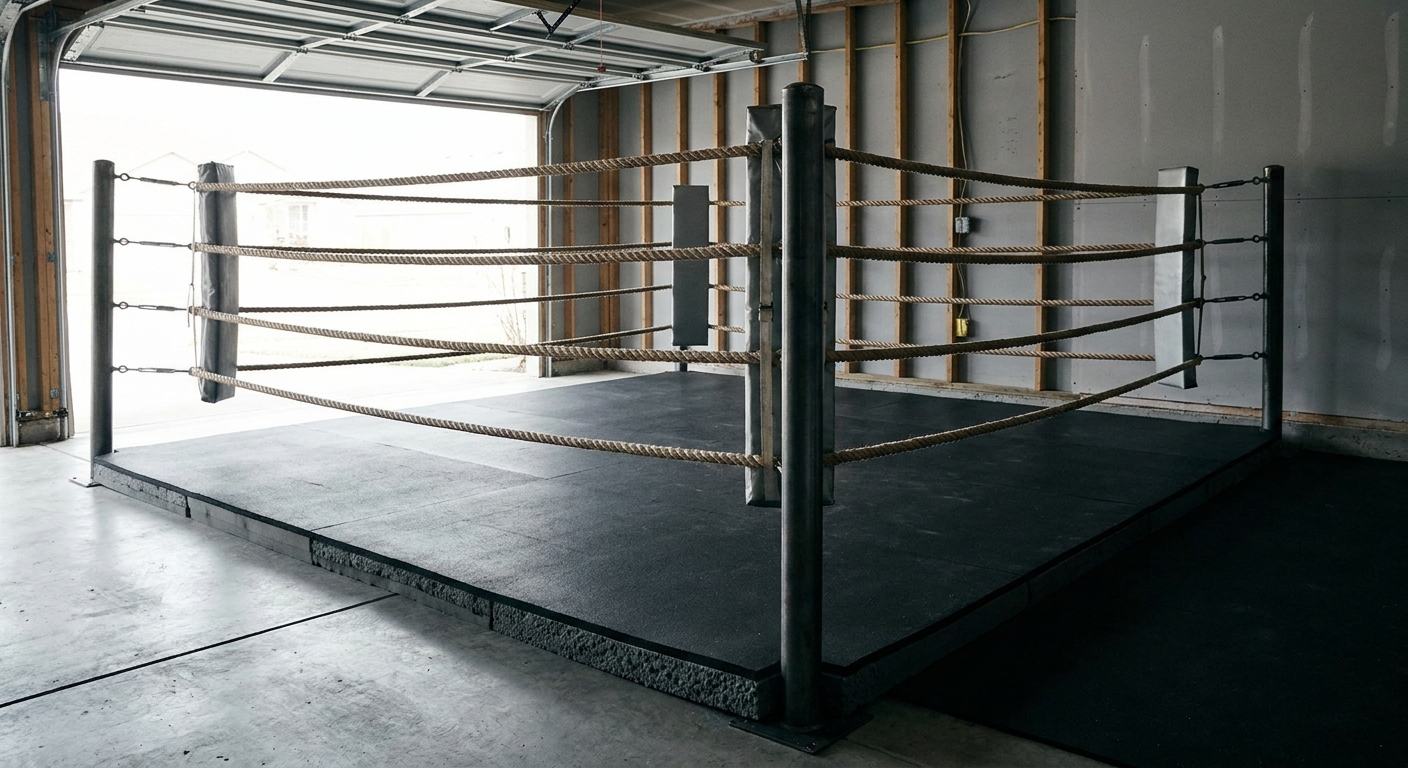
What to prioritize if the budget is limited
If you’re working with under $1,500 total for a home sparring setup, skip the ring hardware and put the money into flooring and gear. You can mark a 16-foot square on a well-matted floor with colored tape or flat rubber strips and get ninety percent of the spatial training benefit from a rope ring. The ropes teach you to use them, and that’s genuinely useful. But they’re not the only way to learn ring generalship.
Good flooring, good headgear, a reliable sparring partner, and a quality bag setup for your off-days will develop your boxing more than a ring you can barely afford to fit inside. Once the space and budget are there, upgrade. Do it in the right order.
The USA Boxing Club Finder at usaboxing.org is worth checking before you commit to major home setup spend. If there’s a club close enough to visit twice a week, a partial home setup supplementing club training often beats a full home ring that you use alone.

Assembling a ring without a platform: a practical checklist
If you’ve decided on the no-platform rope-and-post route, here’s the order that prevents expensive mistakes.
Sort the flooring first. Measure, order, and install the mats before you buy any ring hardware. The mat boundaries define your actual usable space. A lot of people order posts and then discover the mats they planned don’t fit the space after accounting for perimeter clearance.
Pick the post size for your interior dimension. Standard posts are designed for rings with 4-foot aprons outside the ropes. Without an apron, your fighters are one step from the edge of your mats. Either go smaller on the interior roping dimension or build in a wider mat footprint around the outside.
Four-rope tension matters. The bottom rope sits at 18 inches from the mat surface. Top rope at 48 to 54 inches. Don’t run three ropes and call it done; the fourth rope is there so someone going backward doesn’t slide under the bottom strand while stumbling.
Corner pads. Non-optional. Ringside and Cleto Reyes both make post pads that attach cleanly to standard home gym posts. The corner post is the hardest thing to hit in boxing and the one that sends fighters to hospital when unpadded.