
Your Cleto Reyes gloves cost $200 and you’ve had them for eight months. They smell like a locker room that’s been closed since 2019, the wrist velcro has lost half its grip, and there’s a faint crack forming along the thumb seam. Two months from now, those gloves will be garbage. That’s not normal wear. That’s neglect.
Boxing gear isn’t cheap, and most people treat it like it is. A decent pair of bag gloves, quality hand wraps, headgear, a mouthguard, and a heavy bag can easily run past $400 once you’ve built a proper home setup. Losing that investment to rot, mildew, and delamination inside a year isn’t a gear problem. It’s a maintenance problem. Coach John Brown at Gleason’s Gym in Brooklyn, who has been restringing and refurbishing equipment there for over a decade, puts it plainly: if you air it out after every session, you’ll get years out of gear that kills other people’s equipment in months.
This guide goes through every major piece of gear and what it takes to keep it functional. Not polishing, not obsessing, just the basic stuff that most people skip.
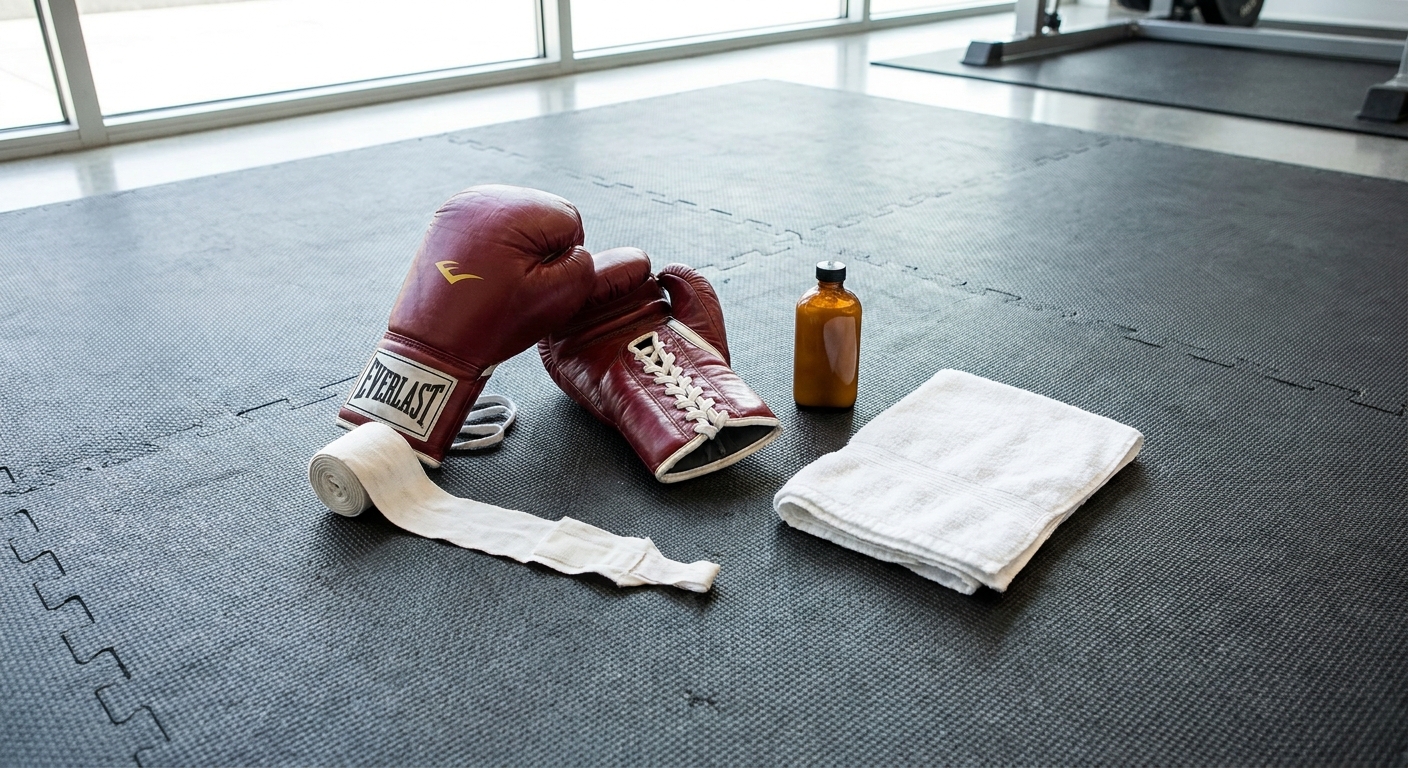
Do your boxing gloves need cleaning after every session?
Yes, but not the way most people think.
The problem isn’t the surface of the glove. It’s the inside, where sweat pools in the foam padding and creates the conditions that degrade leather from within. Bacteria break down the foam’s cellular structure over time. You can’t see it happening, but after enough sessions without drying, you’ll start to feel it: the knuckle padding compresses faster and doesn’t spring back, the wrist feels less structured, the whole glove starts to feel cheaper than it did six months ago.
After every session, pull out the gloves, open the wrist strap wide, and prop them somewhere they get actual airflow. Not jammed in the bottom of a bag. Not hung on a peg in a closet. A window ledge or a gear rack near a fan is better than a shelf in a gym bag. The inside needs to dry within a few hours of use.
For the exterior leather, a slightly damp cloth every few weeks handles surface grime without stripping the natural oils from the hide. A dedicated leather conditioner applied once a month keeps the material from cracking along stress points, especially at the thumb joint and the wrist fold. Leather Honey and Bickmore Bick 4 are both popular among gear-conscious fighters. Fairtex and Winning leather gloves are particularly responsive to conditioning because the hides are thinner and more prone to drying out. Cleto Reyes and Title use thicker cow or horse leather that’s more forgiving, but both still benefit from quarterly treatment.
One thing to avoid: antibacterial sprays with alcohol bases. They kill the smell short-term but dry out the leather and the foam beneath it. Cedar inserts or glove dogs work better as a long-term odor solution because they pull moisture rather than masking it.
If you’re already dealing with chronic hand or wrist issues from bag work, the condition of your gloves is worth checking alongside everything else. A compressed knuckle pad changes how force transfers through the hand on impact. See the full breakdown at Long-Term Wrist Pain From Bag Work for what to look for.

How do you clean hand wraps without destroying them?
Hand wraps are the most neglected piece of gear in most gyms. A 180-inch Mexican-style wrap costs around $10. People wear it every session, stuff it in a bag wet, and then wonder why it’s stiff and stinks after three months.
Washing them in a mesh laundry bag on a gentle cycle is the standard approach, and it works well enough as long as you don’t skip the bag. Loose wraps in a washing machine knot themselves into a balled mess that stretches the elastic unevenly and wears out the Velcro faster. Cold water, gentle cycle, mesh bag. That’s it. Do it once a week if you train three or more days.
Drying them flat or hung loosely preserves the elastic. Tumble drying, even on low, degrades the stretch over time. Let them air dry after washing, and if you’re in a humid climate, make sure they’re fully dry before you fold and store them.
The Velcro closure on most wraps becomes a lint magnet after washing. A quick pass with a stiff-bristled toothbrush removes the fabric threads that clog the hook side and stop it from gripping. This takes thirty seconds and doubles the useful life of the closure.
Does a heavy bag need regular maintenance?
More than almost any other piece of equipment, and almost nobody does it.
A hanging heavy bag has two main failure modes. The shell can crack, split, or start losing its outer material, and the fill can compact and settle unevenly over months of use. Both problems are manageable if you catch them early. Neither is manageable once they’ve gone far enough.
The outside of a leather or synthetic bag should get a wipe-down every few weeks. Not a deep clean, just removing surface grime and dried sweat with a damp cloth. Leather bags benefit from a conditioner application every few months on the same schedule as gloves, applied to the strike zones where the hide takes the most stress. Synthetic vinyl bags don’t need conditioning but should be kept away from direct sunlight when not in use. UV exposure causes vinyl to crack and yellow much faster than normal wear does.

Fill settling is the bigger structural issue. As the fill compacts, it sinks toward the bottom third of the bag. That low-density top section starts absorbing shock differently, and after enough time the strike zone shifts downward, which changes your technique without you realizing it. If you notice your uppercuts are landing on a noticeably firmer section of the bag than your hooks, the fill has started to migrate. The fix is rotating the bag regularly if your mounting setup allows it, or opening the bag and redistributing the fill when the difference becomes obvious.
The chain, strap, or mount hardware deserves inspection every few months. A chain link that’s worn thin at the contact point with the swivel, or a strap that’s developed fraying near the d-ring, is a hazard. Replacement hardware is inexpensive. A 70lb bag coming off its mount mid-session is not a minor problem.
When does headgear need replacing?
The padding inside headgear is designed to compress slightly on impact and spring back. Over time, and under enough hard hits, it stops springing back fully. The outer shell looks fine. The cheek guards look intact. But the foam inside has taken a permanent set and is no longer doing the job it was manufactured to do.
There’s no universal replacement schedule for headgear because wear depends entirely on how often you spar and how hard those sessions are. Someone sparring three times a week at a competitive gym goes through headgear faster than someone doing light technical sparring twice a week. What you’re looking for is whether the padding still bounces back after you press it firmly with your thumb. If it stays compressed for more than a second or two, that’s a sign the foam has started to pack out. At that point, the headgear offers less impact absorption than it did when new, and it’s worth replacing regardless of how the exterior looks.
For the outer leather or synthetic shell: wipe it down, air it out after sessions, apply conditioner to leather periodically. The chin strap and velcro adjustment closures should be checked for integrity before every sparring session, not after.
Is there a maintenance routine that fits into a training schedule?
The problem with gear maintenance advice is that it usually reads like a second job. In practice, most of it takes less than five minutes after a session if you make it habitual rather than occasional.
After every session: open gloves, air them out properly. If you used hand wraps, hang them to dry (wash them at the end of the training week, not when they start smelling, because by then damage is already done). Give the heavy bag a visual check. That’s the session routine.
Once a month: condition leather gear. Check bag hardware. Run wraps through a wash. Inspect mouthguard for fit changes and cracks. This takes maybe twenty minutes total.
Every few months: deep inspection of headgear padding and shell integrity. Check the bag fill distribution. Look at the wear pattern on boxing shoes if you use them. Replace anything that shows structural compromise rather than surface wear.
Setting a round timer when you clean works better than you’d think. Three rounds of conditioning and inspection, two minutes each, with a short rest between. The free boxing round timer at heavybag.pro handles the intervals so you’re not watching a clock while you work through the gear.
What kills boxing gear faster than training does?
Storage is the main answer, and it’s the one thing nobody teaches you when you start boxing.
A closed gym bag in the back of a car in summer is one of the fastest ways to destroy leather gear ever devised. The combination of heat, humidity, and no airflow accelerates everything: foam breakdown, leather cracking, mold growth in the lining of gloves and headgear. Research published by the National Institutes of Health on bacterial contamination in sports equipment found that sports gear stored in poorly ventilated conditions harbors significantly higher microbial loads than gear aired out consistently. It’s not just a smell problem. The bacteria actively degrade the materials.
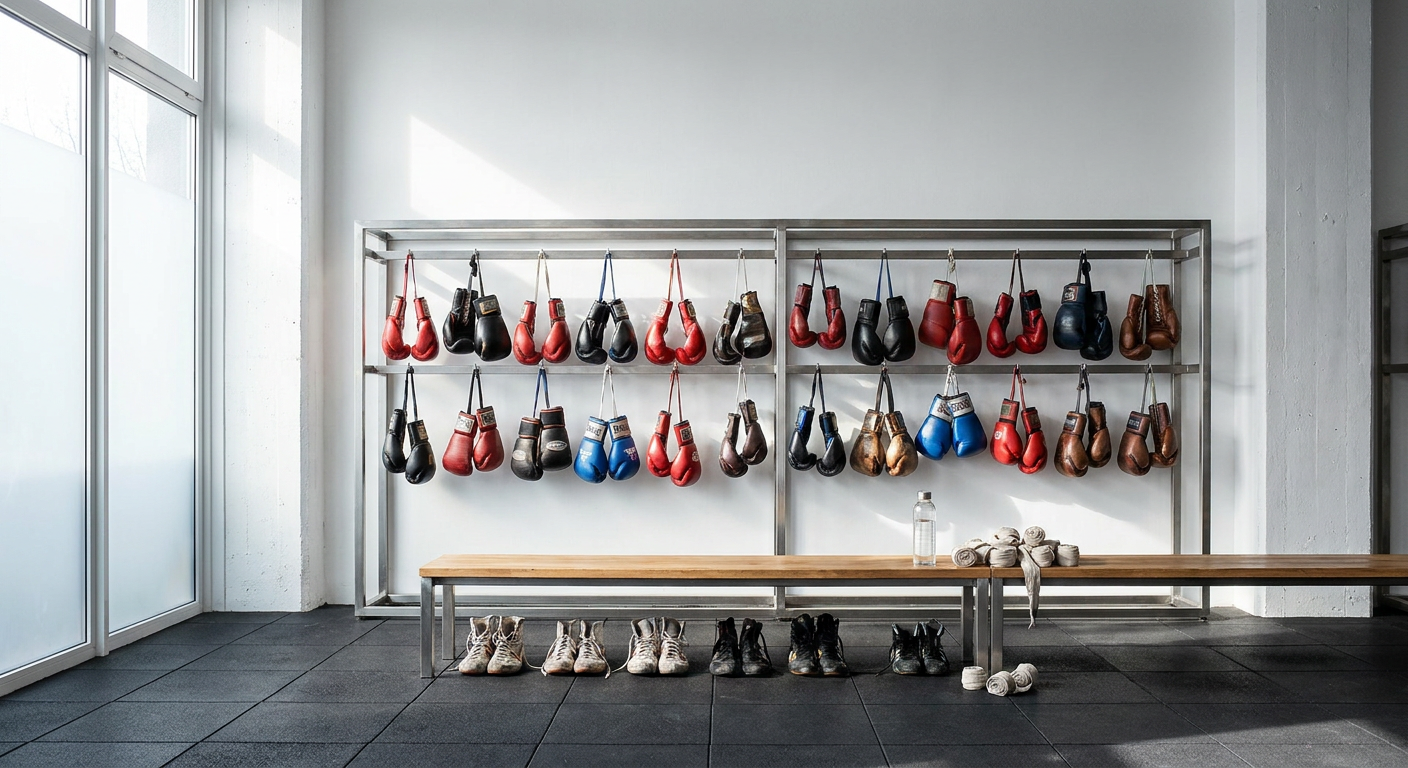
An open gear rack or shelf where equipment can breathe between sessions is worth more for gear longevity than any conditioner or spray. If you’re building out a home setup, account for storage when planning the space. The guide to building a boxing home gym on a budget covers this as part of the full room layout, including how to hang bags and store gear without compressing it.
Sun exposure is the second killer. UV light degrades both leather and synthetic materials faster than impact does. A bag left near a window for months loses color and surface integrity well before it should. Gloves stored in direct sunlight crack at the seams. Keep gear away from windows and UV exposure when it’s not in use.
The third factor: skipping the clean when you’re tired. The nights you come home drained from a hard session and drop everything in a pile are the ones that cost you. Five minutes of airing and hanging after your worst sessions is worth more than an hour of restoration work three months later.
When is it time to replace rather than repair?
Some gear is repairable and some isn’t, and knowing which is which saves money and protects you from training with compromised equipment.
Hand wraps and mouthguards are consumables. Wraps that have lost their elastic, developed holes in the knuckle pad section, or have a Velcro closure that no longer holds should go. A new set of 180-inch Mexican wraps is $10. A mouthguard that’s cracked or has changed fit enough that it moves during sparring is a replacement, not a repair. The boil-and-bite options from Shock Doctor or SISU last roughly a year under regular use before the fit starts to drift.
Gloves can often be repaired if the issue is cosmetic. A cracked exterior can be patched with leather glue if the foam underneath is still intact. A loose velcro closure can be replaced by a cobbler or glove repair service. What can’t be fixed is foam that’s packed out to the point where it no longer provides adequate knuckle protection. At that point the glove is a liability, not an asset, regardless of how it looks from the outside. If you’re unsure what to look for in your next pair, the complete sparring gear checklist covers what condition each piece should be in before it goes on your hands.
Heavy bags have a much longer serviceable life than gloves, often five to ten years for a quality leather bag with proper care. The main replacement trigger is a shell that’s genuinely compromised: a split that can’t be repaired without affecting the fill integrity, or a seam that’s opened enough to let fill escape. Minor surface cracks can be addressed with leather repair compound and a conditioner. But a bag with a structurally failed shell is done.
Headgear has no easy repair path once the interior foam has packed out. The outer shell can last years, but the protective function is in the foam, and foam doesn’t recover once it’s gone. At that point, replacing the headgear is the only honest call.