
Do the nerves ever go away? You’ve been training for months, you’ve earned your spot on the card, and now you can’t sleep. Your stomach is a mess. You’re second-guessing combinations you’ve drilled a thousand times. If that’s where you are right now, you’re not broken. You’re a boxer.
Pre-fight anxiety is one of the most universally experienced and least openly discussed parts of competitive boxing. Plenty of fighters feel it acutely, even deep into their careers. Gennady Golovkin, one of the most devastating punchers of his generation, has spoken about the nerves he feels in the days before a fight and how they shift from dread into something usable once the first bell rings. Bernard Hopkins, who fought professionally until he was 51, described managing nerves as a skill he worked on his entire career, not something that disappeared with experience.
What changes for experienced fighters isn’t the presence of anxiety. It’s what they do with it.
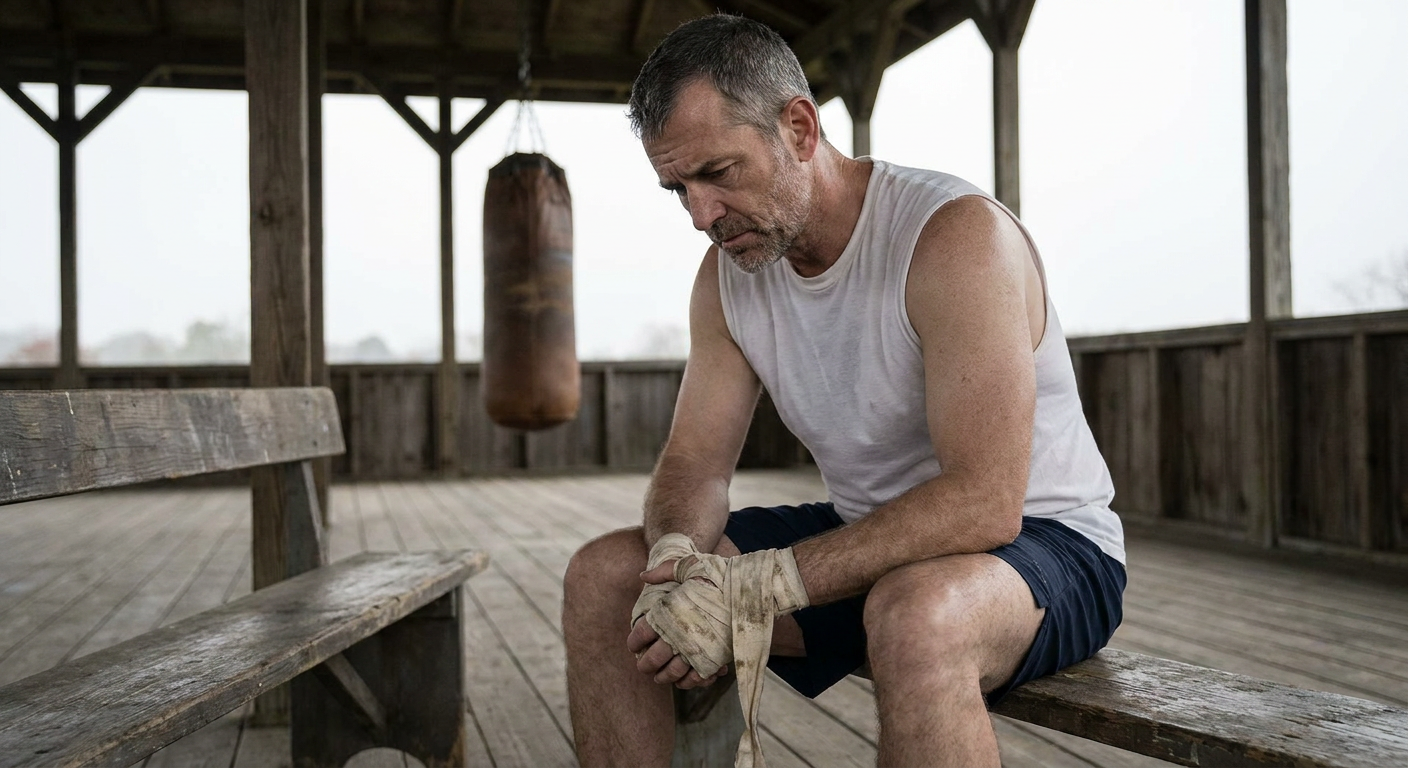
Why Pre-Fight Nerves Exist (And Why They’re Not Your Enemy)
The physical symptoms are familiar: elevated heart rate, dry mouth, digestive upset, trouble concentrating, fragmented sleep. What’s happening is your body’s stress response activating ahead of a high-stakes physical event. Cortisol and adrenaline spike. Your body is preparing, not failing.
The sports psychology literature has a useful distinction here. Researchers studying combat sports performance have documented the difference between anxiety that hinders performance (debilitative) and anxiety that sharpens it (facilitative). The physiological state is nearly identical. What differs is the interpretation. Fighters who learn to say “I’m ready” instead of “I’m scared” when their palms sweat tend to perform closer to their training level under pressure. This isn’t positive-thinking fluff. It’s a cognitive reframe backed by measurable performance outcomes, studied across multiple combat sports contexts.
The practical implication: you probably can’t train the nerves out of yourself. You can train your response to them.
What Happens in the Week Before a Fight
Fighters typically follow a predictable arc. The week before, anxiety is often lowest because training is still happening and the fight feels distant. As fight day closes in, the gap between “training mode” and “combat mode” gets harder to ignore. The two or three days before tend to be the roughest for a lot of amateurs, especially before a first or second bout.
Coach Freddie Roach, who has guided many world champions through camp, has noted that how a fighter behaves in the final 48 hours tells him more about their mental state than almost anything else in the entire camp. Distracted fighters who can’t sit still, who talk too much, who sleep badly and eat inconsistently, are carrying anxiety they haven’t yet learned to direct. Fighters who go quiet and methodical are often doing exactly what they’ve been drilled to do: treat the last two days as a routine, not a countdown.
Creating routine is the first practical tool, and it works precisely because it’s ordinary. Eat the same breakfast. Do a light technical session at the same time you’d normally train. Walk the same route. Watch something dumb on TV. The brain recognizes familiar patterns as safe, and fighting for moments of normalcy in an abnormal week is a legitimate psychological strategy.
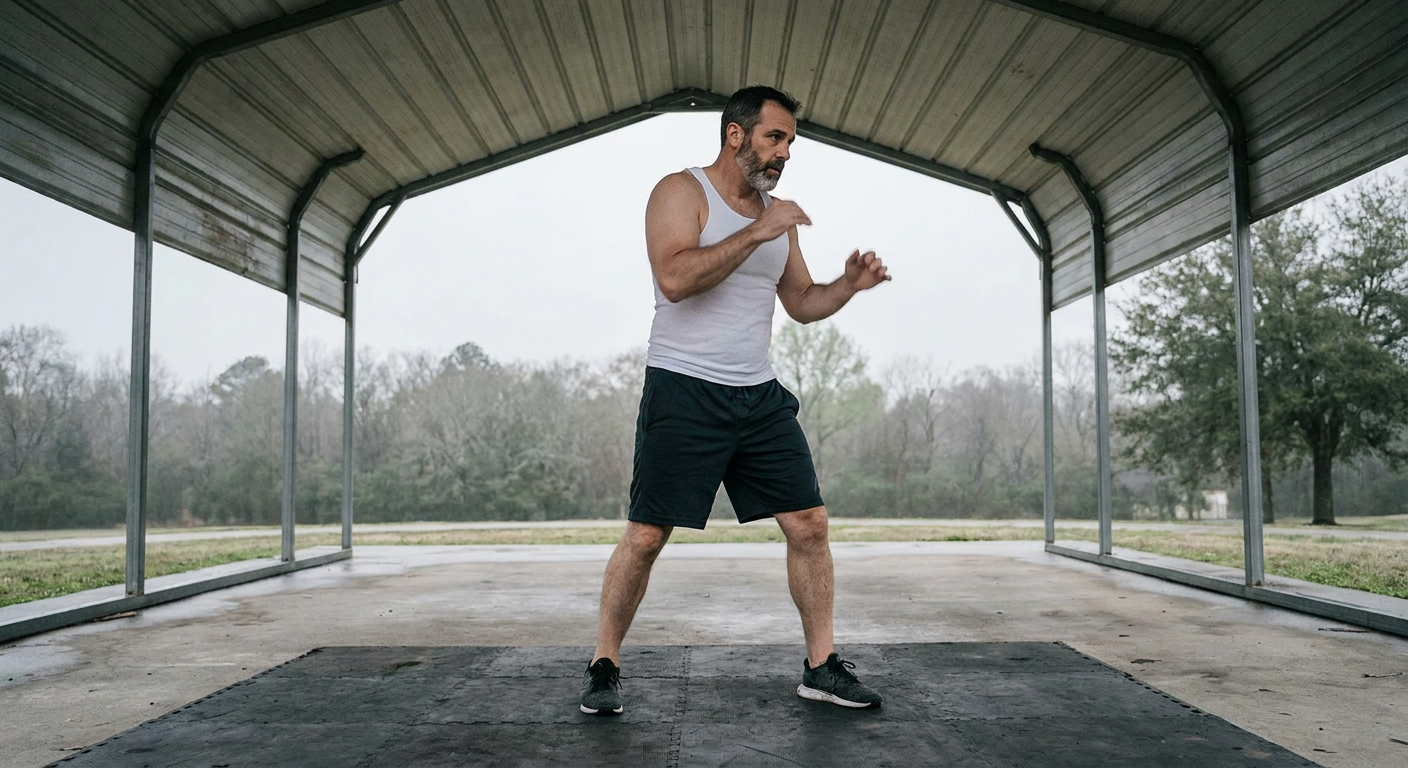
Breathing as a Concrete Tool, Not a Cliche
You will hear “just breathe” from corner coaches constantly. It sounds like filler. It isn’t.
Controlled breathing is one of the few things you can do to directly influence your autonomic nervous system. Specifically, the exhale activates the parasympathetic response, the part of the nervous system that calms the body’s stress reaction. Long, slow exhales are not a metaphor for relaxing. They’re a mechanical input that changes your physiological state, measurably reducing heart rate and cortisol output when done consistently.
The pattern most commonly used in combat sports contexts is a four-count inhale through the nose, a brief hold, and a six to eight count exhale through pursed lips. Do this for five minutes and your heart rate will drop. That’s not motivation. That’s physiology.
Some fighters use a round timer app in the final days of fight week specifically for timed breathing rounds between light pad sessions, keeping the structure familiar while doing the mental work. A structured interval of two to three minutes of breathing work followed by a short shadow round keeps the routine in place without burning legs you need for fight night. The free timer at heavybag.pro/boxingtimer/ makes it easy to set custom interval durations for breathing practice, not just punching rounds.
Visualization: The Preparation You Can Do in Bed at 2am
When sleep won’t come and the mind is racing through worst-case scenarios, visualization is not just a wellness concept. It has a direct training application.
Motor imagery research has consistently shown that mentally rehearsing a physical movement activates the same neural pathways as performing it. For fighters, this means running through combinations, entry sequences, and defensive responses in the mind has genuine training value. Wladimir Klitschko was famously disciplined in his use of visualization before fights, reportedly spending significant time mentally walking through not just what he wanted to do but what to do when things didn’t go as planned.
The key detail: visualize problems, not just perfect execution. If you only rehearse the version where you land your jab clean and your opponent doesn’t respond well, you’re building a fantasy. If you rehearse getting hit, covering up, resetting, and coming back with a combination, you’re building a library of responses that your body will recognize under pressure. This is what separates a fighter who blanks out when the plan breaks down from one who adapts.
If you’ve ever read about how boxers mentally stall at a plateau, the underlying issue is often a gap between what they practice physically and what they’ve prepared for mentally. The article on plateau breakthroughs and what skyrockets boxing progress covers how mental preparation and physical training reinforce each other in ways that new boxers underestimate.
The Difference Between Fear of Losing and Fear of Getting Hurt
These are two separate things and they need different responses.
Fear of getting hurt is rational and legitimate, especially at the amateur level where headgear and referee oversight are in place but real contact is happening. Acknowledging it directly is more useful than suppressing it. A fighter who tells themselves they’re not scared when they clearly are will be caught off guard by the physical reality of sparring-level contact in a fight context. A fighter who has worked through scenarios in training, including taking clean shots and continuing to work, has a reference point. That reference point reduces the fear because the feared event has a known shape.
This is why coaches like those at Gleason’s Gym in New York push controlled sparring over avoided sparring, even for fighters who are not particularly competition-oriented. Exposure to contact in a controlled setting, where the intensity and the partner are calibrated, builds exactly the kind of familiarity that makes fight-night contact less shocking. It’s the same logic covered in how to stop being scared of getting hit as a beginner.
Fear of losing is different. It’s social and ego-driven, and it tends to make fighters either too passive (avoiding exchanges to preserve the score) or too aggressive at the wrong moment (overcommitting to prove a point). The antidote is narrowing the focus to what’s inside the ring and inside the rounds, not the outcome. Coaches often phrase this as “fight your fight, not his record.” Whatever the opponent’s history is, you can only control what you throw, when you move, and how you recover from a bad exchange.
Cornermen and Pre-Fight Communication
If you have a coach in your corner, the most valuable thing you can give them in the 24 hours before a fight is honest communication about where your head is. Not reassurance-seeking, not venting, just a clear update. “I’m anxious but I feel ready” is useful. “I can’t stop thinking about getting dropped” is more useful. A good corner coach can address the specific fear rather than offer generic encouragement that doesn’t land.
Coaches who have worked high-volume amateur programs, like those running USA Boxing club programs in cities with competitive circuits, consistently report that fighters who discuss pre-fight anxiety openly with their corner perform closer to their training level than those who keep it in. Suppressed anxiety tends to surface in the form of either extreme passivity or unplanned aggression in round one, neither of which serves the game plan.
If you don’t have a corner coach and you’re preparing for an amateur bout largely on your own, training with a structured round program in the final preparation week keeps technical work grounded. The boxing-as-stress-relief angle applies here too. Heavy bag rounds in the days before a fight at low to moderate intensity serve a dual purpose: they keep the motor patterns fresh and discharge the physical tension that anxiety generates. Sitting with nerves is harder than hitting something.
Day-Of: From Waking Up to the First Bell
Fight day has its own rhythm and it pays to decide in advance what yours will be.
Wake up at your normal time, or close to it. Eat something you’ve eaten before training without stomach issues, not a new food, not a heavy meal. Move. Not a full workout, but enough movement to remind your body this is a training day, not a passive one. Walk, shadow, stretch. Athletes in combat sports who arrive at weigh-in or check-in already physically activated tend to manage nerves better than those who’ve spent the morning in a hotel room running anxiety spirals.
In the changing room before a bout, the warm-up serves two functions: physical preparation and psychological transition. This is the moment to stop being anxious about the fight and start being in the fight. Some fighters use music aggressively in this window. Some go very quiet. Neither is wrong. What matters is that you have a plan for this window, not just for the rounds themselves. If your warm-up routine is the same as it is on a hard training day, the body reads the cues correctly and begins shifting from anticipation to action.
When the first bell rings, the anxiety almost always changes character. The switch from pre-fight nerves to in-fight focus tends to happen within the first thirty seconds of round one, often the moment of first contact. The waiting is the hard part. The doing is what you trained for.
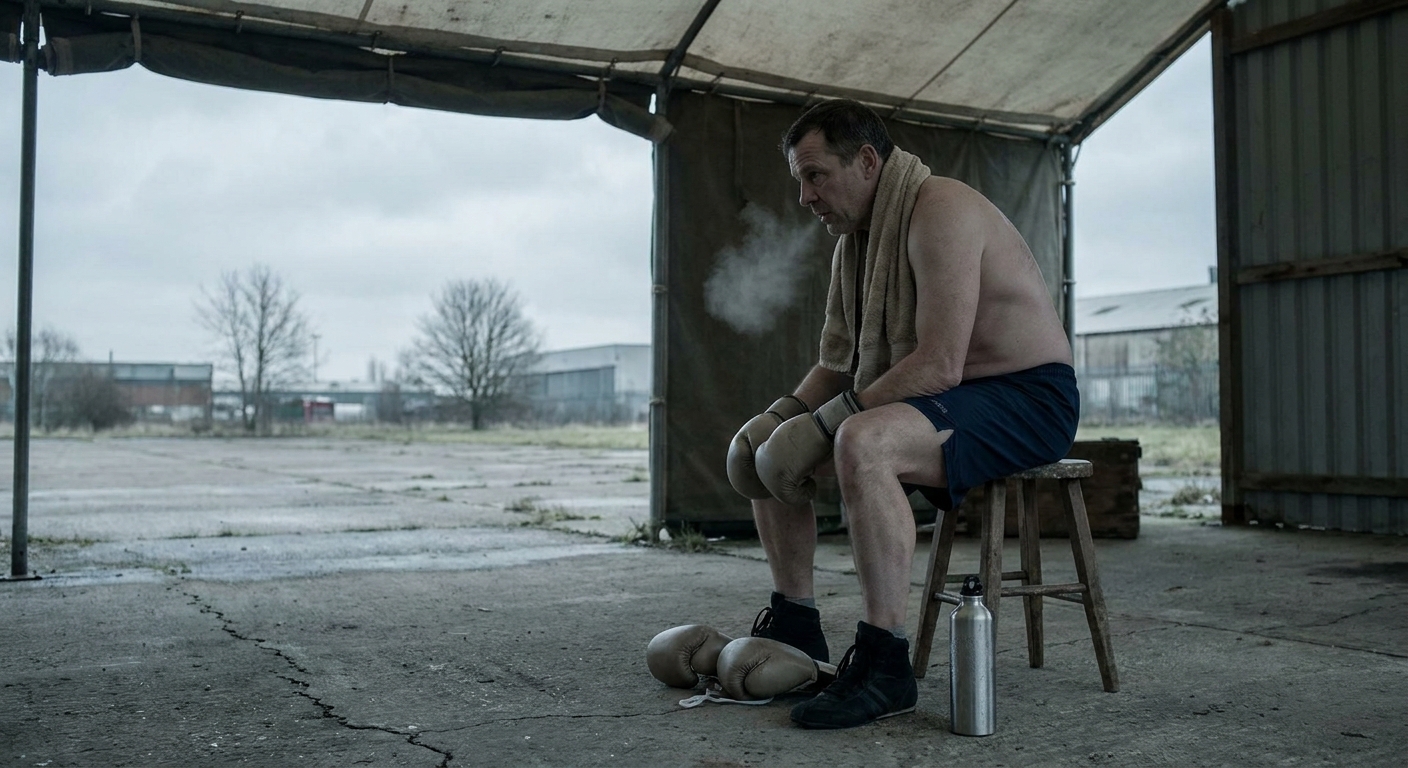
Building an Anxiety Management Protocol Into Training
The fighters who manage pre-fight nerves well don’t improvise on fight week. They’ve built the tools into training so they’re habitual by the time they’re needed.
That means breathing practice as a regular part of cool-down. It means visualization as a scheduled session, not an afterthought when insomnia hits. It means occasional training in slightly elevated-pressure contexts, whether that’s an open gym session with unfamiliar training partners, a harder-than-usual sparring round, or a timed challenge with an audience. Anything that generates mild performance anxiety in training and then requires you to work through it builds the exact neural pathway you need on fight night.
Shadow rounds without music, in front of a mirror, where there’s nowhere to hide from your own mechanics, are underrated for this purpose. They generate mild self-consciousness and then require focus to override it. Ten minutes of that before a regular training session is a small but consistent anxiety-management tool.
Track the rounds that feel tight versus the rounds where the work flows. Over time, you start seeing what conditions produce each. That self-knowledge is the foundation of a real pre-fight protocol, one that’s yours, built from your actual training history, not borrowed from a generic sports psychology checklist.
The Nerves Are Part of It
Elite fighters don’t fight without nerves. The ones who appear relaxed in the walkout have usually learned to wear the anxiety quietly, not to eliminate it. Roy Jones Jr. in his prime described being nervous before every single professional bout, including the ones where he was a heavy favourite. That didn’t stop him from performing at an elite level. It meant he understood that the anxiety was information, not a verdict.
For amateur fighters and those stepping into their first serious sparring context, the goal isn’t to feel nothing. It’s to train well enough and prepare honestly enough that when the nerves arrive, as they will, you have somewhere to put them.
Use the Heavy Bag Pro app to keep your structured round work consistent through fight week, maintain the routine, and give yourself a physical outlet for the tension that builds in the final 48 hours. The app’s timer keeps the session disciplined even when your head is elsewhere, which is exactly what you need when anxiety is pulling your attention in twelve directions.
The first bell solves most of it. Everything before that is just preparation.