
Most people learn the jab in their first week and then stop thinking about it. Throw it straight, keep the hand up on the way back, done. And for a while that’s enough. But then they start sparring and discover their opponent eats the jab all day, steps around it, slips under it, or just doesn’t respect it at all. The punch that’s supposed to set up everything suddenly sets up nothing.
The problem isn’t the jab itself. It’s that most people only have one version of it. In practice they drill the same throw on every round, against the same target, from the same angle, at the same speed. That’s not mastery. That’s memorizing one word and calling yourself fluent.
What separates decent boxers from good ones is often how many different things they can do with the lead hand. Here are 12 jab variations worth spending real time on, why each one exists, and how to train them solo.
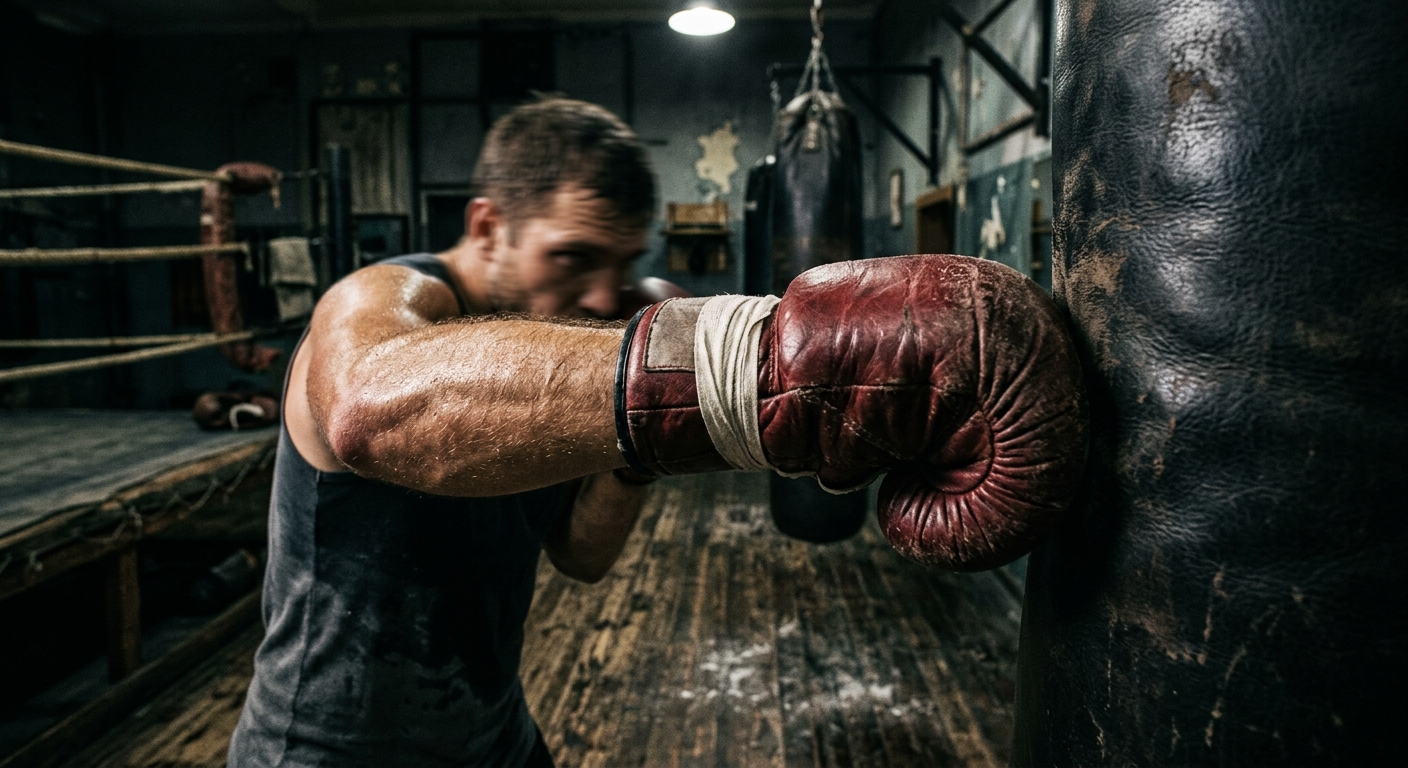
Why the jab is more than just a range-finder
The standard pitch you hear is that the jab “sets up the right hand.” True enough. But coaches who have been around a while will tell you the jab does at least five distinct jobs: it gauges range, disrupts the opponent’s rhythm, hides crosses, buys time while you reset, and scores points when nothing else is open. A single variation handles maybe two of those jobs well. Twelve variations handle all five.
Mayweather Sr. used to say the jab alone could win a round if you throw enough of them in different ways. That’s not an exaggeration. Watch any elite boxer’s jab over a 12-round fight and you’ll count at least 4-5 distinct versions, often within the same round, often without looking like they’re doing anything special at all.
Before working through the list, here’s a useful mental model: jab variations differ across four dimensions. Speed (snap vs. push), depth (surface touch vs. full extension), angle (level, upward, lateral), and intention (score vs. probe vs. disrupt vs. set up). Mix and match those four levers and you end up with far more than 12 options. The 12 below are just the most practically useful ones for training.
The 12 variations: what they do and when to use them
1. The snap jab
This is the textbook version. Fast extension, tight retraction, minimal wind-up. The goal is speed, not power. You’re touching the target and getting the hand back before the opponent can catch it.
When to use it: almost always, as a default. If you’re not sure which jab to throw, throw this one. It scores, it maintains range, and it tells you whether your opponent is going to slip, parry, or eat it. The answer to that question is what decides which jab you throw next.
Drill tip: on the heavy bag, throw snap jabs in short 20-second bursts with full retraction between each. If the bag swings significantly, you’re pushing rather than snapping.
2. The power jab
Full hip rotation, shoulder lean, follow-through into the target. This is not a range-finder. It’s a scoring punch, and it hurts more than most people expect from a lead hand. Mike Tyson had a genuinely damaging power jab. So does Deontay Wilder. So did Joe Frazier, though his version dipped slightly upward toward the chin.
When to use it: when the opponent has a habit of eating snap jabs with their guard. One well-placed power jab to the nose changes their attitude about eating the other ones. Don’t overuse it. The telegraph is longer and a good opponent will time it.
3. The double jab
Two jabs in sequence, usually a soft lead to gauge the reaction and a hard follow-up to score. The first one tests the water. The second one takes advantage of whatever the test revealed.
When to use it: against opponents who reset immediately after one jab because they know the cross is coming. The double jab disrupts that pattern. The second jab lands while they’re still expecting the right hand.
Drill tip: throw this on the bag as a distinct rhythm, not two identical punches. The first one is genuinely lighter and shorter. The second one drives through the target. Many people drill the double jab as two power jabs and miss the whole point.
4. The pawing jab
A long, lazy-looking jab that doesn’t snap back immediately. It stays extended for a half-beat, “pawing” at the target or the opponent’s guard. Some people call this the “range jab” or the “pawing punch.” It looks like a slow jab but it’s actually a probe.
When to use it: to occupy the opponent’s lead hand, keep them from jabbing back, and buy time while you read their feet. It’s not meant to score. It’s meant to be annoying and to tie up their lead shoulder briefly. Larry Holmes did this constantly.
5. The stiff jab
A jab that extends fully and holds contact for a fraction of a second, like a stop sign rather than a snap. It uses body weight and a stiff shoulder to push the opponent’s head back and interrupt their rhythm. Not a power punch exactly, but it has stopping force.
When to use it: when someone is walking in on you. If an opponent keeps pressing forward and eating your snap jabs without caring, switch to the stiff jab. It disrupts their balance and buys you room to work. Building combinations off the stiff jab is a different game than building them off the snap jab, because the stiff jab shifts the opponent’s weight backward.
6. The step jab
A jab thrown while stepping forward into range. The step closes distance and adds momentum to the punch at the same time. It’s more committed than a stationary jab but covers ground faster than any other single technique.
When to use it: against opponents who are good at maintaining range, especially tall southpaws who keep backing up. The step jab covers 18-24 inches of distance in one motion and catches people who think they’ve stepped to safety.
The risk: you’re committed. If the opponent slips outside and counters, you’re moving into the punch. Train the exit footwork as part of the drill, not just the jab itself.
7. The jab to the body
A jab thrown to the solar plexus or floating ribs, with a slight knee bend to get the angle. Most people never practice this. In sparring, a body jab is almost invisible because the opponent is watching for head shots. It disrupts breathing, drops the guard, and makes head shots easier on the next exchange.
When to use it: once every few combinations, especially if you’ve been jabbing the head consistently. The pattern sets it up. The opponent starts raising their guard slightly to protect the face from your jab, which opens the body. A round where you alternate head and body jabs is a difficult round to defend.
8. The jab-and-pull
Throw a jab, then pull straight back (not to the side) as a bait. If the opponent chases with a counter, you’re already out of range. Then re-engage. This isn’t really about landing the jab. It’s about making the opponent miss and creating an opportunity to score on the return trip.
When to use it: against aggressive opponents who counter every jab immediately. One or two bait pulls and they start hesitating on the counter. That hesitation is what you’re actually looking for.
9. The cross jab
A jab thrown across the centerline toward the opponent’s rear side rather than straight at the nose. It angles slightly inward. Against a southpaw, this targets their open side. Against an orthodox opponent, it finds a gap inside their cross-guard. Also known as a “corkscrew jab” when combined with a slight wrist rotation at extension.
When to use it: when the opponent has a very tight straight guard that absorbs or deflects standard jabs. The angle changes the entry point and the guard can’t block it the same way.
10. The check hook jab
Technically this is a lead hook, but it’s thrown in the timing and range of a jab, usually against an opponent who charges straight in. You throw it right as they’re stepping in and pivot off the line at the same time. The punch lands and you exit simultaneously.
When to use it: against rushers and pressure fighters who ignore the jab because they’re moving too fast. The pivot makes you disappear from where they expected you. Floyd Mayweather Jr. used a version of this to absolutely destroy Ricky Hatton in one round.
11. The feint jab
A partial jab, maybe 60-70% extension, that stops short of full range. You’re not trying to land. You’re trying to get a reaction. Specifically: does the opponent flinch back? Do they parry? Do they counter? Do they just ignore it? Each of those four answers tells you something useful about what to do next.
When to use it: early in a round or a fight, to gather information. A good feint jab can tell you in the first 30 seconds whether this particular opponent wants to counter, whether they respect the power of your jab, and which direction they tend to move. That’s real intelligence that pays dividends for the rest of the round.
12. The flicker jab
An extremely fast, loose, high-volume jab thrown from the lead shoulder with minimal arm engagement. Almost all wrist and forearm. Very low power, very high speed. Thomas Hearns had a famous version. It’s not a scoring punch in most cases. It’s a speed punch, a timing disruptor, something to throw in between combinations to mess with rhythm.
When to use it: as a filler between meaningful punches. Three flicker jabs followed by a step-in power jab followed by a cross is a rhythm that’s hard to read. The flickers aren’t the threat. They’re just noise that makes the real punches harder to see.
How to train these solo (without a partner)
The heavy bag is useful for the power variations and for drilling rhythm. But a bag that doesn’t move is also a bag that never makes you miss, which means it can give you false confidence on the feint jab and the jab-and-pull. Keep that in mind.
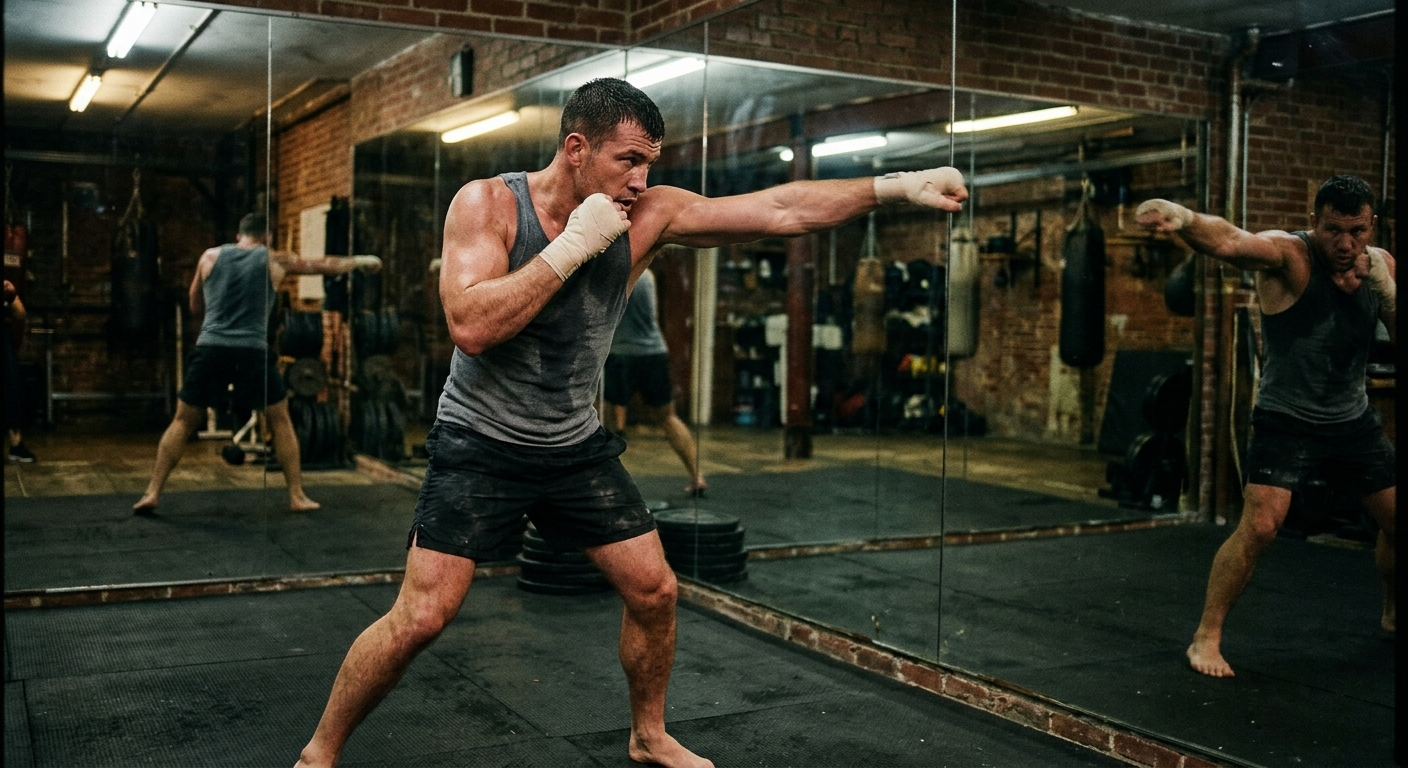
Shadowboxing is actually better for most of these variations because it forces you to visualize the scenario. You can’t train the feint jab on a stationary bag in any useful way, because there’s no reaction to read. Shadowboxing in front of a mirror gives you something.
A structure that works well: pick three variations and dedicate a full three-minute round to each one. Round 1 is nothing but snap jabs and double jabs. Round 2 is body jabs and stiff jabs. Round 3 is feint jabs, jab-and-pull, and flicker jabs. Then a fourth round where you mix freely. A structured round timer makes this easy to track, and tools like the boxing round timer at heavybag.pro let you customize interval lengths so you can run shorter 2-minute variation rounds with longer rest periods when you’re first learning a new one.
The how to have a better solo session breakdown on this site goes into the broader structure of solo training and is worth reading alongside this. The jab variations fit into that framework as their own dedicated block.
Common mistakes across all 12 variations
Dropping the rear hand is the most common. It’s especially bad on the power jab and step jab because the commitment to those punches makes the dropping feel natural. Drill with both hands up even when it feels awkward.
Telegraphing is the second issue. The shoulder dip, the hip turn that starts too early, the slight backwards lean before extending. Most people don’t know they do this until they see themselves on video. If you’re not getting video of your shadowboxing, you’re missing feedback that a mirror can only partially substitute for. Research from sports science on punch timing and motor learning, such as studies published at the National Library of Medicine, consistently shows that video feedback accelerates skill acquisition significantly compared to kinesthetic feedback alone.
Retracting too slowly is the third problem, and it’s almost universal on the power jab and body jab. Fighters extend well but drag the hand back. That hand coming back slowly is a gift to any opponent who wants to trap or counter off it.
Lack of variation in practice is probably the root cause of all three. When you only drill one jab, you optimize for one movement pattern. Your body gets efficient at it in ways that include the bad habits. Training multiple variations forces a reset, because each variation has slightly different mechanics and timing. That variety breaks up ingrained patterns in a useful way.
Putting the jab to work in real rounds
One thing worth saying clearly: you don’t need all 12 variations at once. Most good boxers have 4-5 jabs that they own completely, and they’re deadly with those. The goal of learning all 12 isn’t to throw all 12 in every round. It’s to expand your vocabulary enough that you can choose the right tool for each situation rather than defaulting to the snap jab because it’s the only one you have.
Start with the ones you’re weakest on. If you’ve never thrown a body jab, spend three sessions making it automatic before adding the step jab. If your double jab is identical punches thrown at the same speed, spend time on the soft-then-hard distinction before worrying about the cross jab.
The boxers who are genuinely dangerous with the jab, not just fast but dangerous, are the ones who understand that the jab tells a story over the course of a round. Early feints establish what the opponent expects. Mid-round variations disrupt those expectations. Late-round power jabs exploit whatever openings those disruptions created. That’s not luck. That’s a plan.
For the deeper story on what separates boxers who plateau from ones who keep improving, the skills that separate beginners from advanced boxers post explains the pattern well. Jab depth, specifically having more than two or three variations in your toolkit, shows up on that list more than most beginners expect.
Before your next session
Write down three of these variations you haven’t drilled this week. Before your next solo workout, spend a dedicated round on each one. Don’t mix them with your usual combinations at first. Just the variation, on its own, at different speeds and distances, until the mechanics feel clean. Then in your next combination round, try slipping one of those three into the flow naturally, without announcing it. If it comes out cleanly, it’s yours. If it doesn’t, that’s next week’s work.
The Heavy Bag Pro app is built for exactly this kind of deliberate, round-by-round practice. You can set up focused variation rounds with custom interval lengths and rest periods so the structure does the thinking, and you can put your full attention on the mechanics.