
Walking into a boxing gym alone can feel like showing up to a party where everyone already knows each other. You see groups working pads, sparring partners moving in perfect rhythm, and coaches calling out combinations while you stand there wondering: “What am I supposed to do now?”
Most gyms welcome solo training, but they rarely teach you how to make the most of it. You end up wandering between equipment, doing random rounds on different bags, and leaving feeling like you wasted your time (and membership money).
The truth? Solo boxing sessions can be more focused, more intense, and more productive than group training. You just need to approach them differently.
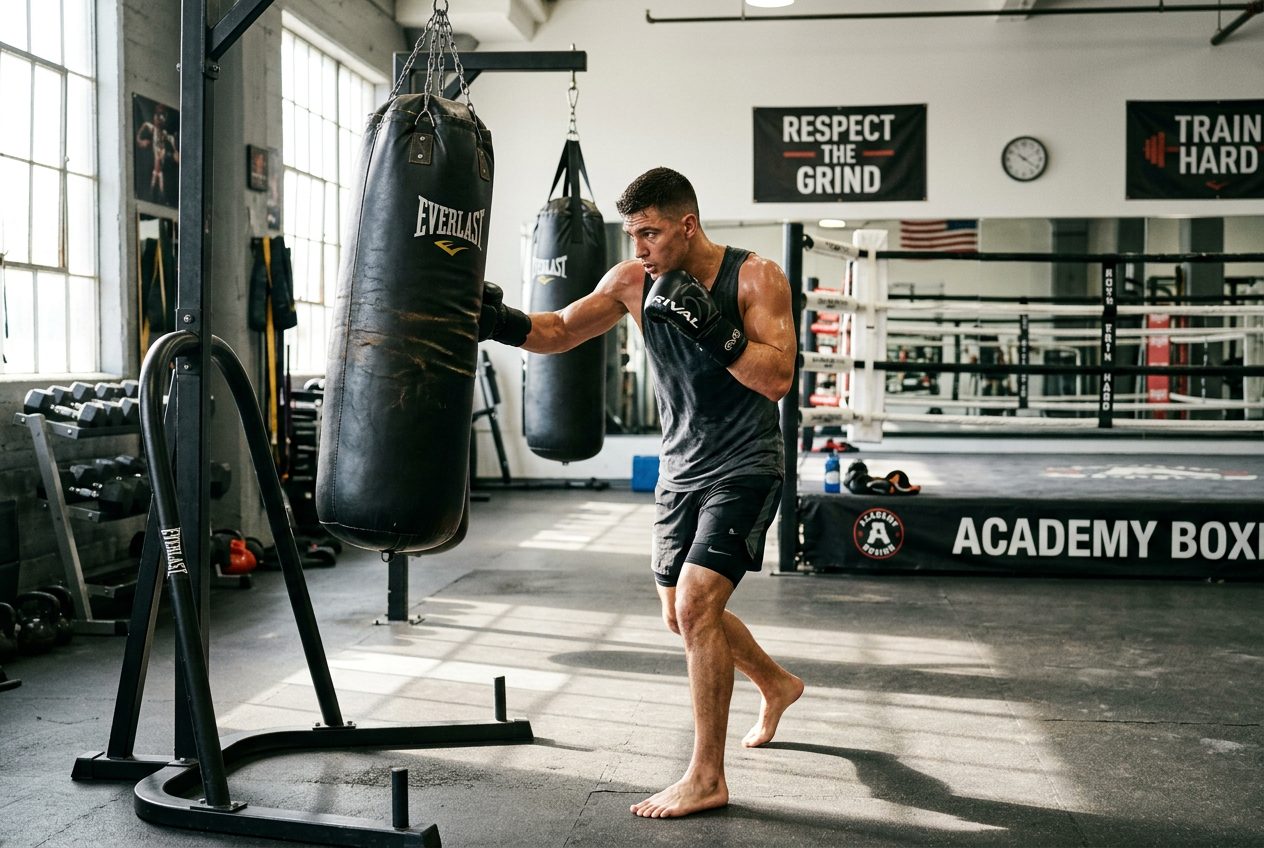
Why Solo Training Actually Works Better
When you train alone, you control everything. No waiting for equipment. No matching someone else’s pace. No distractions or pressure to keep up with more experienced fighters. You can focus entirely on your own development.
Solo sessions force you to become self-reliant. You learn to coach yourself, spot your own mistakes, and push through mental barriers without external motivation. These skills transfer directly to competitive situations where it’s just you and your opponent.
Plus, you can target your specific weaknesses. If your footwork needs work, spend the entire session on movement drills. If your defense is sloppy, dedicate rounds to slipping and blocking. Group classes rarely offer this level of customization.
Pre-Session Setup: Control Your Environment
Claim Your Space Early
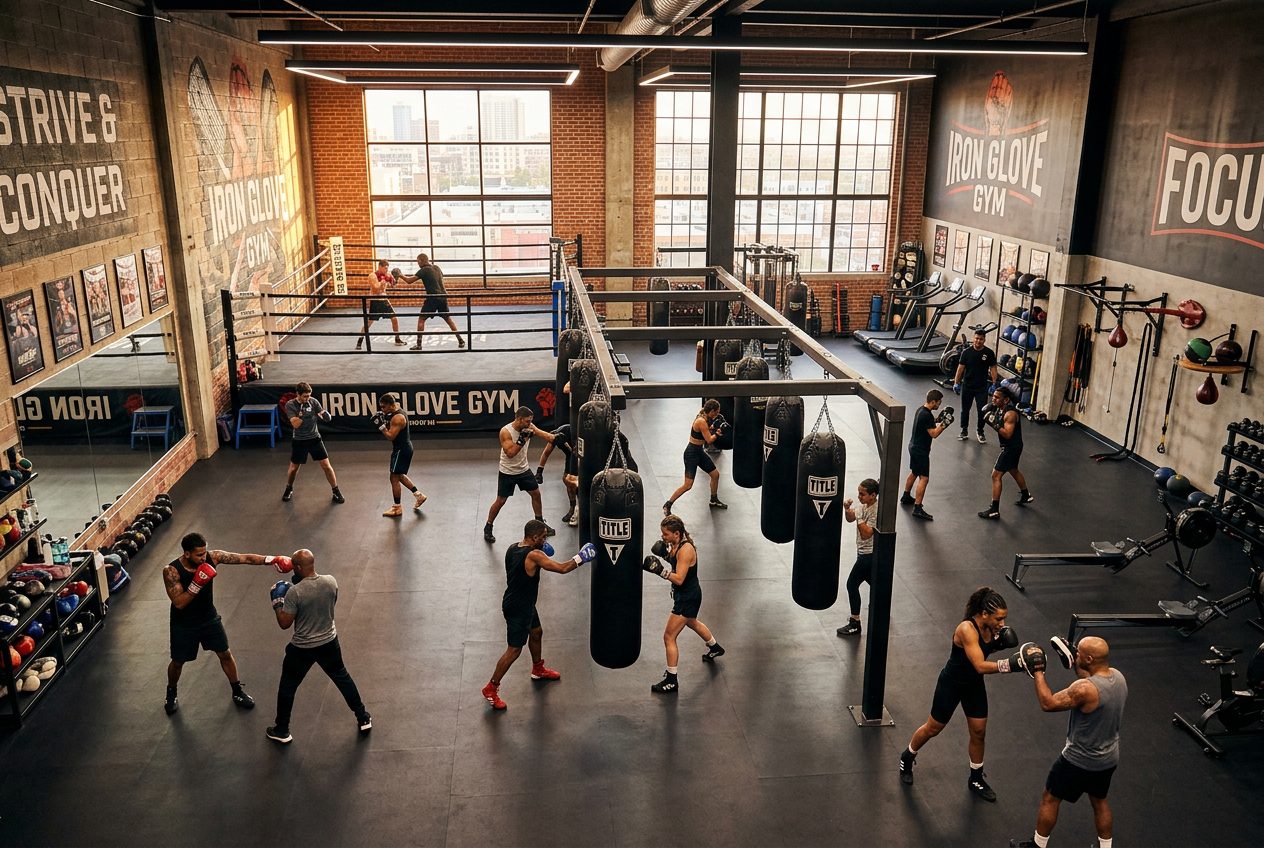
Arrive during off-peak hours when possible. Early mornings, mid-afternoons, or late evenings usually offer the best equipment access. When you do train during busy periods, stake out your area early and set up everything you’ll need before starting.
Position yourself where you have room to move. Heavy bags in corners or against walls limit your footwork options. Center floor bags or bags with space on all sides let you practice circling, cutting angles, and working different ranges.
Equipment Strategy
Gather all your gear before you start. Nothing kills momentum like stopping mid-round to find hand wraps or adjust gloves. Set up water, towels, timer, and any additional equipment (pads, resistance bands, etc.) within easy reach.
If you use apps like Heavy Bag Pro for structured rounds and combinations, make sure your phone is charged and positioned where you can see/hear instructions without stopping to check it.
Session Structure That Actually Works
The 20-Minute Solo Template
Rounds 1-2: Movement and Timing (3 minutes each)
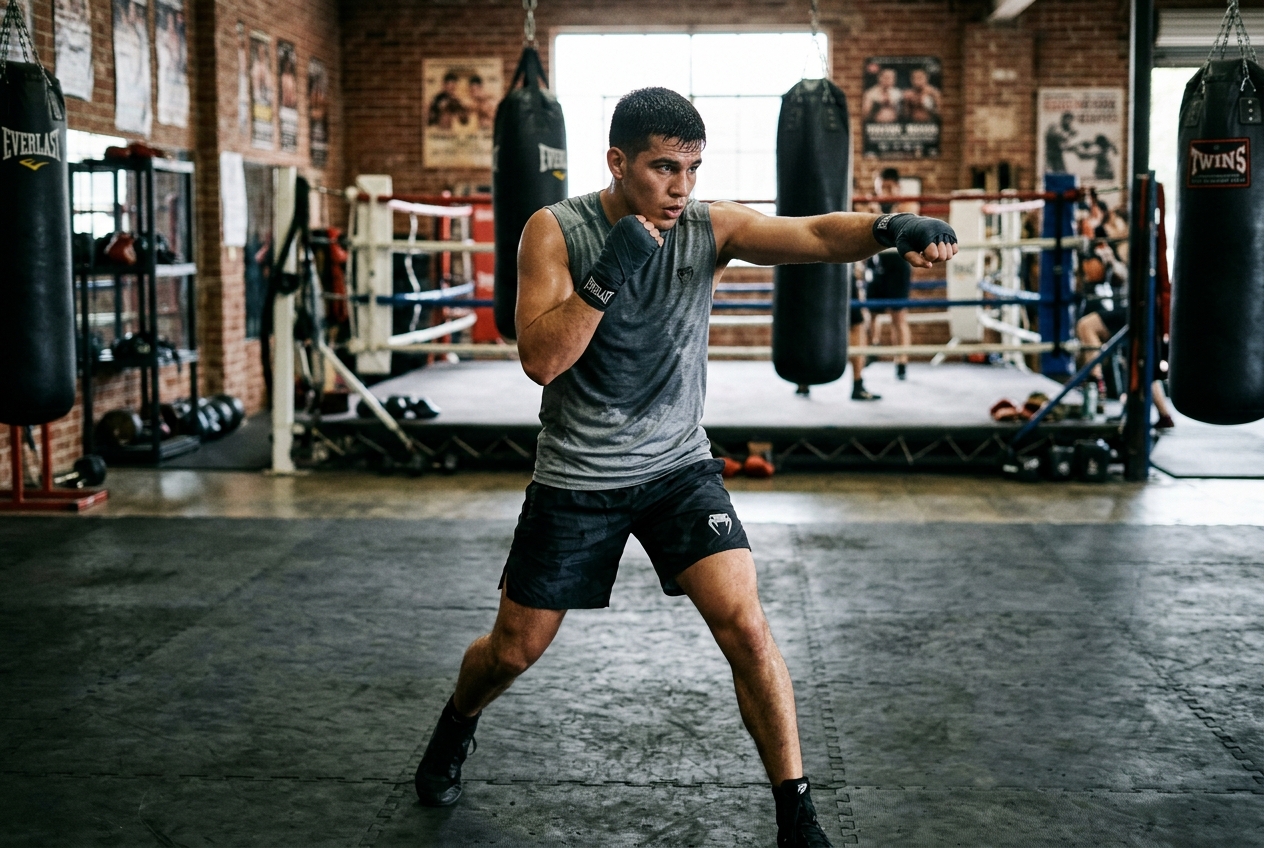
Start with light shadowboxing around the bag. Focus on footwork, distance management, and getting your rhythm. Don’t punch yet – just move, slip, and practice your stance while the bag hangs still. This warms up your body and activates your boxing brain.
Rounds 3-4: Technical Work (3 minutes each)
Focus on specific techniques. One round for jab-cross combinations, keeping them sharp and fast. Another round for hooks and uppercuts, working on proper form and hip rotation. Control power – this is about precision, not devastation.
Rounds 5-6: Power and Conditioning (3 minutes each)
Now you can hit hard. Mix power shots with constant movement. Don’t plant your feet – throw hard punches while stepping in and out, circling, and changing angles. Your heart rate should spike here.
Round 7: Integration (3 minutes)
Combine everything. Technical combinations flowing into power shots, defensive movement mixed with offensive bursts. This is where solo training gets fun – you’re conducting your own boxing symphony.
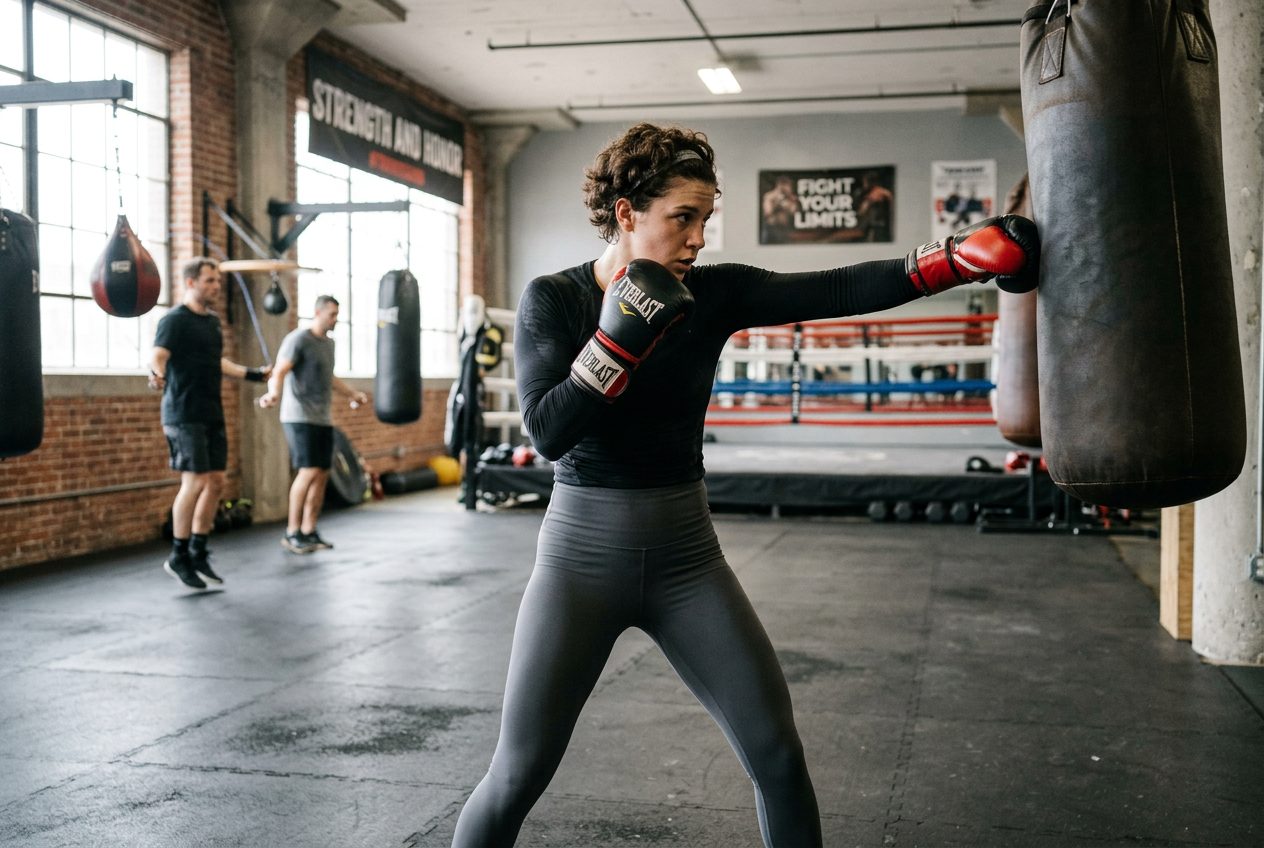
The 45-Minute Deep Session
For longer sessions, add specialized rounds:
Defense Rounds: Shadow box while imagining return fire. Slip, duck, and block after every combination you throw.
Pressure Rounds: Practice cutting off the ring. Move the bag with steady pressure, don’t let it swing back to center.
Counter-Punching Rounds: Let the bag swing toward you, then counter as it approaches. This simulates timing against incoming attacks.
Endurance Rounds: Light, constant pressure for 5-6 minute rounds. Build the conditioning base that separates real fighters from fitness boxers.
Making the Heavy Bag Your Training Partner
Read the Bag’s Movement
A heavy bag isn’t just a target – it’s feedback. When you hit it clean, it moves predictably. When your technique is off, it swings wildly or barely moves at all. Learn to read these signals.
A bag that swings too much means you’re pushing punches instead of snapping them. A bag that doesn’t move enough means you’re not connecting with full technique. Adjust your form based on how the bag responds.
Use the Bag’s Swing Patterns
Let the bag swing, then time your entries. This teaches distance management and timing better than a stationary target. Practice stepping in as it swings away, and stepping out as it swings back.
Work different angles. Most people only punch a bag straight-on. Move to the sides and practice hitting while the bag is at different positions. This simulates the angles you’ll find in actual boxing.
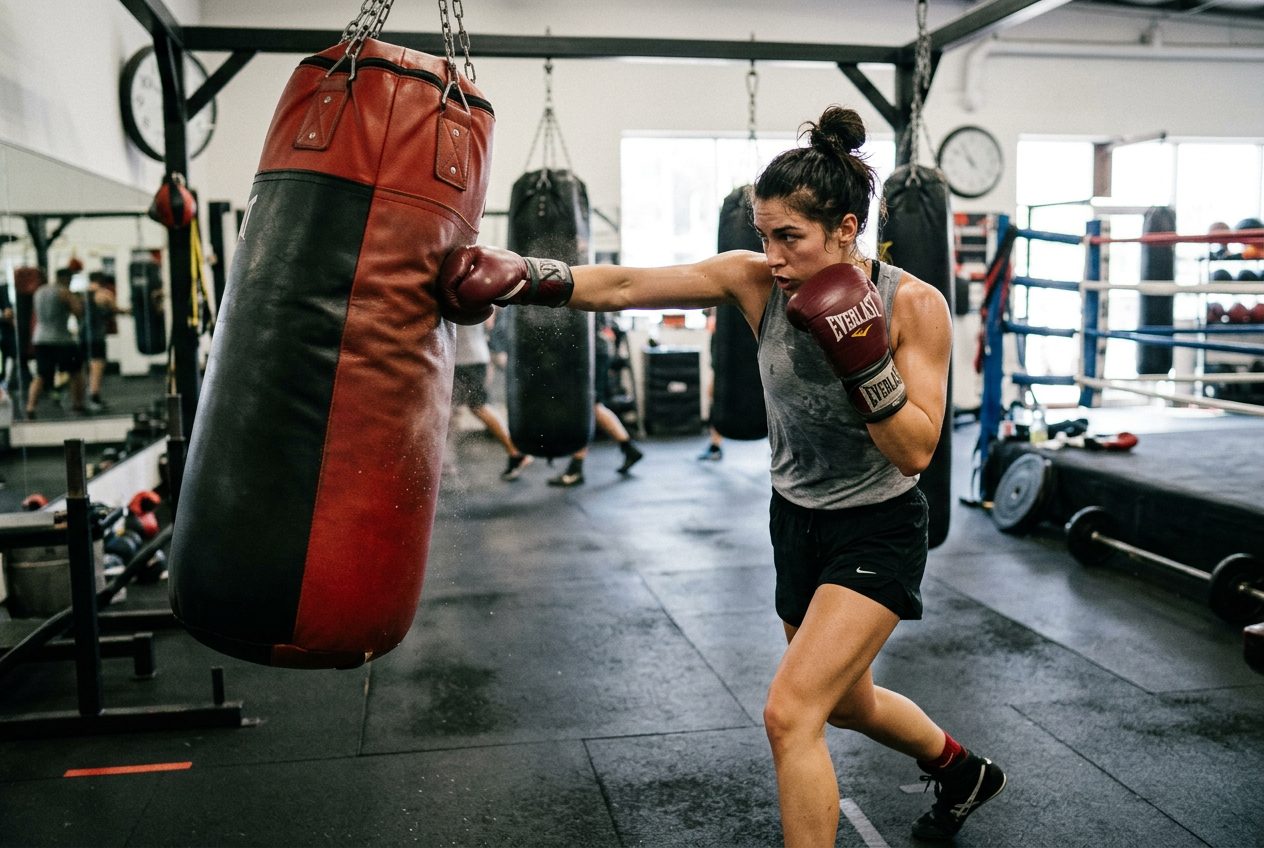
Mental Game for Solo Sessions
Set Specific Goals
Don’t just “work out” – target specific improvements. Maybe today you focus on keeping your rear hand up during combinations. Tomorrow you work on stepping out after every exchange. Clear goals prevent wasted rounds.
Track your progress. Note combinations that feel smooth, techniques that need work, and conditioning benchmarks (like maintaining pace for longer rounds). Solo training works best when you measure results.
Use Visualization
Create scenarios in your head. Picture specific opponents, imagine defending against certain attacks, visualize yourself in competition. This mental component separates solo training from just exercise.
Practice different ranges and situations. Rounds where you’re the aggressor, rounds where you’re countering, rounds where you’re surviving pressure. Variety keeps your brain engaged and builds complete boxing skills.
Equipment Hacks for Better Solo Training
Double-End Bag Work
If the gym has double-end bags (the smaller ones anchored to floor and ceiling), these are gold for solo training. They snap back after every punch, forcing you to time combinations and keep your hands up. Spend 2-3 rounds here during each session.
Speed Bag Intervals
Mix 30-second speed bag intervals between heavy bag rounds. This breaks up the monotony while building hand-eye coordination and shoulder endurance.
Mirror Work
If your gym has mirrors near the bags, use them. Watch your form while shadowboxing. Most people avoid mirrors because they’re self-conscious, but this is where you spot and fix technique flaws.
Common Solo Training Mistakes
Going Too Hard, Too Early
The urge to demolish the bag from round one kills more training sessions than anything else. You tire quickly, technique deteriorates, and you end up just swinging wildly. Build intensity gradually.
Neglecting Defense
Solo training naturally emphasizes offense since you’re always attacking the bag. Force yourself to include defensive rounds where movement and protection are the priority, not landing shots.
No Structure or Progression
Random punching isn’t training. Use apps, write workout plans, or follow established routines. Structure creates progress; chaos creates plateaus.
Training in Isolation
Solo doesn’t mean antisocial. Ask experienced gym members for feedback when appropriate. Film yourself occasionally. Get coaching when available. Solo training works best when combined with occasional external input.
Gym Etiquette for Solo Trainers
Share Equipment Gracefully
Even if you’re training alone, others need equipment too. Let people work in between your rounds if the gym is busy. Most fighters appreciate efficient equipment sharing.
Keep Noise Reasonable
Heavy hitting is fine, but constant screaming or excessive bag abuse draws negative attention. Train hard but respectfully.
Clean Your Area
Wipe down equipment, put weights back, keep your training area organized. Gym staff notice members who take care of the space and often provide better service in return.
Advanced Solo Training Concepts
Periodization for Solo Sessions
Structure your weekly solo training around specific themes:
Monday: Technical precision – focus on clean combinations and footwork
Wednesday: Power development – work on stopping power and knockout shots
Friday: Conditioning and endurance – longer rounds, higher pace
Competition Simulation
Practice fighting different styles against the bag. Spend rounds being aggressive and pressing forward. Other rounds focus on boxing and moving. Mix up your approach like you would against different opponents.
Simulate competitive pressure. Set performance goals for each round (land X clean combinations, maintain movement for Y minutes) and try to achieve them even when tired.
Technology That Enhances Solo Training
Training Apps and Timers
Heavy Bag Pro provides structured workout programs designed specifically for solo heavy bag training. The app calls out combinations, manages round timing, and provides progressive training that keeps sessions challenging and educational.
Use apps that track your training frequency, duration, and focus areas. Data helps identify patterns and ensures balanced development across all boxing skills.
Video Analysis
Occasionally film your training sessions. You’ll spot technique flaws, defensive habits, and movement patterns that you can’t feel while training. Many elite fighters still film themselves regularly for self-coaching.
Making Solo Training Stick
Start Small and Build
Don’t commit to hour-long solo sessions immediately. Start with 15-20 minutes of structured work. Build the habit before building the volume.
Track and Celebrate Progress
Keep notes on combinations you’ve mastered, conditioning improvements, and technique breakthroughs. Solo training progress is often gradual and easy to miss without documentation.
Balance Solo and Group Training
Solo sessions complement but don’t replace all other training. Mix solo technical work with group classes, pad work with coaches, and sparring with partners. Each type of training offers unique benefits.
Your Solo Boxing Evolution
Great solo training transforms you into a complete, self-reliant boxer. You develop internal motivation, self-correction skills, and the ability to maintain focus under pressure. These qualities separate dedicated fighters from casual gym members.
The gym becomes your laboratory where you experiment, refine, and perfect your craft. Every session builds not just physical skills but mental resilience and boxing intelligence.
Start with the basic solo training structure outlined above. Master those foundations, then gradually add complexity and specialization. Within a few months, you’ll walk into any boxing gym knowing exactly how to make the most of your training time.
Your solo boxing journey starts with the next session. Set up properly, train with purpose, and watch your boxing skills evolve faster than you thought possible.
For structured solo training that guides your development, visit heavybag.pro/boxingtimer and discover how proper programming transforms solo sessions into championship preparation.