
“Just fight through the swing.” That’s what the first coach I ever watched said to a new kid who kept stepping sideways to chase a drifting bag. The kid threw two punches, the bag rotated forty-five degrees and came back at a weird angle, and the next shot caught his own elbow. End of round. They both laughed, but the session was a wash.
A bag that drifts, spins, or swings on an unpredictable arc isn’t a training partner. It’s a liability. You end up adjusting your footwork to the bag’s physics instead of working the technique you came to drill. Worse, you start compensating in ways that build bad habits: overreaching on punches, planting your feet to stop the swing, shortening your combinations so the bag doesn’t travel too far. None of that transfers to sparring.
These seven fixes address the most common causes. Some cost nothing. A couple cost a few dollars. None require you to rehang the bag from scratch.
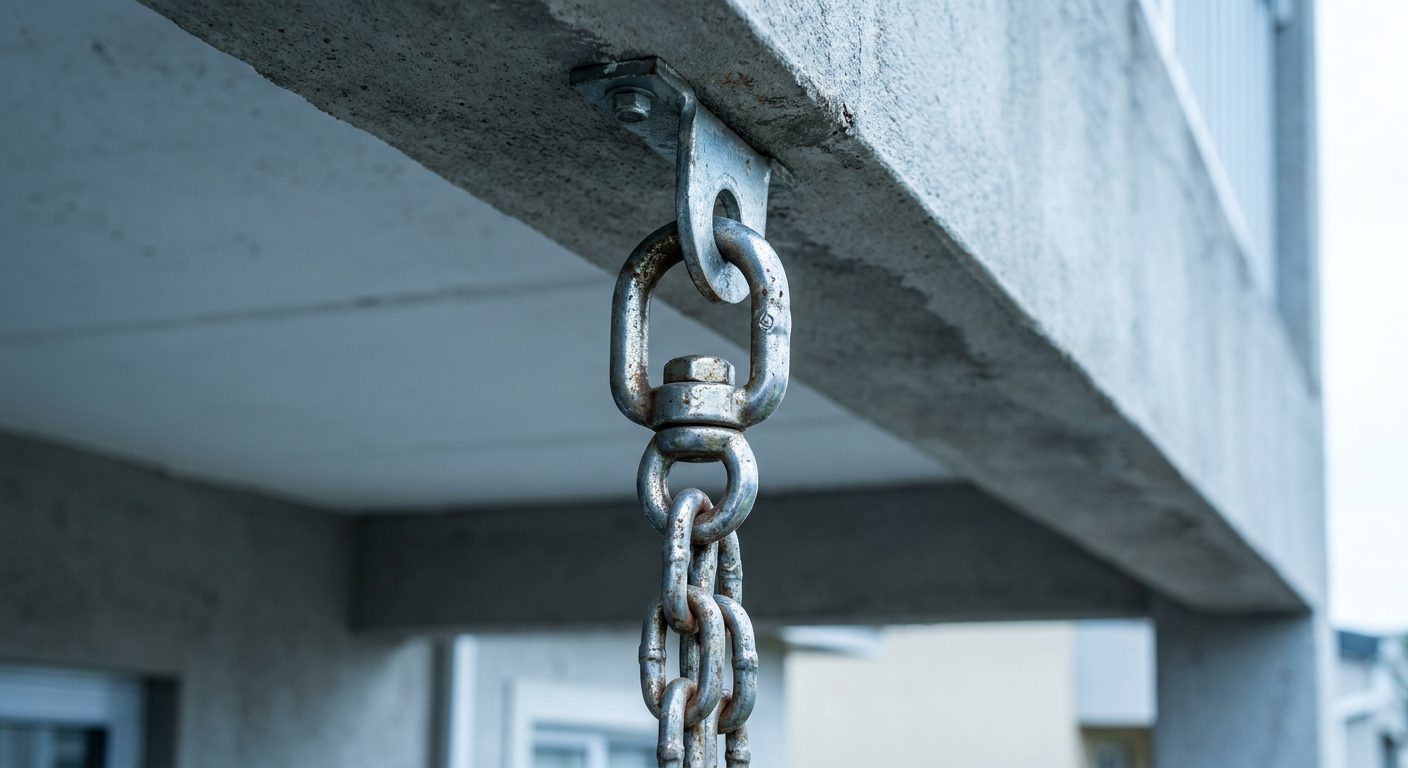
Check What Your Bag Is Actually Hanging From
Before anything else, look at the swivel and the chain. A single-loop swivel with no ball bearing will twist and wind up instead of rotating freely, which turns every hard combination into a pendulum that spins like a top by round three. A quality ball-bearing swivel (the kind that costs around $15-25 from any combat sports supplier) lets the bag rotate cleanly under load without building rotational tension. That tension is almost always the main cause of unpredictable spin.
While you’re up there: check the chain length. Bags hung too high relative to their weight will travel further on impact because the pendulum arc is longer. If your bag is hanging from a ceiling joist at a point where the chain or strap is more than 12 inches long, shortening it even a few inches reduces the swing radius. Some gym owners hang bags lower than feels comfortable specifically to keep travel distance short during heavy combination work.
At Straight Blast Gym locations and most serious club-level facilities, the mounting hardware gets audited every few months. In home gyms, nobody checks. Rust on a swivel’s ball bearing stops it rotating freely and reintroduces spin. Replace it if it’s stiff.
Add Weight to the Bottom of the Bag
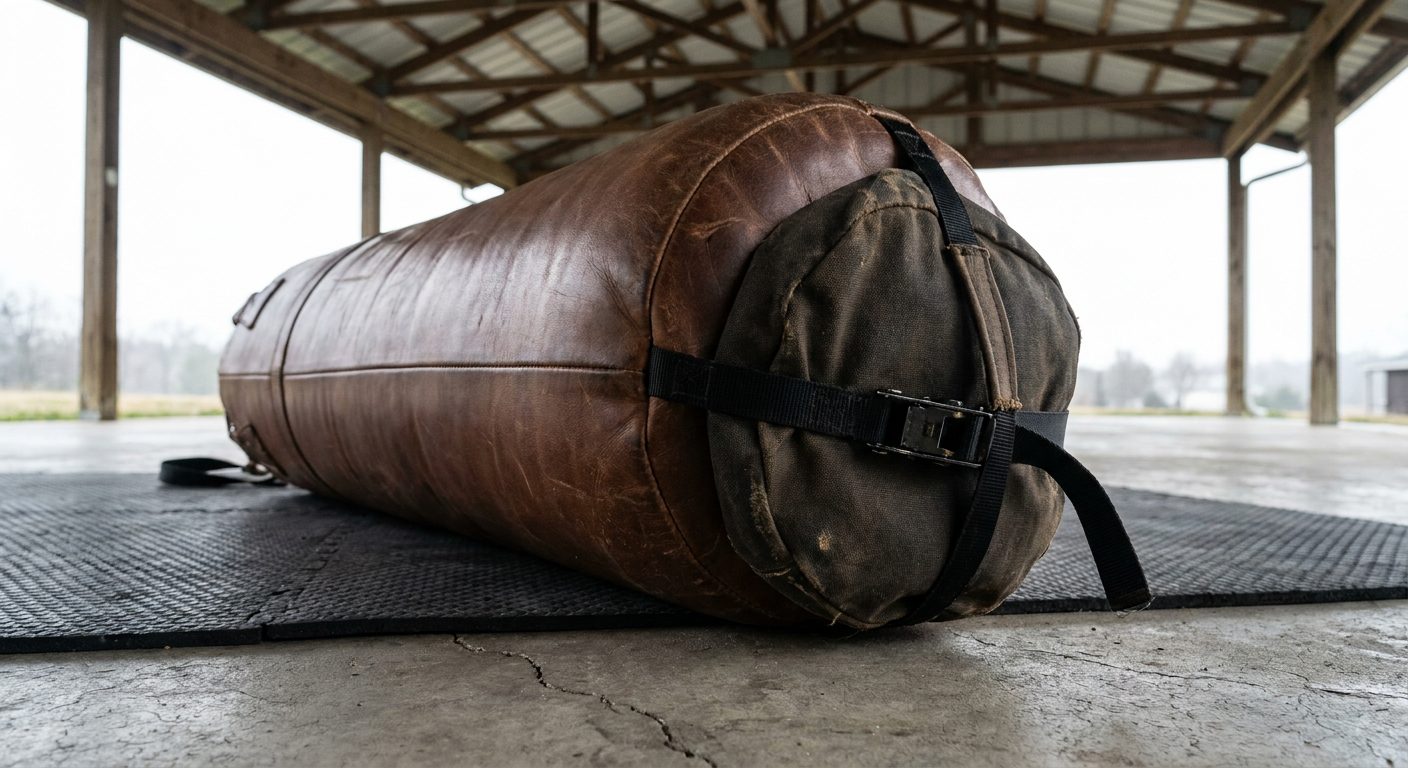
A light bag (under 70 lbs / 32 kg) will drift on almost any strike. The fix sounds obvious and is: add weight. You can slide a 10 lb plate into a gym bag, strap it to the bottom of the heavy bag with a ratchet strap, or fill a compression sleeve with sand and tie it to the bottom D-ring if one exists.
Sandbags designed for this purpose (Everlast, Title, and Ringside all make weighted bag bases) clip directly to the bottom of the bag. They add 15-25 lbs without affecting the bag’s profile and make a noticeable difference in stability on body shots and low combinations. The added weight shifts the center of gravity downward, which shortens the recovery arc after each shot.
This is the single most effective fix when the problem is the bag traveling too far forward and taking too long to return. Bag still drifting sideways? That’s a different problem. Keep reading.
Use a Bungee Cord or Resistance Band at the Bottom
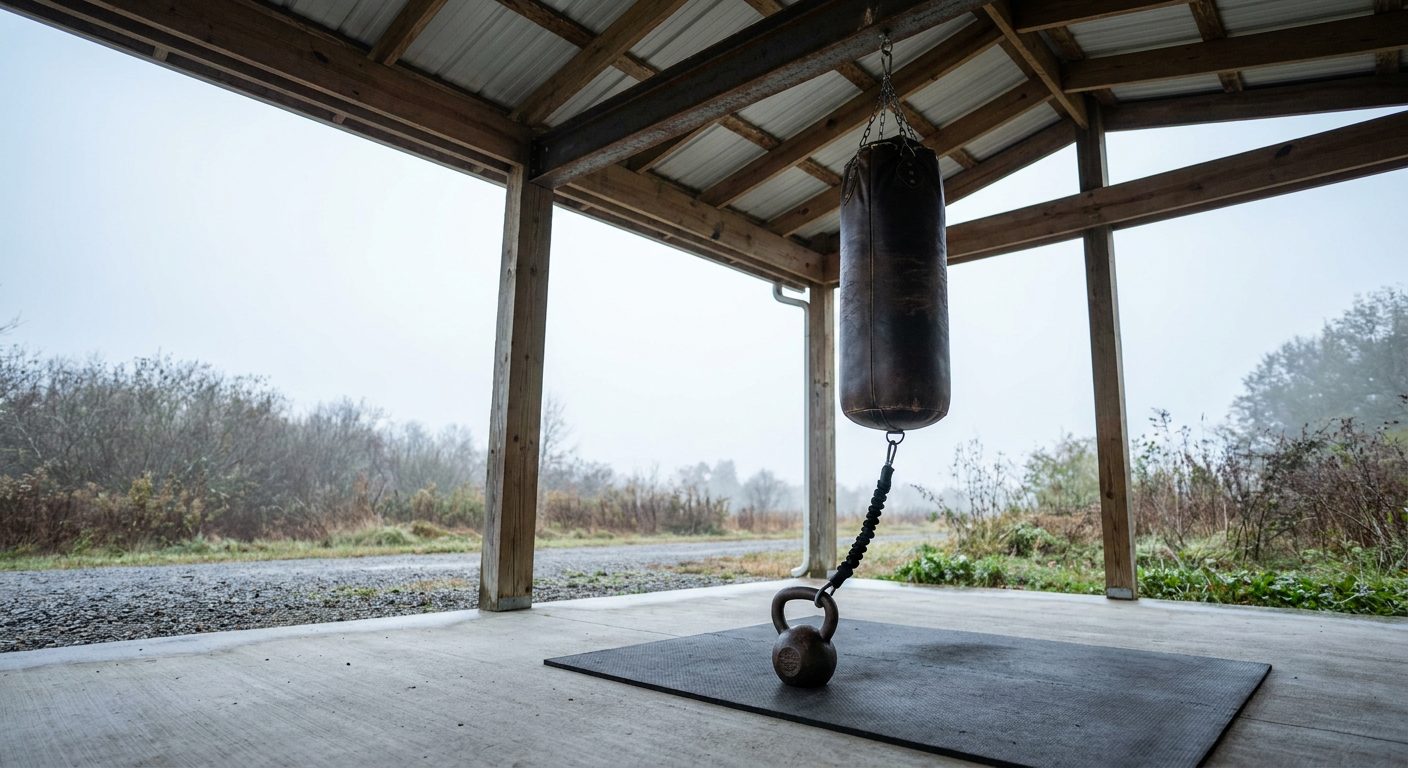
The classic setup at Muay Thai gyms across Thailand is also one of the most practical for home training: a rubber cord or resistance band connecting the bag’s bottom to an anchor point on the floor. Done right, it doesn’t restrict the bag’s response to strikes, it just dampens the drift and pulls the bag back to center faster after each combination.
The anchor can be a floor hook screwed into concrete, a heavy kettlebell or plate, or a sandbag. The cord attaches to the bottom swivel or D-ring of the bag. Tension matters: too tight and the bag barely moves, which defeats the purpose. Too loose and it does nothing. A cord that pulls the bag back to vertical within two or three seconds of a hard kick is about right. Fairtex and Twins gyms in Bangkok use this setup on almost every bag, and it’s the main reason their bags stay stable under heavy kickers who are generating serious force.
A resistance band works similarly. A loop band rated at 50 lbs of resistance (Level 6 or equivalent from any fitness supplier) hooked through the bottom D-ring and anchored to a 45 lb plate on the floor handles most drift without any floor installation.
Set Your Footwork to Control the Bag, Not Chase It
This one gets skipped constantly. The bag drifts forward: step with it. The bag swings back: absorb it with your guard or let it pass and pivot. The bag rotates: circle to keep your strike zone on the front face. This is footwork you’d use against a moving opponent, and the bag is teaching it for free if you stop trying to freeze the swing and start moving with it.
Coaches at gyms like Gleason’s Gym in Brooklyn specifically use bag drift as a footwork drill. Let the bag travel after a hard combination, then cut the angle and meet it at the correct distance for the next strike rather than standing flat-footed waiting for it to return. The bag tells you whether your positioning is right. If you’re reaching or crowding on every shot, you’re out of position, and the bag moving is surfacing that fact.
That said, uncontrolled spin is not a footwork problem. If the bag is rotating significantly on a straight cross, the swivel or chain setup needs fixing, not your footwork. Distinguish between reasonable travel you should adapt to, and mechanical problems that need solving.
Anchor the Chain to a Second Point
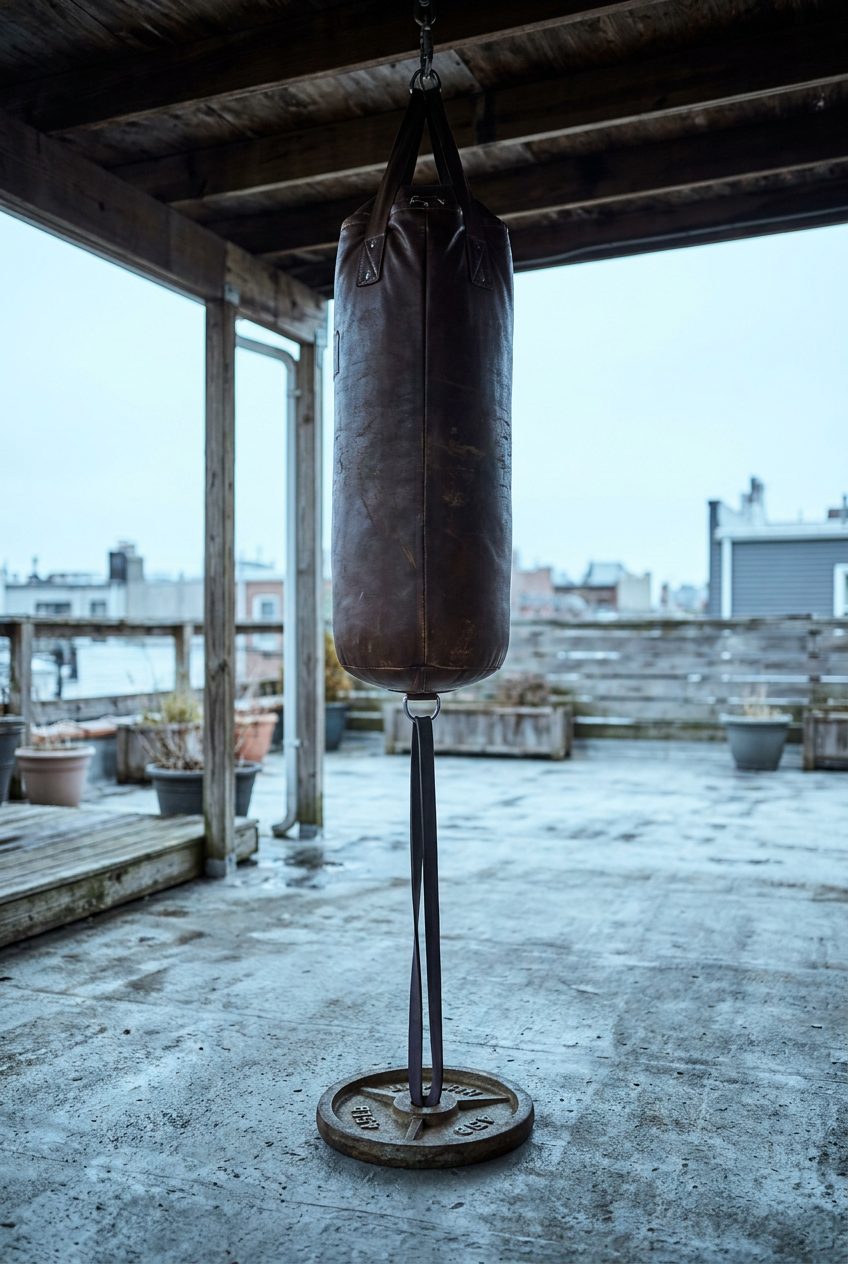
For bags that rotate excessively on heavy strikes, a second anchor chain running from a separate point on the bag’s top ring to a wall hook or second ceiling mount can control rotation while still allowing forward-backward travel. This is common in facilities where bags are mounted near walls or pillars.
A secondary chain of about 18-24 inches, attached loosely enough to allow normal swing but short enough to prevent full rotation, keeps the bag’s front face in your strike zone. If you’re using a heavy bag stand rather than a ceiling mount, this is harder to rig without a wall anchor nearby, but some stands have a second arm or hook specifically for this purpose.
Worth noting: this fix changes the bag’s movement pattern. You lose a small amount of natural rotation that can be useful for practising footwork around a target. If drift and spin have become training distractions rather than training tools, the second anchor is worth it. If you’re advanced enough to work with bag movement, leave the single-chain setup and focus on the footwork.
Check Your Striking Technique for Shoulder Rotation
A heavy bag that drifts sideways almost every time you throw a cross is sometimes not a rigging problem. It’s a mechanical tell. Research on punch mechanics published in the Journal of Sports Sciences shows that force direction during boxing punches varies significantly based on arm position at extension, which explains why technique errors produce off-axis bag movement.
A useful test: throw ten controlled crosses at the bag while watching which way it drifts. Straight back means your force is going forward cleanly. Left or right drift means your arm is finishing off-center. Throw the next set with deliberate focus on pulling the hand straight back after impact. If the drift reduces, the problem was technique rather than rigging.
This shows up often with hooks thrown too wide. A hook where the elbow is above shoulder height at impact will send the bag on a leftward arc (for orthodox fighters) rather than straight back and forward. Get the elbow level with the shoulder, the fist vertical, and the strike’s path horizontal across the bag’s midsection. The bag’s travel direction will clean up. For a deeper look at combination mechanics, the heavy bag coaching breakdown we put together from 50+ coaches covers stance, impact points, and combination structure in detail.
Time Your Rounds So the Bag Has Settled Before You Start
A bag that’s still moving from the previous round when you throw your first punch is already off-center. Your session’s opening combination is hitting a moving target, which sets the bag on a compound arc for the next thirty seconds. Add hard strikes to that and you’ve got a bag doing laps around your stance.
Wait for the bag to stop. Completely. It takes maybe five or ten seconds after a hard round. If you’re timing your own rounds with a structured interval, build that pause into the rest period deliberately. The free boxing round timer at heavybag.pro lets you set custom rest intervals, so you can add an extra fifteen seconds of settle time between hard rounds without manually watching a clock. A consistent rest period also means your bag starts each round in the same position, which is useful if you’re drilling specific combinations with fixed footwork patterns.
The principle behind this applies to bag technique generally. Engaging with the bag in a consistent starting position makes repetition easier to evaluate. If the bag is always in a different place at the start of a combination, you can’t tell whether a technique is improving or just adapting to the bag’s current location.
When the Problem Is the Stand, Not the Bag
Free-standing bags on bases move for a different reason than hanging bags. They walk because the base is light, the floor is smooth, or the fill in the base is too soft. Adding more water or sand to the base is the first fix. On a smooth floor, a non-slip mat under the base creates enough friction to stop walking on moderate strikes. On hard strikes, a non-slip mat plus a rubber stall mat (the 3/4-inch horse stall mats from farm supply stores) doubles the grip surface and adds mass to the setup.
Free-standing bags on carpet walk less but tip more easily on hard roundhouse kicks. If the bag is tipping, it’s either too light for the force you’re generating or the base diameter is too narrow for the height. No hack fully fixes a bag that’s too small for how you train. At that point, you’re looking at a heavier hanging bag or a wider-based free-standing model. For context on the trade-offs, the guide to choosing the right punching bag covers the weight and suspension options for different training goals.
If you’ve already started dealing with hand and wrist strain from compensating for a poorly stabilized bag, it’s worth reading the breakdown on long-term wrist pain from bag work. Chasing a drifting bag and hitting at bad angles is one of the underrated causes of overuse injuries in solo training.
Putting It Together
The hacks rank roughly by impact: swivel quality first, bottom weight second, bungee or cord anchor third. After those three, technique and footwork fixes account for most of the remaining drift. The secondary chain and the start-of-round pause are specific solutions for specific problems rather than universal improvements.
Stabilizing your bag isn’t about making solo training easier. It’s about making your repetitions consistent enough to be worth counting. A combination drilled 200 times against a well-set bag builds something transferable. Two hundred attempts against a bag that’s somewhere different each time builds something closer to chaos management.
Set the bag up right, then get to work.