
Boxing isn’t just a sport—it’s one of the most practical martial arts for real-world self-defense situations. While you’ll hopefully never need to use these skills outside the gym, understanding how boxing techniques translate to self-defense can give you confidence and potentially save your life.
Unlike many traditional martial arts that focus on complex techniques, boxing teaches simple, effective movements that work under pressure. The fundamentals you practice on the heavy bag—jabs, crosses, hooks, and footwork—become instinctive responses that can help you escape dangerous situations.
Why Boxing Works for Self Defense
Boxing excels in self-defense scenarios for several key reasons. First, it trains you to stay calm under pressure. The stress of sparring or intense pad work mimics the adrenaline dump you’ll experience in a real confrontation. This mental conditioning is invaluable when every second counts.
Second, boxing emphasizes distance management and footwork. These skills help you stay out of range of an attacker while positioning yourself for counterattacks or escape routes. The ability to circle, pivot, and maintain proper spacing can be the difference between getting hurt and getting away safely.
Third, boxing teaches explosive power generation from your entire body, not just your arms. A properly thrown cross utilizes your legs, hips, torso, and shoulders to deliver maximum impact. This biomechanical efficiency means even smaller individuals can generate surprising power.
Essential Boxing Techniques for Self Defense
The Jab: Your Primary Weapon
In self-defense situations, the jab is your most important tool. It’s fast, keeps distance between you and an attacker, and can temporarily blind or disorient someone long enough for you to escape. Unlike movies where knockouts are common, real self-defense is about creating opportunities to get away.
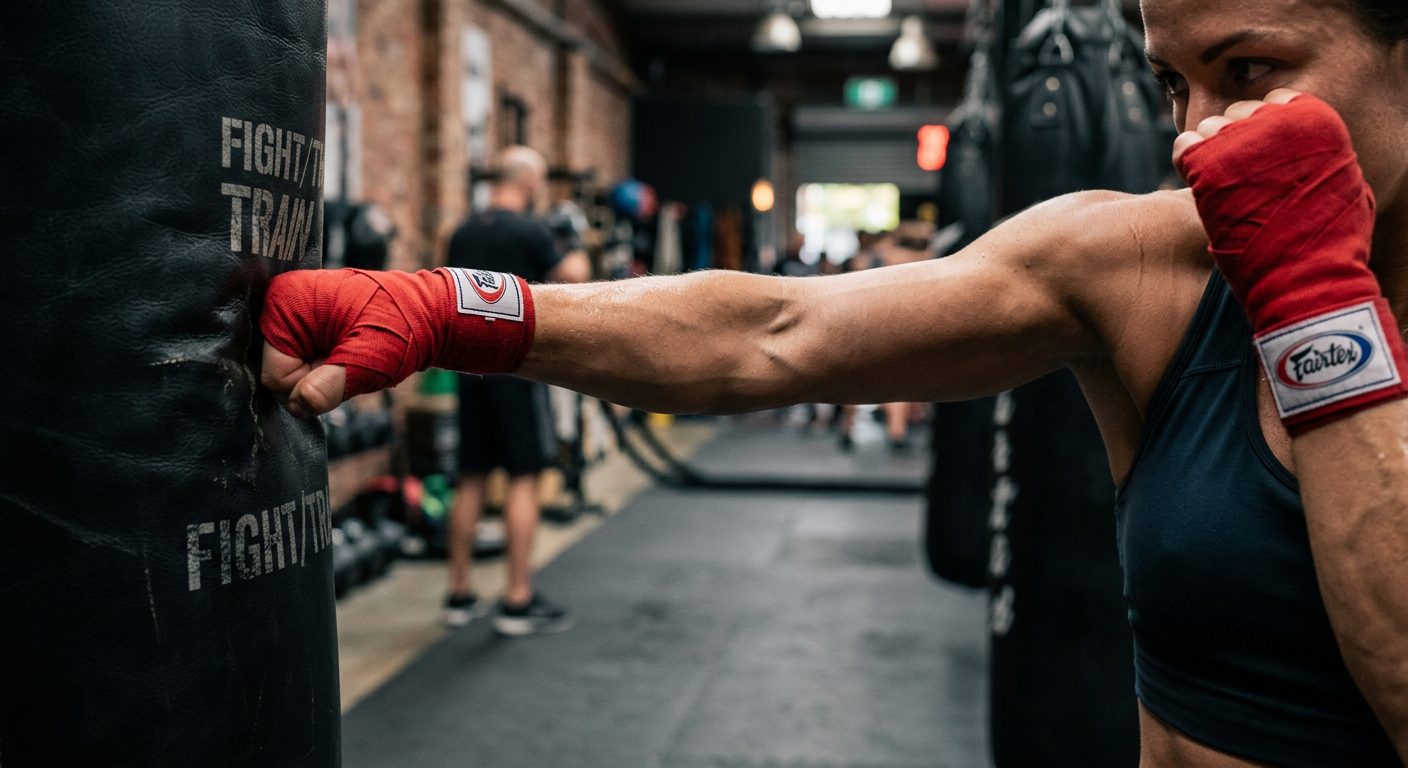
Practice throwing straight, snapping jabs to the nose or throat area. The nose is particularly effective because it causes immediate pain and tears that obscure vision. Remember, you’re not trying to win a fight—you’re buying time to escape.
The Cross: Maximum Power When Needed
The rear cross delivers your maximum power and should be reserved for moments when you need to create serious distance or when an attacker is committed to closing in. Target the chin or solar plexus for maximum effect.
The key is proper rotation. Drive your rear hip forward while pivoting on your back foot. This generates force from your entire body weight, not just your arm. Practice this movement daily until it becomes second nature.
Hooks: Close-Range Defense
If someone manages to get inside your punching range, short hooks to the ribs or jaw can create the space you need to reset or escape. Lead hooks are particularly useful because they’re thrown with the same hand as your jab, making them natural follow-up shots.
Keep hooks tight and compact. Wild, looping punches leave you open to counters and waste precious energy.
Footwork and Distance Management
The Fighting Stance
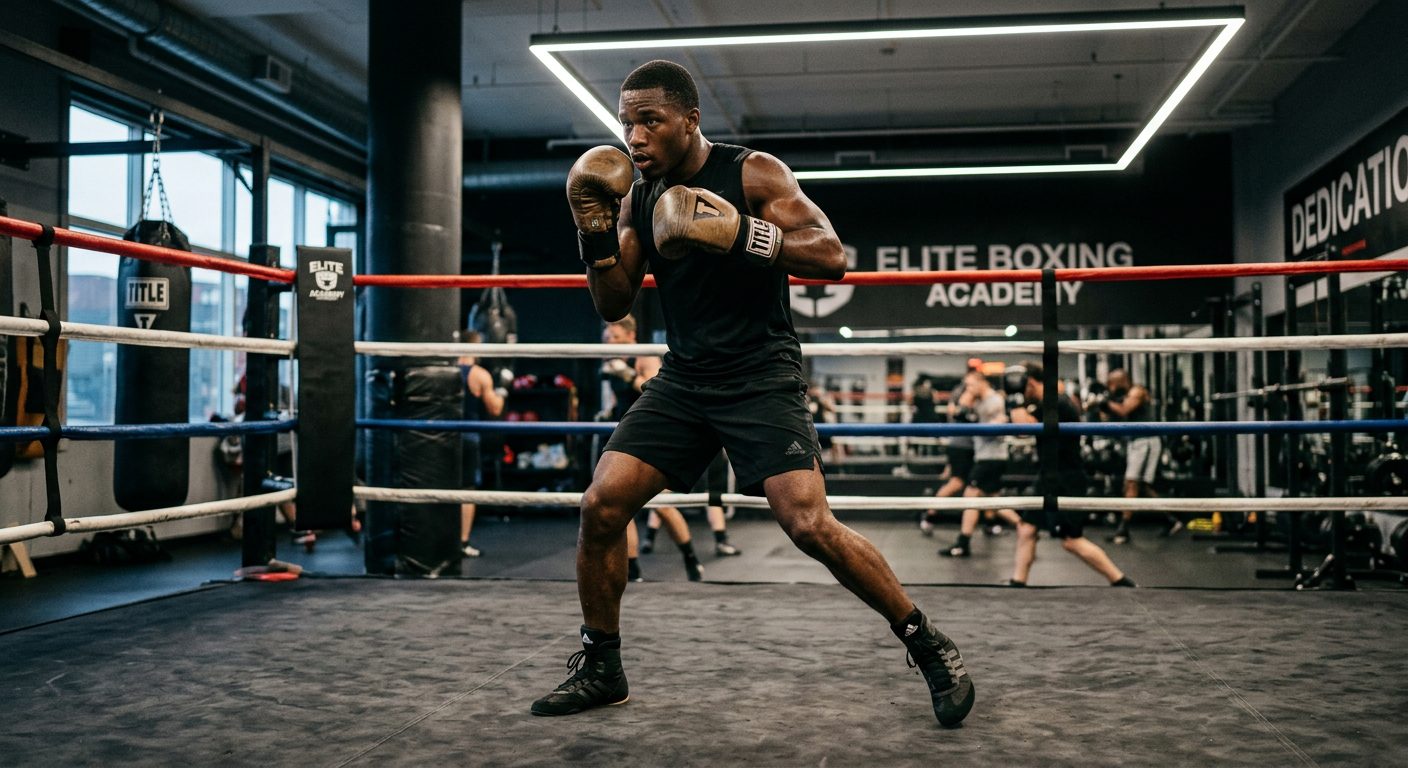
Your stance in a self-defense situation should prioritize mobility and balance. Stand with your feet shoulder-width apart, dominant foot back, and weight evenly distributed. Keep your hands up near your face—not in an obvious “boxer” position that might escalate the situation, but ready to defend.
This positioning allows you to move quickly in any direction while maintaining the ability to throw punches if necessary.
Angles and Escape Routes
Never move straight back from an attacker. Backing up in a straight line often leads to tripping or getting cornered. Instead, use lateral movement and angles to create escape opportunities.
Practice the “step and slide” footwork pattern: step to one side with your lead foot, then slide the rear foot to maintain your stance. This keeps you balanced while moving offline from an attack.
Mental Preparation and Awareness
Situational Awareness
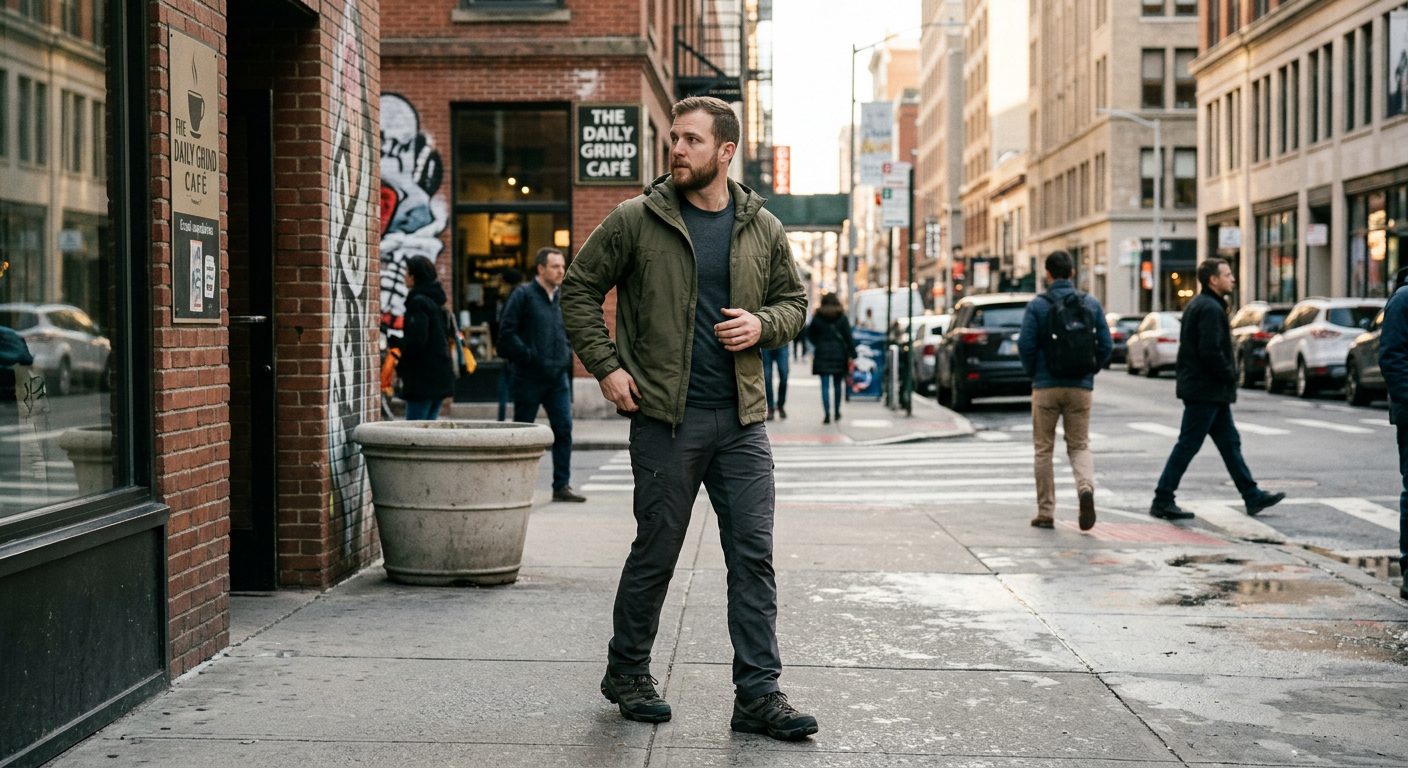
The best self-defense technique is avoiding dangerous situations altogether. Boxing training improves your spatial awareness and ability to read body language—skills that help you recognize potential threats before they become immediate dangers.
Practice scanning your environment during training. Notice where people are positioned, identify potential weapons or escape routes, and develop the habit of staying alert in public spaces.
De-escalation First
Boxing gives you confidence, but that confidence should primarily manifest in your ability to de-escalate situations verbally. Someone who knows they can defend themselves is often calmer and more rational in confrontations, which itself can prevent violence.
Use open, non-threatening body language while maintaining your fighting stance. Speak calmly and clearly. Your goal is always to avoid physical confrontation if possible.
Training for Real-World Application
Stress Inoculation
Regular sparring or intense bag work helps prepare your nervous system for high-stress situations. The feeling of being under pressure in the gym translates to better performance when adrenaline hits in real life.
Focus on maintaining proper technique even when exhausted or stressed. Use Heavy Bag Pro’s round timer to create structured, high-intensity sessions that simulate the stress and time pressure of real confrontations.
Scenario Training
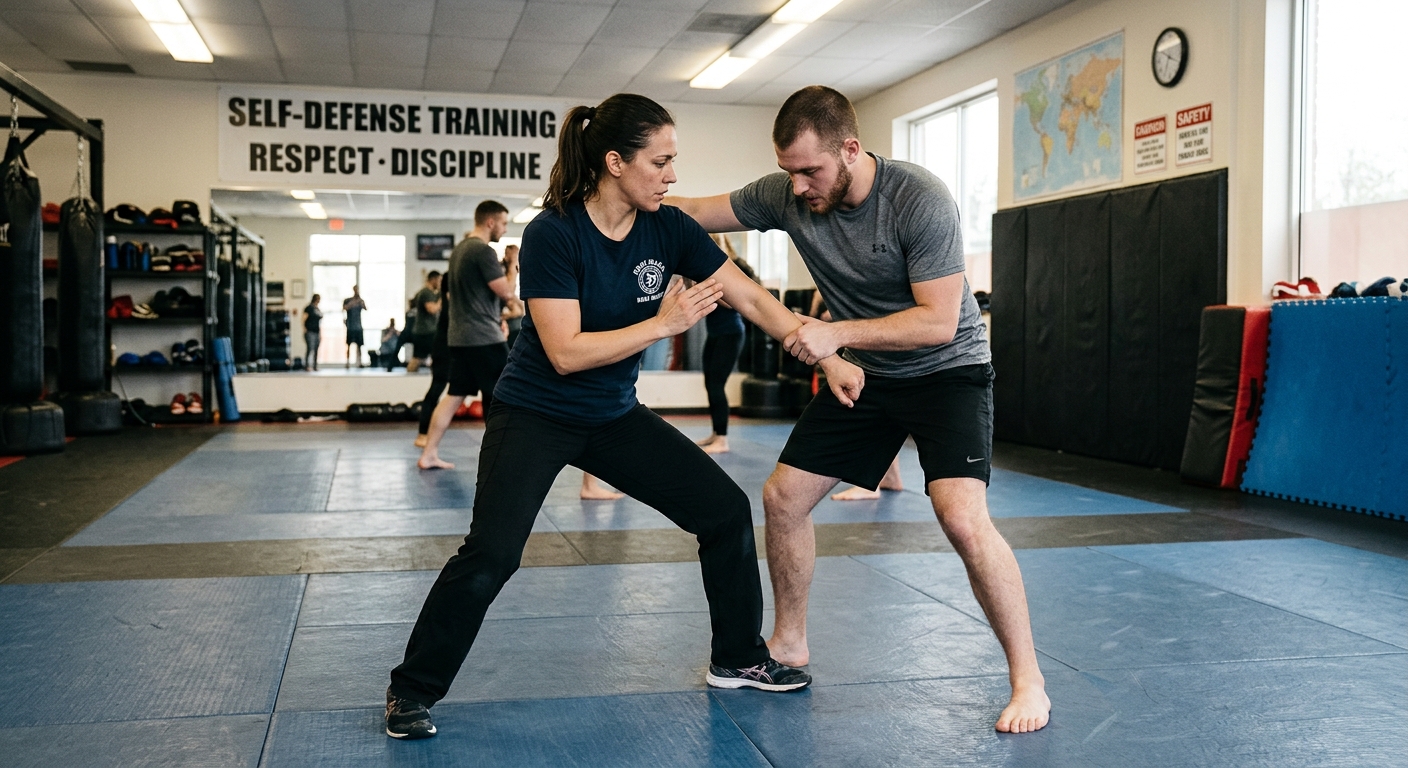
Practice specific self-defense scenarios during your training. Have a partner approach you aggressively while you practice maintaining distance and position. Work on transitioning from defensive positioning to strikes to immediate escape.
Focus on simple combinations: jab-cross-escape, hook-circle out, or push-jab-run. Complex techniques fall apart under stress, so master the basics until they’re automatic.
Legal and Ethical Considerations
Proportional Response
Understanding the legal concept of proportional response is crucial. You can only use the amount of force necessary to stop an immediate threat. Continuing to strike someone who’s no longer a threat can result in serious legal consequences.
Train with the mindset of “stop the threat and escape,” not “win the fight.” Your boxing skills should create opportunities to get away safely, not dominate an opponent.
Duty to Retreat
Many jurisdictions have a legal “duty to retreat” if possible before using physical force. This means if you can safely escape a situation without fighting, you’re legally obligated to do so.
Your boxing training supports this principle. Superior footwork and distance management often provide escape opportunities that untrained individuals might miss.
Adapting Boxing for Multiple Attackers
Real-world violence often involves multiple attackers, which requires modifications to standard boxing techniques. Your primary goal shifts entirely to movement and escape rather than engaging any single opponent.
Practice moving in circles to prevent attackers from surrounding you. Use straight punches to create momentary openings, then immediately move to a different position. Never stay in one place long enough for multiple people to coordinate their attacks.
Women and Boxing for Self Defense
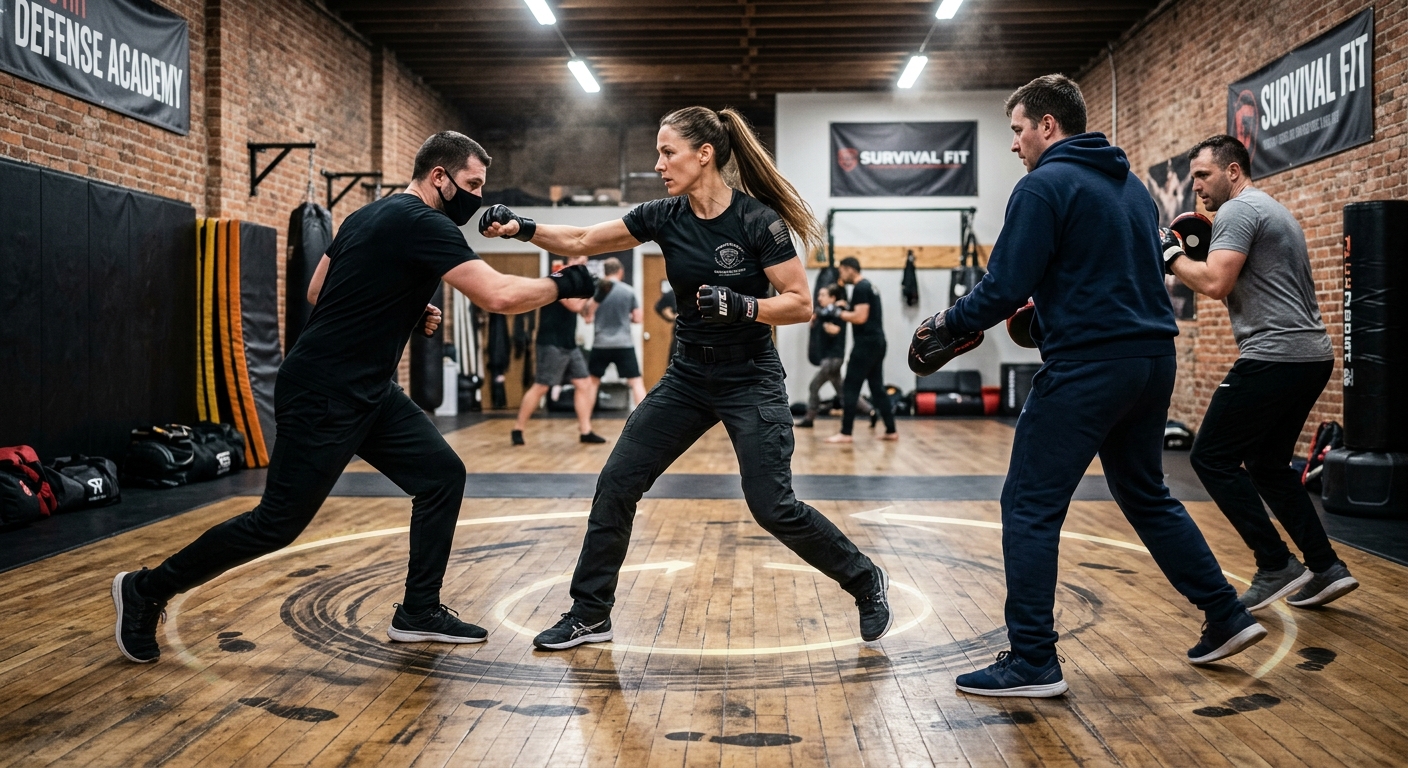
Boxing is particularly effective for women’s self-defense because it doesn’t rely on matching an attacker’s size or strength. Proper technique and targeting can overcome significant size disadvantages.
Focus on speed and accuracy over power. A quick jab to the nose or throat can be just as effective as a powerful hook for creating escape opportunities. Practice stepping offline from grabs and using short, sharp strikes to break free from holds.
The confidence that comes from knowing you can defend yourself often changes how you carry yourself, which can itself deter potential attackers who typically target victims who appear vulnerable.
Equipment for Self-Defense Training
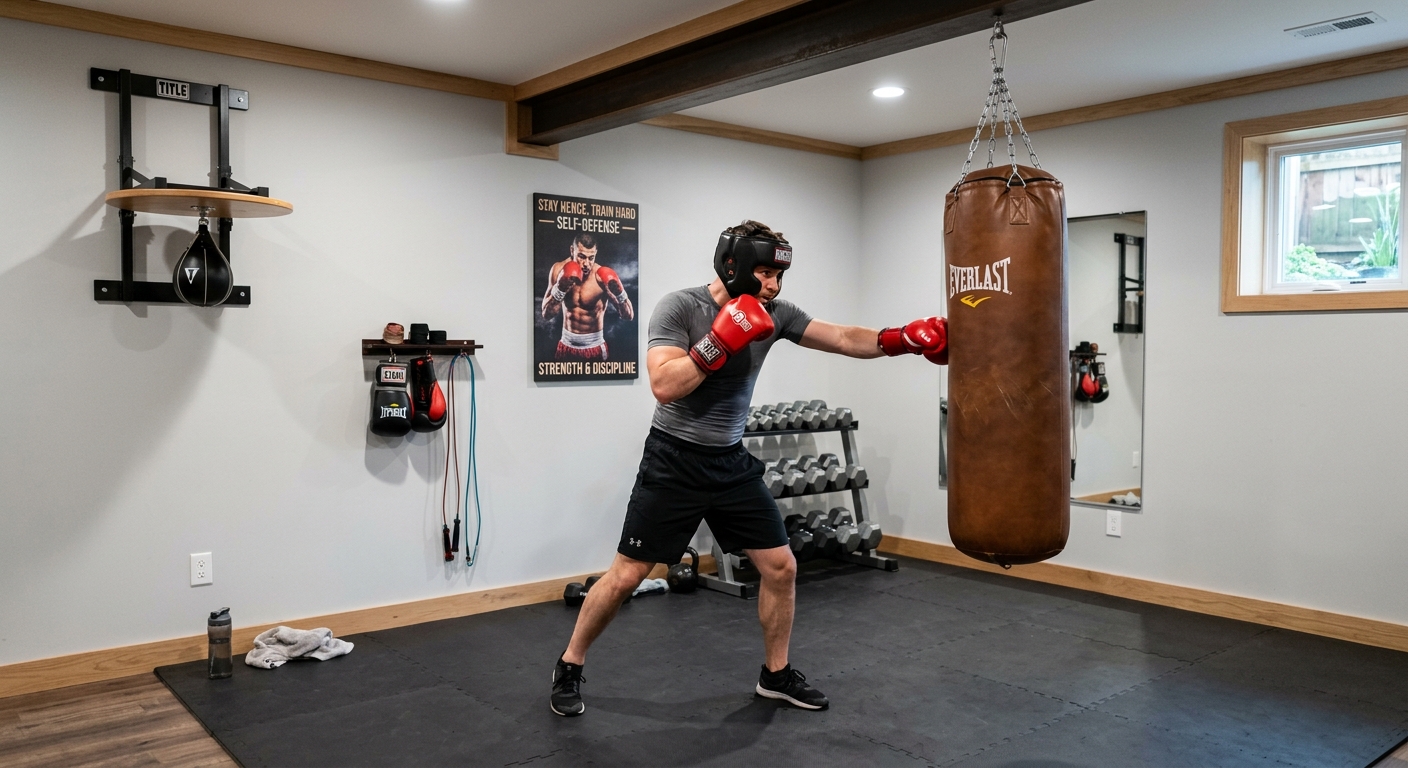
You don’t need expensive equipment to train boxing for self-defense. A heavy bag for practicing power and accuracy, basic hand wraps for protection, and enough space to move around are sufficient for developing effective skills.
Focus your training on scenario-based drills rather than just fitness workouts. Use your boxing round timer to create short, intense sessions that simulate the time frame of real confrontations—most street fights last less than 30 seconds.
A double-end bag or slip bag can help develop timing and accuracy for moving targets, which is more realistic than only training on a stationary heavy bag.
Limitations of Boxing for Self Defense
While boxing provides excellent self-defense skills, it’s important to understand its limitations. Boxing doesn’t address ground fighting, weapons defense, or multiple attackers comprehensively. It also assumes you have space to move and use proper technique.
In extremely close quarters or if taken to the ground, boxing skills become less effective. This is why situational awareness and de-escalation remain your primary self-defense tools.
Boxing also takes time to develop. The techniques need to become instinctive through repetition and practice. A few weeks of casual training won’t prepare you for real violence—consistent, dedicated practice is essential.
Building Your Self-Defense Boxing Program
Start with fundamental techniques and gradually add complexity. Spend at least 80% of your training time on jabs, crosses, basic footwork, and situational drills. These simple techniques are most likely to work under extreme stress.
Create training routines that simulate real-world stress. Use short rounds with high intensity, practice while slightly fatigued, and add mental pressure through scenario training.
Consider supplementing your boxing training with other self-defense skills like basic grappling defense or weapons awareness, but maintain boxing as your foundation for striking and distance management.
Conclusion: Confidence Through Preparation
Boxing for self-defense isn’t about becoming a street fighter—it’s about developing the skills, confidence, and mental preparation to handle threatening situations safely. The discipline required for consistent boxing training builds character traits that serve you well beyond physical confrontations.
Remember that the best self-defense technique is awareness and avoidance. Your boxing skills should be your last resort, not your first choice. When properly trained and mentally prepared, these skills can provide the confidence to stay calm under pressure and the ability to create opportunities for safe escape.
Start with basic techniques, train consistently, and always remember that your goal is to get home safely, not to prove your fighting ability. Boxing gives you tools for self-protection, but wisdom and good judgment determine how and when to use them.