
I’ve watched the same thing happen to three different training partners over the years. They push through a nagging ache in the shoulder for a few weeks, tell themselves it’s just muscle soreness, and keep throwing punches. Then one morning they wake up and can’t reach across to fasten a seatbelt without wincing. The rotator cuff doesn’t give much warning before it starts charging interest.
If you’re already dealing with shoulder pain from bag work or overhead training, or you’ve had a partial rotator cuff injury diagnosed and you’re trying to figure out what you can still do, this is the practical guide I wish someone had handed me. Not the generic “rest and see a physio” answer, though that advice isn’t wrong. The real question is: which parts of boxing training are safe to keep doing, which ones make it worse, and how do you build the shoulder back up while staying in shape?
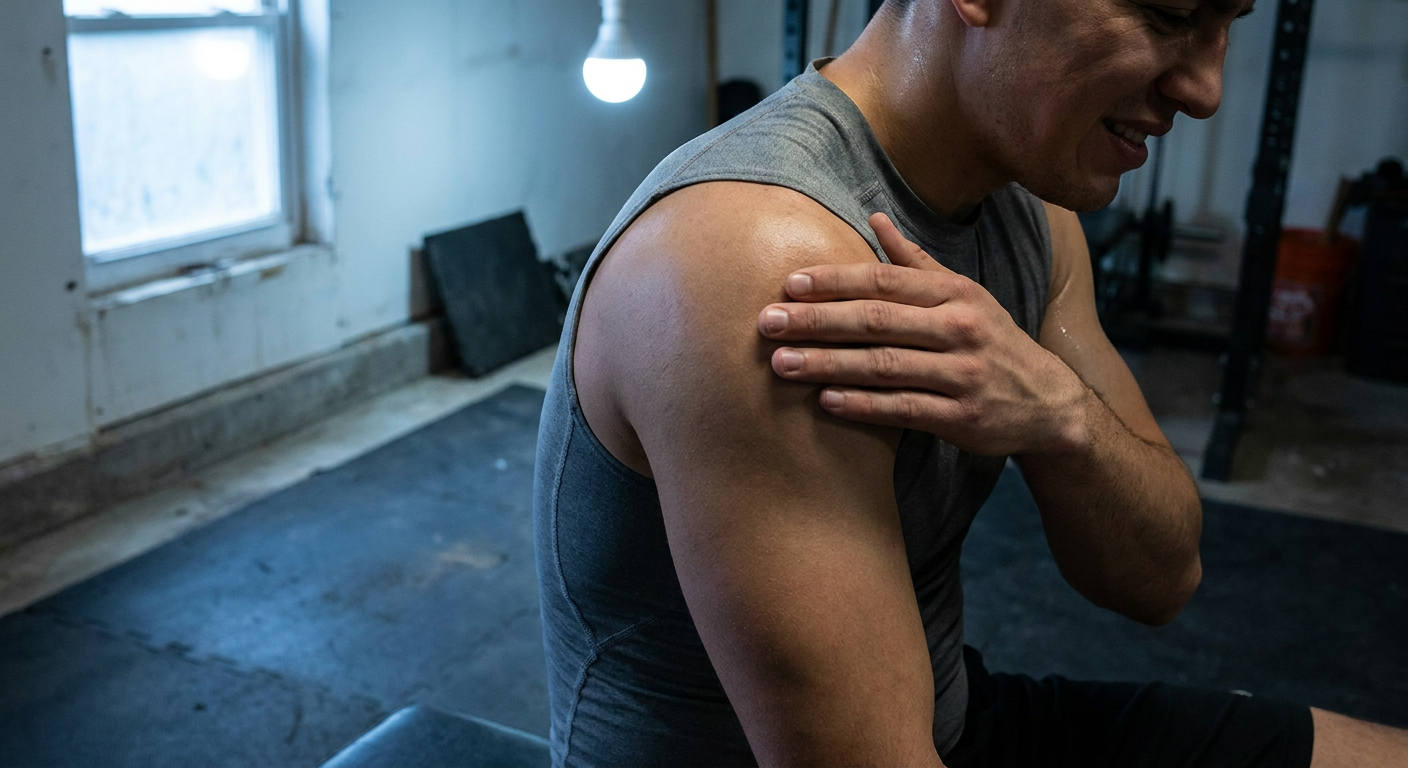
What the Rotator Cuff Is Doing When You Punch
The rotator cuff is four muscles: supraspinatus, infraspinatus, teres minor, and subscapularis. They wrap around the humeral head (the ball of the shoulder joint) and keep it seated in the socket while the larger muscles like the deltoid and pec drive movement. When you throw a cross, the subscapularis fires on the punching side to internally rotate the arm; the infraspinatus and teres minor on the opposite side fire to control the shoulder blade and keep the joint stable. They’re working every round, often under fatigue, and they don’t get much recovery time between punches.
The most common boxing-related rotator cuff problem isn’t a full tear from one dramatic moment. It’s impingement syndrome, where the supraspinatus tendon gets repeatedly pinched between the head of the humerus and the acromion (a bony shelf above the shoulder joint) during overhead or forward arm movement. This is aggravated by poor shoulder mechanics, tight chest muscles pulling the shoulder into internal rotation, and the repetitive forward reach of the hook and cross. Shoulder impingement-related tendinopathy is consistently cited as one of the most common overuse injuries in striking athletes, particularly those doing high-volume bag work without structured shoulder strengthening. USA Boxing’s athlete safety resources include shoulder health as a core injury prevention area for registered competitors.
Knowing what’s happening mechanically changes how you approach training around it.
The Drills That Protect Your Shoulder Instead of Loading It
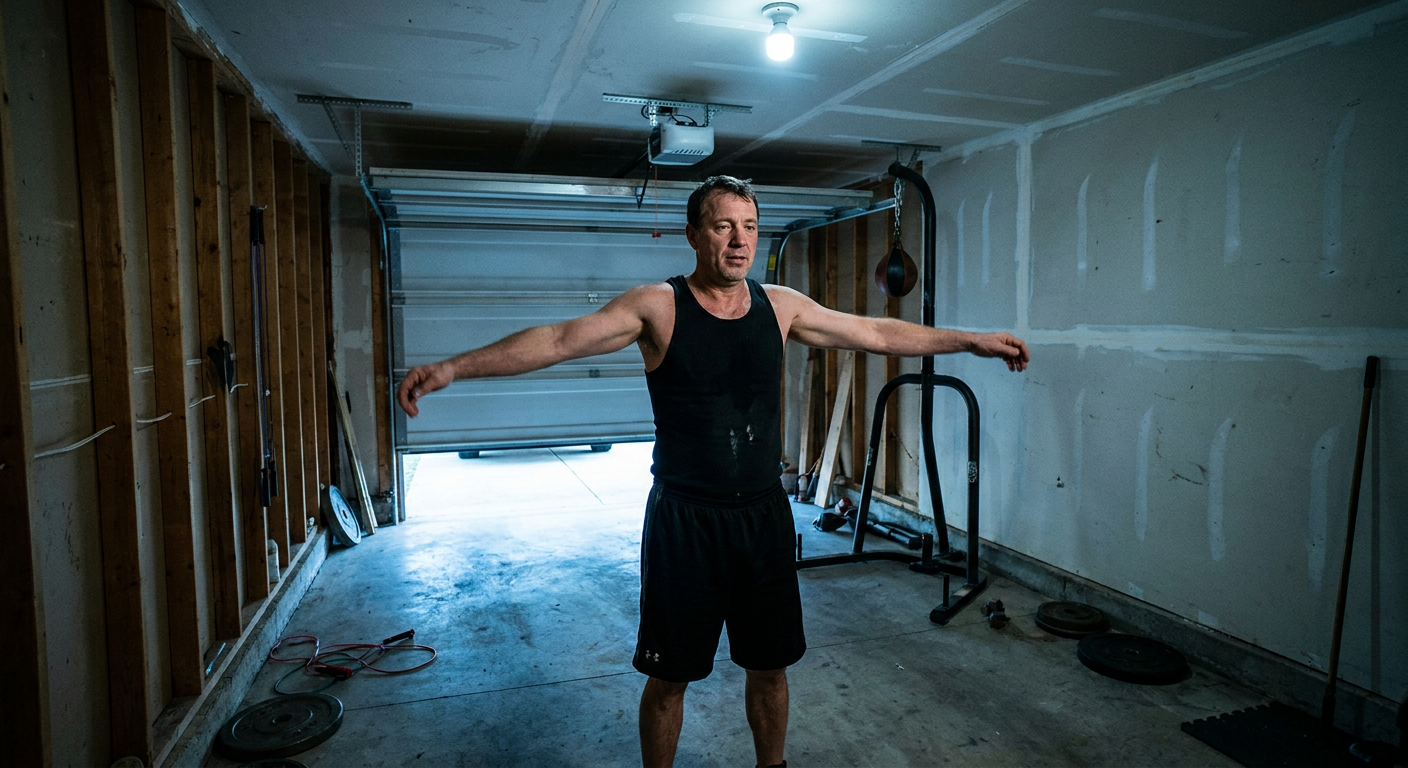
Shadowboxing at reduced intensity is almost always safe with a sore rotator cuff, provided you cut the range of motion. Throw punches to about 80 percent extension rather than locking out, keep the shoulder relaxed, and slow the tempo down to the point where you’re thinking about mechanics rather than speed. This keeps blood flowing to the tendon, which heals through vascularization, and maintains the neuromuscular patterns you’d otherwise lose during a week off.
Footwork and head movement drills need zero shoulder involvement. Lateral steps, pivots, slips, rolls under imaginary punches, angle cuts. These are where you can train hard while the shoulder heals. I’ve seen fighters come back from rotator cuff repairs with noticeably better footwork precisely because they spent their recovery time drilling movement instead of moping. There’s a real upside if you use the time intentionally.
Jump rope is usually fine unless the pain is in the overhead position, which would affect the shoulder raise on each rotation. If skipping hurts, switch to lateral shuffles or double-under attempts where the rope stays closer to the body. If it doesn’t hurt, keep it in your conditioning sessions. Cardiovascular fitness disappears faster than strength does, and bag work is where most people make up the volume they’ve lost during rehab periods. Having good cardio going into that phase matters.
Body-only shadowboxing, meaning deliberate body shots thrown with mechanics you’d use on a bag but stopping short of full power, loads the shoulder in a lower range where impingement is less likely. The hooks and body rips are thrown more inward and downward than the hook to the head, which reduces the subacromial pinch. If your pain is specifically at the top of the range of motion, body-shot drilling can maintain your combination rhythm while the overhead position heals.
The Exercises That Make It Worse (Stop Doing These)
Overhead pressing. Dumbbell shoulder press, barbell press, push press. All of them load the shoulder in the exact position that aggravates impingement. If you’re doing strength training alongside your boxing, pull these from the program until you have a clear pain-free range of motion overhead. They come back in last, not first.
Upright rows are one of the worst exercises for the impinged shoulder because the motion is mechanically identical to the impingement mechanism itself: internal rotation combined with elevation. They look like a reasonable shoulder exercise. They aren’t, for this injury.
Heavy bag punching at full power. The deceleration load at extension, repeated over a three-minute round, puts significant stress on the rotator cuff muscles that are supposed to control that deceleration. If you have acute pain, this is the primary thing to remove. You can come back to bag work before you can come back to overhead pressing, but only after you’ve worked through a structured rehab progression. Coming back too early is how a six-week injury becomes a six-month one.
Pulling exercises with poor form, specifically lat pulldowns behind the neck or behind-the-neck pull-ups, externally rotate and elevate the shoulder simultaneously in a way that many impingement sufferers find genuinely painful. Front-of-neck pulldowns are usually fine. Behind the neck is not. This one surprises people.
The Rehab Exercises That Rebuild the Cuff
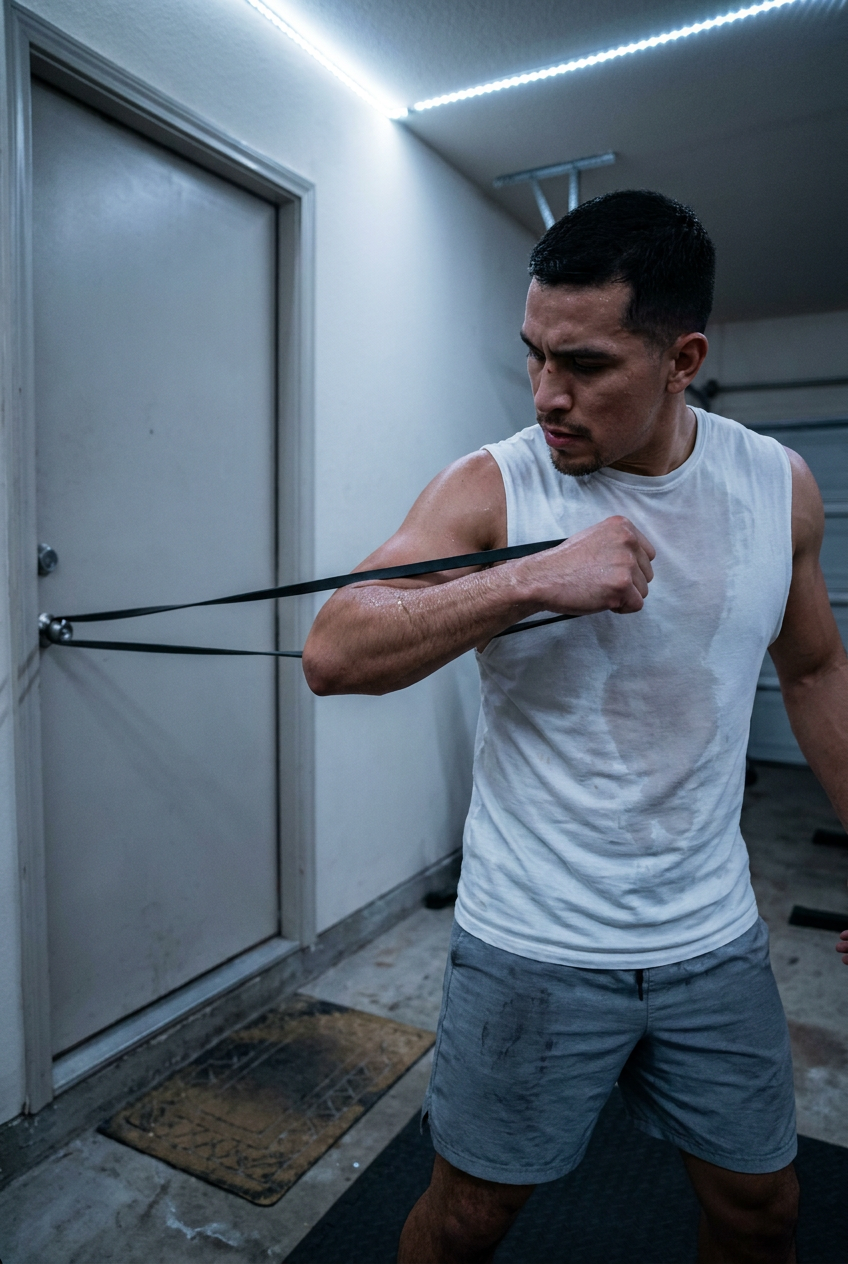
The three movements that most physical therapists start rotator cuff rehab with are external rotation, side-lying external rotation, and scapular retraction. They’re not exciting. They look like nothing from the outside. But they address the specific weakness that allows impingement to develop in the first place: insufficient rotator cuff strength relative to the load being placed on the joint.
External rotation with a resistance band is the one to prioritize. Stand sideways to a door handle with the band anchored at elbow height, elbow bent to 90 degrees and tucked against your side, and rotate your forearm outward against the band’s resistance. Three sets of 15, slow and controlled, feeling the back of the shoulder do the work. Do this every day, not just on training days. The rotator cuff responds well to frequency because the loads involved are low enough not to require the same recovery time as heavier strength work.
Side-lying external rotation is the same pattern done lying on your side with a light dumbbell. One to three kilograms is plenty. The arm hangs perpendicular to the floor, elbow bent, and you rotate the forearm up until it’s parallel to the floor. This one is slower to progress but excellent for isolating the infraspinatus and teres minor. Brian Sutterer MD, a sports medicine physician whose rehabilitation content is widely referenced in combat sports physio circles, frequently cites this exercise as foundational in overhead athlete shoulder rehab.
Scapular wall slides are worth adding. Stand with your back flat against a wall, arms raised to a W position (upper arms roughly parallel to the ground, forearms pointing up), and slowly slide your arms up the wall until they’re extended overhead, keeping contact with the wall throughout. The goal is to train the serratus anterior and lower trapezius to upwardly rotate the scapula properly as the arm elevates. This is the missing piece for most boxers: the shoulder blade isn’t moving correctly as the arm rises, which compresses the supraspinatus tendon from above. Fix the blade movement, fix the impingement pattern.
Structuring a Week When Your Shoulder Is Compromised
You’re a boxer who trains four times a week and you want to keep conditioning up while managing a sore shoulder. Here’s what a reasonable week looks like during a non-acute phase, meaning pain is a two or three out of ten, not a seven.
Monday: footwork and head movement session, 45 minutes. No bag work. Add rehab band work at the end. Tuesday: lower body conditioning, skip rope if overhead position is comfortable, otherwise lateral shuffle intervals. Wednesday: body-only shadowboxing plus light jab drilling (stop at 70 percent extension), followed by rehab exercises. Thursday: rest or easy movement. Friday: full shadowboxing at reduced intensity, no full-power shots, focus on technical work. Saturday: strength session with no overhead pressing, include rows, deadlifts, and lateral raises if the range is comfortable. Sunday: rest.
A round timer matters here more than it might seem. When you’re training around an injury, it’s easy to let sessions run long because you’re not getting the same intensity hit and you feel like you need to compensate. Structure keeps you honest. Using the free boxing round timer at heavybag.pro lets you set specific work and rest intervals for rehab circuits and keeps the shadowboxing rounds clocked rather than drifting. Overtraining a compromised shoulder because you lost track of time is an entirely preventable error.
When to See Someone (And What to Ask Them)
If the pain is severe enough that you’re avoiding any arm use in daily life, or if you have weakness (not just pain but actual inability to raise the arm or hold it at 90 degrees), those are signs of a more significant structural issue and you need imaging before you train around it. A partial tear and impingement syndrome are managed very differently, and training through a partial tear that you’ve misidentified as impingement can convert it into a full tear.
For the more common presentation, the ache at the top of the overhead range with no significant weakness, a good physiotherapist will take you through the same progressions I’ve described, but they can also assess exactly where in the range the pain occurs, test which specific muscles are weak, and identify if there’s a scapular dyskinesis pattern that needs addressing separately. The assessment is the part you can’t replicate at home. The exercises, you can.
When you see them, ask specifically: “Is this impingement or is there a structural component I should be imaging?” and “What’s the earliest I can return to bag work and at what volume?” Those two questions get you the information you need instead of a generic rest-and-ice response. You can also link them to your specific training, as the demands of boxing bag work are different from a tennis serve or a swimming stroke, and knowing your sport helps them calibrate their advice. For more on managing joint injuries while staying active, the posts on wrist pain from bag work and boxer’s knuckle causes and treatment cover similar ground for the hand and wrist.
Coming Back to Full Bag Work: The Progression That Works
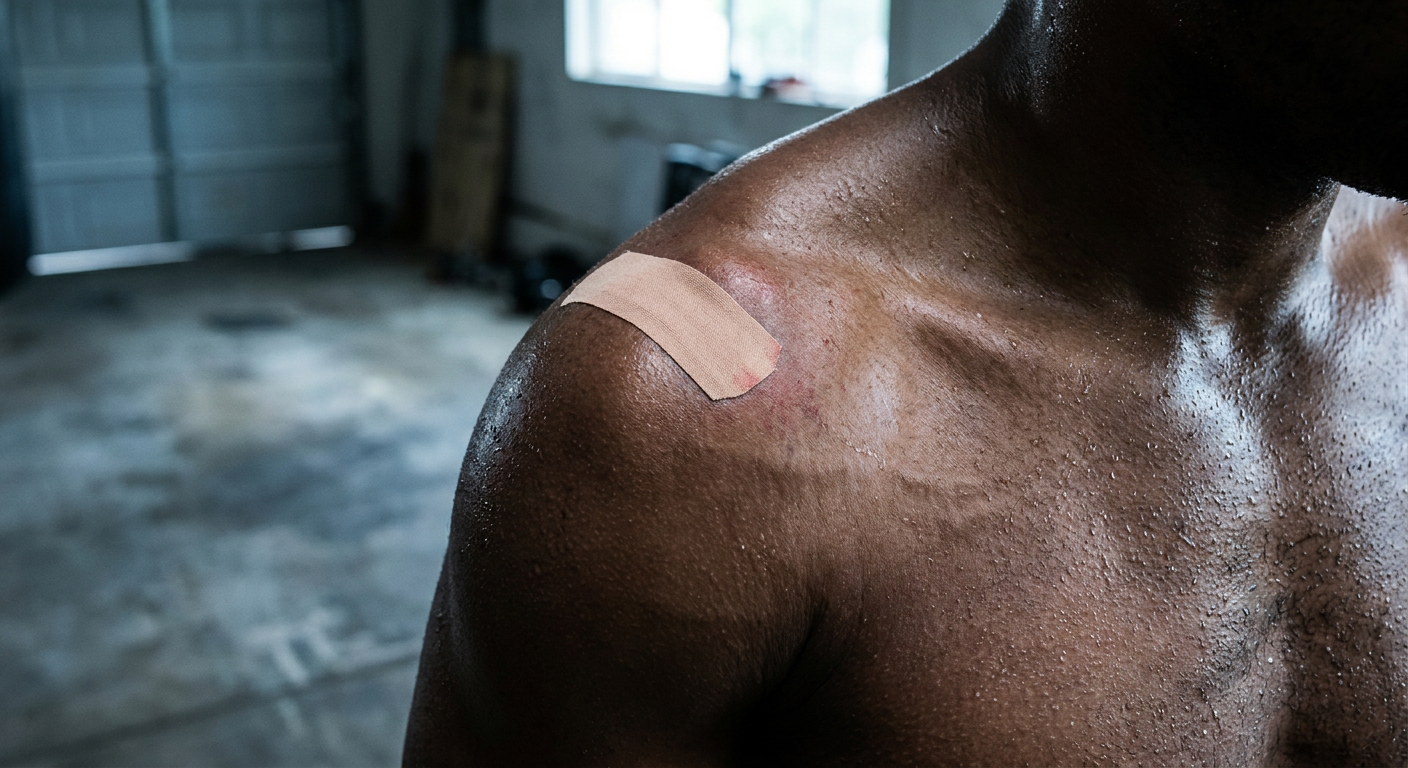
Rushing the return is the most common mistake. Two weeks of reduced pain does not mean the tissue has remodeled. Tendons take longer to adapt than muscles do, and the supraspinatus in particular has a relatively poor blood supply compared to muscle tissue, which is part of why it’s vulnerable to chronic injury in the first place.
A reasonable return progression looks like: light technical bag work at 50 percent power for two weeks, pain-free throughout. Then 70 percent for two weeks, monitoring. Then full power, gradually rebuilding volume from one round to two to three. Each step only happens if the previous one produced no pain during or after the session. “During or after” includes the next morning: delayed-onset soreness in the muscle belly is okay, but a pain spike in the shoulder joint the day after training is feedback that you’re not ready for that step yet.
Maintain the external rotation work throughout the return phase. It’s not something you do until the shoulder feels better and then drop. The weakness that caused the problem in the first place doesn’t resolve on its own just because the acute pain has settled. Fighters who keep doing the band work twice a week after they’re back training are the ones who don’t get the same injury again six months later. Injury prevention as an ongoing training priority is not something you phase out once you’re back to full training. It becomes part of the program.
The One Thing That Predicts Whether You’ll Come Back Stronger
Patience, but not passive patience. Active patience, meaning doing the unsexy band work, drilling your footwork, keeping the cardio sharp, and showing up consistently to sessions that feel less satisfying than full-contact bag rounds. The boxers I’ve watched come back from shoulder injuries in better shape than before are the ones who treated the recovery period as actual training, not as a waiting room. The ones who do nothing and then rush back to full volume are the ones who re-injure within a month.
The shoulder can handle a lot, and it can heal, but it needs you to give it specific work rather than just rest. External rotation, scapular mechanics, controlled loading. That’s the protocol. The bag will be there when you’re ready for it, and you’ll hit harder when you’ve done the work to earn the return.
If you want to structure your rehab sessions properly with timed intervals for band work and shadowboxing rounds, the Heavy Bag Pro app lets you set custom round lengths and rest periods for any circuit, including low-intensity rehab work where precise rest timing matters.