
Why does round four on the bag feel so much worse than round three, when you throw the same combinations at the same pace? Fitness is part of it. A bigger part, more often than people admit, is a bottle that sat untouched by the door all session.
Hydration advice for fighters usually swings between drink constantly and tough it out because real boxers do not stop. Both skip the one fact that matters: people sweat very differently. What follows are plain answers to the questions that come up most, from the first sip before wrapping to the last glass after the final bell.
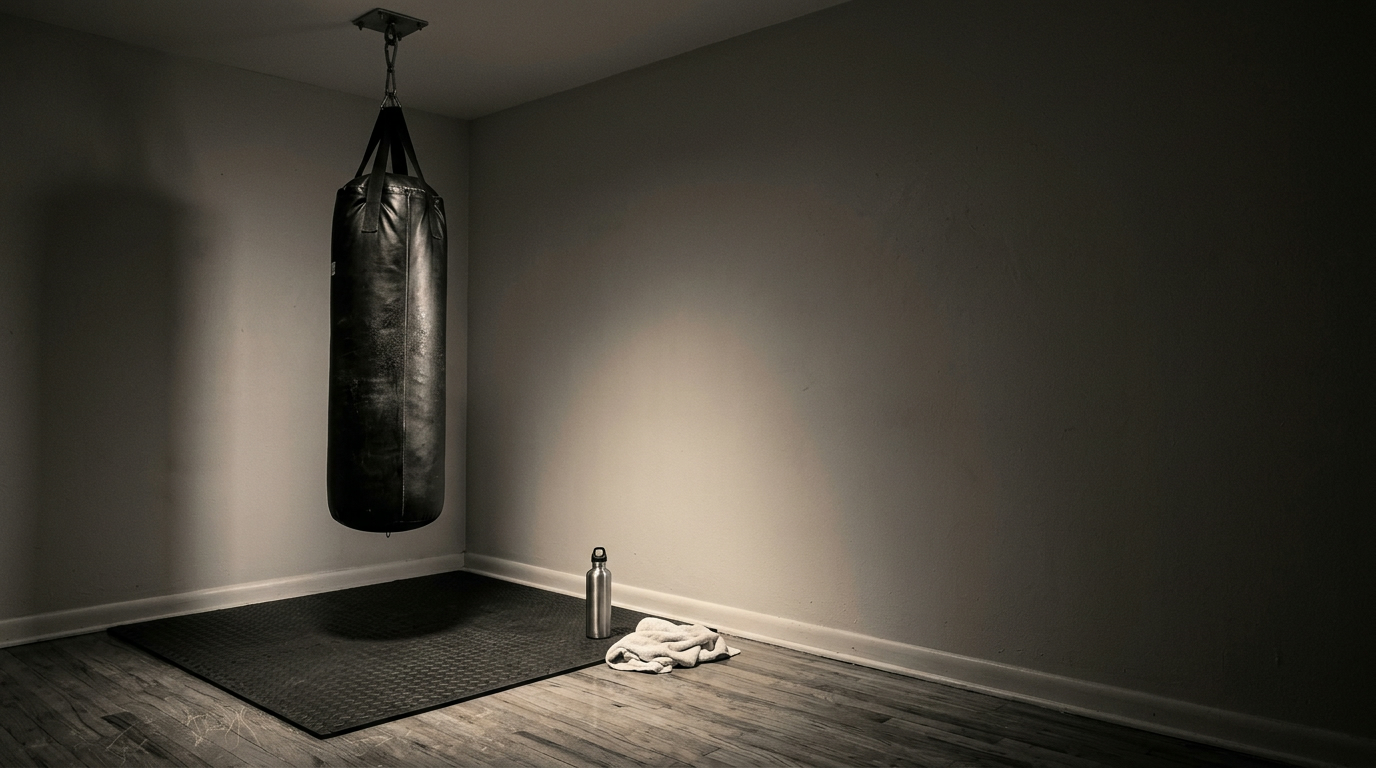
How much water does a bag session actually cost you?
Nobody knows your number but you. Sweat rates vary enormously from person to person, and the American College of Sports Medicine says as much in its position stand on exercise and fluid replacement. Its authors recommend customized fluid plans and point to the cheapest test there is: weigh yourself before and after a session.
Try it. Step on the scale in dry shorts before wrapping, then again after you towel off. Whatever you lost is mostly water, minus anything you drank along the way. The same document sets the line worth caring about: drinking during exercise should prevent more than 2 percent of body weight disappearing as a water deficit, because past that point performance starts to suffer.
At a Muay Thai camp in Thailand, the day often starts with roadwork before the heat builds, then a second long session in the afternoon. Fighters there sweat through their shirts early and sip from small bottles all day. Nobody is counting ounces. They have simply learned what a normal day costs them. Repeat the scale test on a hot day, a cool day and a hard day, and you will learn yours too.
Your garage in August and your apartment in February will give wildly different answers. Test both.
What should you drink before you wrap your hands?
Start earlier than you think. The ACSM guidance says to begin drinking at least several hours before activity, so that your body can absorb the fluid and your urine output returns to normal. Arriving at the bag with a dry mouth and then chugging half a litre is the worst version of this.
The old gym test still works: look at your urine. Pale straw means you are in decent shape. Dark apple juice means you started behind, and no amount of mid-session sipping fully fixes that.
There is a practical limit on the other side. A stomach sloshing with water is miserable when you rotate into hooks and body shots, and some people feel it on every round. If that is you, drink a normal amount with your meal and a small amount in the last stretch before you start, then let the rest breaks do the work.
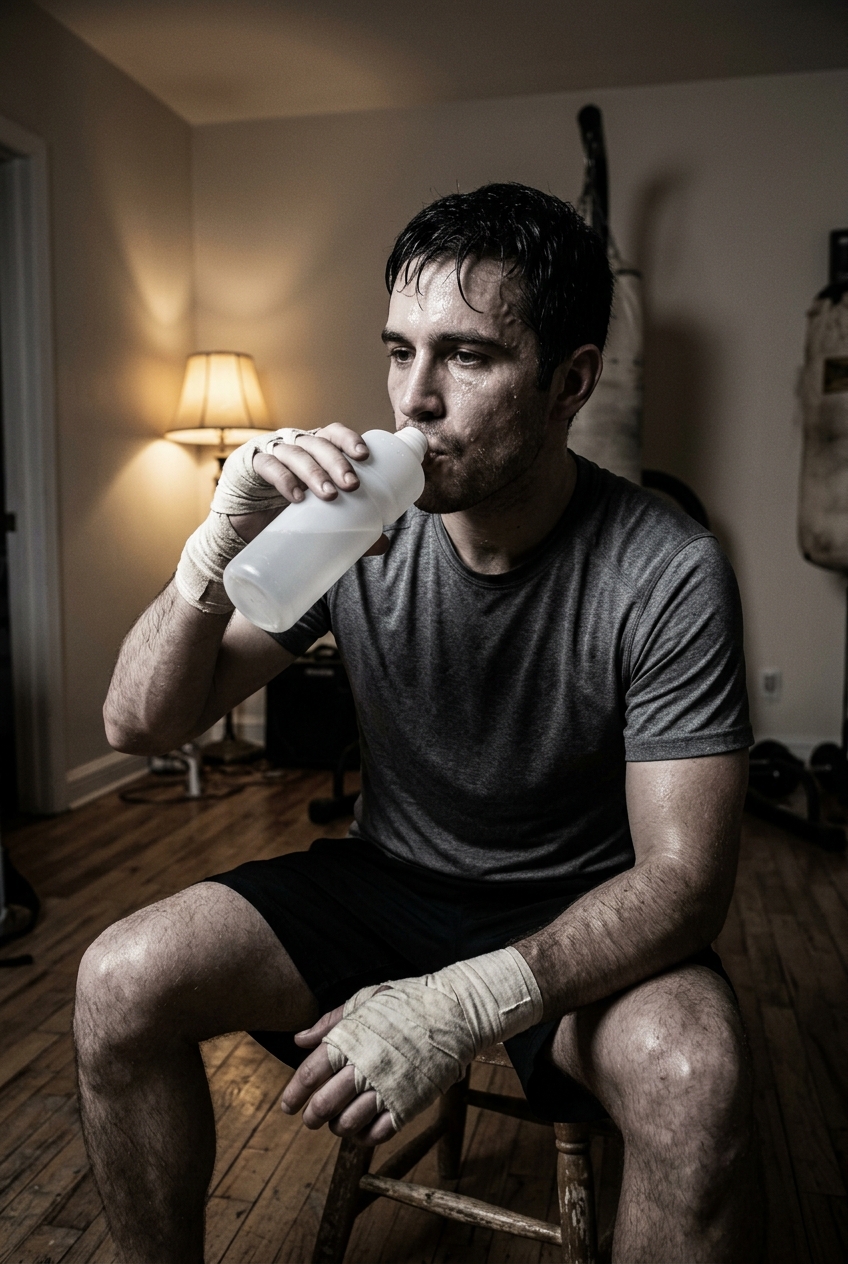
How do you drink between rounds without killing your rhythm?
This is where most home trainers go wrong. They either skip the bottle entirely until the session ends, or they stop after every round, sit down for five minutes and scroll their phone. Neither keeps the session alive.
Here is the cue that works for a standard round-by-round session of three-minute rounds with a short rest. Stay on your feet during the rest. Walk a slow circle, shake out your arms, and take a couple of swallows, not a gulp. Then put the bottle down before the bell. Gulping makes you feel full and slow, and you will feel it as soon as the next round starts.
Early rounds need less. When you are only warm, sips are enough. As the session gets heavier, the swallows should get a little bigger, because that is when the sweat is running. If you are doing ten rounds or more, think of the bottle as part of the workout, not a reward for finishing it.
A round timer with built-in rest periods takes the decision off your plate. When the bell sounds for rest, you drink. When it sounds again, you stop. You do not have to think about it at all.
Watch a pro fight and you will see the reverse in the corner. The cutman or trainer holds a bottle to the fighter’s mouth, and the fighter rinses and spits far more often than he swallows. A full stomach in the middle of twelve hard rounds is a bad idea. For you, solo on the bag, swallowing is the point.
Do you need electrolytes, or is water enough?
For a normal bag session of moderate length, water does the job for most people. The ACSM paper notes that drinks with electrolytes and carbohydrates can offer benefits over water alone under certain circumstances, and the circumstances are mostly long sessions, hot rooms and heavy sweaters.
How do you know if you are a heavy sweater? Look at your shirt and cap after they dry. White salt marks mean you lose a lot of sodium along with the water. Cramping calves or hands late in a session is another hint, though it can have other causes too.
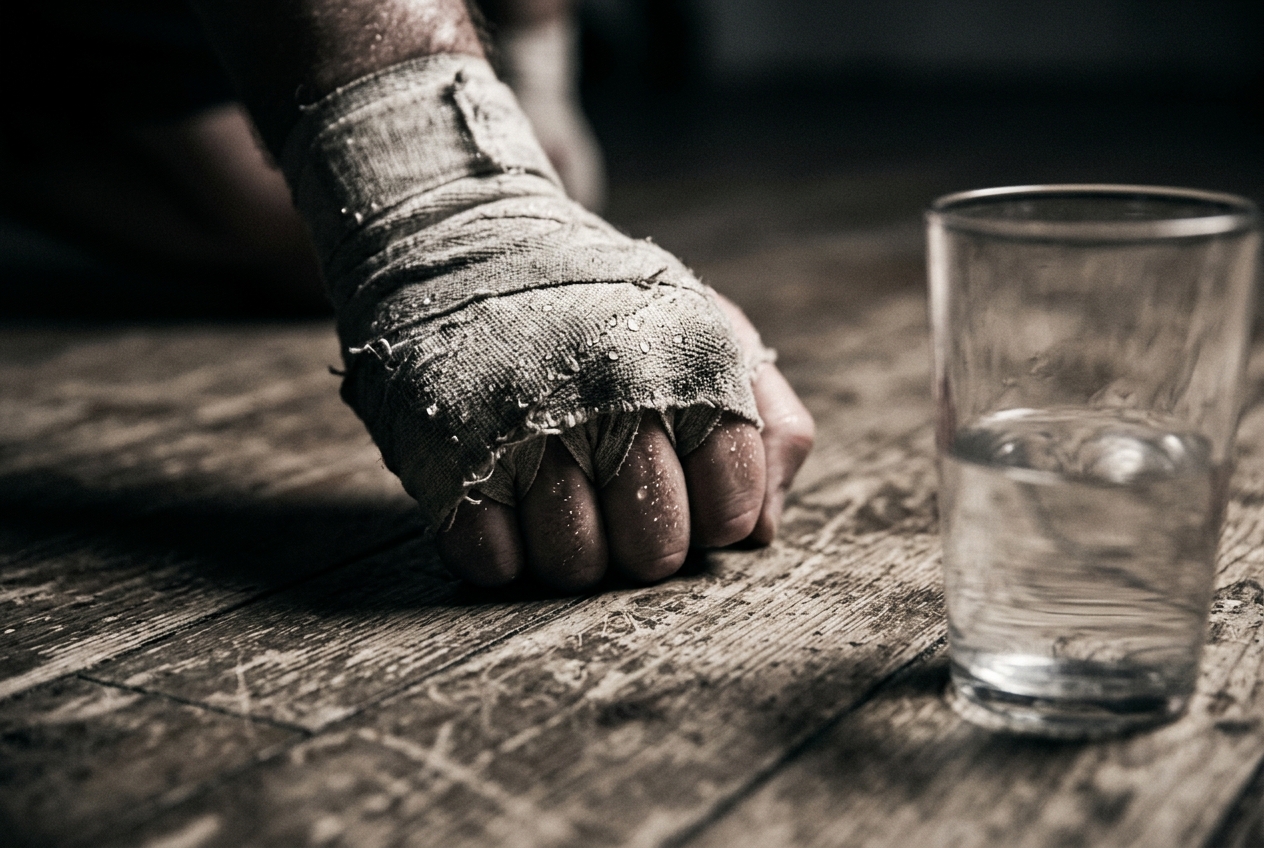
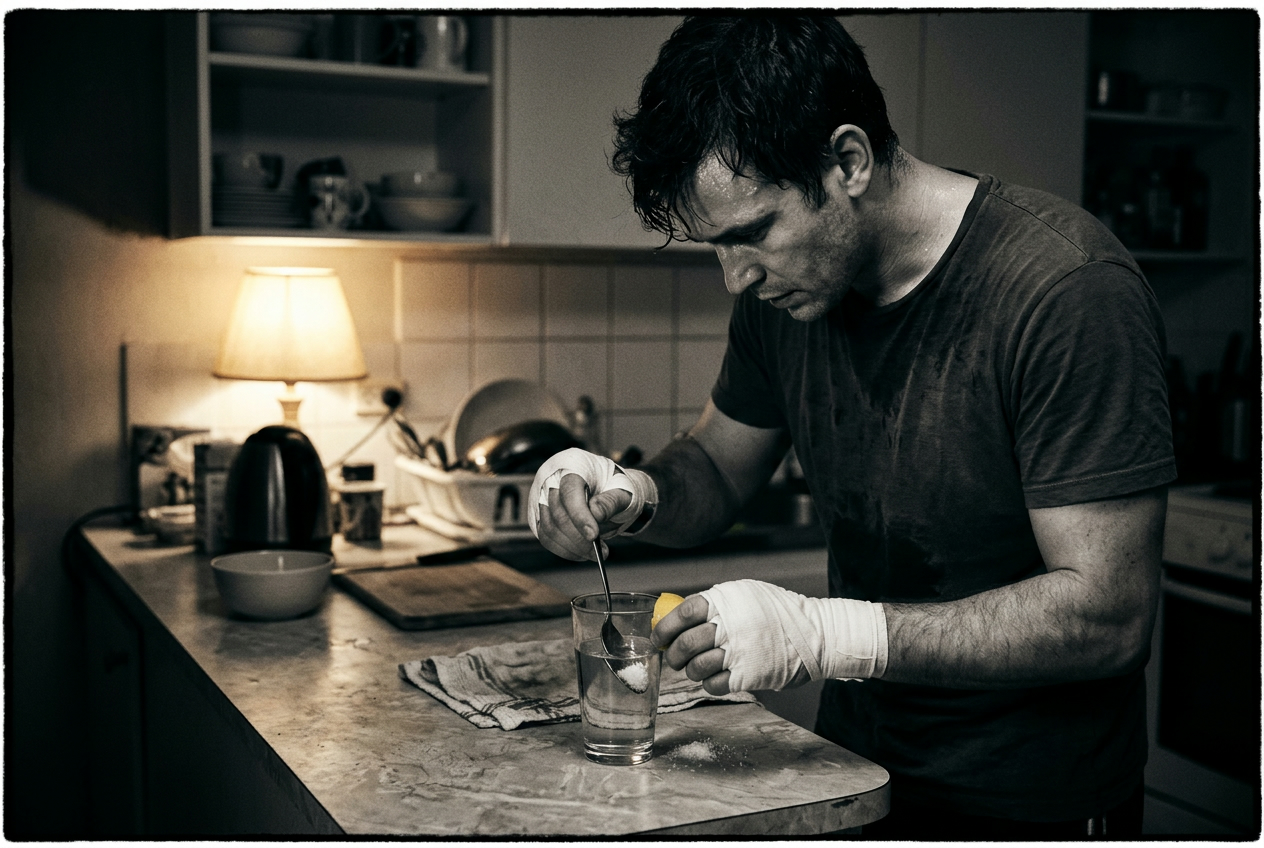
If this sounds like you, a pinch of salt and a squeeze of lemon in a glass of water after training is the home version. It is cheap and you control exactly what goes in. If you prefer a commercial mix, read the label for sodium and sugar and pick one that matches how long you train, not how hard the marketing pushes it.
There is a flip side that gets less attention. Drinking far more than you sweat out can dilute your blood sodium, a condition called hyponatremia that has been documented in endurance athletes who drank on a schedule rather than to thirst. It is rare in a thirty-minute bag session. It matters if you are doing long roadwork in the heat and forcing down a bottle every few minutes. Thirst is a decent guide for most of us.
Does sweating more mean you burn more fat?
No. This is the myth that never dies in boxing gyms. Plastic sweat suits, hot rooms and extra layers all make the scale drop, and all of it is water that you will put back with your next glass.
Fighters who need to make weight know this better than anyone, and the ones who do it well treat the last few days very carefully. Our guide to cutting weight safely before a fight covers why dehydrating on purpose is a calculated risk and not a training method. If you are not stepping on a scale in front of a commission, you have no reason to take it.
If your real goal is a leaner midsection, hydration is a support act. Fat loss comes from consistent training and eating, and a structured core plan such as the Abs Pro 30 day abs program pairs well with bag rounds. Staying hydrated simply lets you complete those sessions at full effort.
What if you train in a hot garage or a stuffy apartment?
Heat changes the math. A garage in summer, a basement with no airflow or a room with the windows shut can add a lot to the load on your body, because sweat does not evaporate well and your body keeps making more of it. A fan helps more than most people expect, and opening a window costs nothing. Plenty of old-school gyms in hot climates, from Bangkok to Philadelphia in July, run big fans for exactly this reason.
Know the warning signs and respect them. A pounding headache, dizziness, nausea, cramps that will not release or a sudden chill while you are still sweating all mean the session is over. Stop, sit somewhere cooler, sip water slowly and call it a day. Finishing the round is never worth it. If symptoms are severe or do not settle, get medical help.
Shorter rounds or longer rests are a legitimate adjustment on a brutal day. Cutting intensity for a week in a heat wave is training smart, not going soft.
What should you do after the last round?
Weigh yourself again, if you are curious, and drink steadily over the next few hours rather than all at once. You will keep passing some of it as urine, so you generally need to take in more than you lost. The ACSM statement says the aim after exercise is to replace the fluid and electrolyte deficit, with the speed depending on when you train next. If your next session is tomorrow evening, there is no panic. If you box twice in one day, start now.
A glass of milk, a meal with some salt in it or a bowl of soup all count. Pair that with real food, which carries its own sodium, and a decent night. Our article on sleep for fighters explains why recovery between sessions decides how good the next one is. Hydration is the cheapest part of that.
What does a simple plan look like for tomorrow?
Drink normally through the day, pale straw as the target. Fill a bottle and put it where you can reach it without leaving your training space. Do your warm-up, then work in rounds, and sip during every rest. After the last bell, drink steadily and eat.
If you want a clock that handles the rounds and rests for you, the free Heavy Bag Pro boxing timer works in any browser, and the app adds over a thousand boxing, kickboxing and Muay Thai combinations with audio callouts for the rounds themselves.
Round four will still hurt. It will just stop being the round where you quit.