
A 43-year-old walking into a boxing gym for the first time is not an inspiring exception. It happens more than coaches let on, and the people who do it are not all fitness fanatics chasing a midlife identity. Some of them just got tired of running. Some of them got divorced. One coach I spoke to described a guy named Trevor who showed up in February with no gym bag, no wraps, and no idea what a jab even was. Trevor had just turned 41. Three months later, he was the best student in the beginner group, and the guy landing pad sessions twice a week.
The roadmap for people over 40 is not dramatically different from the roadmap for people who are 25. But the margins matter more. Recovery windows are wider. Wrist tendons need longer to adapt. Ego can get in the way in a specific, age-flavoured way that younger beginners do not deal with as often. This guide is about working with those realities, not pretending they do not exist.
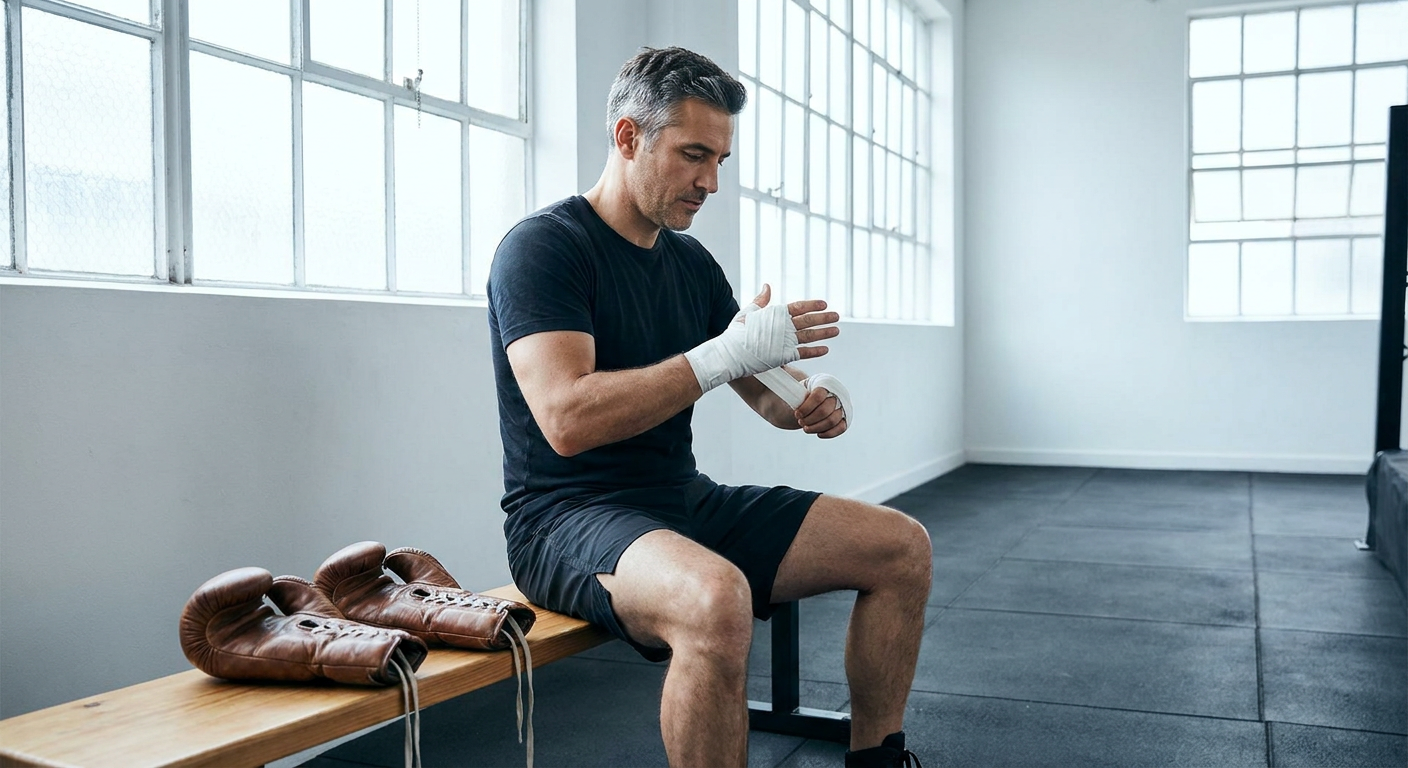
Is 40 the cutoff everyone treats it as?
The short answer is no. USA Boxing allows amateur competition up to age 40, and masters-level competition exists for fighters well past that. On the training side, there is no medical consensus that 40 represents a meaningful physiological cliff. Aerobic capacity, muscle recruitment, and motor learning all continue to respond to training stimulus into your forties and beyond.
What does change is the rate of recovery. Connective tissue, tendons especially, takes longer to adapt to new load than it did at 25. This is not a reason to avoid boxing. It is a reason to structure the first six months differently from how a 22-year-old might. The people who get hurt are not the ones who started at 40. They are the ones who trained like they were 22.
Bernard Hopkins won a world title at 49. Tony Bellew was competitive in his late thirties. These are outliers in terms of elite achievement, but they demonstrate something useful: the sport does not expire at a round number on a birthday.
What does the first month look like?
It mostly looks like footwork. And shadowboxing. And a fair amount of feeling slightly ridiculous in front of a mirror.
The first month for any beginner over 40 should be almost entirely technique-focused, with no bag work beyond light touch work, and no sparring whatsoever. The reason is not fitness. It is connective tissue. Your cardiovascular system will adapt to boxing-specific demands within a few weeks of consistent training. Your wrists, elbows, and shoulder joints need longer to adjust to the impact loads of punching, even padded punching against a bag.
A good starting week might look like this: two technique sessions focused on stance, guard, and the jab cross. One session of pure footwork, lateral movement, and pivoting without any punching at all. One rest day between each session. That is it for week one. For people with previous gym experience, this will feel embarrassingly slow. That feeling is worth sitting with rather than overriding.
I asked a coach at a small boxing gym what he wished more beginners over 40 would understand. His answer: “They think they’re behind. They’re not behind anyone. They’re starting.” He meant it as reassurance, but there is also something useful in the framing. There is no race happening here. The bag will be there in two months.

How do you warm up properly when your joints are not 25?
Longer. That is the honest answer. A proper warm-up for a 42-year-old is going to take closer to 15 minutes than 5. This is not optional padding. A cold shoulder joint does not absorb punching load well, and a cold wrist flexor tears under the kind of impact that a warmed-up one handles fine.
The warm-up structure that works for older beginners: start with 5 minutes of light movement, jogging on the spot or skipping at a slow pace, before touching any combat-specific work. Then wrist rotations, shoulder circles, and hip mobility for another 5 minutes. Then shadowboxing at low intensity, no power, just movement and form. Only after all of that should you start hitting anything.
A solid resource on this: the Boxing Recovery and Rest Day Guide on this site covers the relationship between tissue adaptation and training load in more detail than I will go into here. The core point is that warm-up is not wasted time. For people over 40, it is training.
Do you need to spar, and when is it safe to start?
No, you do not need to spar. And the timeline for when to start is longer than most beginners expect.
The standard recommendation at most credible boxing gyms is three to six months of technique work before any contact sparring. For beginners over 40, I would lean toward the longer end of that range. Not because older beginners cannot take contact, but because the neurological patterns that protect you in sparring need time to become reflexive. Walking into sparring with two months of training means defending from a conscious, deliberate place, which is slow. You need the guard and the slip to happen before you think about them.
There is an intermediate step that does not get discussed enough: padwork with a coach. This is where a lot of the real development happens. The coach controls the pace and the contact, you learn to read incoming angles, and the feedback loop is immediate and specific in a way that bag work cannot replicate. If your gym has a coach who will do padwork sessions with beginners, that is worth prioritising over bag rounds.
As for sparring, start with very light technical sparring with a partner who understands the point. No ego. No hard shots. The goal in the first few sparring sessions is purely to apply movement patterns under pressure, not to win anything.
What should you do about the ego problem?
It is real, and it affects beginners over 40 in a specific way. A 23-year-old who gets outworked by a better boxer does not have twenty years of professional competence to reconcile that with. A 44-year-old who is genuinely skilled in their job and their life does. Being a beginner again is strange, and sometimes uncomfortable in a way that is hard to name.
The practical version of this: older beginners have a tendency to go harder than they should in class because being seen as slow or incompetent registers differently. This leads to overextension, ego-driven power shots that burn out technique, and sometimes to injury. The coaches who are good with adult beginners know to watch for this.
Worth reading: Starting Boxing at 50 addresses the psychological side of late-start boxing in more depth. A lot of it applies equally well to people in their early forties. The short version is that the gym culture in most boxing gyms is far more welcoming of adult beginners than outsiders assume, and the ego problems are usually self-generated rather than coming from other students.
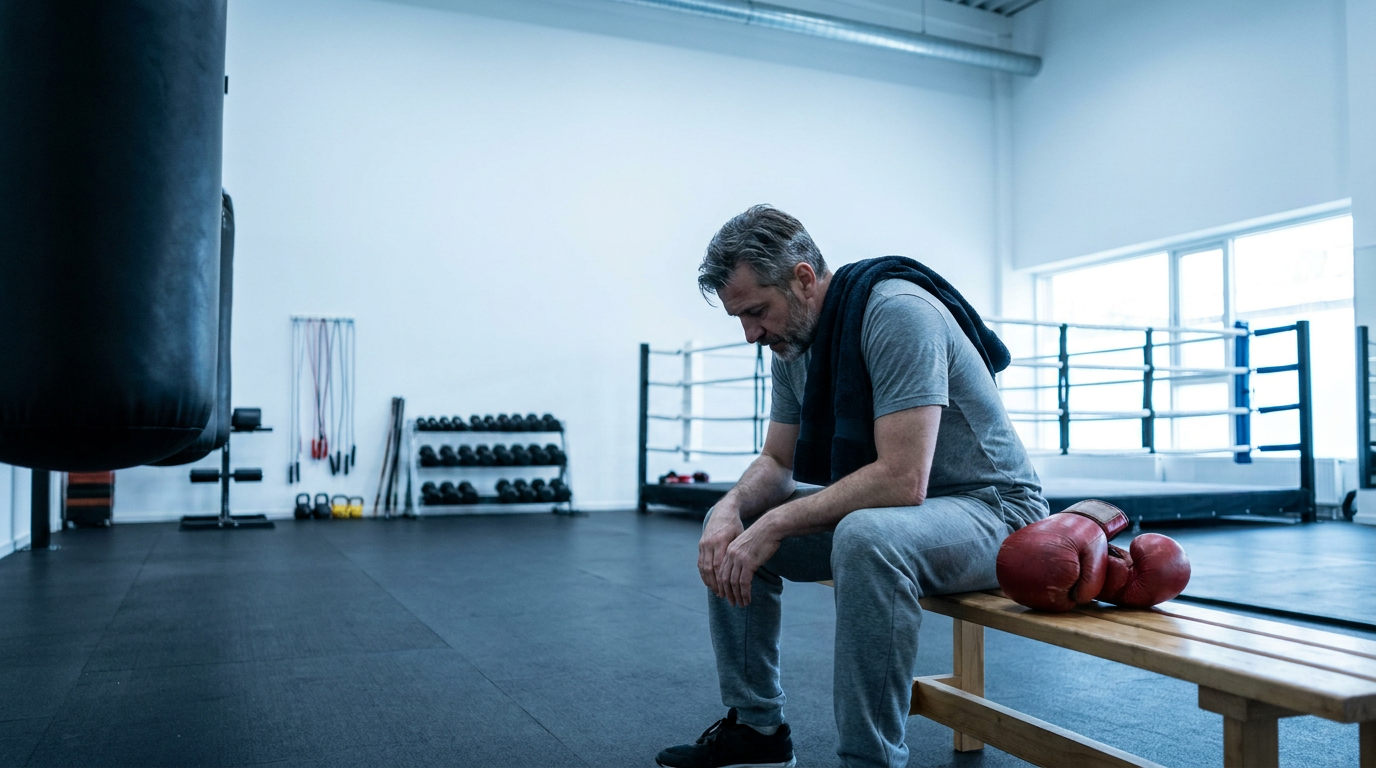
What training tools help for solo work at home?
A heavy bag is not strictly necessary for the first few months. Shadowboxing, footwork drills, and skipping give you most of what you need in the early stages without the joint load of bag work. When you do add a bag, start with lighter rounds and build volume gradually over weeks, not days.
What does help from day one is structured round timing. Free-form shadowboxing without a timer is harder to sustain and harder to pace. Using a round timer, even a simple 3-minute-round-1-minute-rest format, gives the session a discipline that open-ended drilling does not. The free boxing round timer at heavybag.pro/boxingtimer/ does this without requiring an app download, which is useful when you are still figuring out whether the habit will stick.
The solo session guides on this site are worth bookmarking for home training days, covering how to structure work without a coach in the room, which is the situation most beginners find themselves in more often than they expected.
How long before you feel like you actually know what you are doing?
Longer than the YouTube videos suggest. This is not pessimism. It is the honest shape of any motor skill learning curve.
A reasonable benchmark: after three months of consistent training (three sessions a week), your stance and guard should feel natural without active concentration. Your jab and cross should land with some consistency on the bag. You should have footwork patterns that work most of the time. Beyond that, specific development depends on where you train, how often, and who teaches you.
The feeling of competence, the feeling that you know what you are doing rather than executing a remembered sequence, takes longer. Some people get it at six months. Some people are still finding it at a year. This varies, and comparing timelines across different people is not particularly useful.
For what it’s worth, a 2019 BMC Sports Science study on adult recreational boxing found that adult beginners of all ages showed measurable improvements in coordination, balance, and reaction time within 12 weeks of supervised training. Age was not a statistically significant predictor of learning rate in the beginner cohort. The people who stuck around improved at comparable rates regardless of whether they were 25 or 45.
What I have noticed, asking coaches who work with adult beginners: the people who stick at it past the six-month mark almost universally describe a shift where the gym starts feeling like theirs. Not in a territorial way. Just in the way that a place you belong feels different from a place you are visiting. That shift is worth waiting for. Trevor, the guy with no gym bag who showed up in February, says it happened for him somewhere around month four.
Ready to structure your training properly?
The Heavy Bag Pro app builds structured round-based sessions you can follow at home or in the gym without needing a coach to plan everything for you. For beginners over 40 who are training solo at least some of the time, having the session structure provided makes it easier to keep the pace sustainable and track what you have done week over week.
The early stages of boxing are mostly about showing up consistently and not overdoing it. The structure comes first. The skill follows.