
You wake up one morning at 50, look in the mirror, and think about all the things you never tried. Maybe boxing is one of them. Your friends might call it a midlife crisis. Your doctor might raise an eyebrow. But here’s what nobody tells you: boxing at 50 isn’t just possible, it might be perfect timing.
The fears are understandable. Your joints aren’t 25 anymore. Your recovery takes longer. You’ve got responsibilities that 20-year-olds don’t have. But boxing for fitness at 50 brings unique advantages that younger people don’t have: patience, wisdom, and a clear understanding of what you want from training.
This guide covers what you actually need to know about starting boxing at 50. Real expectations, real training plans, real results.
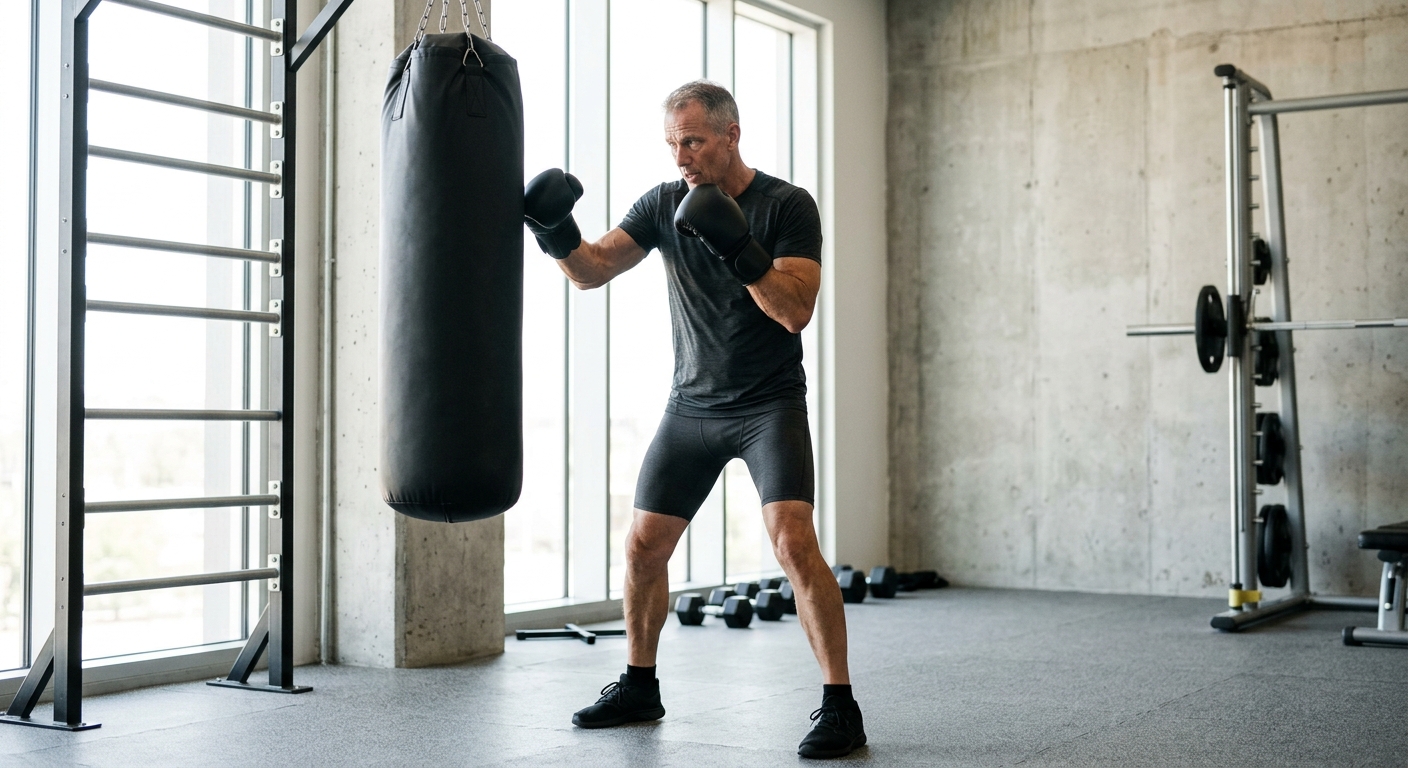
Why 50 is Actually a Great Time to Start Boxing
Starting boxing at 50 has advantages younger guys don’t have. You’ve got patience they lack. You ask better questions. You know what you want.
Mental advantages of starting later
Your brain works differently at 50. You actually listen to instruction instead of just wanting to hit things hard. Young fighters rush to sparring. You’ll master the basics first, which makes you better.
Financial stability for quality instruction
At 50, you can likely afford good coaching and equipment. Quality instruction becomes crucial when you’re older because poor technique can lead to injury. Private lessons, proper gear, and safe training environments aren’t luxuries anymore — they’re necessities you can prioritize.
Clear goals and realistic expectations
Younger boxers often dream of going professional. At 50, your goals are clearer: fitness, stress relief, learning new skills, and maybe some friendly competition. This clarity helps you train smarter and enjoy the process more.
Real Talk: Physical Considerations at 50
Let’s be real. Your body isn’t 25 anymore. Pretending it is gets you hurt. Working with what you have gets results.
Recovery time increases significantly
A 25-year-old can train hard five days straight. You need rest between intense sessions. That’s not weakness, it’s smart.
Plan for 2-3 hard training days per week with active recovery or complete rest between them. Listen to your body. Soreness that lasts more than 48 hours means you pushed too hard.
Joint health becomes priority one
Your knees, shoulders, and hips have decades of wear. Boxing training needs to account for this without becoming so cautious that you don’t get benefits.
Focus on proper warm-ups, cool-downs, and mobility work. Spend 10-15 minutes preparing your body before hitting the bag. This isn’t wasted time — it’s injury prevention that keeps you training consistently.
Cardiovascular adaptation is slower but real
Your VO2 max peaked years ago, but aerobic fitness can still improve significantly. The key is gradual progression. Start with shorter rounds and longer rest periods. A 50-year-old beginner might start with 1-minute rounds and 2-minute rest periods, gradually building up.
Your heart will adapt, but give it time. Trying to match the intensity of 25-year-olds from day one is a recipe for burnout or worse.
Safe Training Progression for Beginners Over 50
The biggest mistake? Trying to keep up with kids half your age. Your ego wants to, but your knees have other plans.
Weeks 1-4: Foundation building
Start with shadowboxing, basic movements, and light bag work. Focus entirely on form. Learn the four basic punches: jab, cross, hook, and uppercut. Practice your stance and footwork.
Train 2-3 times per week maximum. Each session should be 30-45 minutes including warm-up and cool-down. If you’re sore for more than two days, you’re doing too much.
Weeks 5-12: Adding intensity gradually
Once basic movements feel natural, start adding light resistance and slightly longer sessions. Introduce combination punching and begin working with focus mitts if you have a training partner.
Increase training frequency to 3-4 times per week, but vary intensity. Have easy days between hard days. Your hard days might be moderate compared to younger fighters, and that’s fine.
Month 4 and beyond: Finding your rhythm
By month four, you’ll understand your body’s response to boxing training. Some 50-year-olds can handle more volume than others. Some excel at technical work but need to limit power training. Find what works for you.
Consider adding light sparring only if you’re interested and have proper instruction. Many mature boxers get excellent benefits from bag work, pad work, and technical training without ever sparring.
Equipment and Safety for the Mature Boxer
Good equipment matters more at 50. Your joints don’t bounce back from cheap gloves and bad form like they used to.
Essential protective gear
Hand wraps are non-negotiable. Your wrists and knuckles need extra support. Invest in quality 180-inch Mexican-style wraps and learn proper wrapping technique.
Boxing gloves should be 14-16 oz for bag work. The extra padding protects your hands and the bag. Don’t use MMA gloves or light bag gloves — the weight and padding of boxing gloves are there for a reason.
If you plan to spar, headgear and a quality mouthguard become essential. But remember, sparring isn’t required to get benefits from boxing training.
Supporting your joints
Consider joint support for problem areas. Knee sleeves, wrist supports, or ankle braces aren’t signs of weakness — they’re tools that keep you training.
Good boxing shoes make a difference for footwork and ankle support. If you have foot problems, invest in quality shoes or talk to a podiatrist about boxing-specific orthotics.
Training environment matters
Train in a gym with mature supervision if possible. Young trainers sometimes don’t understand the needs of older athletes. Look for coaches who work with masters athletes or have experience with adult beginners.
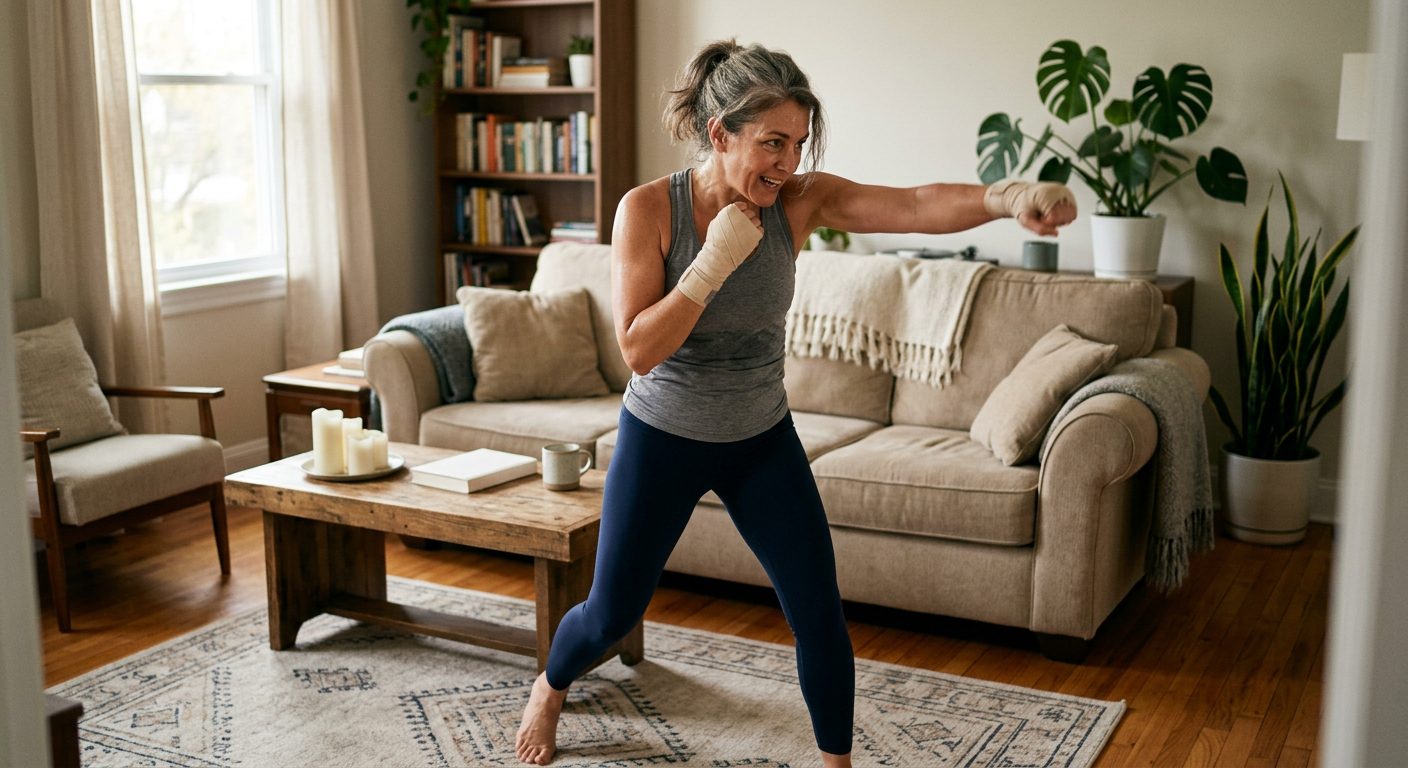
If you train at home, ensure you have proper space and equipment. A quality heavy bag, good lighting, and enough room to move safely make home training viable for many mature beginners.
Common Mistakes and How to Avoid Them
Mature beginners make predictable mistakes. Knowing them in advance helps you avoid setbacks.
Trying to keep up with younger fighters
This is the biggest mistake mature beginners make. Your training partner might be 30 and have been boxing for five years. Comparing yourself to them is pointless and dangerous.
Train at your own pace. Focus on your own progress. Celebrate small victories like landing clean combinations or lasting a full round.
Ignoring pain signals
Young bodies bounce back from minor injuries. Mature bodies need attention to aches and pains before they become major problems.
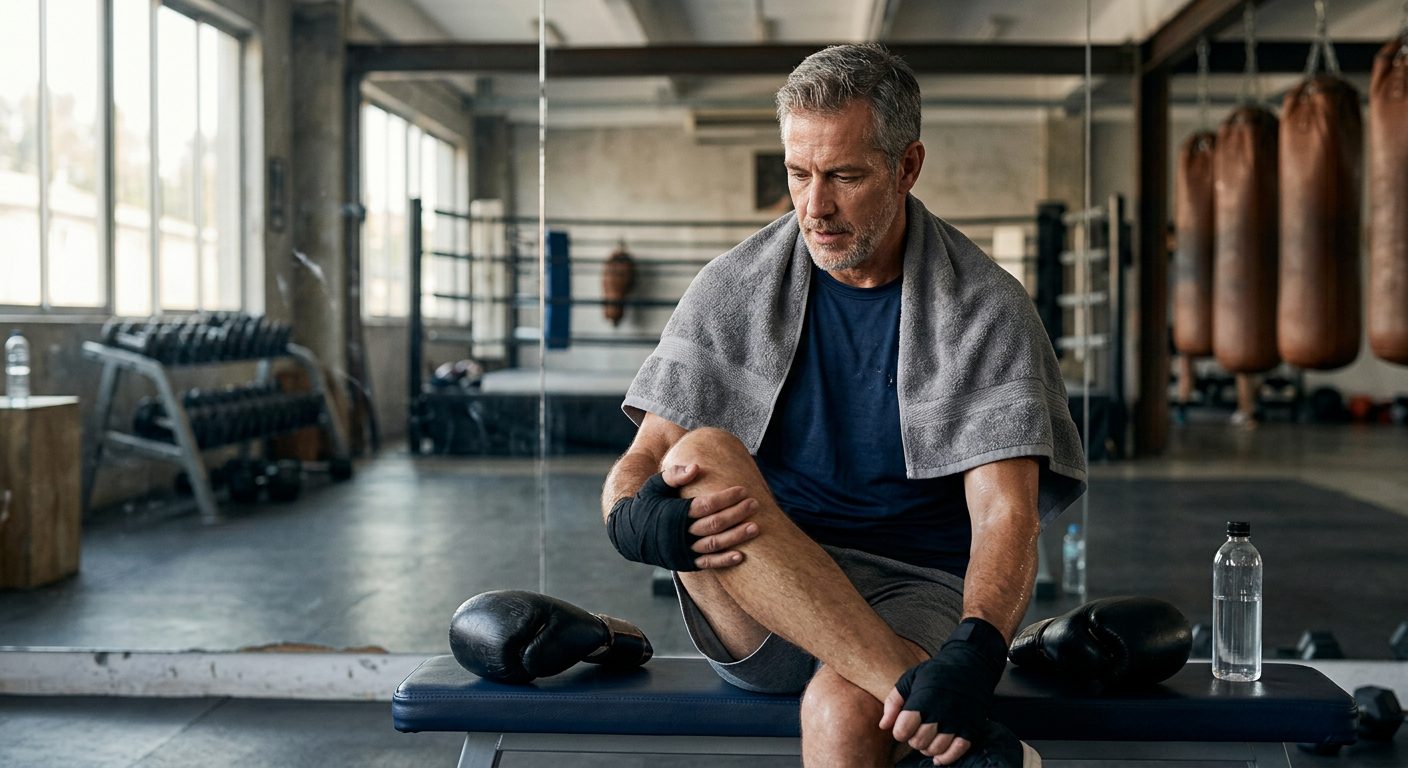
Learn the difference between muscle fatigue and joint pain. Fatigue is normal and expected. Sharp pain, especially in joints, needs immediate attention. When in doubt, rest and evaluate.
Skipping warm-up and cool-down
Young fighters can sometimes get away with jumping right into hard training. Mature athletes need proper preparation and recovery protocols.
Spend at least 10 minutes warming up with light movement, dynamic stretching, and gradual intensity increases. Cool down with light movement and static stretching. This isn’t optional.
Setting unrealistic timelines
You want results, but expecting to transform your body and boxing skills in six weeks is setting yourself up for disappointment. Real fitness changes take months, not weeks.
Set process goals instead of outcome goals. Instead of “lose 20 pounds,” focus on “train consistently three times per week.” Instead of “learn to box,” focus on “master basic combinations.”
Health Benefits That Matter at 50
Boxing training at 50 provides specific health benefits that matter more as you age.
Bone density improvement
Weight-bearing exercise like boxing helps maintain and build bone density. This becomes crucial for preventing osteoporosis and fractures later in life.
The impact of punching (when done with proper technique) stimulates bone formation in your hands, wrists, and arms. Footwork and stance work strengthens leg and hip bones.
Balance and coordination
Boxing requires constant balance adjustments and hand-eye coordination. These skills decline with age unless actively maintained.
Regular boxing training can improve balance, reduce fall risk, and maintain cognitive function through complex movement patterns that challenge your brain.
Cardiovascular health without joint pounding
Boxing provides excellent cardiovascular benefits without the joint impact of running. The interval nature of round-based training improves both aerobic and anaerobic fitness.
For people with knee or hip problems who can’t run, boxing offers an alternative that’s easier on joints while still providing intense cardio benefits.
Stress relief and mental health
The stress relief benefits of boxing are real and significant. Hitting a heavy bag releases physical tension while the focus required for technique work provides mental relief from daily concerns.
Many mature boxers report better sleep, improved mood, and increased confidence from their training. The accomplishment of learning new skills at 50+ provides a psychological boost that extends beyond the gym.
Creating a Sustainable Training Schedule
Consistency matters more than intensity for mature beginners. A sustainable schedule you can maintain long-term beats an aggressive program you’ll burn out on.
Sample weekly schedule for beginners
Monday: Boxing technique (45 minutes including warm-up/cool-down)
Tuesday: Rest or light activity (walking, stretching)
Wednesday: Boxing conditioning (40 minutes focusing on fitness)
Thursday: Rest or mobility work
Friday: Boxing skill practice (45 minutes working on combinations)
Saturday: Active recovery (light activity, walking, yoga)
Sunday: Complete rest
Adjusting for your lifestyle
Work travel, family commitments, and other responsibilities require flexibility. The key is maintaining consistency when possible and not abandoning training completely when life gets busy.
Have backup plans for busy weeks. Even 20 minutes of shadowboxing and stretching maintains continuity when you can’t get to the gym.
Consider home training options for consistent practice. A basic setup with gloves, wraps, and a timer allows you to maintain skills between gym sessions.
Progressing safely over months
Month 1: Master basic stance and single punches
Month 2: Learn simple combinations (jab-cross, jab-hook)
Month 3: Add footwork and defense basics
Month 4: Integrate movements into flowing combinations
Month 5: Increase intensity and consider pad work
Month 6: Evaluate goals and plan intermediate progression
This timeline might seem slow, but it builds lasting skills without injury setbacks that could derail your progress.
Nutrition and Recovery for the Mature Boxer
Your body’s recovery needs are different at 50. Nutrition and recovery protocols become more important for consistent training.
Protein needs increase with age
Mature adults need more protein to maintain muscle mass, especially when adding resistance exercise like boxing. Aim for 1.2-1.6 grams of protein per kilogram of body weight daily.
Time protein intake around workouts. Having 20-30 grams of protein within two hours of training helps muscle recovery and adaptation.
Hydration becomes critical
Dehydration risk increases with age, and boxing training increases fluid needs. Start drinking water hours before training and continue replacing fluids throughout the day.
Pay attention to urine color as a hydration indicator. Light yellow indicates good hydration; dark yellow suggests you need more fluids.
Sleep quality affects everything
Recovery happens during sleep, and sleep quality often declines with age. Boxing training can actually improve sleep quality, but you need to prioritize it.
Aim for 7-8 hours of sleep nightly. Create a consistent sleep schedule and avoid intense training within three hours of bedtime.
Managing inflammation
Low-level chronic inflammation increases with age and can be worsened by intense exercise. Anti-inflammatory foods and recovery practices become more important.
Include omega-3 fatty acids, colorful vegetables, and anti-inflammatory spices in your diet. Consider recovery practices like gentle yoga, meditation, or massage.
When to Consider Sparring (If Ever)
Light sparring can be beneficial for experienced mature boxers, but it’s not necessary for fitness benefits. Many successful boxing programs for older adults focus entirely on bag work, pad work, and technique development.
Prerequisites for safe sparring
Before considering any sparring, you should have:
- At least six months of consistent technique training
- Excellent control of basic punches and combinations
- Good defensive positioning and footwork
- Proper protective equipment including headgear and mouthguard
- Experienced supervision from a qualified coach
Light contact only
If you do spar, keep it light and technical. The goal is practicing timing and distance, not testing power. Your sparring partner should be experienced enough to control intensity.
Set clear rules before sparring: light contact only, focus on technique, stop immediately if anyone feels uncomfortable. Ego has no place in mature sparring.
Alternatives to sparring
You can get most benefits of sparring through other methods:
- Focus mitt work with a partner
- Shadowboxing with an imaginary opponent
- Reaction training drills
- Defensive movement patterns
These alternatives provide timing and distance practice without impact risks.
Mental Game and Motivation
Starting something new at 50 requires different motivation strategies than at 25. Understanding this helps maintain long-term commitment.
Embrace the beginner mindset
You’re going to be bad at boxing initially. This is normal and expected. Embrace being a beginner instead of fighting it.
Focus on small improvements rather than comparing yourself to others. Celebrate landing clean combinations, completing full rounds, or mastering new techniques.
Set age-appropriate goals
Your goals at 50 should reflect your life stage and priorities. Instead of competitive goals, focus on:
- Consistent training habits
- Improved fitness markers (strength, endurance, flexibility)
- Stress management and mental health benefits
- Learning new skills and challenging yourself
- Social connections through training
Handle gym intimidation
Boxing gyms can seem intimidating to mature beginners. Remember that most serious boxers respect anyone willing to train hard and learn.
Find a gym that welcomes adult beginners or consider starting with personal training before joining group classes. Many gyms have masters or adult-only classes specifically for mature athletes.
Long-term perspective
Think in terms of years, not months. The goal is building a sustainable practice that improves your life long-term.
You might not become a great boxer in six months, but you can definitely become a fitter, more confident person who happens to box. That’s a worthy goal at any age.
Working with Instructors as a Mature Athlete
Finding the right instruction is crucial for mature beginners. Not all trainers understand the needs of older athletes.
Look for experience with mature athletes
Seek trainers who have worked with masters athletes or adult beginners. They understand different learning styles, injury prevention needs, and appropriate progression rates.
Ask potential trainers about their experience with older students. How do they modify training? What’s their injury rate? How do they handle different fitness levels?
Communicate your goals and limitations
Be honest about your goals, health history, and any physical limitations. A good trainer will work with your individual needs rather than pushing a one-size-fits-all approach.
Discuss any previous injuries, current medications, or health concerns that might affect training. This isn’t showing weakness — it’s providing information that helps your trainer keep you safe.
Advocate for appropriate training
Don’t be afraid to speak up if training intensity or methods don’t feel right for your body. You know your limitations better than anyone.
A good trainer will appreciate feedback and adjust accordingly. If a trainer insists on pushing through pain or ignoring your concerns, find someone else.
Building a Support Network
Training at 50 can feel isolating if you’re surrounded by much younger athletes. Building a support network helps maintain motivation and enjoyment.
Find training partners your age
Look for other mature athletes in your gym or community. Many adults who start boxing at 50+ become lifelong training partners and friends.
Consider starting a small group with other beginners. Training together provides accountability and shared learning experiences.
Family and friend support
Help friends and family understand your goals so they can provide appropriate support. Some people might not understand why you want to box at 50.
Share your successes and challenges. Most people will support your efforts once they see the positive changes in your health and confidence.
Online communities
Connect with other mature boxers through online forums and social media groups. Sharing experiences with people facing similar challenges provides motivation and practical tips.
Many boxing apps and communities have specific groups for masters athletes or adult beginners.
Equipment and Technology for Training
Modern technology can enhance boxing training for mature athletes, providing structure and tracking that helps with motivation and progress.
Boxing timer apps for structured training
Consistent round timing helps structure training sessions and build conditioning gradually. The Heavy Bag Pro boxing timer provides professional-grade timing features designed specifically for combat sports training.
Having reliable timing allows you to focus on technique and intensity without watching clocks. Start with shorter rounds (1-2 minutes) and build up gradually as fitness improves.
Heart rate monitoring
Heart rate monitors help mature athletes train in appropriate intensity zones. This prevents overexertion while ensuring you’re getting cardiovascular benefits.
Learn your target heart rate zones and use monitoring to guide training intensity. This is especially important when you’re learning to gauge exertion during new activities.
Video analysis for technique
Recording your training sessions allows you to review technique and track improvement over time. Many mature learners benefit from visual feedback to correct form.
Simple smartphone video can help you see what you’re doing right and wrong. Compare your technique to instructional videos or have trainers review recordings.
Conclusion: It’s Not Crazy, It’s Smart
Starting boxing at 50 isn’t a midlife crisis — it’s a smart investment in your health, confidence, and personal growth. The key is approaching it with realistic expectations, appropriate caution, and a long-term perspective.
You won’t become Rocky Balboa, but you can become a fitter, more confident version of yourself. You can learn new skills, relieve stress, and maybe make some friends along the way.
The best time to start boxing was 20 years ago. The second-best time is now, regardless of your age. Your 50-year-old self is ready for this challenge if you approach it intelligently.
Start slow, focus on technique, listen to your body, and enjoy the process. Boxing at 50 can be one of the best decisions you make for your physical and mental health.
Remember, age is just a number in the gym. What matters is your commitment to learning, your willingness to work hard, and your determination to keep improving. Those qualities get better with age, not worse.
Lace up your gloves and show yourself what you’re capable of. The heavy bag is waiting, and it doesn’t care how old you are.