
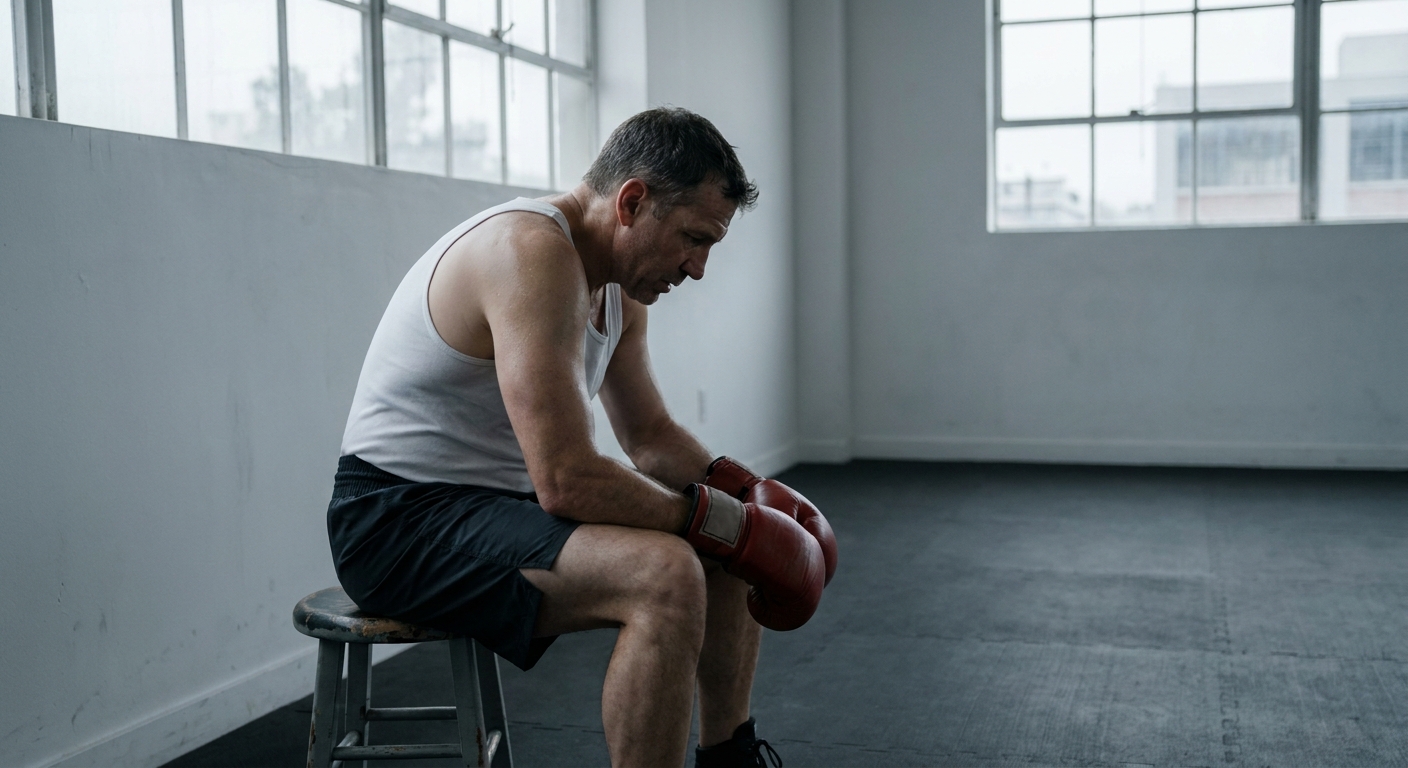
What do you actually say when your fighter is sitting on the stool, thirty seconds from the bell?
Not the motivational speech version. Not the movie corner scene with the swelling music. The real version, where your fighter’s hands are shaking, their mouth is dry, and they’ve already forgotten half of what you drilled this week. You’ve got maybe twenty words before the referee waves you out. Which twenty do you choose?
I’ve been asking coaches this question for months. Cornermen at amateur cards, a few trainers who’ve worked regional pro shows, gym owners who’ve been putting first-timers in competition for years. Nobody gives the same answer. But the bad answers all share a shape, and once you see it, you can’t unsee it.

The problem with most pre-fight corners
Walk around any amateur boxing card and stand near enough corners to hear what coaches say between rounds or right before the opening bell. You’ll hear a lot of this:
“You’ve got this. You trained hard. Go out there and show them what you’re made of.”
That’s not corner advice. That’s a bumper sticker. The fighter already knows they trained hard. Telling them they’ve got this doesn’t give them anything to do with their hands or their feet when the other person does something unexpected in round one.
The specific failure here is that motivation-only corners treat pre-fight nerves as a confidence problem when they’re actually an information-access problem. A nervous fighter doesn’t lack belief. They lack immediate, executable instructions. Their working memory is compressed by adrenaline, and they need one clear thing to anchor to, not five abstract affirmations.
Eddie Futch, who trained Joe Frazier and Ken Norton among others, was famous for extremely short, extremely specific instructions before rounds. His fighters reported feeling calmer walking out knowing exactly what one thing they were supposed to do, not what kind of person they were supposed to feel like. That specificity is the whole game.
Diagnosing what your fighter needs
Before you can say anything useful, you need to know which problem you’re solving. And they’re not the same problem for every fighter.
Some fighters get physically tense. Their shoulders ride up, their breathing gets shallow, their punches get stiff. The corner cue for this fighter is usually physical and rhythm-based. “Breathe out when you throw. Exhale, exhale, exhale.” Or even simpler: “Loose hands. Loose hands, then throw.” Something that gets the body out of the freeze state. At USA Boxing-sanctioned amateur events, coaches who work development programs for younger fighters often use a simple breathing cue as standard protocol before round one for exactly this reason.
Some fighters get mentally scattered. They’ve thought about the other fighter so much that they’re fighting a movie in their head rather than the actual person. This fighter doesn’t need more information. They need less. One anchor point. “Find the jab. Everything off the jab.” One clear entry point into the fight that they’ve drilled a thousand times.
Some fighters get avoidant. They start looking for reasons not to engage, not to throw, not to commit. They’ll do a lot of pretty footwork and very little else. The cue here needs to create a first action. “First thing you do when the bell rings: jab to their chest. One jab, on the bell.” Giving the fighter a scripted first action removes the decision from the moment when their brain is least equipped to make it.
Knowing which version your fighter is matters more than having any single magic phrase. A breathing cue on a mentally scattered fighter does nothing. An anchor jab for someone who’s already too aggressive can make things worse. If you’ve trained with someone for months, you should know their pattern under pressure. If you don’t, ask them directly in the locker room: “How are you feeling right now?” Listen to how they answer, not just what they say.
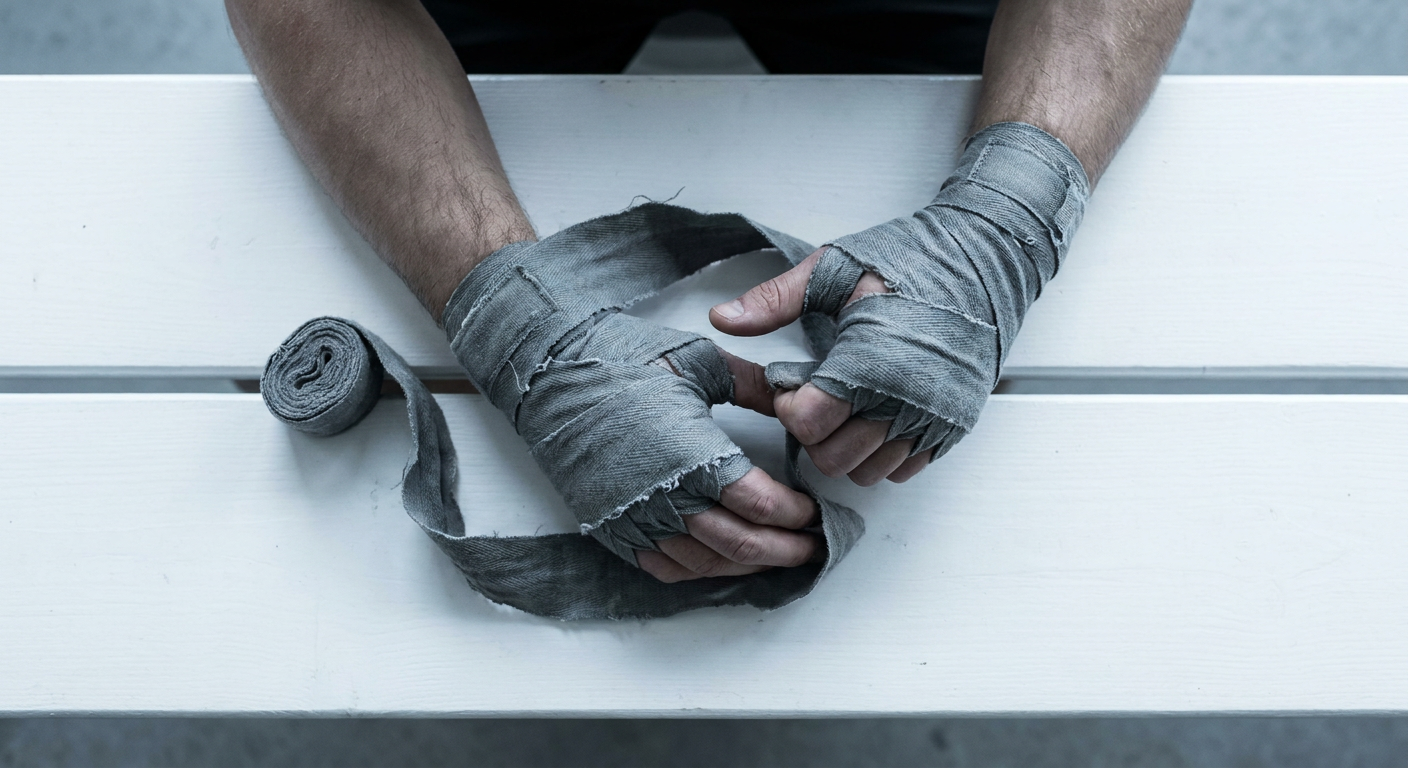
The cue library that works
Here’s what experienced corners have told me works, organized by what it accomplishes. None of these are magic. All of them are short.
Physical reset cues
These interrupt the physical tension response. Best for fighters whose bodies are fighting them more than their minds.
“Roll your shoulders back. Now breathe out.” (Simple physical sequence that breaks the freeze.)
“Loose gloves, loose jaw.” (Two body parts to think about instead of the whole fight.)
“Shake your hands out. Every round starts fresh.” (Resets any physical tension from the previous round’s contact.)
Technical anchor cues
These give the fighter one tactical entry point. Best for the scattered fighter who’s overthinking.
“Jab first, every time. We build from the jab.”
“Keep your right hand on your face when you throw the left.”
“Circle to your right when they load up.”
The anchor cue has to be something the fighter has drilled. If you throw a new tactical idea at them thirty seconds before the bell, it doesn’t exist in their muscle memory and it won’t fire under pressure. Stick to what they know.
Permission cues
These address the avoidance problem. They give the fighter explicit permission to do the thing they’re hesitating to do.
“You’re allowed to throw first. You don’t have to wait.”
“If they back up, you follow. That’s fine.”
“Go in there and throw some punches. That’s why we’re here.”
Permission cues sound obvious, but first-time competitors frequently hold back because nobody explicitly told them they could be the one to initiate. The nerves read as a signal to be careful, and “being careful” looks like not throwing.
First-action scripts
These pre-decide the first five seconds so the fighter doesn’t have to make a decision when the bell rings while their brain is in fight-or-flight.
“Bell rings, jab to the body, then look for their reaction.”
“Come out moving left. Touch the jab. See what they do.”
“Stay on the outside for the first thirty seconds. Measure them up. Don’t rush.”
A first-action script is different from a full game plan. Game plans fall apart before round one ends. A first-action script just gets the fighter moving with intention rather than standing in the middle of the ring wondering what to do next.
Between rounds: the corner adjustment window
Between-round corners are a different discipline from pre-fight corners. You have sixty seconds, the fighter is winded, and you need to fix at least one thing before the next bell. The temptation is to fix everything. Fix one thing.
Miguel Cotto’s trainer Freddie Roach, speaking in a training documentary, described his between-round approach as identifying the single most damaging thing and addressing only that. Everything else waits. “I give them one adjustment per round,” he said. “Two adjustments and they forget both.” That framing is worth carrying into amateur corners at any level.
To get the adjustment right, you need to watch the round. That sounds obvious. But corners sometimes spend rounds pacing, talking to a second, watching something else, then scramble to say something relevant when the bell rings. Watch the round. Specifically watch for the pattern that’s costing the fighter most.
Is the other fighter landing right hands? Because your fighter keeps dropping their left after the jab?
Is your fighter’s footwork going straight back instead of at an angle?
Is the opponent’s jab finding your fighter’s face every time they drop their head?
Pick the one you can fix with a cue they understand, and give it in a complete sentence with a concrete action. “When you throw the jab, keep your right on your cheek” beats “Watch your guard” every time. “Don’t back straight up” gives them nothing. “When they come forward, angle to your left” gives them a direction.
Water, mouthguard removal, any cuts work, and the one tactical cue. That’s the structure. You can use a structured round timer like the one at heavybag.pro/boxingtimer/ during sparring sessions to practice this exact 60-second window in training, so when competition comes, the corner knows how much time it has.
What not to say
Don’t narrate what just happened. “You got hit with three right hands in a row there.” The fighter knows. They felt it. You’ve used five seconds of limited time to say nothing useful.
Don’t list what the other fighter is doing well. “They’ve got a fast right hand.” That’s not a fix, that’s a threat delivery. The fighter doesn’t need more information about what the opponent is good at right now. They need to know what to do about it.
Don’t apologize or hedge. “I know you’re tired, but try to…” The “I know you’re tired” part lands first and tells the fighter you’ve already accepted that they’re exhausted. “Push through to your right when they clinch” is cleaner. Say the adjustment, not the sympathy.
Don’t give tactical instructions that require new learning. Round three of a fight is not the moment to introduce a counter you never drilled. The fighter cannot learn and execute a new technique simultaneously under pressure. If the technique isn’t already in their body, it doesn’t exist in competition.
Don’t yell. Escalating volume doesn’t add clarity. It adds panic. Coaches who speak at normal conversational volume in corners consistently report that their fighters hear and process the instruction. Yelling often means the fighter remembers the emotion of the corner, not the content.
The locker room twenty minutes before
A lot of the pre-fight corner work should already be done before anyone walks to the ring. The twenty-minute pre-fight locker room window is when you can have a slightly longer conversation, before the adrenaline fully floods in and working memory compresses.
This is the time to pre-decide the game plan in one or two sentences. Not a complex strategic framework. One sentence about what they’re going to do when the bell rings, one sentence about what they’ll do if the first thing isn’t working.
This is also the time to ask about how they’re feeling and calibrate your corner approach. If they’re very quiet, they might need physical activation. If they’re chatty and a bit manic, they might need a slowing-down cue. I’ve talked to coaches who do a brief five-breath exercise with fighters in the locker room specifically to get a read on their state before the walk to the ring.
And it’s the time to remind them of the one technical thing that has most consistently worked in training. Not the thing they struggle with. The thing that makes them good. “Your jab is fast. Start with that.”
For fighters managing anxiety before their first competition, the detailed guide on boxing anxiety and how pros manage pre-fight nerves covers the psychological preparation side in depth, including breathing techniques and mental framing that coaches can encourage fighters to use in the locker room.

The corner as a practice skill
Cornering is trainable. It’s a skill that coaches almost never practice explicitly, which is why so many corners default to the bumper-sticker approach when the pressure hits.
One way to practice it: during sparring sessions, set a timer for sixty seconds between hard rounds and run a corner. Give one piece of feedback. One technical cue. Watch the round deliberately instead of just observing it. Do it enough times and you’ll build the pattern of identifying the single most important thing quickly, which is exactly the skill you need at a competition.
The other thing worth practicing is brevity. Record yourself running a corner after sparring. Count the words. Most coaches who do this are surprised by how much of what they said was filler that didn’t survive the translation into the next round. The fighters acted on the clear concrete stuff and forgot the rest. That’s the same thing that will happen in competition.
For fighters who train without a regular coach, having a structured round timer with clear interval signals helps impose some of the same discipline on solo sessions that good cornering creates in the gym. The Heavy Bag Pro app lets you set custom work/rest intervals and warning tones, which is also useful for drilling the “first-action script” mentality: round starts, you do the one thing you pre-decided.
Related reading: how to be a better training partner during pad work covers some of the same communication principles from the mitts holder’s perspective. The habits that make a good pad holder and the habits that make a good corner coach overlap more than most people expect.
After the bout
What you say after the fight matters too, especially for development-age fighters who are processing the experience in real time.
Win or loss, the first thing out of your mouth should be specific and observable. “You kept your jab active in round two. That worked.” Or: “You got caught with the right hand because you were backing straight up. We fix that in the gym.”
Vague post-fight feedback (“You did great, you just need more experience”) doesn’t give the fighter anything to work with in their next training session. Specific feedback does. And it signals that you were watching carefully, which matters to a fighter who’s just spent three rounds in a state of high vulnerability.
The fighters who improve fastest after their first competition are the ones whose coaches debriefed them with specific observations within an hour of the bout. That feedback window is narrow; the emotional clarity that comes right after a fight doesn’t last, and if you miss it, the fighter spends the next week replaying a distorted emotional version of the event rather than a useful technical one.
If you want your fighters to compete again, give them a reason to. Tell them one concrete thing they did well and one concrete thing that will make the next fight different. Those two things are enough.