
Why Boxers Skip Rope Like Their Lives Depend On It
Walk into any serious boxing gym and you’ll see it within minutes: someone in the corner absolutely shredding a jump rope, moving like their feet are on fire. Most people think it’s just cardio or warm-up filler. Wrong.
For boxers, rope work builds the exact movement patterns you need in the ring: light feet, perfect timing, and the rhythm that makes combinations flow like water. When you see Floyd Mayweather or Canelo Alvarez moving around opponents, that footwork was built on thousands of hours with a simple rope. The difference between a boxer’s feet and a runner’s feet starts here.
This guide covers everything from your first awkward skip to advanced patterns that will transform your boxing movement. No fluff, no generic fitness advice. Just the techniques that actually matter for boxing performance.
The Boxing Benefits You Can’t Get From Running
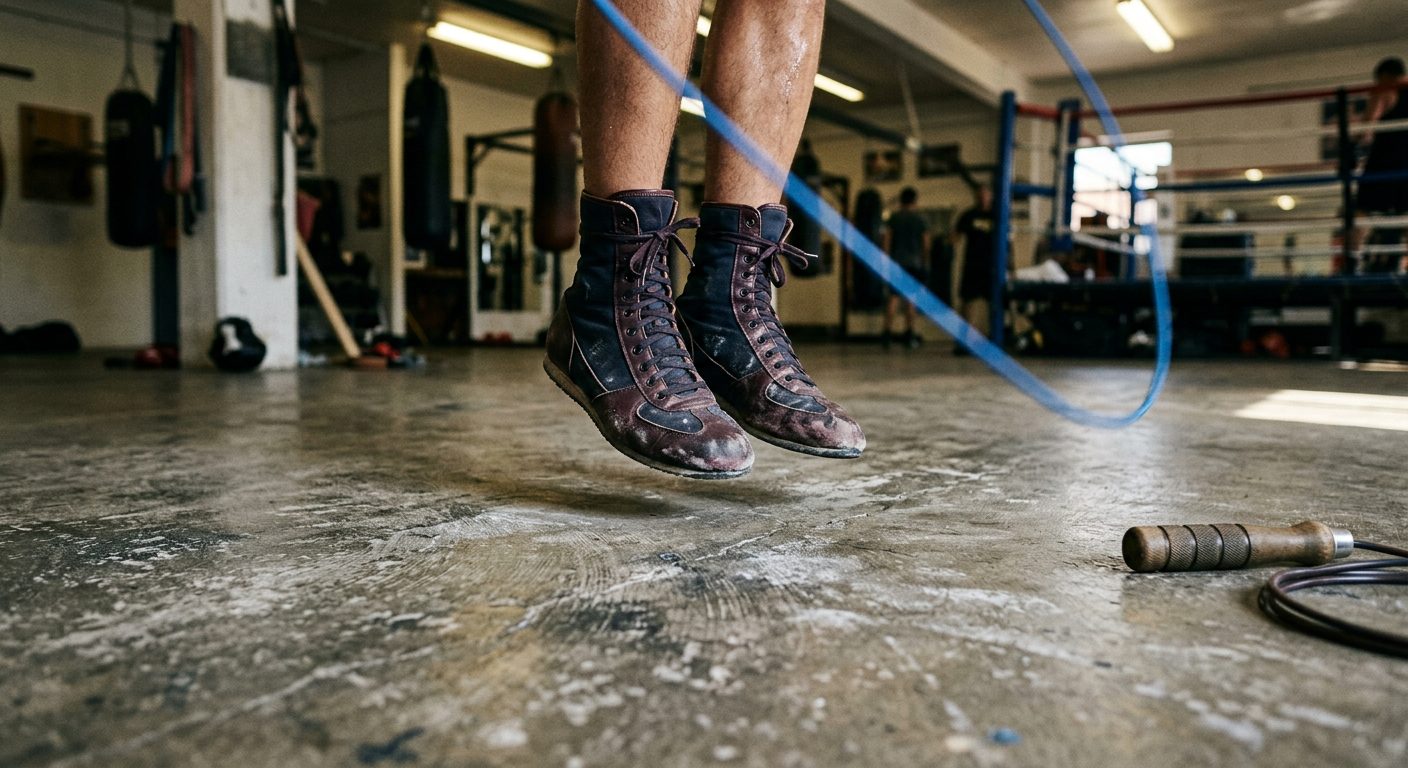
Sure, running builds cardio. But skipping rope builds boxing cardio. The difference is massive. When you’re shadow boxing or hitting the bag, your feet need to stay light and responsive while your upper body works. Running teaches you to pound the pavement with heavy steps. Rope work teaches you to float.
Here’s what 10 minutes of proper rope skipping does that treadmill time can’t match:
- Timing precision: Every skip requires perfect coordination between hand and foot rhythm. Miss by a fraction and you trip.
- Calf power without bulk: Constant small bounces build the exact muscle endurance boxers need for staying light on their feet through 12 rounds. Research confirms that plyometric exercises like rope skipping improve reactive strength without adding significant muscle mass.
- Hand-eye coordination: Your peripheral vision tracks the rope while you maintain balance and breathing. This transfers directly to tracking punches while moving.
- Mental focus under fatigue: When you’re gassed, maintaining rope rhythm forces the same concentration needed to execute combinations when exhausted in a fight.
Professional boxers don’t skip rope because it’s tradition. They do it because it works better than any other single exercise for building the movement foundation that everything else builds on.
Getting Started: The Basic Bounce
Forget the fancy footwork you’ve seen on YouTube. Master the basic bounce first. This is the foundation that every advanced pattern builds from.
Rope length: Step on the middle of the rope with both feet. The handles should reach your armpits. Too long and you’ll trip constantly. Too short and you’ll hunch over like you’re afraid of getting hit.
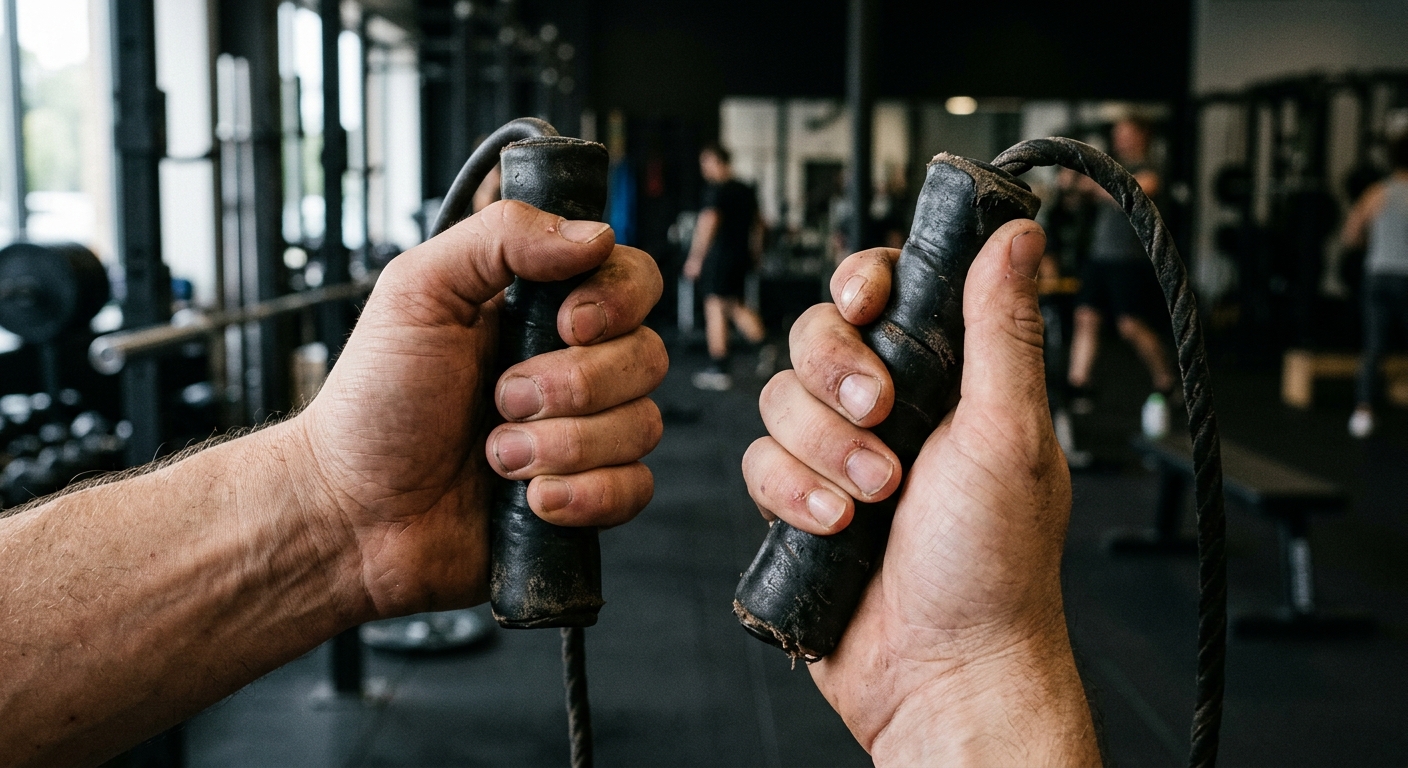
Hand position: Elbows stay close to your ribs. Hands about 6 inches from your sides. Turn the rope with small wrist circles, not big arm swings. Your shoulders shouldn’t move much at all.
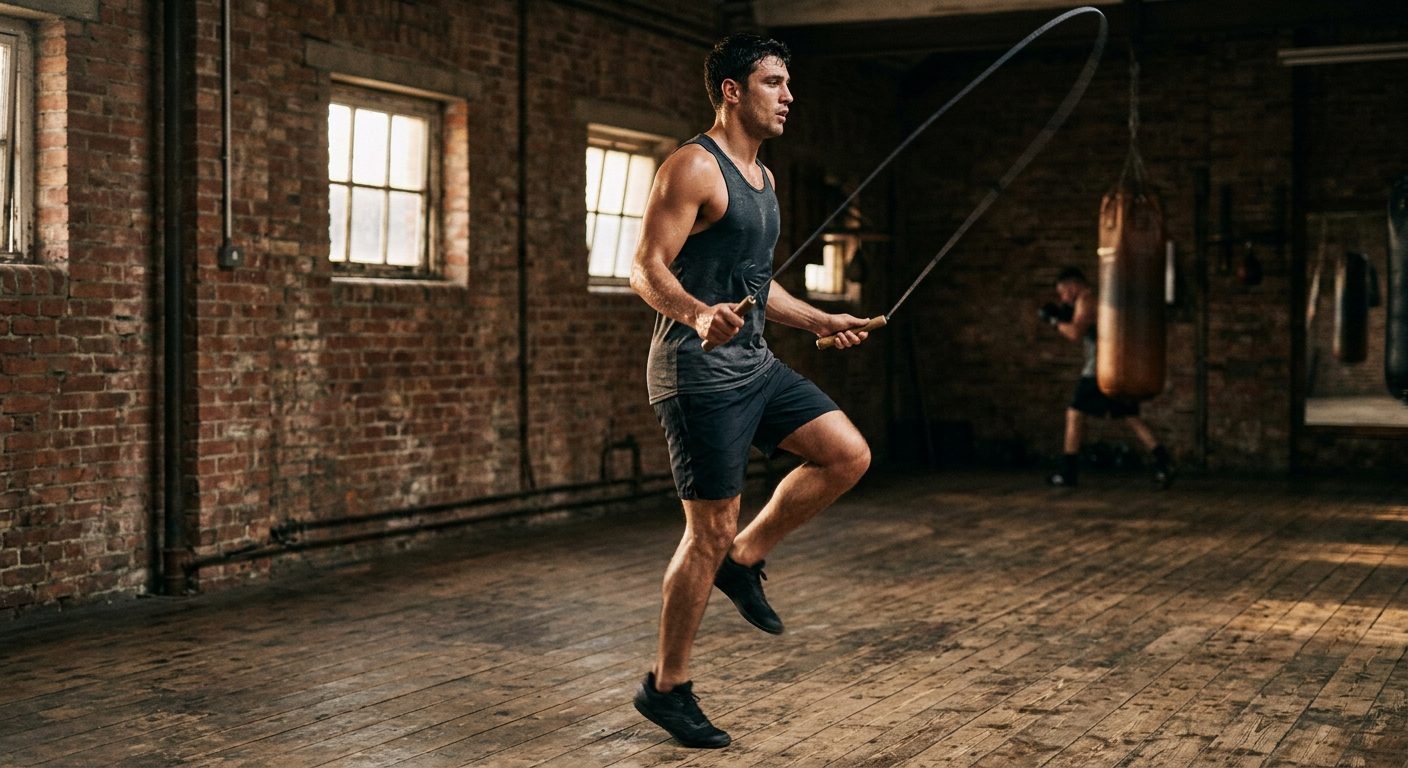
The bounce itself: Land on the balls of your feet, never flat-footed. Small, quick bounces about 1-2 inches off the ground. Knees slightly bent, core tight. Breathe steady through your nose when possible.
Start with 30-second intervals. Your goal isn’t speed—it’s clean, consistent bounces without tripping. Most beginners rush and stumble. Slow, perfect form beats fast, sloppy movement every time.
Common beginner mistakes to avoid:
- Jumping too high (waste of energy, slower recovery)
- Landing flat-footed (kills your calf springs)
- Turning the rope with your whole arms (exhausting and inconsistent)
- Looking down at the rope constantly (ruins posture and timing)
The Step-by-Step Progression System
Boxing gyms don’t teach rope skipping in random order. There’s a logical progression that builds each skill on top of the previous one. Follow this sequence and you’ll develop proper habits instead of fighting bad ones later.
Week 1-2: Foundation
Basic bounce: 30 seconds on, 30 seconds rest. Build up to 3 minutes straight.
Focus: Perfect form, steady rhythm, breathing control.
Daily target: 10-15 minutes total rope time.
Week 3-4: Rhythm Variations
Add alternate foot step: Instead of bouncing on both feet, shift weight from left foot to right foot with each skip. Like jogging in place while turning a rope.
Focus: Smooth weight transfer, maintaining rope speed.
Daily target: 15-20 minutes, mixing basic bounce with alternate foot.
Week 5-6: Boxing Footwork
Add boxer step: Small step forward and back while skipping. Then side to side. This mimics actual boxing movement patterns.
Focus: Moving while maintaining rope rhythm, never losing the bounce.
Daily target: 20-25 minutes, incorporating movement in all directions.
Week 7-8: Speed and Endurance
Double unders: Rope passes under your feet twice per jump. Requires faster hand speed and slightly higher jumps.
Speed rounds: 20 seconds all-out speed, 40 seconds recovery pace.
Focus: Maintaining form under fatigue, building speed without sacrificing technique.
This progression takes about 2 months to complete properly. Don’t rush it. Sloppy advanced techniques are worse than perfect basics.
Advanced Patterns for Boxing Performance
Once you’ve mastered the progression above, these patterns will elevate your footwork and conditioning to fighter levels. Each one targets specific aspects of boxing movement.
The Ali Shuffle
Quick side-to-side steps while skipping. Builds lateral movement and the ability to change direction instantly. Start slow—this one trips up experienced rope skippers if they rush it.
Cross-Step Pattern
Step your right foot behind your left, then back to center, then left foot behind right. Mimics the crossing steps used to create angles for punching. Crucial for inside fighting.
Heel-Toe Work
Land on your heel, then rock forward to your toe, then jump to switch feet. Builds the rocking motion that generates power in hooks and helps with balance when throwing combinations.
High Knee Marching
Bring your knees up toward your chest while skipping. Brutal for conditioning and builds the hip flexor strength needed for checking kicks in mixed training or clinch work.
Don’t try to learn all these at once. Add one new pattern every 2-3 weeks after you can do the previous ones smoothly for 3-minute rounds.
Common Mistakes That Kill Progress
Even experienced gym-goers make these rope skipping errors that limit their improvement and waste training time.
The ego trap: Trying to match the speed of boxers who’ve been skipping for years. I see this constantly. Fast and sloppy teaches your muscles the wrong patterns. Slow and perfect builds the foundation that actually allows speed later.
Ignoring breathing: Holding your breath or panting through your mouth kills endurance fast. Practice steady nose breathing during easy intervals. This transfers directly to staying calm under pressure in sparring.
Inconsistent practice: Skipping rope once a week won’t build the neuromuscular patterns you need. 10 minutes daily beats 70 minutes once a week. Your feet need to learn the timing through repetition.
Wrong surface: Concrete is too hard and will beat up your joints. Thick carpet tangles the rope. Hardwood floors, thin exercise mats, or outdoor basketball courts give the best combination of bounce and rope clearance.
Cheap rope selection: Those plastic beaded ropes from sporting goods stores are too light and inconsistent. A simple leather or wire-core rope with comfortable handles will last years and give much better feedback.
Integrating Rope Work Into Boxing Training
Rope skipping fits into boxing training in specific ways that maximize its benefits without interfering with other skills.
As a warm-up: 5-10 minutes at an easy pace gets your feet active and core engaged before shadowboxing or bag work. Don’t go hard—you want to wake up your coordination, not exhaust yourself.
Between rounds: Light rope work between heavy bag or pad rounds keeps your feet moving and prevents that flat-footed feeling when fatigue sets in.
Dedicated footwork sessions: 20-30 minutes of focused rope work with various patterns. This is where you build new movement skills and push conditioning limits.
Cool-down and recovery: Very light rope work helps flush lactate from your calves after intense training. Keep it relaxed and focus on smooth, easy rhythm.
A structured rope routine using Heavy Bag Pro’s boxing round timer helps maintain proper intervals. Set 3-minute rounds with 1-minute rest periods to match standard boxing timing. This builds the specific endurance patterns you’ll need when the intensity ramps up in sparring or competitions. Consider incorporating rope work into your weekly boxing training schedule for consistent progress.
Troubleshooting the Most Frustrating Problems
“I keep tripping on the rope”: Your timing is off, not your feet. Slow down the rope speed by 30% and focus on hearing the consistent rhythm. Here’s what’s happening – you’re trying to match your feet to a rope that’s moving too fast for your current skill level.
“My calves burn out in 30 seconds”: You’re jumping too high. Most beginners bounce 4-6 inches off the ground when 1-2 inches is plenty. Lower jumps let your calves work as springs instead of power generators.
“I can’t breathe while skipping”: You’re probably holding tension in your shoulders and chest. Keep your shoulders relaxed and practice breathing in for 4 skips, out for 4 skips until it becomes automatic.
“The rope keeps hitting my head”: Your hands are too wide or too high. Bring your elbows closer to your ribs and lower your hands slightly. The rope should clear your head by 6-8 inches, no more.
“I can’t maintain speed”: Build endurance at a sustainable pace first. Most people try to skip fast before they can skip long. Consistent moderate pace for 10 minutes beats sprinting for 2 minutes and being done.
Building Your Weekly Rope Schedule
Consistency trumps intensity for rope skill development. Here’s a realistic weekly schedule that builds boxing-specific benefits without burning you out.
Monday: 15 minutes easy pace, focus on basic bounce and alternate foot patterns. Recovery day intensity.
Tuesday: 20 minutes with movement patterns. Practice boxer step forward/back and side to side.
Wednesday: 10 minutes light warm-up before main boxing training. Keep it simple.
Thursday: 25 minutes skill development. Work on one advanced pattern for 5-minute segments.
Friday: 15 minutes speed intervals. 30 seconds fast, 90 seconds recovery pace.
Saturday: 20-30 minutes endurance focus. Longer rounds with shorter rest periods.
Sunday: Optional 10 minutes very light recovery pace or rest completely.
This gives you 105-125 minutes per week of rope work, which is enough to build serious skill without interfering with other boxing training. Adjust the intensity based on your overall training load and recovery.
When Rope Skipping Clicks: The Breakthrough Moment
Most people experience a breakthrough around week 6-8 of consistent practice. Suddenly, the rope disappears from your consciousness. Your feet move automatically. You can carry on conversations while skipping complex patterns. Your breathing stays steady even during faster segments.
This is when rope skipping clicks. It transforms from a coordination challenge into movement meditation. Your footwork in shadowboxing becomes lighter and more varied. You notice your balance improving during combinations on the heavy bag. The timing skills just transfer over to better rhythm in all your boxing movements.
From this point, rope work becomes less about learning new tricks and more about maintaining the precise timing and foot speed that separates good boxers from average ones. I still do basic bounces in my warm-up. Perfect fundamentals never go out of style.
Ready to put this footwork training into action? Heavy Bag Pro helps you structure your rope work with precise round timers that match real boxing intervals. Set your 3-minute rounds, track your progress, and build the timing that transforms good technique into fight-ready movement.
Whether you’re training for fitness, self-defense, or competition, mastering jump rope gives you the movement foundation that makes everything else in boxing more natural and effective. If you’re working on fundamental boxing skills, rope work accelerates your progress across the board. Start with 10 minutes tomorrow. Your footwork will thank you in six months.