
Boxing Training Schedule: Weekly Program for Results
You can’t just show up and wing it. I see new people at the gym all the time doing exactly this – hitting the bag for 20 minutes, sweating like crazy, then wondering why they’re not improving after a month. Boxing fitness takes structure.
The difference between people who stick with it and people who quit after 6 weeks? Having an actual plan. Not some Instagram post with 50 exercises, but a realistic weekly schedule that builds on itself.
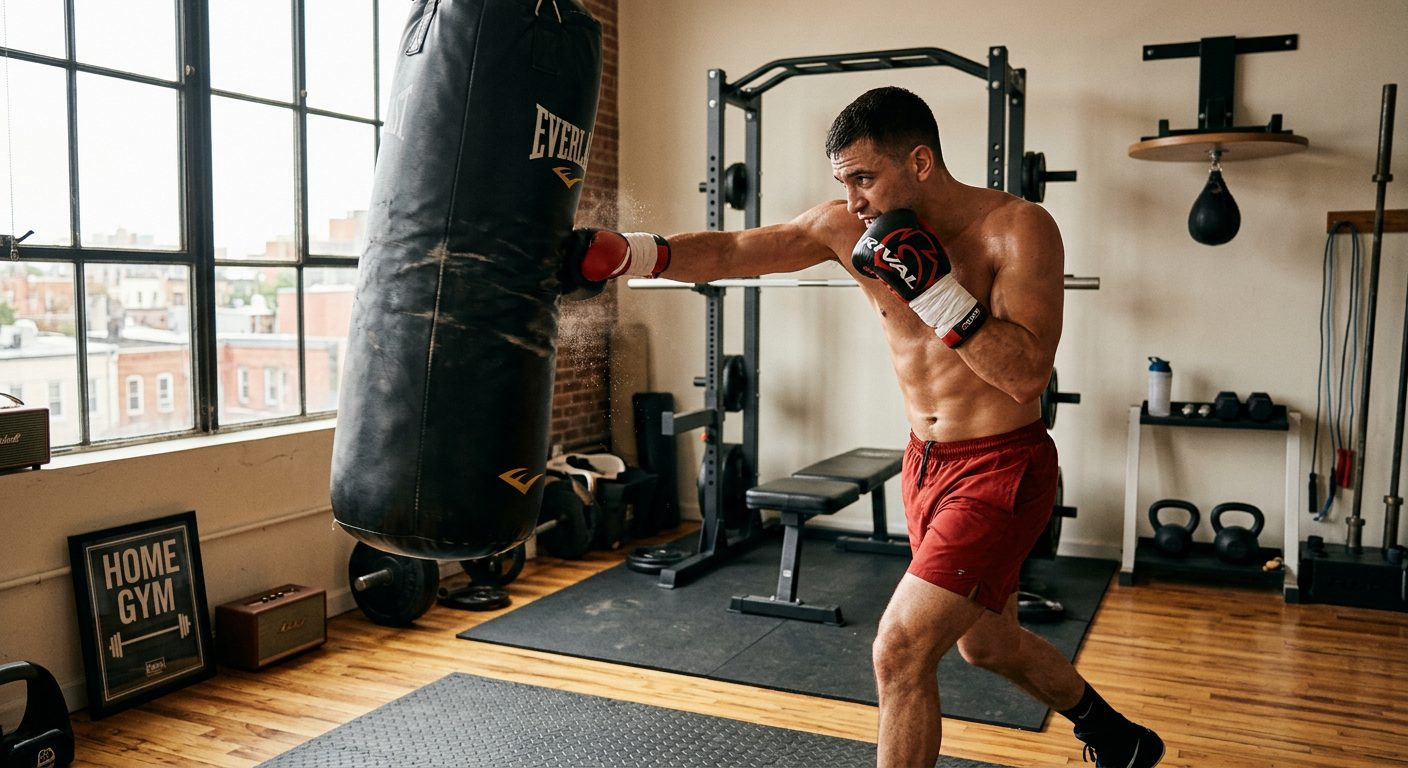
Start Here: 3 Days Per Week
Three sessions a week. That’s it. Your ego wants more, but your body needs recovery time. I’ve watched dozens of people burn out because they tried to train like Rocky in week one. Don’t be that person.
Monday: Heavy Bag Focus
– 10-minute warm-up (jumping jacks, arm circles, light shadowboxing)
– 6 rounds on heavy bag (2 minutes work, 1 minute rest)
– 3 rounds shadowboxing (focus on footwork)
– 15 minutes core work (planks, Russian twists, mountain climbers)
– 10 minutes stretching
Wednesday: Speed and Combinations
– 10-minute warm-up
– 5 rounds speed bag or double-end bag (if available)
– 4 rounds shadowboxing with combinations
– 20 minutes footwork drills
– 15 minutes conditioning (burpees, push-ups, jump rope)
– 10 minutes stretching
Friday: Power and Conditioning
– 15-minute warm-up with light shadowboxing
– 8 rounds heavy bag (focus on power shots)
– 3 rounds speed combinations
– 20 minutes strength training (bodyweight or light weights)
– 15 minutes core and flexibility
Level Up: 4 Days Per Week
After a solid month of 3 days, you can add a fourth. Notice I said “can”, not “must”. If you’re still dragging yourself to the gym on day 3, stay at 3 until it feels automatic.
Monday: Technical Skills
– 15-minute warm-up
– 6 rounds shadowboxing (work on technique, not power)
– 4 rounds heavy bag with specific combinations
– 3 rounds speed bag
– 20 minutes footwork and defense drills
– 10 minutes stretching
Tuesday: Strength and Power
– 10-minute boxing warm-up
– 25 minutes strength training (squats, deadlifts, pull-ups, push-ups)
– 6 rounds heavy bag (focus on power)
– 15 minutes core work
– 10 minutes stretching
Thursday: Conditioning Focus
– 20-minute cardio warm-up (jump rope, running, or bodyweight)
– 8 rounds boxing intervals (30 seconds all-out, 30 seconds active rest)
– 4 rounds technical shadowboxing
– 15 minutes HIIT conditioning
– 15 minutes recovery stretching
Saturday: Skills and Sparring Prep
– 15-minute warm-up
– 8 rounds shadowboxing with mirror work
– 6 rounds heavy bag combinations
– 4 rounds defensive movement
– 20 minutes reaction training
– 10 minutes cool-down
For the Obsessed: 5-6 Days Per Week
Here’s where it gets serious. Training 5-6 days means you eat right, sleep 8 hours, and have your recovery dialed in. Half-assing any of these will wreck you.
Monday: Power Development
– 20-minute warm-up with shadowboxing
– 8 rounds heavy bag (focus on knockout power)
– 4 rounds double-end bag
– 25 minutes strength training
– 15 minutes core
– 10 minutes stretching
Tuesday: Speed and Combinations
– 15-minute warm-up
– 6 rounds speed bag
– 8 rounds combination work on heavy bag
– 20 minutes footwork drills
– 15 minutes conditioning circuits
– 10 minutes flexibility
Wednesday: Technique Refinement
– 20-minute shadowboxing warm-up
– 10 rounds technical work (slow, perfect form)
– 15 minutes defensive drills
– 20 minutes mitt work (if available) or heavy bag precision
– 15 minutes stretching and mobility
Thursday: High-Intensity Conditioning
– 25-minute cardio warm-up
– 10 rounds boxing intervals (various time splits)
– 15 minutes explosive movements (burpees, jump squats)
– 20 minutes core and strength
– 15 minutes recovery work
Friday: Competition Simulation
– 20-minute extensive warm-up
– 12 rounds fight simulation (3-minute rounds, 1-minute rest)
– Mix heavy bag, shadowboxing, and defensive movement
– 10 minutes cool-down only (save energy for weekend)
Saturday: Active Recovery or Skills
– Light 30-minute session: easy shadowboxing, stretching, mobility
– OR technical skills practice (no high intensity)
– Focus on weak areas identified during the week
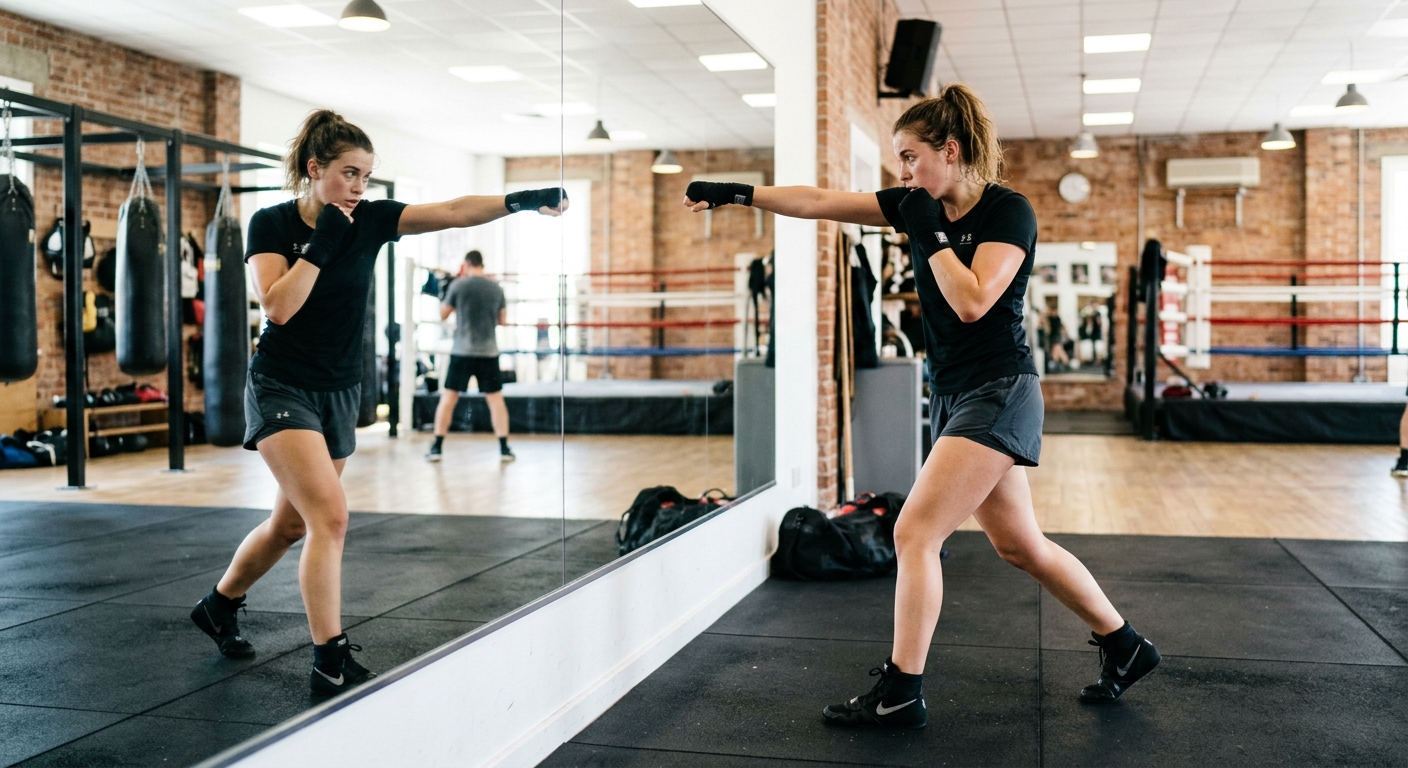
Round Timing That Won’t Crush You
Everyone knows boxing rounds are 3 minutes. What they don’t tell you is most beginners can’t even throw decent punches for 90 seconds straight. Start shorter and work up to full rounds.
Beginner Round Structure:
– Week 1-2: 90 seconds work, 60 seconds rest
– Week 3-4: 2 minutes work, 60 seconds rest
– Week 5-8: 2.5 minutes work, 45 seconds rest
– Week 9+: 3 minutes work, 60 seconds rest
Get a proper boxing timer app. I use Heavy Bag Pro because the round timing is exact and you can customize work/rest periods for each phase. Beats constantly fumbling with your phone between rounds.

Recovery (The Part Everyone Skips)
Training hard is easy. Recovering smart is where people fail.
Sleep: 7-9 hours. Not “I’ll catch up on weekends” sleep. Real sleep. Boxing fries your nervous system way more than jogging.
Food: Protein within 30 minutes after training. And drink water all day, not just when you’re dying during rounds.
Rest Days: Move a little. 10 minutes of walking or easy stretching. Complete couch potato mode makes you stiff.
Plan Your Off Day: Don’t just skip randomly when you feel lazy. Pick one day a week to rest and stick to it.
Mistakes That Kill Progress
Training When You’re Exhausted: Your form goes to hell when you’re tired. Keep practicing bad technique and it becomes permanent.
Never Adding Difficulty: Add one round per month. That’s it. Slow and steady works better than dramatic jumps that burn you out.
Avoiding Your Weak Spots: Everyone loves practicing what they’re good at. Force yourself to work on the stuff you suck at.
100% Intensity All the Time: New people want to throw bombs every round. Save the power for power rounds. Technical work happens at 60-70% effort.
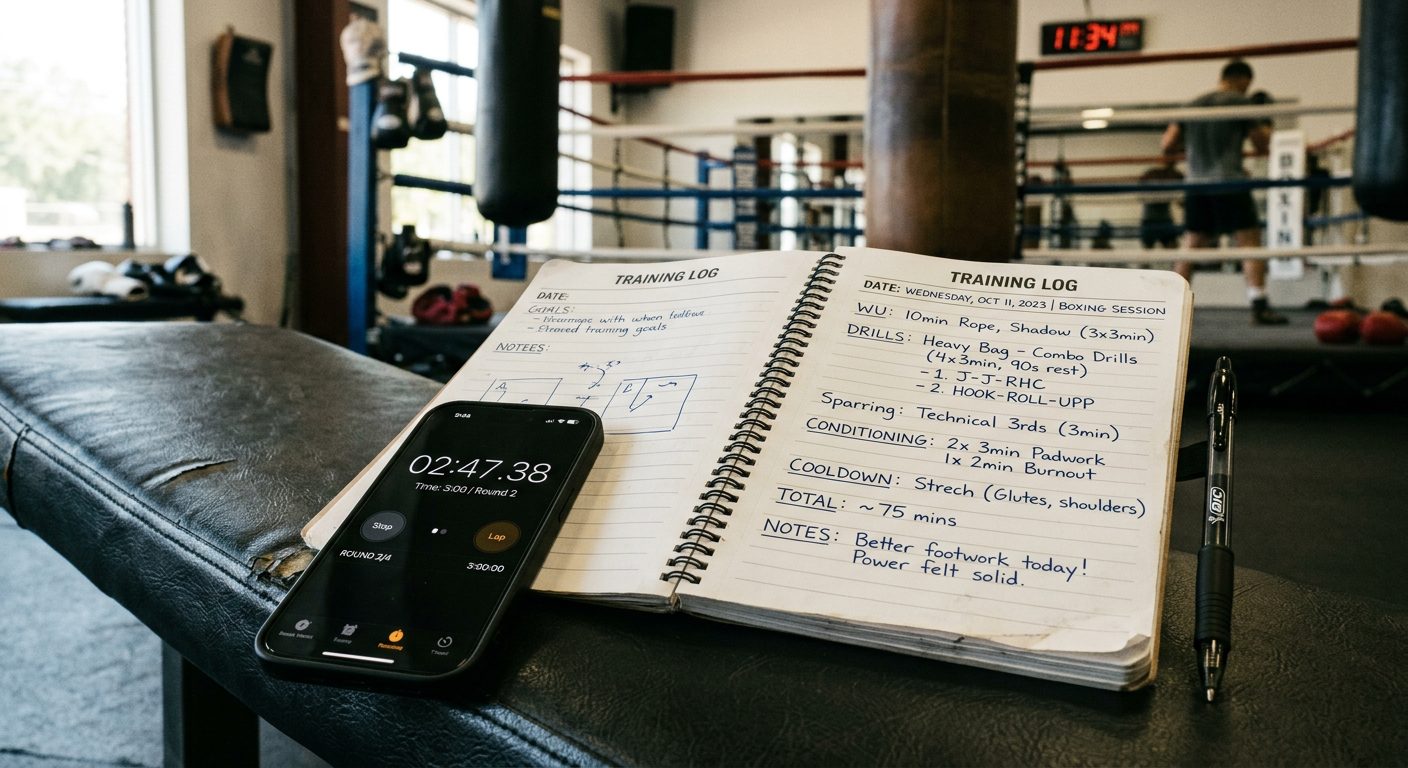
Tracking Your Progress
Keep a simple training log with three metrics:
1. Rounds completed without form breakdown
2. Power endurance (how long you can throw hard shots)
3. Recovery time between rounds
After 4 weeks, you’ll finish your planned rounds without dying. After 8 weeks, your power lasts most of each round instead of fading after 30 seconds. After 12 weeks, you bounce back between rounds faster.
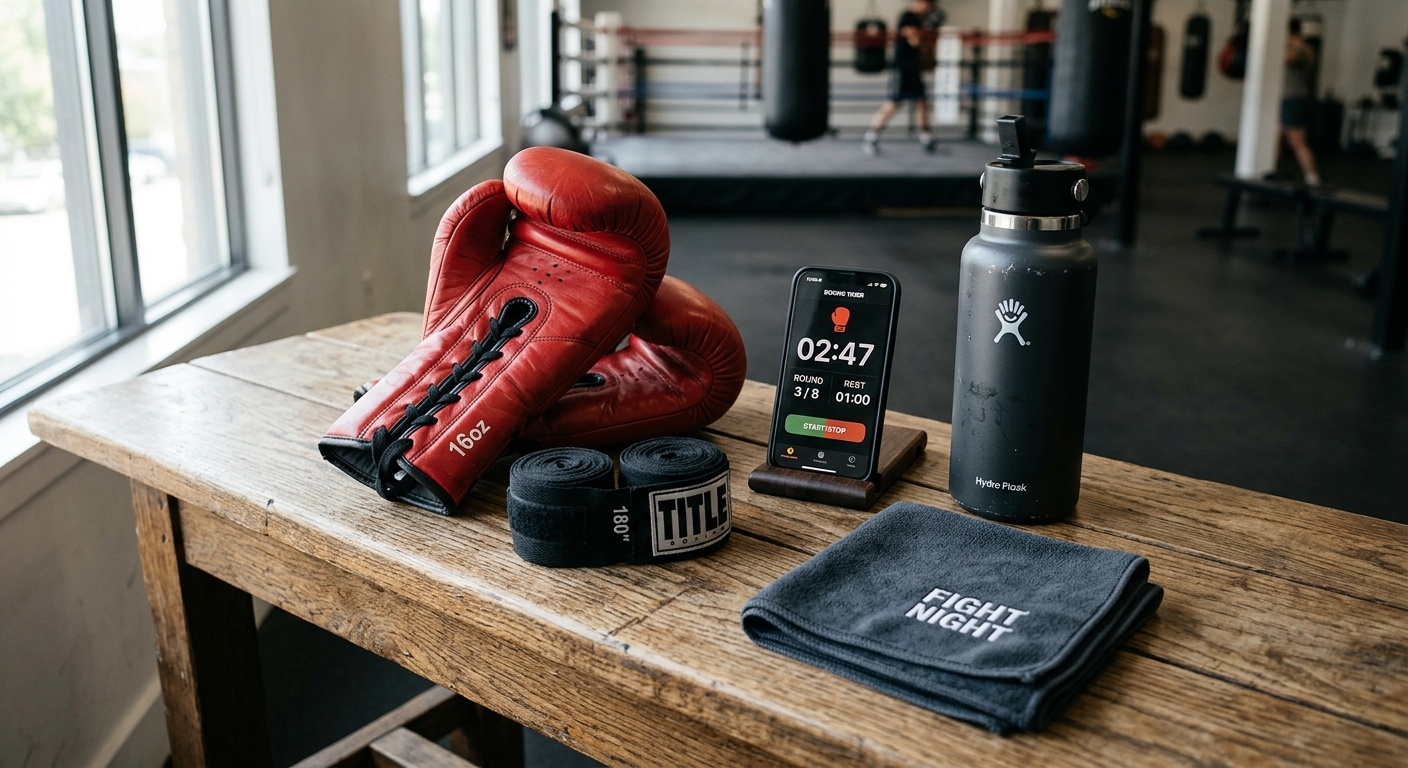
Gear That Matters (Spoiler: Not Much)
Hand wraps, 12oz gloves, heavy bag access. That’s your starter pack. The Instagram fitness influencers will try to sell you 47 different accessories. Ignore them until you’ve trained consistently for 3 months.
If you’re setting up at home, don’t cheap out on the heavy bag mount or gloves. Nothing kills momentum like equipment that breaks mid-session.
Actually Sticking To It
Start Ridiculously Small: 3 quick sessions you actually do beats 1 epic workout you skip.
Same Time, Same Days: Train Monday, Wednesday, Friday at 6pm. Every week. Your body starts expecting it.
Emergency Backup: Have a 15-minute routine for crazy busy days. 15 minutes of shadowboxing in your living room beats zero.
Mark It Down: Put an X on the calendar after each session. Sounds dumb, but seeing a streak of X’s is surprisingly motivating.
This stuff takes months to build, not weeks. Better to follow a moderate plan for 6 months than go crazy for 3 weeks and quit. Start with 3 days. Only add more when those 3 days feel automatic, like brushing your teeth.
The people who are still training 2 years later treat their boxing schedule like a dentist appointment. They show up even when they don’t feel like it.