
Good footwork separates amateur fighters from professionals. While beginners focus on punching power, experienced boxers know that superior footwork creates angles, generates knockout power, and keeps you safe from counterattacks. The best part? You can develop championship-level footwork at home with just a few square feet of space.
Professional boxers spend 40-50% of their training time on footwork drills. Muhammad Ali didn’t float like a butterfly because he was naturally gifted, he practiced specific movement patterns thousands of times until they became muscle memory. This guide breaks down the exact drills used by championship-level fighters.
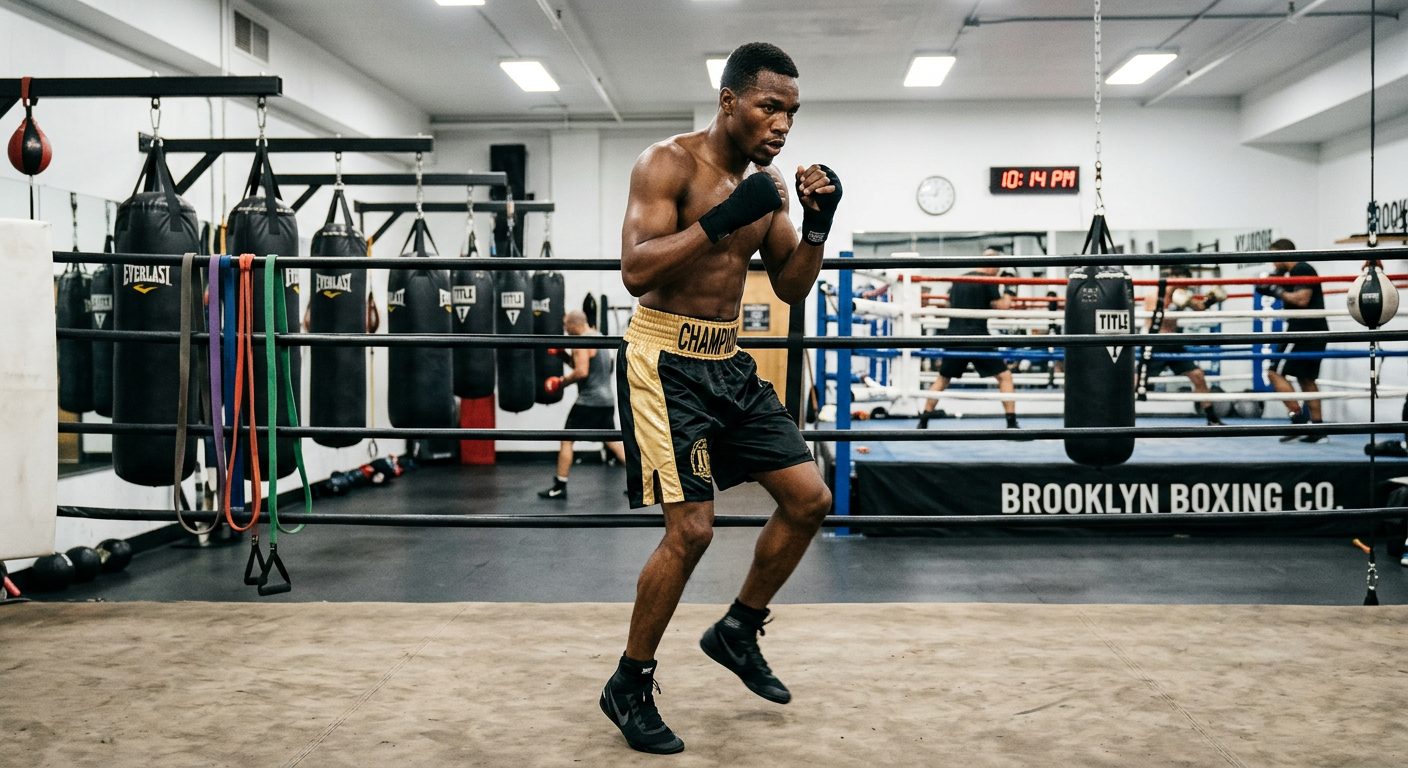
Why Footwork Matters More Than Punching Power
Power comes from the ground up. Every knockout punch starts with proper foot positioning. When you step correctly, your entire body weight transfers through your punch. Poor footwork means you’re arm-punching, wasting energy and telegraphing your intentions.
Watch any Floyd Mayweather highlight reel. His footwork keeps him just outside punching range while positioning him for perfect counters. He doesn’t need knockout power because his positioning creates easy scoring opportunities. That’s the difference between fighting and boxing.
Speed isn’t about moving your feet faster, it’s about moving them smarter. Elite boxers cover less distance while maintaining better positioning. They waste zero movement because every step serves a tactical purpose.
Essential Boxing Footwork Fundamentals
Orthodox Stance Positioning
Your feet should be shoulder-width apart with your left foot slightly forward (right foot forward for southpaws). Keep 60% of your weight on your back foot. This distribution allows quick forward movement while maintaining balance for defensive movements.
Your front foot points toward your target. Your back foot stays at a 45-degree angle. Never let your feet cross or come too close together, this eliminates your mobility and leaves you vulnerable to knockdowns.
The Boxing Step
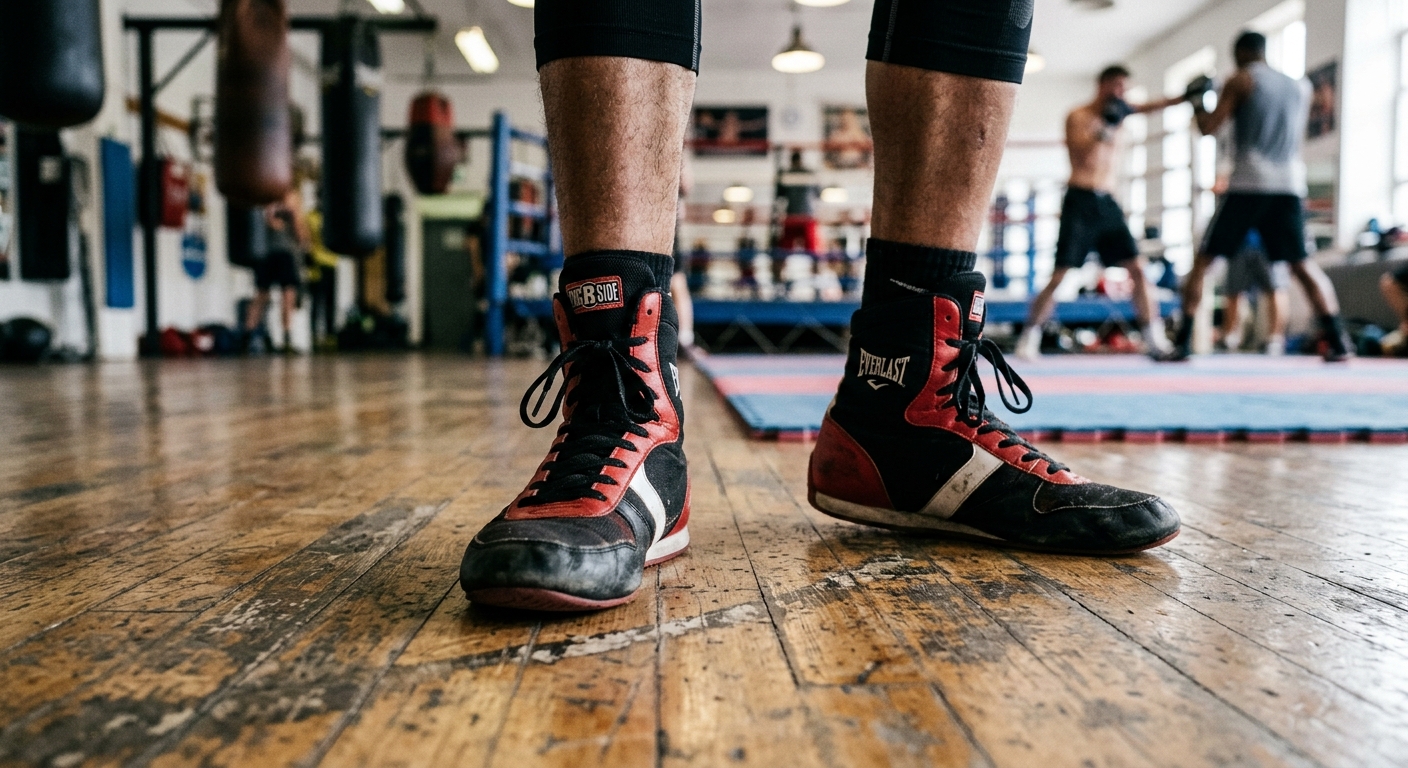
Professional boxers never hop or jump. Every movement maintains constant ground contact. Step with your lead foot first when moving forward, step with your back foot first when moving backward. This keeps your stance intact throughout the movement.
Small steps beat big steps. Cover distance with multiple small adjustments rather than large dramatic movements. Big steps telegraph your intentions and leave you off-balance between movements.
Speed Development Drills
Ladder Steps (Without Equipment)
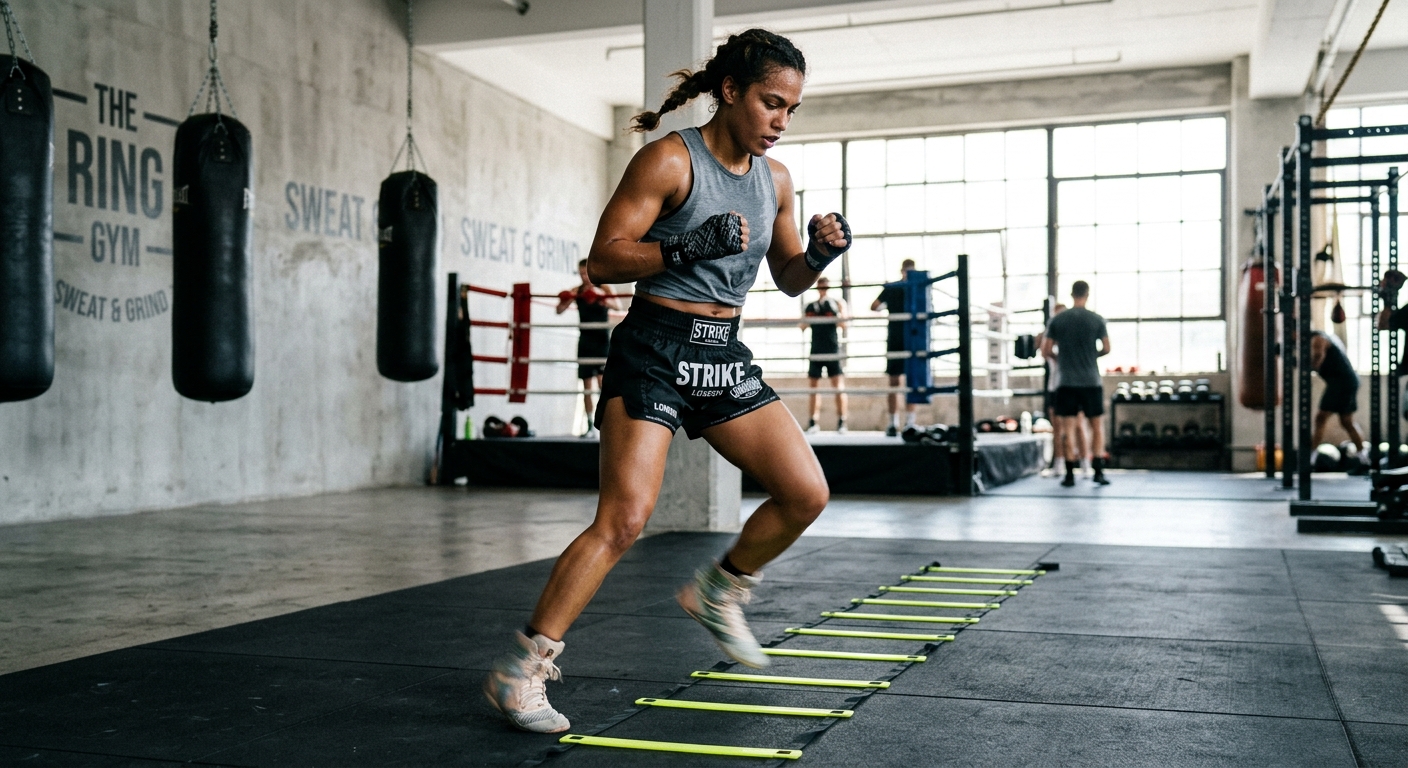
Create an imaginary ladder on the floor using tape or chalk lines 18 inches apart. Step forward through each “rung” maintaining proper boxing stance. Focus on quick, light contacts with the ground.
Start slow and gradually increase speed while maintaining form. Poor form at high speed builds bad habits that are hard to break. Master the movement pattern first, then add speed.
Perform 3 sets of 20 steps forward, then 20 steps backward. Rest 30 seconds between sets. Your legs will burn, but this drill builds the fast-twitch muscle fibers essential for explosive movement.
Pivot Drill
Plant your front foot and pivot 90 degrees left and right using only your back foot. This drill develops the hip mobility and ankle strength needed for creating angles during combinations.
Keep your hands up throughout the movement. Many fighters drop their guard while focusing on footwork. Championship habits require practicing multiple skills simultaneously.
Perform 20 pivots left, 20 pivots right. Focus on maintaining your stance width throughout the rotation. Your foot position after the pivot should mirror your starting stance.
Agility Enhancement Exercises
Circle Steps
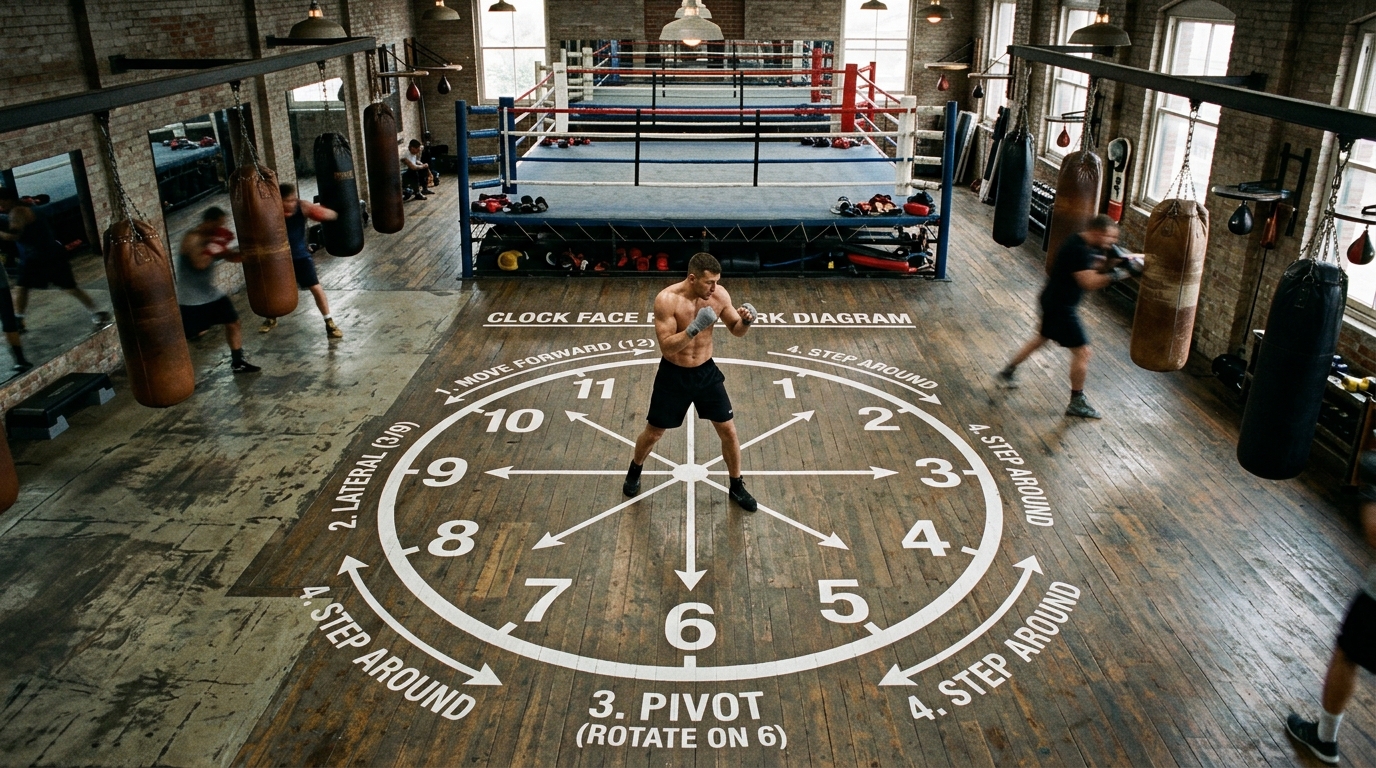
Imagine standing in the center of a clock face. Step to 12 o’clock, return to center. Step to 1 o’clock, return to center. Continue around the entire clock maintaining proper stance.
This drill develops omnidirectional movement while teaching you to return to your base position after every directional change. Real boxing requires quick adjustments in all directions, not just forward and backward.
Complete two full rotations clockwise, then two counterclockwise. Time yourself and try to improve your completion time while maintaining perfect form.
Triangle Drill
Set up three markers in a triangle pattern, each point 6 feet apart. Start at one corner and move to each point using proper boxing footwork. Change your movement pattern: step-slide, pivot, or lateral movement.
This drill simulates the unpredictable movement patterns needed during actual boxing. Unlike predictable forward-backward drills, triangle patterns force quick directional changes that mirror real fight scenarios.
Distance Control Training
In-and-Out Footwork
Start in your fighting stance 3 feet from a wall or target. Step forward into punching range, throw a 1-2 combination, then immediately step back to your starting position.
The key is maintaining proper stance throughout the entire sequence. Many fighters rush the exit and end up off-balance. Practice the retreat with the same precision as your attack.
Perform 10 sequences, rest 30 seconds, repeat for 3 sets. Use a timer app like Heavy Bag Pro’s boxing timer to maintain consistent timing and track your improvement.
Range Finder Drill
Practice finding your perfect punching distance without throwing punches. Step into range, hold for 2 seconds, step out. Focus on recognizing the exact distance where your jab fully extends.
This drill builds distance awareness, the ability to know when you’re in punching range without thinking about it. Elite fighters feel range like musicians feel rhythm.
Advanced Footwork Combinations
Step-Slide-Pivot Sequence
Combine multiple footwork elements into one fluid movement. Step forward with your lead foot, slide your back foot up, then pivot 45 degrees left or right. This creates angles while maintaining offensive positioning.
Practice this combination 20 times to each side. The movement should feel like one continuous action, not three separate steps. Smooth transitions indicate proper muscle memory development.
Lateral Movement Chains
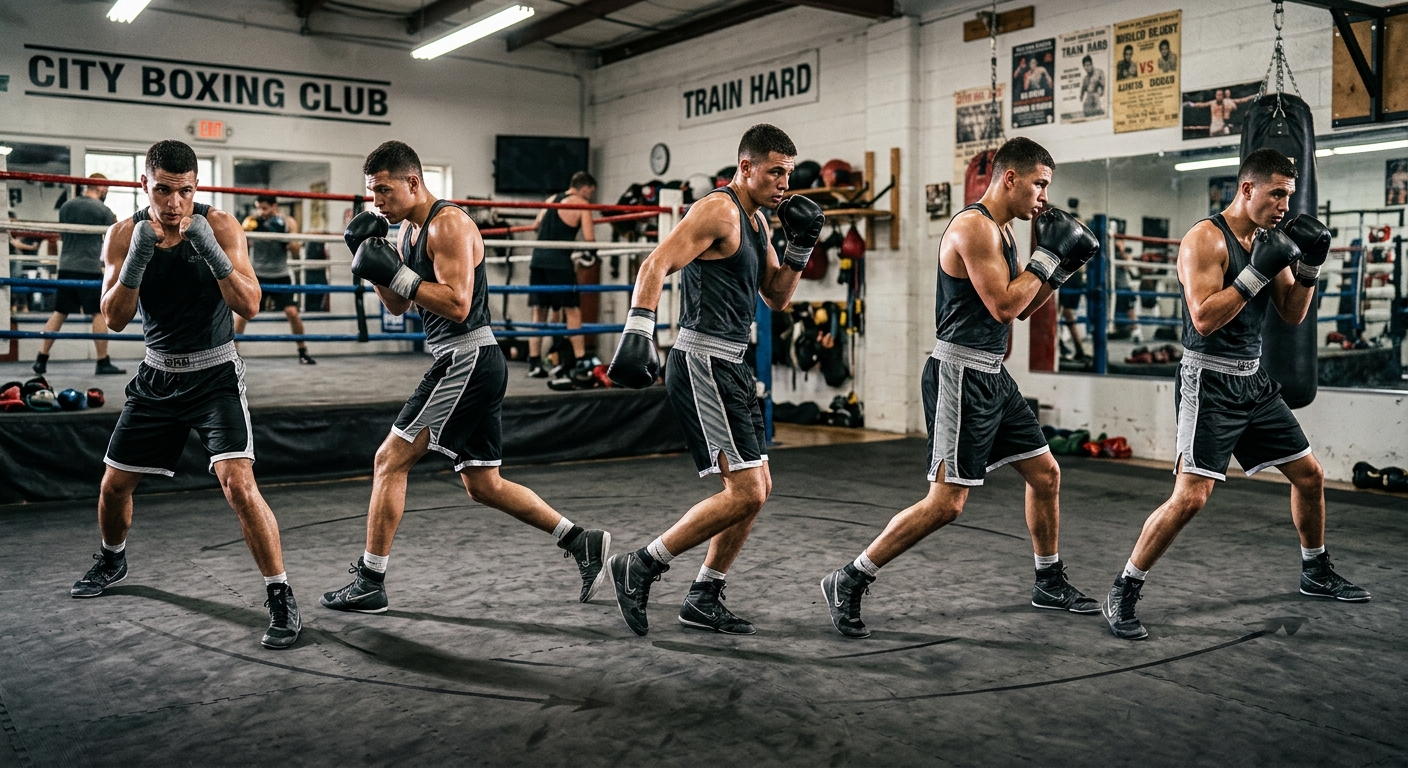
Move side to side using small shuffle steps while maintaining your fighting stance. Focus on not crossing your feet or bringing them too close together. Your head should stay level throughout the movement.
Good lateral movement frustrates opponents and creates counter-punching opportunities. Instead of backing straight up when pressured, lateral movement keeps you in punching range while changing angles.
Common Footwork Mistakes That Kill Speed
Bouncing Instead of Gliding
Recreational fighters often bounce on their toes thinking it looks professional. Bouncing wastes energy and telegraphs your timing. Professional boxers glide across the canvas with minimal vertical movement.
Keep your feet low to the ground. Every inch of vertical movement is wasted energy that could be used for forward momentum or defensive positioning.
Wide Steps That Break Stance
Taking steps wider than shoulder-width destroys your balance and power generation. Wide steps also slow your recovery time between movements.
Practice in front of a mirror to monitor your stance width. Your reflection should maintain consistent positioning throughout all movements.
Building Footwork Into Daily Training
Warm-Up Integration
Start every training session with 5 minutes of footwork drills. This activates the neural pathways needed for coordinated movement while raising your heart rate gradually.
Rotate through different drill patterns each day. Monday: ladder steps and pivots. Tuesday: circle steps and triangle drills. Wednesday: distance control and lateral movement. This prevents adaptation and maintains skill development.
Shadow Boxing With Purpose
Shadow boxing becomes exponentially more effective when you focus on footwork rather than punching. Throw 3-punch combinations while emphasizing the steps between each punch.
Quality over quantity. Three perfect combinations with excellent footwork beats 50 sloppy combinations. Mental focus during practice determines the quality of your muscle memory.
Measuring Your Progress
Speed Tests
Time yourself completing 20 ladder steps or 10 in-and-out sequences. Record your times weekly to track improvement. Consistent timing indicates that speed is becoming automatic rather than conscious.
Balance Challenges
After completing any footwork drill, immediately stop in perfect fighting stance and hold for 10 seconds. If you wobble or need to adjust your feet, your movements are too aggressive.
Perfect footwork leaves you ready to punch, defend, or move again instantly. Any movement that compromises your balance needs refinement.
Equipment-Free Training at Home
World-class footwork develops in small spaces. A 6×6 foot area provides enough room for every drill in this guide. Many Olympic boxers developed their footwork in apartment living rooms or garage spaces.
Use a smartphone timer to track rounds and rest periods. Apps like Heavy Bag Pro provide boxing-specific timing that keeps your training focused and measurable.
Mark your training area with tape to create consistent drill patterns. Having visual references improves your spatial awareness and movement precision.
Advanced Training Considerations
Surface Variations
Practice on different surfaces when possible. Carpet, hardwood, concrete, and gym mats all affect your movement patterns. Adaptable footwork works on any surface.
Fatigue Management
Footwork technique deteriorates rapidly when you’re tired. Schedule footwork drills early in your workout when your nervous system is fresh and capable of learning new patterns.
Short, intense sessions beat long, sloppy sessions. Fifteen minutes of focused footwork training produces better results than 45 minutes of distracted practice.
Taking Your Footwork to the Next Level
Master these fundamentals before adding complexity. Championship footwork starts with perfect basics repeated thousands of times. Muhammad Ali spent entire training sessions working on simple step-slide patterns.
Video record yourself performing these drills monthly. Watching your own movement patterns reveals subtle mistakes that are impossible to feel while training.
Remember that footwork serves punching combinations, not the other way around. The goal isn’t to move beautifully, it’s to position yourself for devastating offense while remaining defensively sound.
Professional footwork develops through consistent daily practice rather than occasional intensive sessions. Ten minutes daily produces better results than one hour weekly because motor skill acquisition requires frequent repetition.
Start with one drill per day until the movement becomes automatic. Add complexity only after mastering the basics. Your foundation determines your ceiling.