
Your training session is done, you’re dripping sweat, and the bag is still swinging. What happens next matters more than most gym-goers realize. Skip the cooldown and you walk out tight, stiff, and more prone to injury in the next session. Spend 10 focused minutes stretching and your body starts recovering before you even get home.
This guide gives you a specific, structured boxing cooldown you can run every time without thinking about it.
Why skipping the cooldown costs you
During bag work and sparring, your muscles are loaded and firing fast. The tissues shorten under load. Blood is pooled in the working muscles. Heart rate is elevated. If you stop cold and walk to your car, all of that just sits there.
The practical result: you wake up stiffer the next morning, your session quality drops, and over time, tight hips and shoulders start limiting your technique. Freddie Roach has talked in interviews about how much time his fighters at Wild Card Boxing Club spend on post-session mobility, not because it’s glamorous but because it keeps them training consistently. Consistency is the actual variable. Anything that protects consistency is worth doing.
A 10-minute cooldown isn’t rest. It’s active work at lower intensity. You’re using that window when your muscles are warm and pliable to add range of motion you can’t get when you’re cold.
The 10-minute sequence
Do these in order. Each one flows into the next. You don’t need a mat, you don’t need a foam roller, you don’t need anything beyond a patch of floor space.
Run it after your last round, once your heart rate has come down to something close to normal. If you’re still gasping, walk the floor for two minutes first.
Walking it out (2 minutes)
Just walk. Around the bag, around the ring, around the room. Swing your arms loosely. Let your breathing slow down naturally. Don’t rush this. Two minutes of low-intensity movement starts flushing lactic acid and prevents blood from pooling.
If your gym has a jump rope, you can do this phase as very slow, relaxed skipping instead. Same effect.
Shoulder circles and cross-body stretch (90 seconds)
Stand tall, roll each shoulder back slowly 10 times. Then bring one arm across your chest and use the opposite forearm to press it in. Hold 20-30 seconds each side. Boxers trash their anterior deltoids on the bag, so this matters more than most people think.
After the cross-body, grab your elbow overhead, pull it toward the opposite ear. This hits the tricep and lat. 20 seconds each side.
Chest opener (30 seconds)
Clasp your hands behind your back, squeeze the shoulder blades together, lift slightly. Hold. This reverses the forward-shoulder pattern that heavy bag work bakes in over time. Research published by the National Institutes of Health on upper-body flexibility in combat sport athletes consistently shows anterior shoulder tightness as a recurring issue, making posterior chain openers like this one useful rather than optional.
Hip flexor lunge stretch (2 minutes)
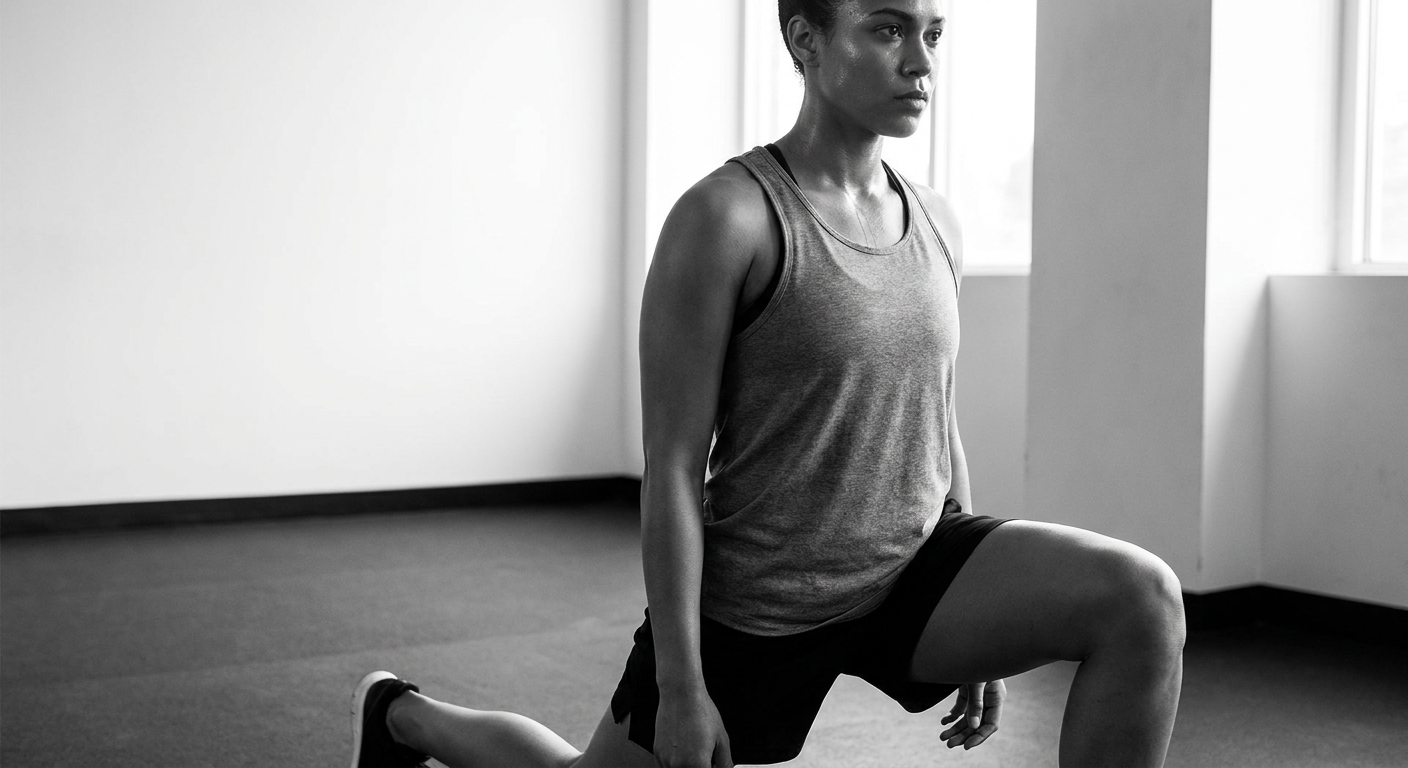
Drop into a low lunge, back knee on the floor. Keep your torso upright and gently push your hips forward. You’ll feel this in the front of the hip of the back leg. Hold 45 seconds each side.
This one is critical for boxers and Muay Thai practitioners. The hip flexors are loaded every time you throw a power shot from a bent-knee stance, every teep, every time you push off the back foot. Tight hip flexors flatten your stance and reduce hip extension. If you’ve been using the boxing round timer at heavybag.pro to run timed intervals, this is the spot to add a cooldown interval into the sequence.
Seated hamstring stretch (90 seconds)
Sit on the floor, legs straight. Hinge at the hips and reach toward your feet. Don’t round your back. Hold where you feel the pull without forcing it. 45 seconds, then switch to a single-leg version: one leg out straight, the other bent with the foot against your inner thigh. Lean toward the straight leg.
Hamstrings are perpetually tight in fighters who do a lot of footwork and lateral movement. Leaving them contracted after a session shortens your recovery window.
Figure-four glute stretch (90 seconds)
Lie on your back, cross one ankle over the opposite knee. Flex that foot. Either stay here if you already feel the stretch, or grab behind the uncrossed thigh and pull both legs toward your chest. The glute medius and piriformis both take a beating in any session with pivot work or lateral footwork.
45 seconds each side. Breathe out each time you pull deeper.
Thoracic rotation (90 seconds)
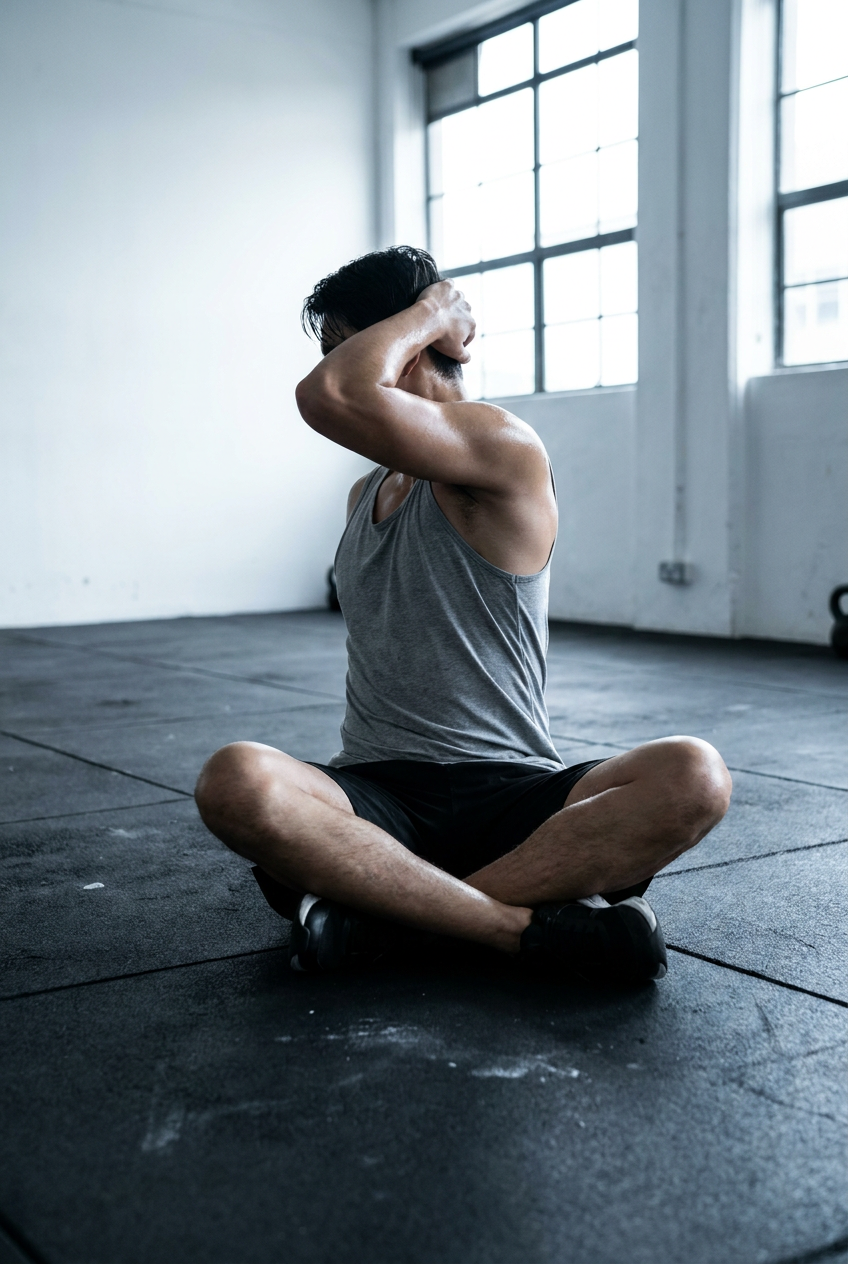
Sit cross-legged, place one hand behind your head, elbow out. Rotate your torso toward that side, hold briefly, rotate back. 10 reps each side, slow and controlled. This is the range of motion your rotation punch mechanics actually demand, and it’s the one most people never touch in cooldown.
Child’s pose (1 minute)
Kneel, sit your hips back toward your heels, reach your arms forward on the floor, forehead down. This decompresses the lumbar spine and opens the lats simultaneously. If you feel tension pulling in your hips, widen your knees slightly. A full minute here. Don’t rush it.
What to add when you have more time
The 10-minute sequence covers the essentials. If you have 5-10 extra minutes a few days per week, these additions make a measurable difference:
Neck circles and side tilts. Gently circle your head in each direction, then tilt your ear to your shoulder and hold. Neck tension in boxing is real and underaddressed. Keep the movements slow, no forced range.
Foam roller on the thoracic spine. Lie over the roller at mid-back, support your head, and extend back over it. Work it up and down the thoracic vertebrae. Two minutes here does more for a rounded upper back than most people’s entire mobility practice.
Calf and ankle circles. Stand on one foot, trace slow circles with the other ankle. Then do a standing calf stretch against the wall. Ankles take punishment from any session with footwork. The Boxing Recovery and Rest Day Guide covers how to structure your full weekly recovery around session intensity, and ankle work features there too.
Deep squat hold. Squat as low as you can with your heels on the floor. Hold for 2 minutes. This restores hip and ankle mobility simultaneously. It’s uncomfortable at first. That discomfort is the point.
If you’re consistent with the 10-minute version for a month, you’ll notice the difference in how your hips and shoulders feel when you start each session. The stiff hips guide on heavybag.pro goes deeper on hip-specific mobility if that’s your problem area.
Tracking your sessions with a structured timer helps you build the cooldown habit. Heavy Bag Pro lets you set a labeled cooldown interval at the end of any workout so it runs automatically without you having to remember. Check it out at heavybag.pro.
The habit problem
Nobody skips cooldowns because they don’t know they should stretch. They skip them because they’re tired, they want to leave, and the gym is either crowded or closing. The solution isn’t motivation. It’s making the decision before you train.
Set your timer to include a cooldown interval before you throw your first punch. When it beeps, you stretch. No negotiation. Vanes Martirosyan, who was known for his conditioning, talked in a 2019 interview about how post-session recovery work was the unsexy half of training that separated fighters who lasted from fighters who broke down. That’s the frame. The cooldown isn’t optional; it’s the last drill of the session.
10 minutes. Same sequence every time. Do it until it’s automatic.