
The best-known camp in Thailand is often the wrong camp for you. Fame buys a gym a big roster, a polished website and a waiting list, and none of that guarantees that a coach will watch your teep on Tuesday morning. A camp wastes your time when the structure around you does not match what you came for, and you can check most of that before you book a flight.
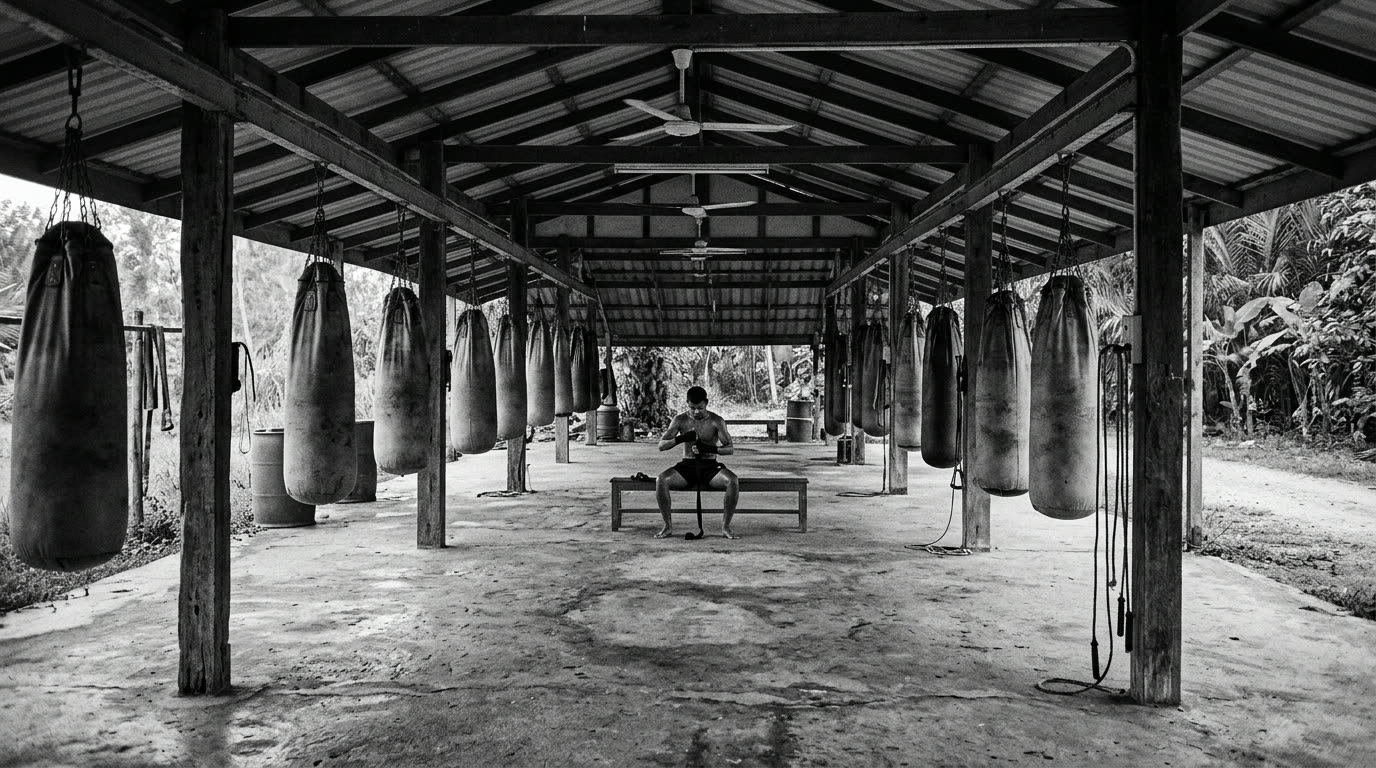
What Do You Actually Want From the Trip?
Start here, because every other answer depends on it. A two-week holiday with training in it is a different product from a fight camp, and camps are built around one or the other. Some gyms run big open classes where a crowd shares a few trainers. Others take a handful of fighters and push them toward a stadium card.
Be honest about which person you are. If you have never been hit in anger, you want a gym where the group class is well run and the trainers pay attention to beginners. If you have a few amateur fights and want a bout in Thailand, you want a gym with a fight team and a promoter who can find you an opponent your size. If you want fitness and a tan, say so, nobody will judge you.
Write the goal in one sentence and send it to every camp you email. How they answer tells you more than their photos do.
Which Part of Thailand Fits Your Plan?
Location shapes the whole experience. Phuket and Pattaya have the largest camps built for foreigners, with English-speaking staff, on-site rooms and a steady stream of fellow travellers. Fairtex in Pattaya and Tiger Muay Thai in Phuket are the names most visitors have heard of, and both run big programmes for all levels. Chiang Mai is calmer and cheaper, with smaller gyms and a more local feel. Bangkok puts you near the two famous stadiums, Lumpinee and Rajadamnern, and in a city where the heat and traffic eat energy you would rather spend training.
Big camps give you structure and company. Small gyms give you attention and a closer look at how Thai training really runs. Neither is better. Pick the one that matches the sentence you wrote above.
Season matters too. The hot months are brutal for anyone arriving from a cold winter, and the rainy season brings heavy afternoon downpours that turn the open-air floor slick. Cooler months are the busiest, which means fuller classes and more competition for pad time.
What Should a Normal Day Look Like?
Most Thai camps run two sessions a day, one in the morning and one in the late afternoon, on most days of the week. The morning often starts with a run, then skipping, shadowboxing and bag work. The afternoon leans toward pads, technique, clinch and sparring. Exact timetables vary, so ask for the weekly schedule in writing.
Look at what happens in the gaps. A good camp has rest built in, a place to eat, and a sensible rhythm. A bad one packs the schedule so full that you spend your energy surviving and learn nothing.
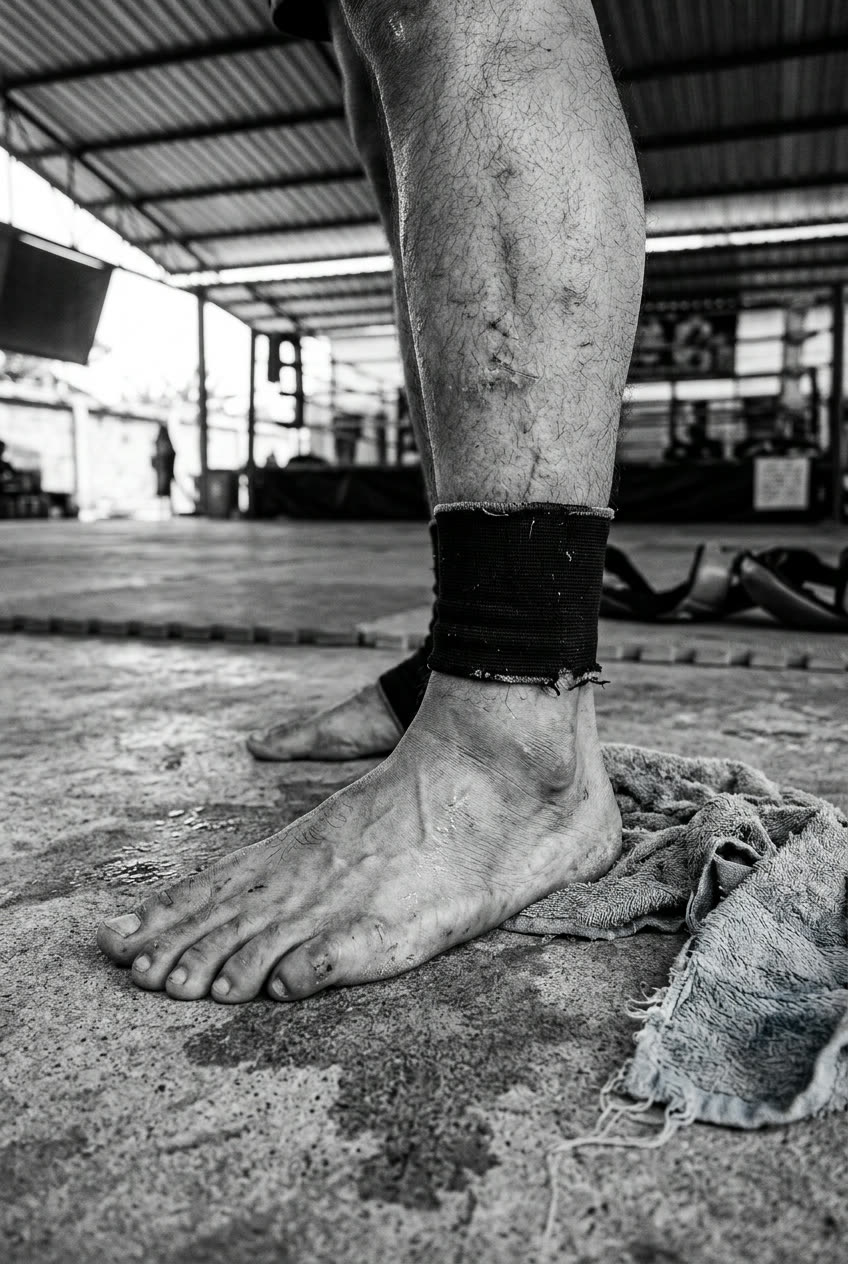
Ask how pad work is organised. In a traditional Thai session you hold three-minute rounds with a kru, who is usually a former fighter. He feeds you combinations, corrects your hips and makes you throw the kick again. If the camp rotates a different trainer into every round, or if most of your pad time is spent in a queue, you will leave fit and not much better.
How Many People Share One Trainer?
This is the question that separates a good camp from a crowded one. A packed class with a few trainers means you get scraps of real attention per session. A class where the head trainer knows your name and watches your rounds gives you more in a week than the crowded one gives in a month.
Ask directly. Ask what the ratio is in the afternoon session, since that is when most camps pack in the holiday crowd. Ask whether beginners and fighters train together, and whether private sessions are sold separately. Privates are common and fairly priced in Thailand, and a single private with a good kru can be worth several group classes.
If a camp dodges the question, take that as your answer.
Can You See Real Reviews and Real Fighters?
Marketing photos are all sunsets and smiling fighters. Look for the unedited stuff instead. Read recent reviews on several platforms, and pay most attention to the middling ones, which are usually the honest ones. Look at the gym’s social feeds for ordinary training clips, not highlight reels. Message past guests if you can find them.
Check whether the camp has real fighters, meaning Thai fighters who compete on the stadium circuit and train there daily. They show that the trainers have a working record. They also set the tone: a gym full of serious Thai fighters has a different air from one where the loudest people are other tourists.
A coach’s credibility is easy to inflate, so look for specifics. Which stadiums did he fight in? Which fighters has he trained?
What Are You Paying For, and What Is Extra?
Prices are quoted in several ways: per session, per week, per month, or as a package with a room and meals. Ask what is included. Gloves and shin guards? Laundry? Airport transfer? Visa help? Are privates extra? Is there a deposit, and what happens to it if you leave early because of injury?
Visas deserve a line of their own. Rules change, and camps sometimes offer long-stay training packages tied to a particular visa. Check the current rules on the official Thai government sites before you commit, and do not rely on a gym’s summary.
Accommodation is another trap. Staying at the camp is convenient and often social, but rooms vary a lot. Ask for photos of the actual room, not a showcase one. A bad night of sleep ruins the next day’s training, and sleep is the first thing a hot, noisy room takes from you.
How Do You Prepare Before You Leave?
This is where most people lose the most. They book the flight, plan the Instagram posts and arrive unfit, then spend the first week being sick, sore and slow while the rest of the group moves on. Thai camps do not slow down for you.
Build a base before you go. Run regularly, because the morning roadwork is real. Skip rope until a full round feels dull. Hit the bag with kicks and knees, not only punches, because your shins, hips and calves have to get used to the load. A short, honest routine beats a heroic one you abandon after the first week. If you want your core strong enough to take body kicks and long clinch sessions, a structured plan such as Abs Pro gives you a simple daily routine to follow, and it pairs well with bag work.
Hips deserve extra attention. Thai kicks demand range that a desk job and a few months of boxing classes rarely provide. Our article on hip mobility for stronger punches and kicks gives you drills to start with.
Learn the vocabulary too. Pad rounds go faster when you know the difference between a teep and a switch kick, and a kru will not stop to translate for you. Our visual glossary of Muay Thai techniques is a fast way to get the names straight.
What About Heat, Food and Injuries?
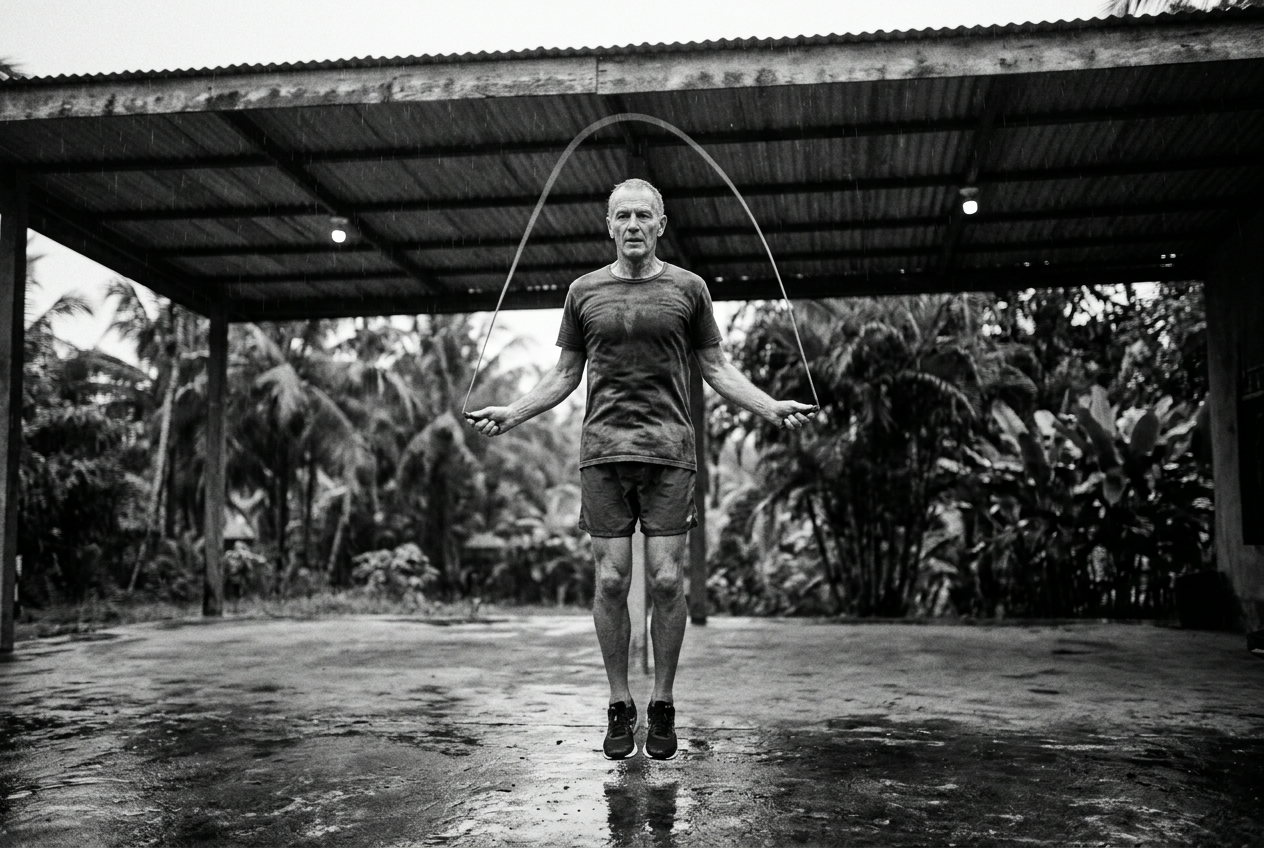
Heat is the thing that surprises people. Even fit fighters get caught out in the first few days, because heavy sweating, fast breathing and a weak, rapid pulse can signal heat exhaustion. MedlinePlus notes that it builds after several days of high heat without enough fluids, and that it can become heat stroke if ignored. Drink steadily through the day, replace salt, and stop when you feel dizzy, not after you fall over. If someone is confused, that is a medical emergency.
Food is mostly good news. Thai food is cheap and easy to find near any camp, and eating plain rice, chicken and fruit is fine for most people. Stomach trouble from unfamiliar water or street food can cost you days, so be careful in week one.
Injuries are the real risk of overtraining. Skin infections from mats and shared gear are common, so clean any cut properly and wash your kit. If a shin, knee or ankle hurts in a way that feels different from ordinary soreness, skip a session. Cutting your trip short through stubbornness is the most expensive way to train.
Check that your travel insurance covers combat sports. Many standard policies exclude them, and an unpleasant surprise at a Thai hospital is not what you want.
How Do You Test a Camp Before You Commit?
Book one week, not one month. Almost every camp sells weekly or single-session rates, and a short stay lets you leave if the place does not deliver. Take the first two days to watch. Notice whether the trainers correct people or just hold pads. Notice whether the sparring is controlled or reckless. Notice who looks like they are enjoying themselves after a week, and who has stopped showing up.
Watch for warning signs: high-pressure sales, a trainer who talks about discounts more than technique, no clear schedule, or a gym that hides its pricing until you arrive. Walk out of a gym that treats the first session as a sales funnel.
Then trust your gut. If you leave each session tired but sharper, you have the right camp. If you leave tired and confused, change gyms or ask for a private to see whether the camp can fix it.
Where Does the Preparation Start Today?
Pick the three camps that match your goal, email the same short questions to each, and compare the answers. While you wait, start the conditioning: run, skip, kick the bag, loosen the hips. Set your rounds with the free boxing round timer, so your sessions already match the rhythm of a Thai pad round before you land in Bangkok. Heavy Bag Pro also has a large library of combos with audio callouts if you want to drill on a bag at home between now and departure.