
A lot of people who walk into a boxing, kickboxing or Muay Thai gym for the first time have the wrong gloves, and most of them bought more than they needed. What you need depends on one question: where will you train? This guide splits boxing equipment for beginners into two kits. The home kit is built around a punching bag. The class kit covers bag work, pad work and, if your class spars, the protective gear for sparring. Plenty of people end up with both, and the two kits share the basics.
Every product here is from RDX. We picked them because the quality is well above what the prices suggest, which matters when you are buying a whole kit at once and do not yet know if the sport will stick.
Heavy Bag Pro partners with RDX Sports. If you buy through the links on this page we earn a commission, at no extra cost to you. Use the code RDXHBP15 at RDX for 15% off everything in this guide except punching bags.
The short version
| Boxing | Kickboxing and Muay Thai | |
|---|---|---|
| Training at home | Punching bag, bag gloves, hand wraps, shorts, t-shirt | Same as boxing. Bag work is done barefoot, so no shin guards |
| Training in a class | Bag gloves, sparring gloves (12 to 16 oz), hand wraps, shorts, t-shirt. Once sparring starts: mouth guard, head guard, groin guard | Same as boxing. Once sparring starts, add shin guards |
The home kit costs about $230 with a hanging bag, or about $305 with a freestanding bag. The class kit costs about $155 without sparring gear, and about $260 for boxing or $290 for kickboxing and Muay Thai once you add it. Prices are RDX US prices at the time of writing and vary by region.
What everyone needs, at home or in class
Hand wraps
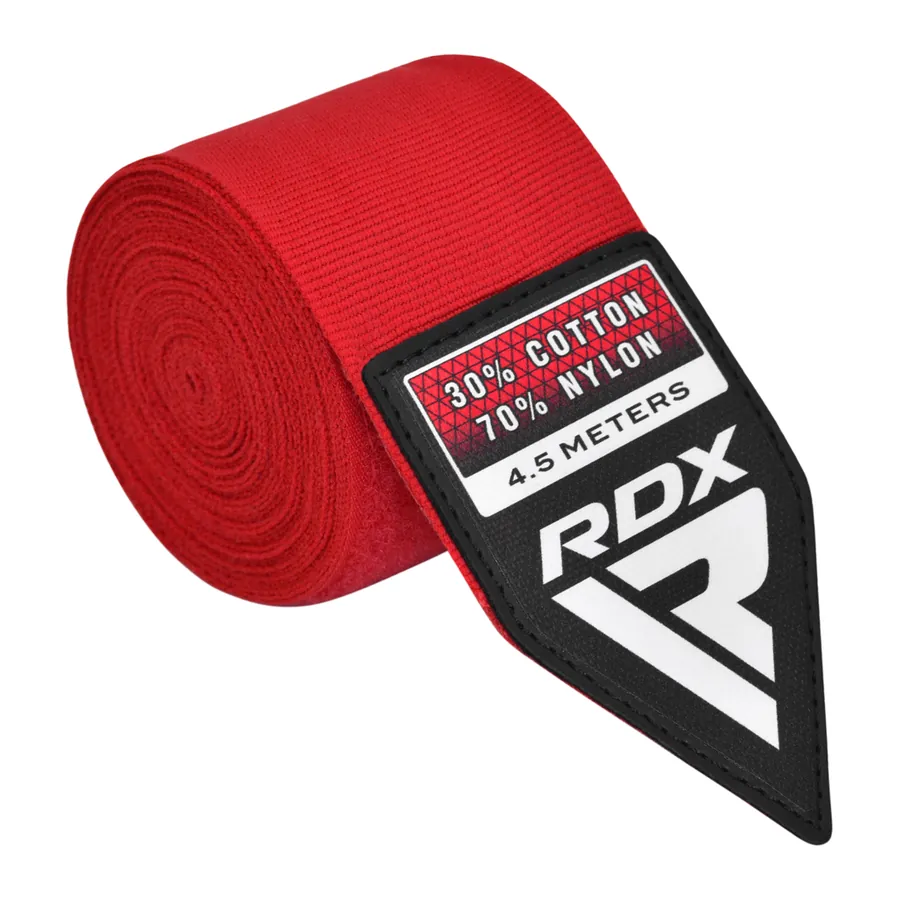
Not optional. Wraps hold the small bones in your hand together and support the wrist; gloves alone do not. Get the long ones (4.5 m / 180 in) so you have enough length to wrap the knuckles twice and the wrist three times. Two pairs is the sensible number, one drying while you use the other.
RDX WX hand wraps are the standard 4.5 m elastic wraps, and they wash fine.
Shorts and a t-shirt
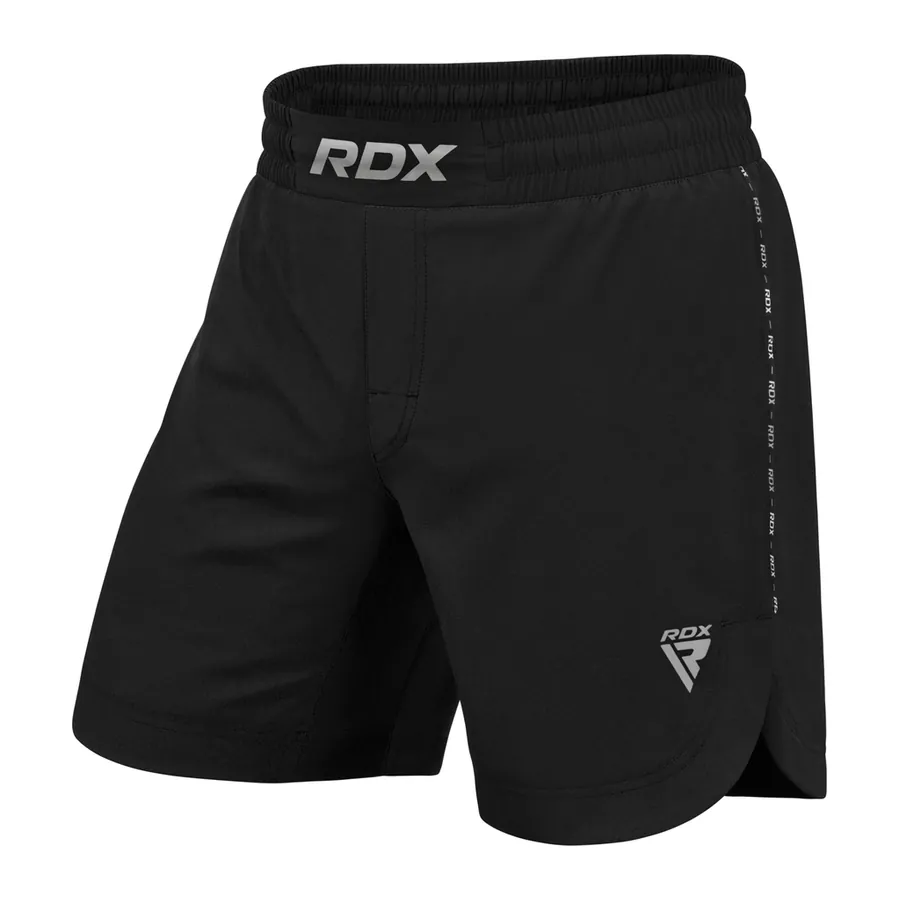
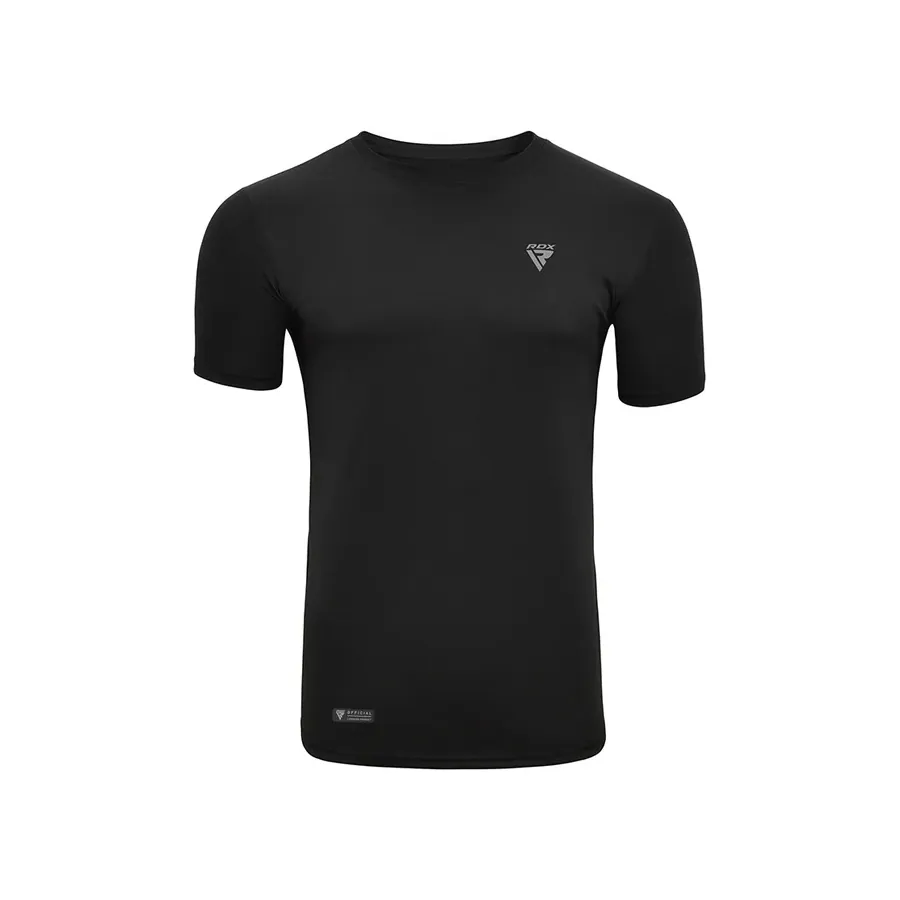
Anything you can throw a knee in. Fight shorts have a wider leg and a stretch panel so they do not restrict kicks and knees; normal gym shorts with a tight leg will. For the top, a sweat-wicking t-shirt is better than cotton because cotton gets heavy and cold in a 60 minute class. A rash guard or a tank is fine too, check your gym’s rules.
RDX T15 fight shorts work for boxing, kickboxing and Muay Thai, and the RDX T2 training t-shirt handles a full class without turning into a wet towel.
Jump rope
Almost every boxing and Muay Thai class starts with rope, and at home it is the best warm-up you can do in a small space. It is also where boxers learn to stay light on the balls of their feet, which carries straight over into footwork on the bag.
Beginners should start with a coated cable rope rather than a thin speed rope: it turns a little slower, so the timing is easier to learn. Length matters more than brand. Stand on the middle of the rope; the handles should reach your armpits. RDX’s adjustable 10.3 ft (3.1 m) skipping rope is long enough for tall people and shortens in a couple of minutes for everyone else.
Gloves: bag gloves and sparring gloves
The glove you need depends on what you hit. At home you only hit a bag. In class you hit the bag, pads held by a coach or partner, and, if your class spars, a training partner. Bag gloves and sparring gloves are built differently for those jobs, so a home trainer needs one pair and a class trainer is best off with both.
Bag gloves for home and class
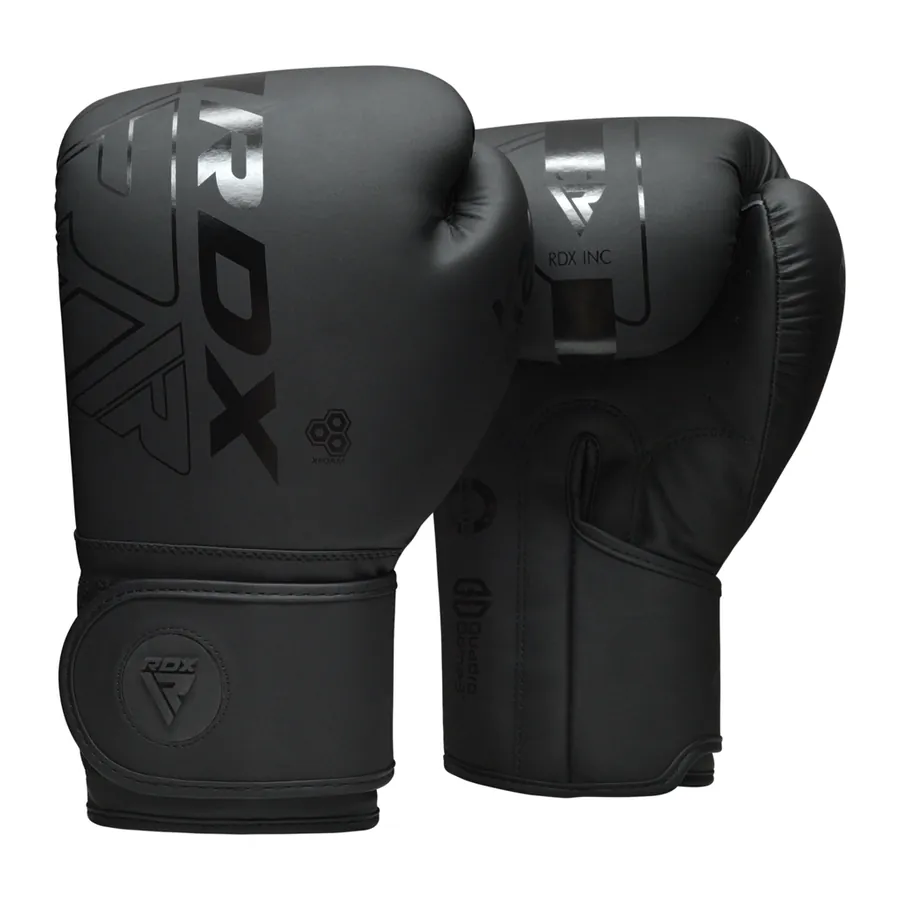
Bag gloves are smaller and lighter than boxing gloves, with dense padding over the knuckles and a firm wrist. They are made for one job, hitting a bag, and they make bag rounds feel fast. RDX F6 Kara bag gloves are our pick, for the bag at home and the bag rounds in class. If you buy a freestanding bag set, the mitts that come with it do the same job at home.
If you train only at home and hit hard, have had sore knuckles before, or want one pair that also works on pads with a friend, get training gloves instead, sized by your body weight:
- Under 60 kg (130 lb): 10 oz
- 60 to 80 kg (130 to 175 lb): 12 oz
- Over 80 kg (175 lb): 14 oz
Our pick there is RDX F6 Kara training gloves (10, 12 or 14 oz), with dense padding and a wrist strap that actually holds your wrist straight. There is more on choosing gloves in our guide to boxing gloves for bag work.
Sparring gloves for pad work and sparring (12 to 16 oz)
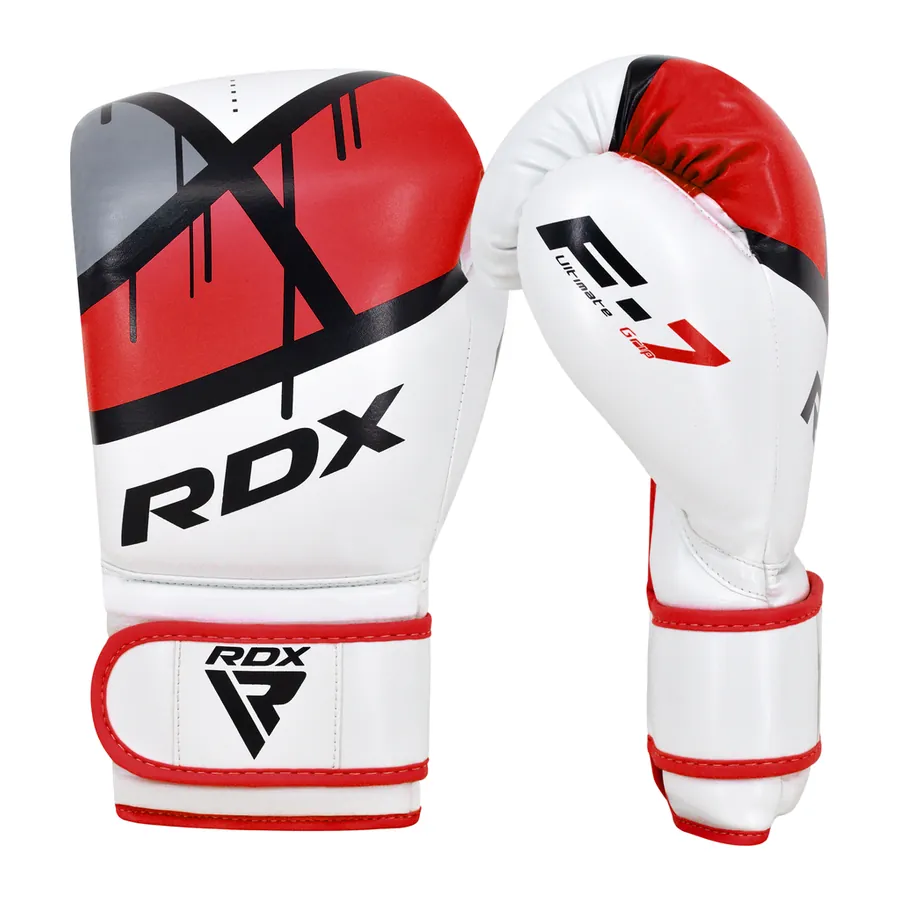
In class, sparring gloves are what you wear for pad work and, later, sparring. They carry more padding than bag gloves, because the padding is there to protect the person in front of you, not you. 16 oz is the safe default and what most gyms expect from adult men. 14 oz is fine for lighter people, and 12 oz works for very small hands, which includes many women. If in doubt, ask your coach what the gym uses.
RDX F7 Ego gloves come in 12, 14 and 16 oz, with thick, soft knuckle padding and a long cuff. They are the pair in our class kits.
Why two pairs for class
Bag work packs the padding down, and gloves that have gone flat on a heavy bag are not what you want to put in a training partner’s face. It is considered good manners not to spar in your bag gloves, and the experienced people in your gym will notice if you do. Bag gloves on the bag and sparring gloves for pads and sparring keeps both pairs in shape for longer.
Training at home: hanging or freestanding punching bag
Skip this section if you only train in a class. If you train at home, the bag is the one piece of kit that decides whether you train at all, because a bag in the garage is a workout you can do in 20 minutes without driving anywhere.
There are two kinds of punching bag for home, and the right one depends on your room more than your style.
| Hanging bag | Freestanding bag | |
|---|---|---|
| Best for | Garages, basements, houses you own | Apartments, rented homes, shared rooms |
| Installation | Ceiling joist, wall bracket or bag stand | None, fill the base and stand it up |
| Feel | Swings like an opponent moving, absorbs power | Rocks and snaps back fast, good for speed |
| Kicks | Low, mid and high kicks all fine | The base gets in the way of low kicks and close range |
| Hard hitting | Stays put | Can slide or tip unless the base is filled heavy |
| Moving it | Stays where it hangs | Tilt and roll it into a corner |
| Price (RDX) | About $120 | $225 to $290, with mitts |
Hanging punching bag: the best option if you can mount one
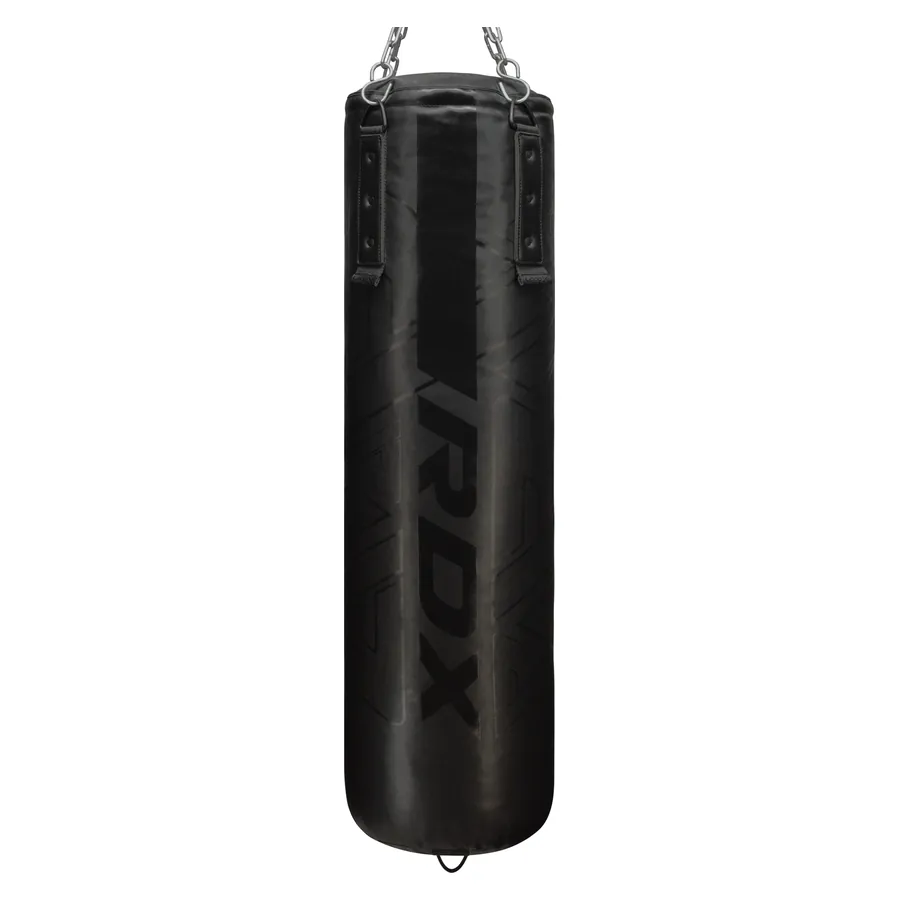
A hanging heavy bag is what every gym uses, for good reasons. It swings away and comes back, so you have to move your feet, cut angles and time your punches instead of standing still and hitting. It takes full-power hooks and kicks without going anywhere, and you can kick it at any height. It is also the cheaper option.
Weight matters more than anything else. An adult hitting with proper technique wants a bag of 50 kg (110 lb) or more. Anything lighter swings away from every punch, you spend half the round waiting for it to come back, and your wrists learn bad habits on a target that gives way.
Our pick is the RDX F6 Kara punching bag set, 5 ft, filled. It ships at about 20 to 22 kg, which is fine for learning technique in the first weeks, but the shell is built for 50 to 60 kg and has a zip opening, so when it starts swinging too much you add filling and end up with a gym-weight bag for a fraction of what a gym-weight bag normally costs. Get the 5 ft if you kick, so there is something to kick at thigh height.
Mount it from a ceiling joist or a wall bracket rated for 60 kg, never from drywall. If neither is possible, a freestanding bag is the simpler answer than a separate bag stand.
Freestanding punching bag: when you cannot drill
A freestanding bag stands on a wide base that you fill with water or sand. No drilling, no joists, no landlord conversation. Fill it, stand it up, and roll it into a corner when you are done. The base also soaks up a lot of the vibration that a hanging bag sends through the ceiling, so with a rubber mat underneath it is the quieter choice for flats and upstairs rooms.
The trade-offs: it does not swing, so you lose the movement training a hanging bag gives you. Hard hooks and kicks can make it rock or walk across the floor, and the base sits where your feet want to be for low kicks and close-range work. For a Muay Thai or kickboxing beginner who wants to kick hard, a hanging bag is better if there is any way to mount one.
Two good options, both 6 ft and both sold as a set with mitts, so you do not need separate bag gloves:
- RDX KT Ronin 6 ft freestanding punching bag. The better value. Eight-leg stabiliser at the base, a zip top so you can adjust the bag’s firmness, and a base that RDX lists at 80 litres of water or up to 120 kg of sand.
- RDX F6 Kara 6 ft freestanding punching bag. The same F6 Kara range as the hanging bag, with high-density foam over the striking surface and a shock-absorbing connector between bag and base.
Fill the base with sand, not water, if you hit hard or kick. Sand is about 50% heavier for the same volume, and weight in the base is the only thing that stops a freestanding bag sliding.
How to make a hanging bag heavier
Do this the day the bag swings away from your punches instead of absorbing them. You need old clothes and towels, 15 to 25 kg of sand (any builders’ or play sand), zip-lock freezer bags, packing tape, a broom handle and a bathroom scale. Plan an hour.
- Put the sand in sealed bags. Fill freezer bags about three quarters full, squeeze the air out, zip them, then wrap each one in packing tape so it cannot leak. Never pour sand loose into the bag: it sinks to the bottom, turns the bottom third into concrete and splits the seams.
- Cut extra fabric small. Old t-shirts, towels, bed sheets, jeans, cut into strips or chunks the size of your hand. Big rolled-up items leave gaps that turn into soft spots.
- Open the zip and take out the top third of the factory filling. Keep it, you will put it back.
- Compact what is left. Pack it down hard with the broom handle. The factory filling is loose, and compacting it is where most of the room for new weight comes from.
- Put one sandbag in the centre, then pack fabric around it. Sand stays in the middle of the bag with at least a hand’s width of fabric between it and the outer shell, so you never hit a hard spot. Keep the sandbags roughly cylinder-shaped.
- Repeat in layers. Fabric, compact, sandbag in the centre, compact, until the bag is full, using the factory filling you took out plus your cut fabric.
- Weigh it. Weigh yourself holding the bag, subtract your weight. 50 kg is the target for an adult. Stay under 60 kg, which is the limit for this bag’s shell and straps.
- Zip it, hang it, and leave it a week. The filling settles. Lay the bag on its side and beat out any lumps, then top up with fabric after the first week or two.
Do not use gravel, rice or loose sawdust, and do not fill the bag with sand only. Fabric gives the bag its density and the feel of hitting something solid; sand only adds weight.
For the rest of a home setup, including where to put the bag, see which equipment you need for home boxing training.
Training in a class: protective gear for sparring
Whether you need any of this depends on your class. Many gyms do not let beginners spar for the first months, some not before six months of training, and contact-free classes such as fitness boxing never spar at all. Until sparring starts, or if it never does, gloves and wraps are all you need. When your coach says you are ready, add the gear below.
Mouth guard
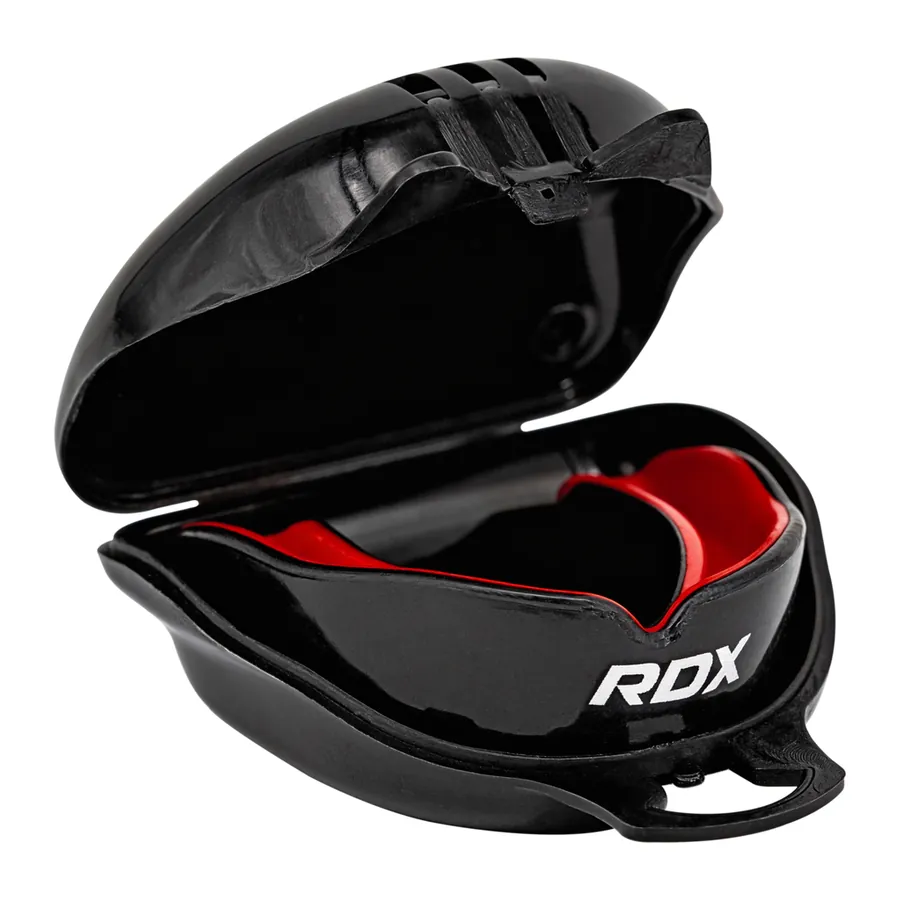
Cheapest item on the list and the one you must never spar without. A boil-and-bite guard like the RDX 3W mouth guard moulds to your teeth in two minutes in hot water. Carry it in its case; a mouth guard loose in a gym bag is a mouth guard you will not want to put in your mouth.
Head guard
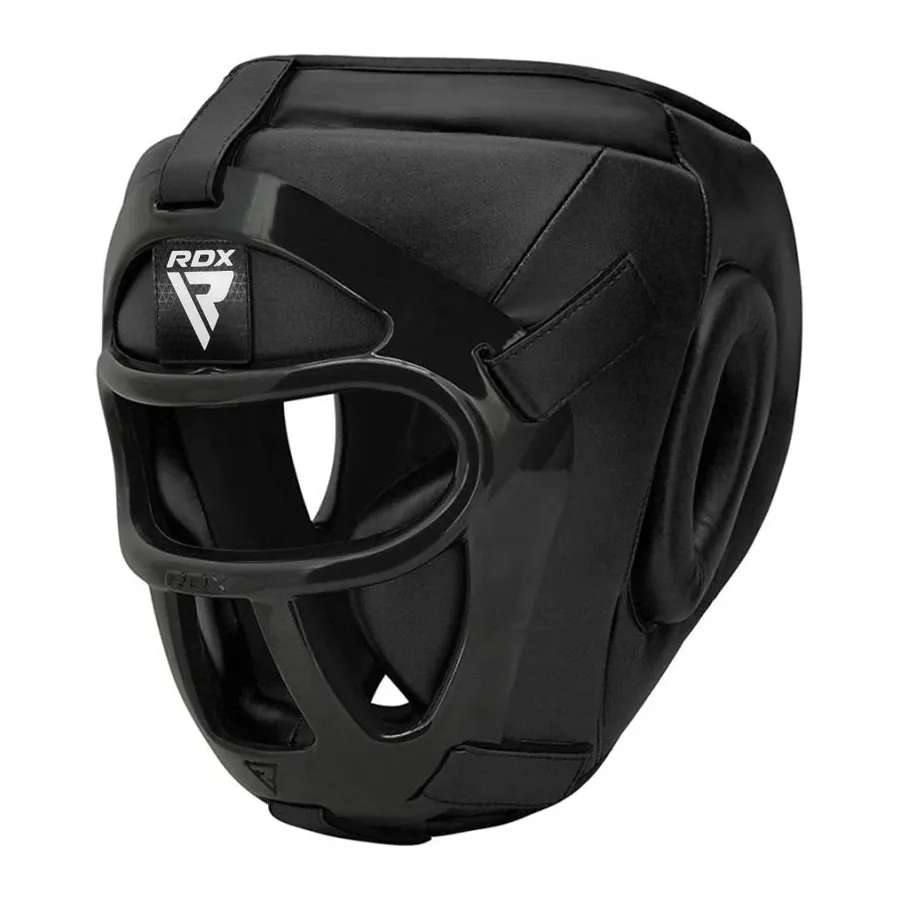
Required at most gyms for beginners who spar. An open-face head guard protects the forehead, cheeks and ears and still lets you see hooks coming. The RDX T1 head guard has a removable face cage, which is worth having for early sparring when you are still learning to keep your hands up.
Groin guard
Kickboxing and Muay Thai gyms require one for sparring, because kicks and knees land low by accident all the time. In boxing, many gyms ask for one too, and amateur boxing competition requires it for men. If your Muay Thai class does clinch and knee drills, wear it in training as well.
Get a cup-style guard with a waistband that stays flat under your shorts. The RDX F6 Kara groin guard has a hard polymer cup, a padded waistband and elastic straps, in S to XL by waist size.
Shin guards (kickboxing and Muay Thai sparring)
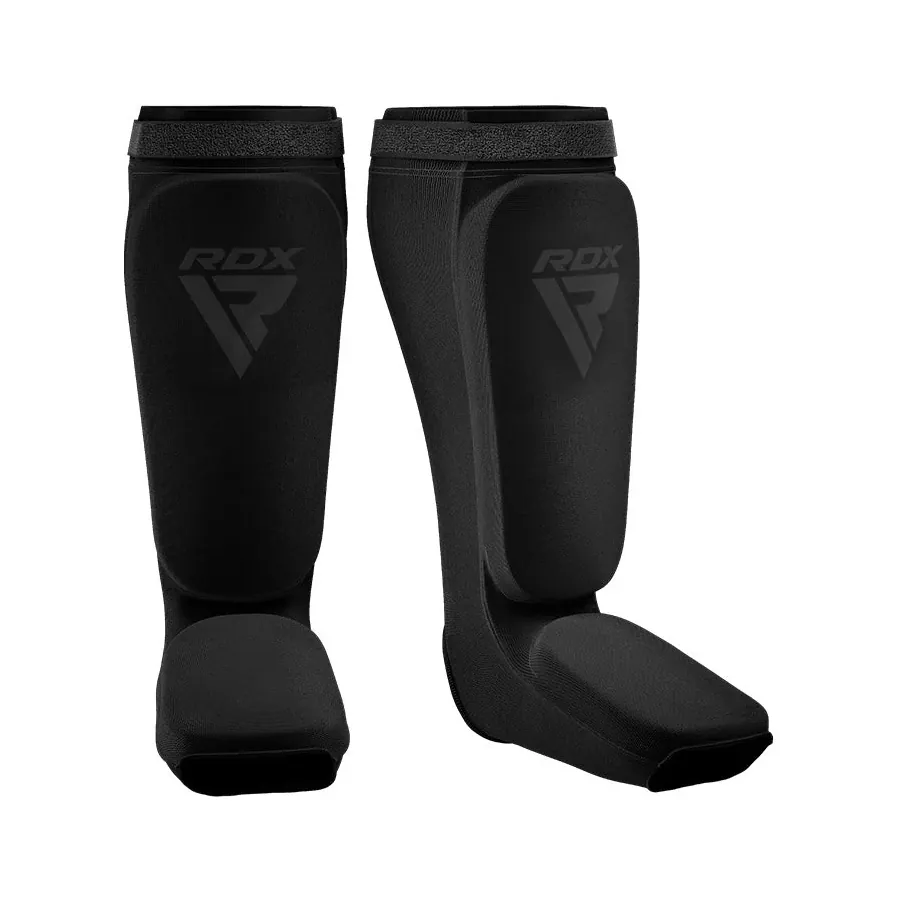
Bag work and pad work in kickboxing and Muay Thai are done barefoot, without shin guards, at home and in class. You need shin guards for sparring, where shin meets shin and a checked kick hurts both people. Most kickboxing and Muay Thai gyms require them for anyone who spars.
Get shin and instep guards, the type that covers the top of the foot too, with two straps at the back. RDX shin instep guards come in S to XL; measure from just under the knee to the ankle and check their chart.
What to wear to your first boxing, kickboxing or Muay Thai class
Shorts, a t-shirt, hand wraps and a water bottle. That is it. Many gyms lend gloves for the first few sessions, so ask before you buy; lending gloves are sweaty, so wraps are the one thing to bring on day one. Bare feet for kickboxing and Muay Thai, trainers or boxing shoes for boxing. Leave jewellery at home and tie long hair back.
Boxing glove size guide
| Your weight | Training gloves (home bag work) | Sparring gloves (class) |
|---|---|---|
| Under 60 kg / 130 lb | 10 oz | 12 to 14 oz |
| 60 to 80 kg / 130 to 175 lb | 12 oz | 14 to 16 oz |
| 80 to 100 kg / 175 to 220 lb | 14 oz | 16 oz |
| Over 100 kg / 220 lb | 14 to 16 oz | 16 to 18 oz |
Ounces are the weight of the glove, which tracks how much padding it has. Hand size is a separate question: very small hands, including many women’s, fit 12 oz sparring gloves better; large hands may need to go up a size. Always try gloves on with wraps, and check what your gym requires for sparring. Bag gloves sit outside this table; they are built light on purpose and only used on the bag.
Four beginner kits, ready to order
These are the kits we put together with RDX. Pick the home kit, the class kit, or both. Prices are approximate US prices before the discount code.
Beginner boxing kit for home (about $230)
- F6 Kara punching bag set, 5 ft, filled
- F6 Kara bag gloves
- WX hand wraps
- T15 fight shorts
- T2 training t-shirt
Cannot mount a bag? Swap the bag and bag gloves for the KT Ronin freestanding bag set, which comes with mitts (about $305 in total).
Beginner boxing kit for class (about $260)
- F6 Kara bag gloves for bag work
- F7 Ego sparring gloves, 14 or 16 oz (12 oz for small hands), for pads and sparring
- WX hand wraps
- T15 fight shorts
- T2 training t-shirt
- Once sparring starts: 3W mouth guard, T1 head guard and F6 Kara groin guard
In a contact-free class, or before your gym lets you spar, the first five items are the whole kit (about $155).
Beginner kickboxing and Muay Thai kit for home (about $230)
Same as the boxing home kit. Bag work is done barefoot, so there are no shin guards in it. Get the 5 ft bag so you have something to kick at thigh height. Muay Thai shorts are traditionally shorter and wider than MMA shorts; the T15 works for both, but any Muay Thai short with a wide leg is fine.
Beginner kickboxing and Muay Thai kit for class (about $290)
The boxing class kit plus shin instep guards once sparring starts. Bag and pad work are done barefoot.
Training at home and in class
Get both kits. They share the bag gloves, wraps, shorts and t-shirt, so the second kit costs less than its full price: about $380 for boxing, $410 for kickboxing or Muay Thai, for everything on this page including sparring gear.
Worth adding to any kit
- Adjustable skipping rope for warm-ups and footwork
How much does beginner boxing gear cost
Training at home costs about $230 with a hanging bag (bag, bag gloves, wraps, shorts, t-shirt), or about $305 with a freestanding bag set. Training in a class costs about $155 for bag gloves, sparring gloves, wraps, shorts and a t-shirt, which covers a contact-free class or the months before you spar. Sparring gear adds about $105 for boxing (mouth guard, head guard, groin guard) and $135 for kickboxing or Muay Thai with shin guards. Topping up a hanging bag to full weight later costs old clothes and a few dollars of sand. The code RDXHBP15 takes 15% off everything except punching bags.
What you do not need yet
- Boxing shoes. Trainers are fine for the first six months.
- Focus mitts and Thai pads. Only useful with a partner who knows how to hold them, and gyms provide them.
- Speed bag, double-end bag, reflex ball. Skill toys. Learn to hit the heavy bag properly first.
- Sparring gear before your gym lets you spar. In a contact-free class you never need it.
- Shin guards for bag work. Kickboxing and Muay Thai bag and pad work are done barefoot.
Got the gloves? Now learn what to throw
Gear gets you to the bag. What most beginners lack is someone telling them what to do once they are standing in front of it. Heavy Bag Pro shows every combination on screen as you throw it, round by round, from 1000+ combos built by pro fighters, so a home session looks like a class instead of three minutes of jabs and a shrug. It works the same on a hanging or a freestanding bag. Start with the beginner workout once your wraps are on.
FAQ
Do I need a punching bag to start boxing?
No. If you train in a class, you need bag gloves, sparring gloves, wraps, shorts and a shirt, and protective gear only once sparring starts. A bag only matters if you want to train at home, and then it matters a lot.
Is a hanging or freestanding punching bag better?
A hanging bag, if you can mount one. It swings like a moving opponent, takes full-power kicks and costs less. A freestanding bag is the right choice when you cannot drill into the ceiling, rent your home or live in an apartment.
How heavy should a punching bag be?
50 kg (110 lb) or more for an adult. Lighter bags swing away from every punch. Most hanging bags ship lighter than that, so pick one with a zip opening and add sealed sandbags and fabric until it reaches weight. For a freestanding bag, fill the base with sand rather than water.
What size boxing gloves should a beginner get?
Bag gloves for the bag, at home and in class. For pad work and sparring in class: 16 oz sparring gloves for most adults, 14 oz for lighter people, 12 oz for very small hands. If you train only at home and want more padding, 10 to 14 oz training gloves by body weight.
What is the difference between bag gloves and boxing gloves?
Bag gloves are lighter, with less padding, and made only for hitting bags. Sparring gloves of 12 to 16 oz are for pad work and sparring. In class it helps to have both, and you should not spar in gloves that have been flattened on a bag.
When do beginners start sparring?
It depends on the gym. Many wait a few months, some six months, and contact-free classes such as fitness boxing never spar. Your coach decides. Buy sparring protection when that day is close.
Do beginners need headgear?
Only for sparring, and most gyms will not let you spar without it. Not for bag or pad work, and not for contact-free classes.
Do I need a groin guard for Muay Thai or kickboxing?
Yes for sparring, and most gyms require it. Wear it in training too if your class does clinch and knee drills.
Do I need shin guards for kickboxing or Muay Thai?
Only for sparring. Bag work and pad work are done barefoot, at home and in class. Most gyms require shin guards for anyone who spars.
Is a jump rope worth it for boxing?
Yes. It is the standard boxing warm-up, it builds the light, bouncy footwork you use on the bag, and it costs very little. Pick an adjustable rope; standing on the middle, the handles should reach your armpits.
What is the difference between boxing, kickboxing and Muay Thai gear?
Gloves, wraps and protective gear are the same. Kickboxing and Muay Thai add shin guards for sparring, and Muay Thai usually uses shorter, wider shorts. That is the whole difference for a beginner.