
A sports medicine clinic at the University of Pittsburgh found wrist injuries account for a larger share of boxing-related overuse complaints than any other joint in the hand or forearm. Not knuckles, not elbows, not shoulders. Wrists. The joint you probably don’t think about until it starts talking back after round three.
I spent a while going down this rabbit hole after hearing the same complaint in gym after gym: “I wrap well, I use decent gloves, and my wrists still hurt.” The wraps are the obvious answer, so that’s where everyone starts. But the athletes who kept struggling were already wrapping correctly. Something else was going on. I asked a few coaches and a physio who works with combat sports athletes, and the picture got more interesting.
There are five causes that come up repeatedly, and wraps are not one of them.
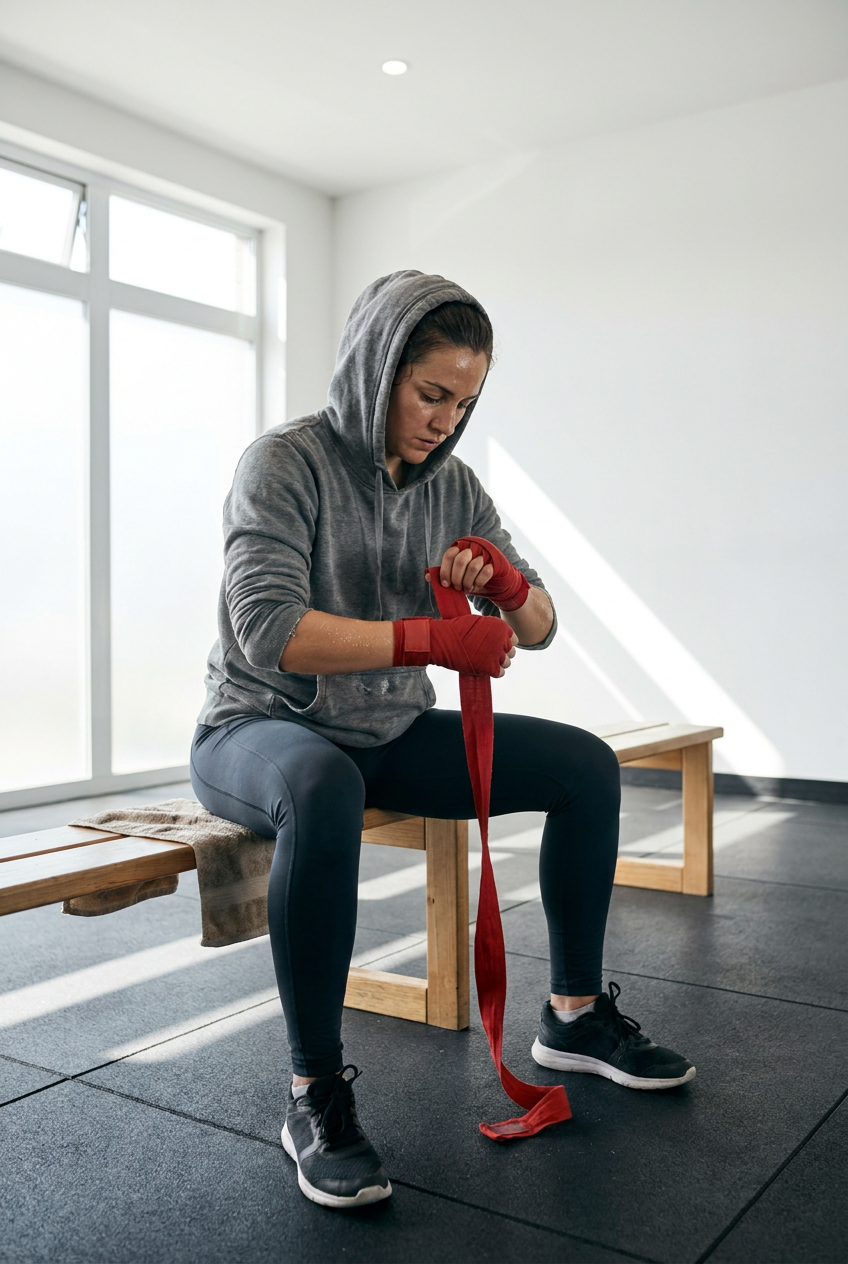
1. Bad angle.
The wrist needs to be straight at the moment of impact. Straight, not flexed, not extended, not cocked sideways. When it bends even slightly on contact, the force that should travel up through your radius and ulna instead loads the small carpal bones and the tendons running over them. Over dozens of rounds, that adds up.
This is the cause I heard about most from coaches, and it’s also the one that took me longest to believe because you can wrap your wrist perfectly and still be bending it in the moment you land. The wrap supports a neutral wrist; it doesn’t force one.
The fix is basically just slow repetition with the bag. Throw at maybe half speed. Watch where your wrist goes on contact. If you’re hitting with a hook and your wrist is flexing outward when your knuckles connect, that’s your problem. Drill the hook at low speed until the wrist stays flat, then gradually bring the speed back up. Freddie Roach used to have new fighters spend entire sessions just working the basic straight punches slowly for this exact reason, making sure the body learned the aligned position before speed turned it into a guess.
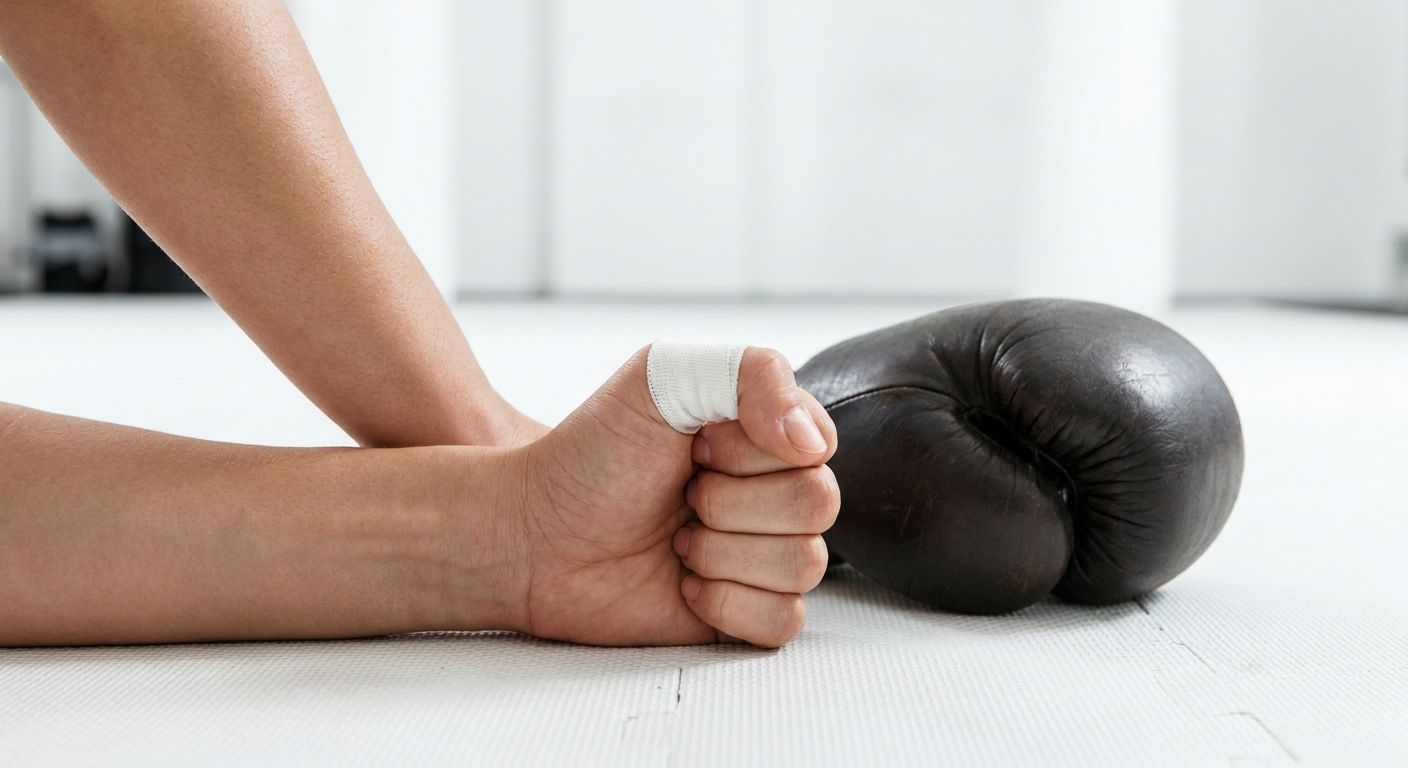
2. Wrong glove.
Bag gloves and sparring gloves serve different purposes, and using sparring gloves on the heavy bag long-term does a specific kind of damage. Sparring gloves are padded to protect your partner. Bag gloves are structured to protect your hand and wrist. The padding distribution is different, the wrist closure is different, and the way the knuckle padding disperses impact is different.
Using sparring gloves on the bag isn’t the end of the world for a session or two, but doing it every session for months is where the wrist problems start. The softer, less structured padding in sparring gloves compresses further on impact, which means more force reaches the wrist joint. You don’t usually clock this until you switch to a proper bag glove and feel the difference immediately.
Glove weight matters here too. Many beginners buy 16oz gloves for everything because they heard that’s what you should use for sparring. For the heavy bag, 12oz or 14oz is usually a better fit for smaller hands and gives a tighter, more supported feel around the wrist closure. The post on dedicated heavy bag gloves covers the weight and construction differences if you want the full breakdown.
3. Dead hands.
I’ve heard this described different ways, but the cleanest explanation came from a physio: your hand should be making a real fist at the moment of impact, not drifting in. Dead-hand syndrome, as some coaches call it informally, is when the muscles of the hand and forearm aren’t actually engaged at contact. The punch looks fine, speed is fine, but the fist is loose at the critical moment.
When the fist isn’t properly clenched, the impact spreads into whatever is most available to absorb it. That’s often the wrist joint. A properly squeezed fist turns the hand into a rigid block, and the shock transfers much more cleanly up through the radius and ulna and into the shoulder, where larger muscles can handle it.
You can check this on the bag at low speed. Hit the bag and hold contact for a second. Is your fist still tight? Or did it partly open on impact? If it opened, you found something worth fixing. Tighten on the way in, hold through contact, then relax on the way back. Roger Mayweather used to call this “hitting with your hands open” when coaching beginners, and the drill he used was simple: hold contact for a full count on every punch during slow-work rounds until the squeeze became automatic.

4. No recovery.
Volume without rest is where chronic wrist pain develops. The tendons and ligaments around the wrist don’t recover at the same rate as muscle tissue, and high-volume bag work two days in a row, every week without a break, builds up micro-damage that doesn’t fully clear. At some point the cumulative load outpaces recovery and pain becomes a constant background noise instead of an acute “I landed something wrong” signal.
This is the cause that’s easiest to miss because the wrist doesn’t blow up in one session. It creeps. Gets a bit worse each week. By the time it’s bad enough to stop training, it’s been building for months.
The practical fix is pretty simple: don’t hit the bag two days straight if your wrists are already sore, and build in at least one full rest day from any impact work per week. Shadowboxing and light padwork on the “off” days is fine. A structured rest-day approach matters more than it gets credit for, and the wrists are often the canary telling you the overall volume is too high before anything else breaks down.
Using a round timer to structure your bag sessions also helps here. When you’re watching the clock, you tend to pace the work more honestly. A free tool at heavybag.pro/boxingtimer/ lets you set work-to-rest ratios so the session has actual recovery built into it rather than running continuously until your wrists are cooked.

5. Impact point drift.
This one is subtle. Your knuckle index is where the punch is supposed to land, the two large knuckles of the index and middle finger. When that landing point drifts, either to the smaller outer knuckles or to the base of the hand, the wrist absorbs the mismatch.
Outer-knuckle contact (ring and pinky fingers) is the classic cause of boxer’s fracture, but the wrist takes damage from it too because the alignment from impact site up through the bones isn’t clean. Base-of-hand contact sends the force directly into the carpals with no bone column above to distribute it.
This often happens when punches get sloppy in later rounds. Fatigue changes your punch mechanics without you noticing. The hand rotates slightly, the landing point drifts, and rounds 6-8 are hitting differently than rounds 1-3. Slowing down and going back to basics at the bag, checking where contact actually happens rather than where you think it happens, is the diagnostic. A mirror or a phone propped up to record a few rounds can show you things you can’t feel in real time.
If the impact-point problem is consistent rather than fatigue-related, the issue might also be in how you’re wrapping. The step-by-step guide to hand wrapping covers how to align the wrap across the correct knuckles, which changes where the padding sits and where the hand naturally wants to land.
When to stop and see someone.
Sharp pain during the punch, not after: stop. Swelling that doesn’t go down after 48 hours: stop. Pain that’s getting progressively worse week over week even when volume is low: stop and see a physio or sports medicine doctor.
Wrist pain that’s dull and comes on after training, then clears within a day, is usually overuse and responds to the fixes above. Acute or escalating pain is different. There’s a post on long-term wrist pain causes and fixes that goes deeper on the anatomy side if you’re trying to figure out whether you’re dealing with a tendon issue, a ligament issue, or something else.
Wrist problems from bag work are fixable without stopping completely, as long as you’re honest about what’s causing them. Fixing the actual cause is just slower and less satisfying than buying new gear, which is why gear usually gets blamed first.