
Nobody tells you this when you start boxing: the ring is the easy part. Out there, the rules are clear. You throw, you move, you breathe. But walk back into your office, your kitchen, your daily commute after six months of training, and something has shifted. You carry yourself differently. Or you don’t, and you wonder why training three nights a week hasn’t touched the part of you that feels like a fraud in meetings or hesitates before making a hard call.
Boxing confidence is weirdly specific. You can feel genuinely capable at the heavy bag and still struggle to hold eye contact with someone who intimidates you. The sport builds something real, but it doesn’t automatically transfer. How it transfers depends on what you do outside training hours.
What the bag is teaching you
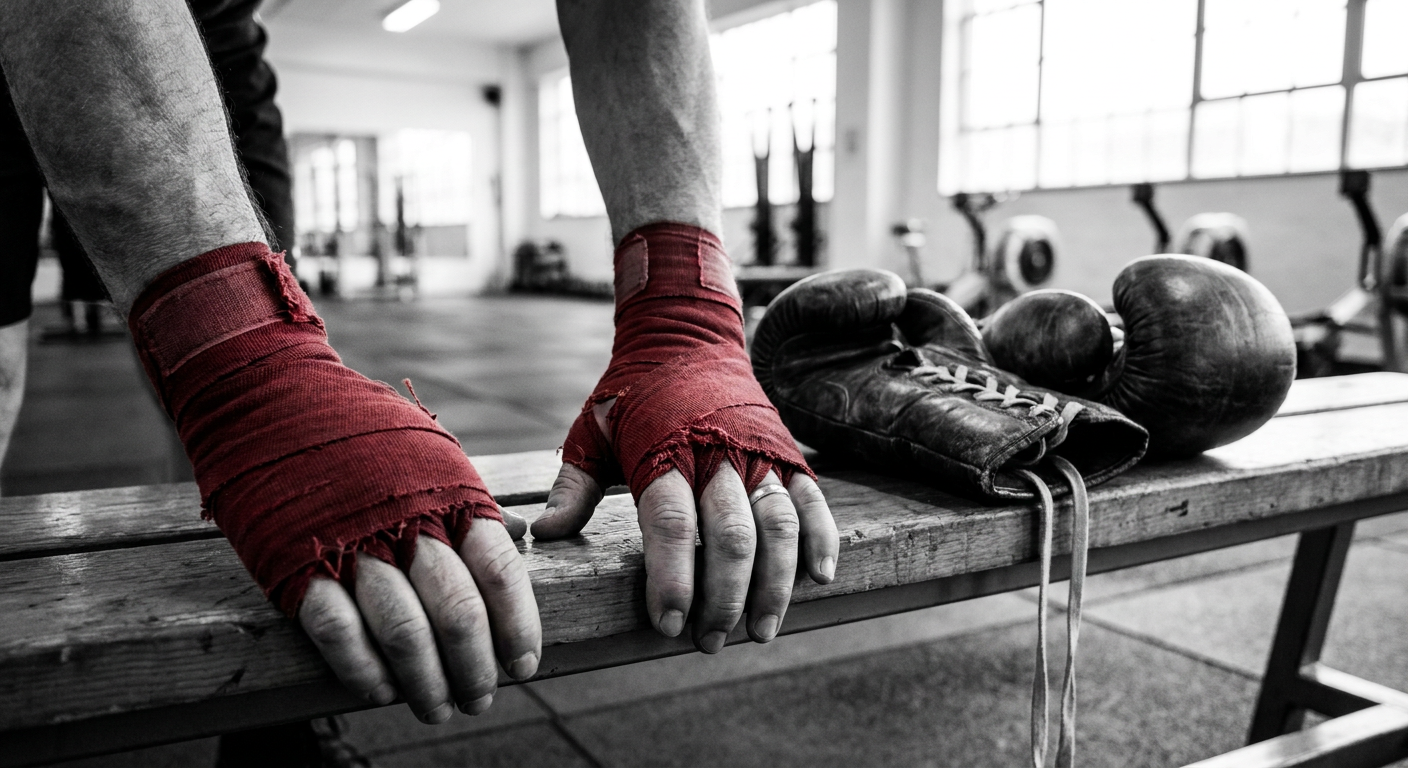
There’s a reason coaches in programs like the USA Boxing youth development circuit use the sport with at-risk kids. It’s not the punching. It’s the feedback loop. You throw a sloppy cross, the bag swings awkward, and your wrist stings. There’s no ambiguity about whether the technique worked. You know immediately. Instant, honest feedback like that is rare outside the gym.
Confidence comes from competence with evidence. When you can point to something concrete you’ve learned, something you couldn’t do three months ago, you have a reference point. “I figured that out” is a mental anchor that carries into other situations. Jeff, a 47-year-old sales manager who took up boxing after a rough divorce, put it this way in his gym’s member blog: he didn’t become bolder in negotiations because boxing made him tough. He became bolder because he’d spent eight months proving to himself he could learn difficult physical skills from scratch. The transfer was about learning identity, not aggression.
The specificity trap
One thing I’ve seen come up repeatedly when talking to people who train: gym confidence doesn’t automatically generalize. A boxer who’s been training two years, no competition, can feel completely at ease doing footwork drills or working combinations on the pads. Put them in a new gym and they freeze. Put them in a job interview and they revert to old patterns.
That’s not a failure of the sport. It’s just how confidence works. Psychologists call this domain specificity. Skills and the sense of capability that comes with them stay close to where they were built, unless you deliberately bridge them. Manny Pacquiao’s trainer Freddie Roach has talked in various interviews about how many fighters are completely different people inside the gym versus outside it. The gym is structured, safe, and familiar. Life isn’t.
So the question becomes: how do you pull what boxing teaches into the rest of your day?

Tracking milestones, not feelings
Feelings about confidence are unreliable. You’ll feel good some weeks and terrible others, and neither maps cleanly onto how much you’ve progressed. What works better is tracking concrete milestones, the kind boxing naturally generates.
Start with written evidence. Not a training log of reps and rounds (though that helps), but a list of specific moments: first time you hit a 3-minute round without dropping your guard, first time you landed a clean left hook on the pads without telegraphing, first time you didn’t flinch when your sparring partner feinted. These moments are data. They tell you that you changed something, that effort produced a result.
Having a structured timer that tracks your rounds and intervals isn’t just a training tool. When you look at the data after a session, you’re seeing evidence of work. That’s different from vague feelings of “I trained today.” The free boxing round timer at heavybag.pro lets you run structured rounds with session history, which gives you that concrete feedback loop outside the session itself.
Write three things down after every training week. What got sharper. What broke down. What you want to fix. You’re building a factual record of someone who keeps showing up and improving, which is harder to argue with on bad days than vague feelings of progress.
The 2am voice problem
There’s a specific kind of confidence that training alone doesn’t reach, and it’s the one that shows up at 2am when you’re lying awake second-guessing a decision you made. Or the voice that says you don’t belong in the room when you walk into something new.
Boxing can quiet that voice, but not by making you feel like a fighter. It does it by forcing you to get used to being the worst person in the room. If you’ve trained at a proper boxing gym for any length of time, you’ve been outskilled, outpaced, and corrected constantly. You survived it. You came back. That is directly transferable to new environments where you feel incompetent or out of place.
Wladimir Klitschko spent years training with Emanuel Steward at the Kronk Gym in Detroit, surrounded by people who operated at a level he was still working toward. He’s talked in interviews about how the gym taught him to be comfortable with the gap between where he was and where he wanted to be. He didn’t wait until he felt ready. He trained as if readiness would come from the reps, not the other way around.
That’s the mindset to borrow. Not “I’ll feel confident when I’m good enough.” Rather: show up when you’re not good enough, let the work accumulate, and trust the record.
Using the routine as a foundation
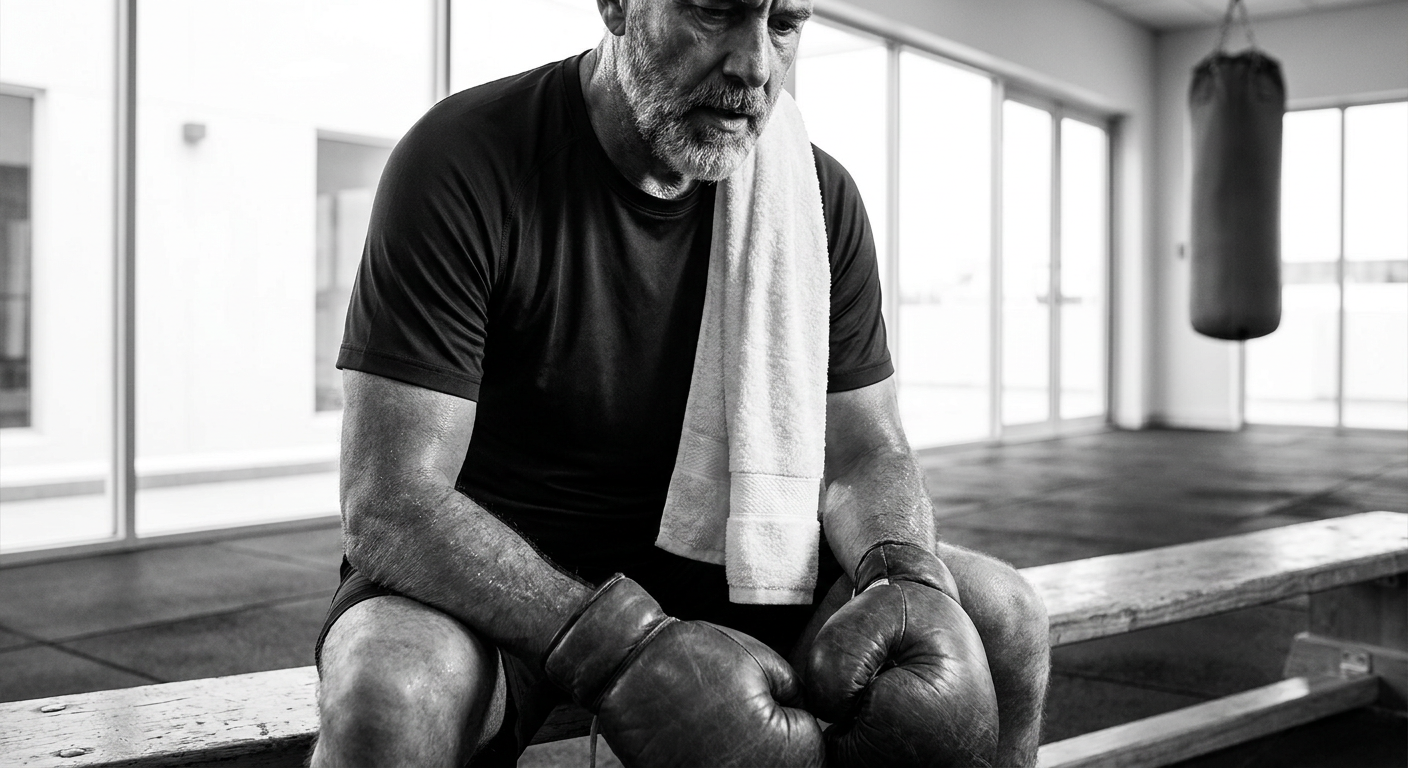
People underestimate what consistent training does for confidence simply through structure. If you train three times a week, that’s three days per week where you are the main character of at least 90 minutes of your own story. You showed up. You pushed through something. You didn’t cancel on yourself.
That rhythm becomes a foundation. It doesn’t matter if the session was brilliant or mediocre. The fact of it matters. Gym culture has a word for this in Muay Thai camps, especially at gyms like Fairtex Training Center in Pattaya or Yokkao’s facility in Bangkok: they call it showing face. You’re there. You’re visible. You’re doing the work. Confidence is partly just the accumulated weight of that.
The practical version of this for people training at home or at a commercial gym: set the session time the day before, not the morning of. Decide it’s happening before your brain has a chance to negotiate. Use a round timer so the structure is external and removes another decision point. The less energy you spend on whether to train, the more you spend on training. And training consistently is what generates the evidence that builds confidence. See the related breakdown of how to keep home training consistent when motivation dips.
Stress response, and why it matters outside the gym
One thing boxing does that’s hard to replicate elsewhere: it repeatedly puts your nervous system into a mild stress state and then asks you to function anyway. Hitting a heavy bag hard for three minutes while tired is not comfortable. Your heart rate spikes, your breathing gets ragged, your arms fill with lactic acid. The task is to keep throwing, keep moving, keep thinking, while your body is screaming at you to stop.
Do that enough times and you start to recognize the physical sensation of stress as something that doesn’t necessarily require a panicked response. A study published in Frontiers in Psychology on physical activity and psychological resilience found that repeated exposure to manageable physical stressors improved perceived stress tolerance in adults. The researchers measured self-reported anxiety responses in subjects who trained in high-intensity exercise and found meaningful reductions in perceived threat response over 10 weeks of training.
Applied to boxing: the person who’s been throwing hard three-minute rounds twice a week for a year walks into a tense meeting and their body already has a library of “I’ve been uncomfortable before and survived it.” That’s not nothing. That’s one of the most useful things the sport builds, and it’s largely invisible because it feels so mundane during training.
Coaching yourself with boxer’s language
One of the smaller habits that transfers surprisingly well: the way boxing coaches talk about failure. Trainers at technical gyms, the kind who work with USA Boxing regional teams or Golden Gloves competitors, frame errors as information. “You dropped your guard, so you got hit. Now you know.” There’s no catastrophizing, no identity collapse. The mistake has a cause, the cause has a fix, the fix gets drilled.
Bring that framing outside the gym. When something goes wrong at work or at home, run the boxer’s diagnostic: what specifically happened, what decision created it, what’s the corrected version. Cut the emotional commentary about what it means about you as a person. The gym trains you to think like this by necessity, because there’s no time during a round for self-pity. The bag doesn’t care.
It takes practice to apply this outside. But if you’ve spent enough time at the gym hearing coaches give corrective feedback without drama, the pattern starts to stick. That’s a more portable form of confidence than any physical technique: a framework for processing failure without it flattening you.

What “outside the ring” means
You’re reading this probably because you train, or you’re about to start, and you’re wondering if the gym will change something broader. It will. But the mechanism isn’t magic and it’s not automatic.
Boxing builds confidence outside the gym when you pay attention to what it’s teaching you: that effort compounds, that discomfort is survivable, that feedback is a gift rather than an indictment, and that showing up consistently is its own form of self-respect. You take those lessons and you apply them deliberately. That’s what makes the transfer stick.
If you’re building a home training practice and want structure that removes friction from your sessions, the Heavy Bag Pro app is built specifically for solo boxing and bag work, with round structures, session tracking, and interval controls that let you focus on training instead of managing your phone.
The bag is the easy part. You already knew you could do that. The harder thing, and the more interesting one, is learning to bring what happens in those rounds into the rest of your week.