
Thirty seconds into your first round and the bag is already swinging like a pendulum. You can’t work angles on it, can’t drill tight combinations, can’t do anything useful except chase the thing around the room. You did the install last weekend. You bought the chain because that’s what came in the box. Maybe the swivel is wrong. Maybe the ceiling anchor isn’t perfectly centered. Or maybe you grabbed the wrong suspension method entirely and it’s quietly eating your training session from the first bell.
Chain and strap are not interchangeable. They behave differently under load, cost differently, install differently, and fail in different ways. Get it wrong and you spend sessions fighting your setup instead of drilling your technique. This is the practical breakdown.
How each one works
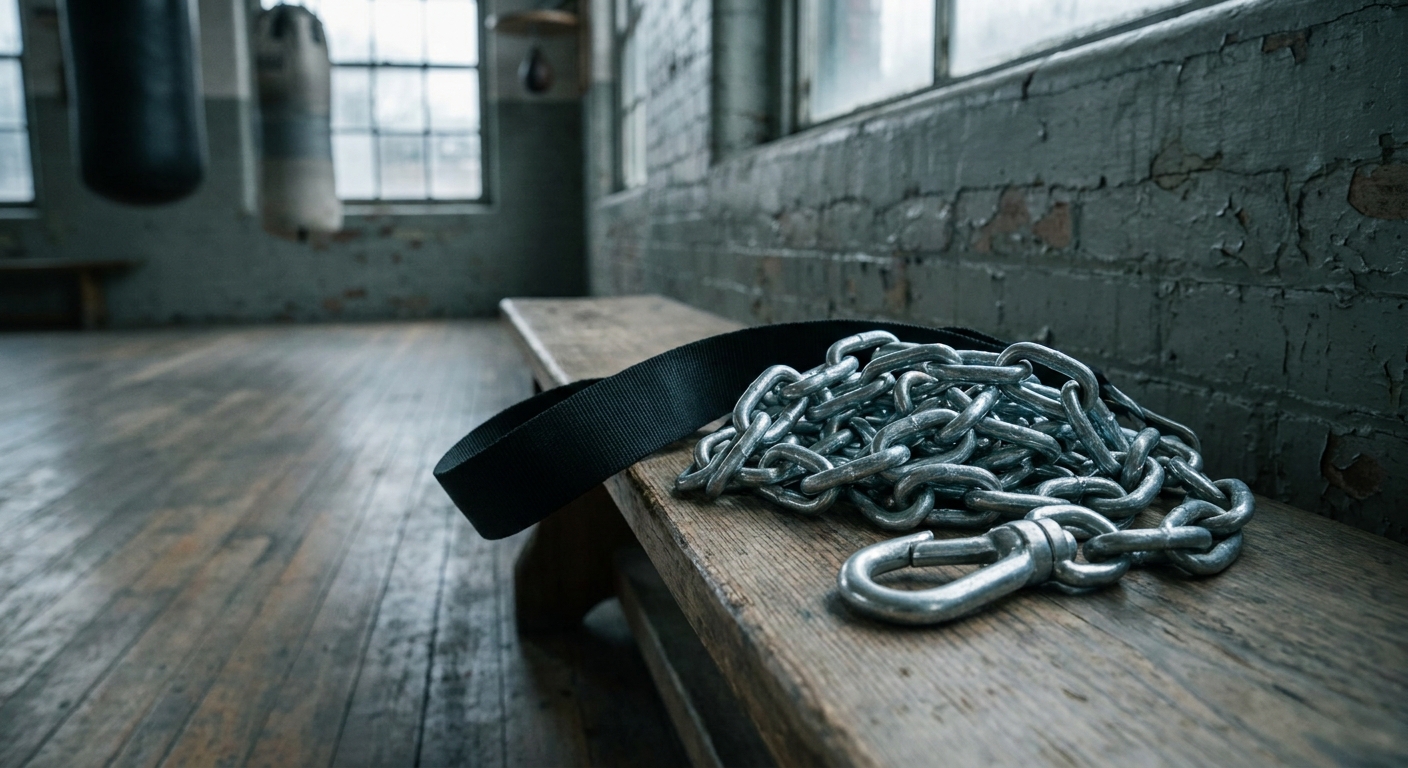
A chain suspension is exactly what it sounds like: galvanized or zinc-plated steel links, usually with an S-hook or carabiner at each end, connecting your ceiling anchor to the bag’s hanging loop. Most bags ship with a short length of chain already attached at the top. The chain absorbs almost no energy on its own. When the bag swings, the force transmits directly through rigid steel into your ceiling mount.
A strap suspension uses a wide nylon or polyester webbing loop, often adjustable, to hang the bag. The strap itself has some flex. Under hard impact, the weave compresses slightly before snapping back. That few millimetres of give changes how the bag behaves at the end of a combination. The movement is slightly softer, slightly slower to return.
Neither is wrong. But they suit different situations.
What chain gets right
Chain is stiff, and stiff is predictable. Hit the bag hard and it swings away on a consistent arc. It comes back on that same arc. Experienced trainers who work angles on the bag like this rigidity because the bag’s return path stays repeatable. You set your position, throw, and move before the bag comes back. Do it enough and the rhythm becomes automatic.
The load rating on chain is also well-defined. A standard Grade 30 proof-coil chain in 5/16-inch diameter handles well over 1,500 pounds working load. A heavy bag tops out around 150 pounds. Under normal training, a heavy bag puts a fraction of that load through the chain. Even hard bag work with significant impact doesn’t put meaningful fatigue on the steel. Chain that’s properly installed and not corroding will outlast the bag itself, often by years. OSHA’s rigging hardware guidelines explain chain grades and load limits in plain terms if you want to verify what grade you’re working with before you buy.
Inspection is easy. Look at each link. If you see a bent link, a cracked weld, or visible rust pitting, replace the section. There’s no ambiguity about when chain is compromised.
The downside is noise and vibration. Chain is a mechanical fastener and every hard impact sends a clank through the links into the ceiling anchor, then into whatever the anchor is bolted to. In a proper gym with a dedicated beam, this is fine. In a shared wall, an apartment, or a wooden-frame suburban house, that transmitted vibration becomes a real problem by round three.
What strap gets right
Strap suspension dampens. The woven nylon absorbs a fraction of the impact energy before it reaches the anchor, which cuts transmitted noise and vibration measurably. If you’re working in a garage gym with a neighbour on the other side of a shared slab, this matters more than most people realise until they’ve had the conversation through the wall.
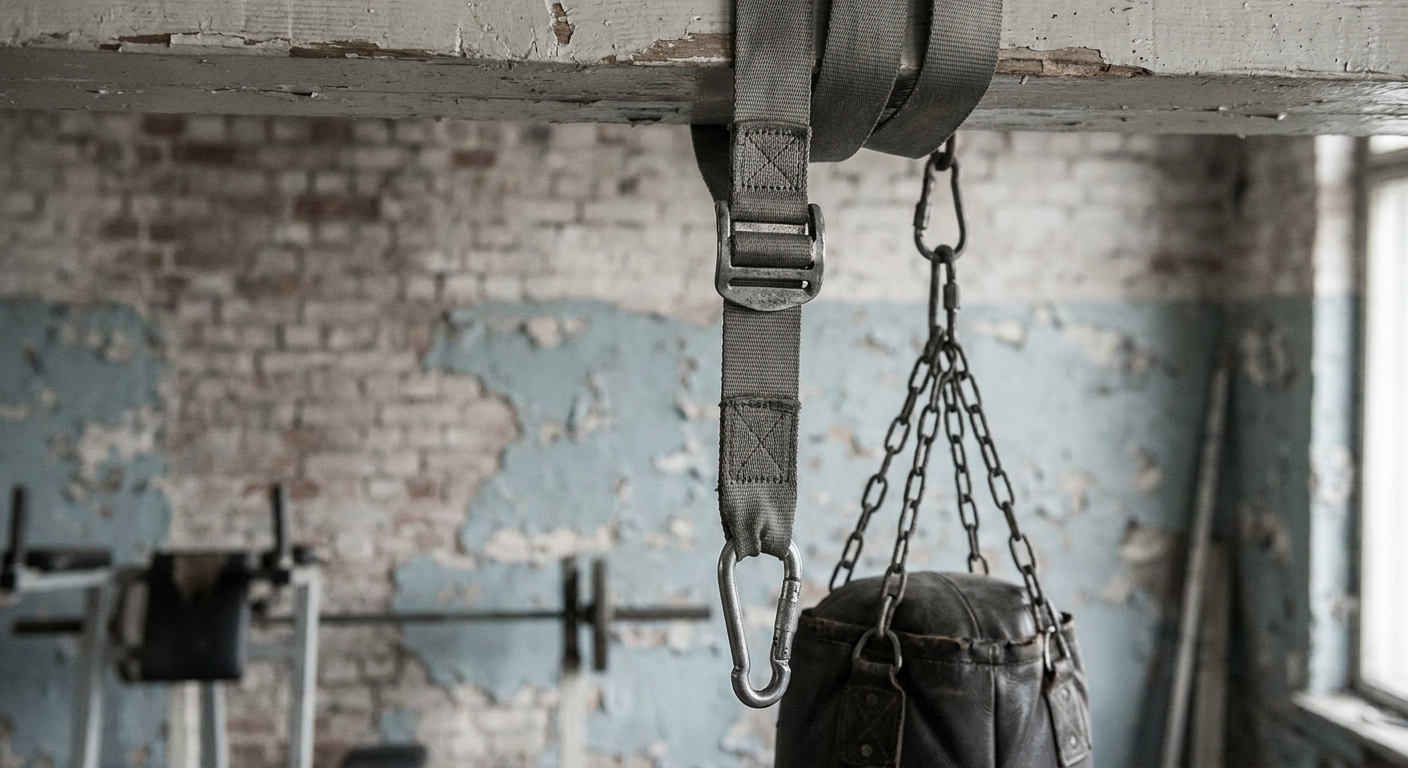
Strap systems are also lighter to handle during install. Adjusting a strap to dial in bag height is straightforward: loosen, slide, re-lock. Adjusting chain height means buying a new length, grinding a link, or adding extension hooks. None of those options are fast on a Monday morning.
The weight capacity question gets raised a lot. Quality heavy-duty straps rated for gym use handle 600 to 1,000-plus pounds. A 100-pound bag on that strap is nowhere near the rated limit. The concern isn’t the strap’s tensile strength under static load. It’s UV degradation, heat cycling, abrasion on the webbing, and whether the adjustment mechanism can hold under repeated dynamic loading. Inspect the webbing the same way you’d inspect climbing gear: look for fraying, discolouration, or any stiffness that wasn’t there before. When in doubt, replace it.
The main trade-off with strap is that slight extra give in the bag’s movement. For most people this is either neutral or positive. For anyone who wants the bag to behave like a rigid training partner, it can feel imprecise.
The swivel question
Before you decide on chain or strap, solve the swivel problem first. A swivel bearing mounted between your suspension and your bag’s hanging loop is what controls rotation. Without one, the bag twists and binds as you work combinations. With a decent ball-bearing swivel, the bag rotates freely so you can move around it and hit from different angles without the bag fighting back.
Swivel quality varies dramatically. The cheap plated-steel swivels that come bundled with budget bags wear out inside three months of daily use. Look for a heavy-duty forged swivel with a rated load capacity and actual ball bearings, not bushings. Brands like Everlast and Ringside both sell purpose-built bag swivels that hold up; your local hardware store’s marine-grade swivel hardware also works well if you match the load rating.
Whether you use chain or strap above the swivel is almost secondary once the swivel is doing its job properly. A good swivel on a strap suspension outperforms a bad swivel on a chain suspension every time.
Match the method to your ceiling
This is where the real decision happens. The suspension hardware is only as strong as what it’s attached to.
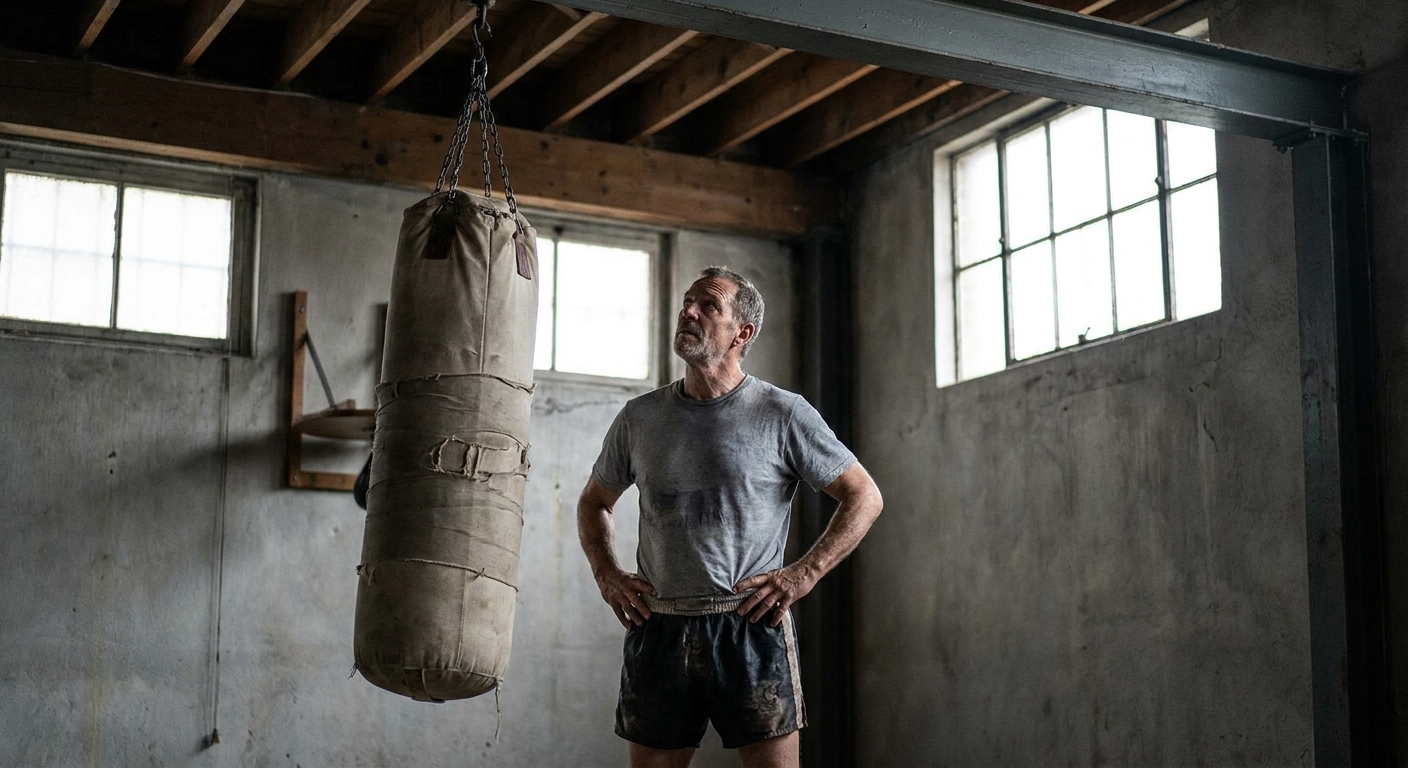
A solid wood joist, lag-bolted with a proper load-rated eye bolt, handles either chain or strap without issue. The ceiling structure is the limiting factor here, not the hardware type.
A steel I-beam or RSJ is ideal. Beam clamps designed for rigging work attach directly without drilling. Either chain or strap runs from the clamp. This setup is bombproof for the kind of loads a heavy bag puts through it.
A hollow concrete ceiling needs chemical anchors or a proper expansion bolt, not a standard lag. Neither chain nor strap compensates for an inadequate anchor point. Get the anchor right first.
Drywall alone supports nothing. If you’re not drilling into a structural member, you’re not hanging a bag. A bag stand is your option here, and neither chain nor strap matters because the stand is the structure.
If you’re building out a home gym from scratch and debating the whole setup, the complete home boxing gym guide on this site covers the structural side in detail, including which anchor types work in different ceiling materials.
Noise is the deciding factor in most homes
Ask fifty trainers in commercial gyms which suspension they prefer and most will say chain without much thought. Ask fifty people who train at home in houses or apartments and the answer shifts toward strap, often because of a partner or neighbour they’d rather not wake up at 6am.
The vibration path from chain goes: impact, bag, chain link by link, anchor bolt, joist, structure. Every joint in that path is rigid metal-on-metal and transmits sound efficiently. The strap breaks that path at one point, the fibres, and that’s enough to make a noticeable difference through a wooden floor or ceiling.
If noise is not a concern, chain is more durable over a long timeline and requires less frequent inspection of the connection points. If noise is a concern, strap is the practical answer even if it requires more regular checks on the webbing condition.
What breaks and when
Chain: S-hooks open under repeated lateral load if they’re not properly closed. This is the most common chain failure and it’s avoidable. Use locking S-hooks or replace open S-hooks with properly-rated carabiners. Chain links themselves rarely fail unless the chain was already damaged or is deeply corroded. Annual inspection is enough for most setups.
Strap: The webbing itself resists abrasion less well than steel. Any point where the strap rubs against a rough surface, the edge of a beam, a bolt head, a rough concrete corner, is a wear point. Route straps so they bear on smooth surfaces. Check the adjustment cam or buckle mechanism for cracks or deformation. Strap systems also hold onto moisture where the webbing folds, which encourages mildew in damp garage environments. Six-month inspections are reasonable; replace any strap showing fraying or colour change.
The advice collected from experienced coaches on this site consistently points to the anchor, not the suspension, as the thing that fails in most home-gym setups. Sort the ceiling mount before you worry about chain versus strap.
Cost
Chain: Three to four feet of 5/16-inch Grade 30 chain costs around $15 to $25 at a hardware store. Add a locking carabiner or two ($5 to $10 each) and a quality swivel ($20 to $40) and you’re under $60 for a complete, long-lasting suspension setup.
Strap: Purpose-built bag straps run $15 to $35 on their own. Add the same quality swivel and you’re in similar territory. Pre-packaged suspension kits from boxing equipment brands often bundle a short chain, strap, swivel, and hooks together for $30 to $50 and are worth buying for the swivel alone if the rest of the kit is decent quality.
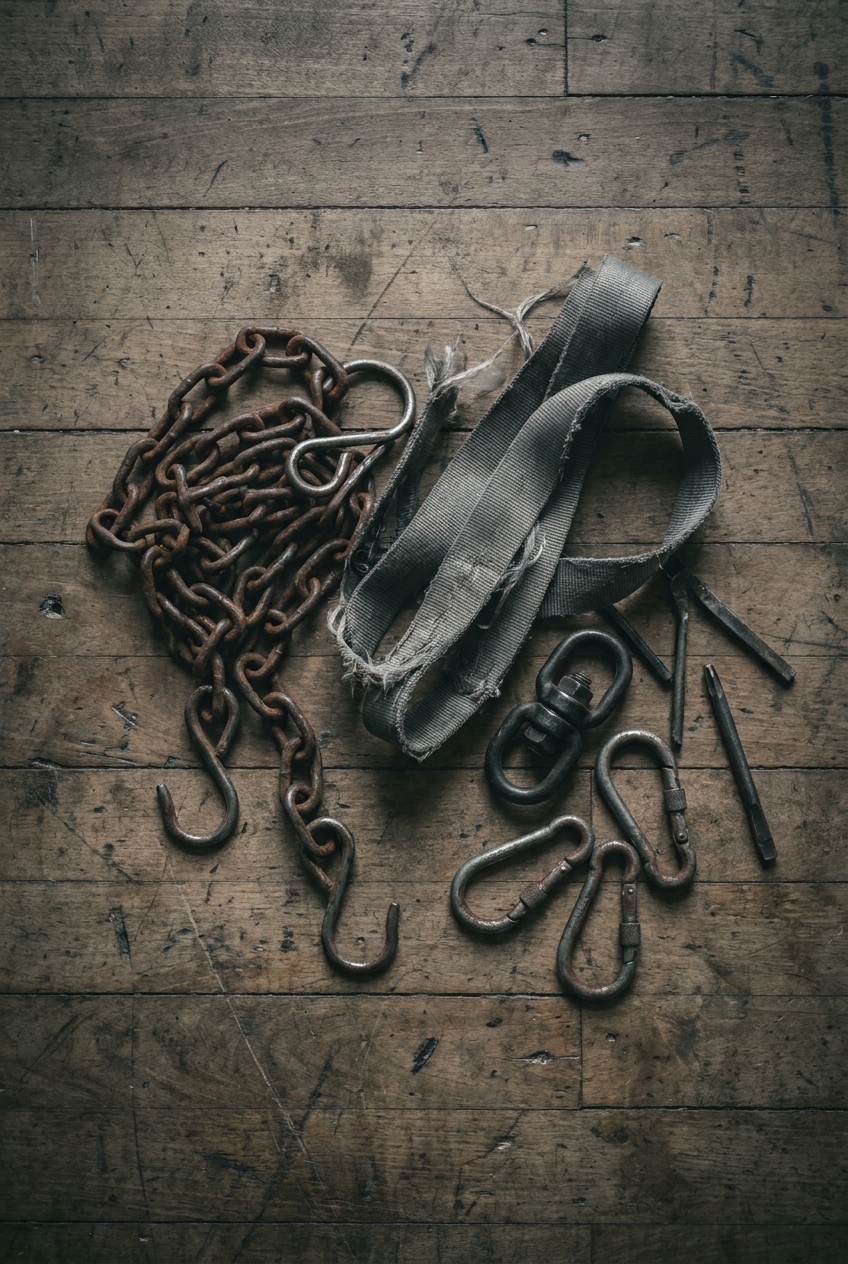
Neither option requires significant investment compared to the bag itself. Don’t cheap out on the swivel regardless of which suspension you choose.
The call
Train in a dedicated space with solid structural access and noise isn’t a concern: use chain. Simpler inspection, longer service life, more predictable bag movement.
Train in a shared structure, apartment, or anywhere sound travels into other people’s space: use strap. The vibration dampening is real and it matters.
Either way, use a quality ball-bearing swivel. And fix the anchor first.
Once your bag is dialled in and hanging right, a structured round timer makes the difference between drifting through bag work and building something. The free tool at heavybag.pro/boxingtimer/ runs your rounds, rest intervals, and warning beeps so you’re working the bag instead of watching the clock. The full punching bag selection guide on this site is worth reading before you commit to a bag if you haven’t already, since the bag’s weight and fill density affect how your suspension setup behaves under load.