
A custom mouthguard costs $500 and takes three dental visits to get right. A boil-and-bite from the drugstore costs $5. Both cover your teeth. So why does anyone spend $495 more?
That question has a real answer, and it isn’t “dentists are selling you a premium you don’t need.” But the reverse is also true: the boil-and-bite isn’t the reckless choice that some gym coaches make it out to be. The difference between these two options is narrower in some ways and bigger in others than the marketing suggests, and which one makes sense for you depends on how you spar, not how serious you think you are.
This guide breaks down what separates boil-and-bite from custom mouthguards, what each one protects against, what the fitting process looks like, and how to make the call for your own situation.
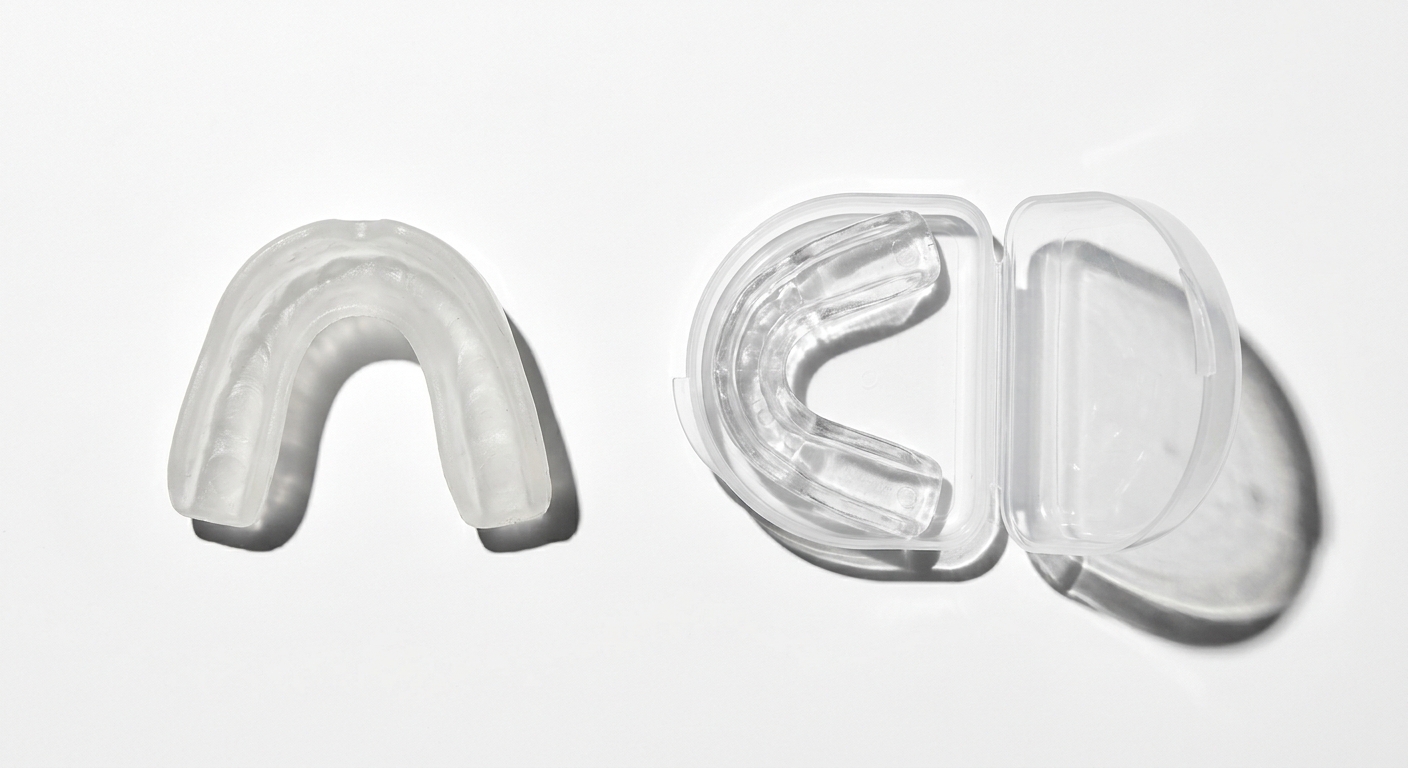
Step 1: Understand What a Mouthguard Actually Does
Protection claims for mouthguards are murkier than most gear marketing lets on. The American Dental Association has consistently endorsed them for contact sports, and a 2014 systematic review in the British Journal of Sports Medicine found that mouthguard use significantly reduces the rate of dental injuries in contact sports. What they do clearly: absorb and redistribute impact energy away from your teeth and gum line, reduce the chance of tooth fracture or avulsion, and cushion soft tissue so your cheeks and lips don’t get lacerated against your own teeth.
What they do less clearly: prevent concussions. The “mouthguard prevents brain injury” claim has been circulating in combat sports for decades. The research is less settled. Some studies suggest a well-fitted guard may reduce lower-jaw impact transmission to the skull; others find no significant concussion-rate difference. Treating your mouthguard as your main concussion defense is a mistake. Treating it as your main dental defense makes complete sense.
Fit matters here more than anything else. A guard that doesn’t seat properly against your molars and premolars doesn’t transfer energy efficiently. It shifts. It pops out. It makes you clench your jaw to hold it, which tires your face during rounds. A guard that fits well, regardless of price point, stays put and lets you breathe and communicate normally.
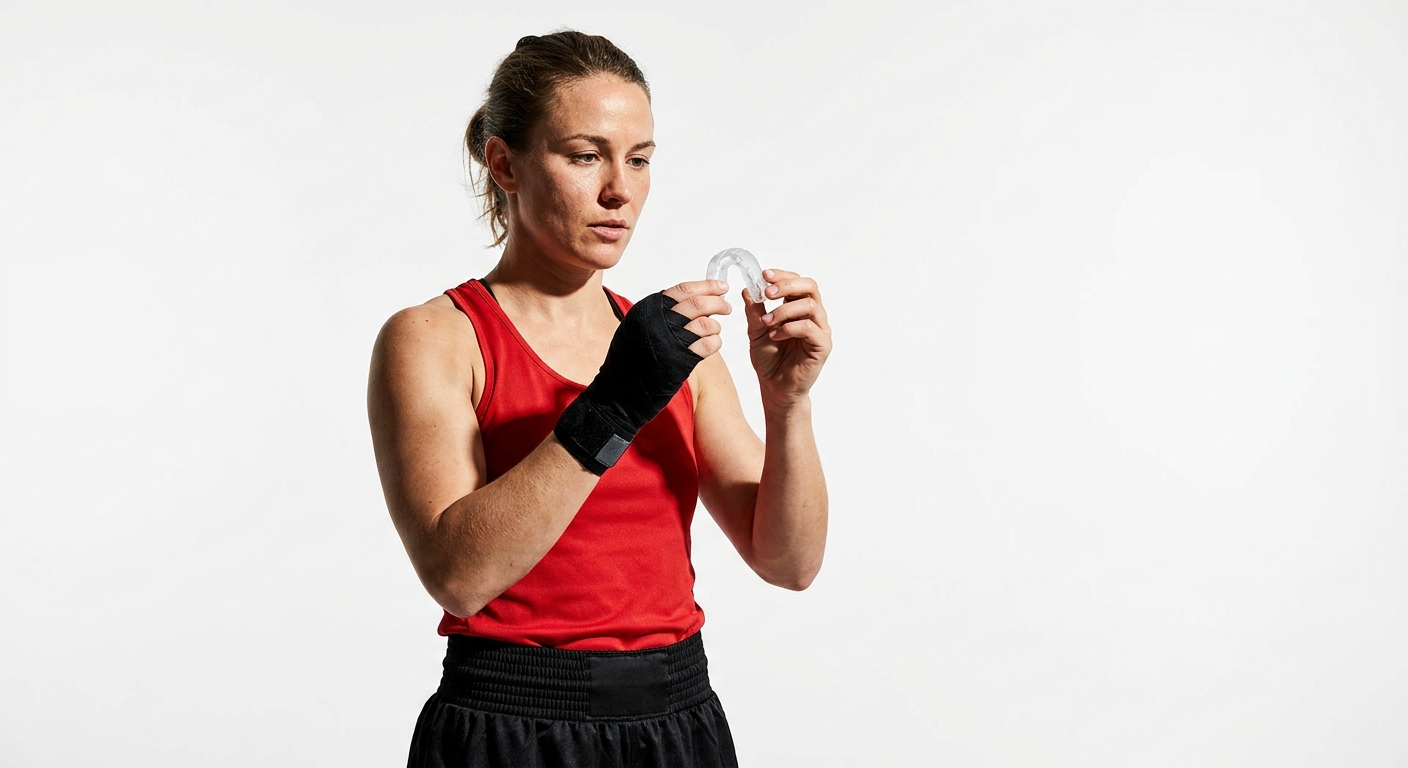
Step 2: Know What You’re Getting With Boil-and-Bite
Boil-and-bite guards have a bad reputation in some corners of the boxing world, mostly from people who haven’t used a good one recently. The category has improved. The basic process: you heat the guard in boiling water until it softens, bite into it firmly for 30-60 seconds while the material molds to your teeth, then cool it in cold water to set the shape. Done right, you get a reasonably accurate impression of your bite.
Done wrong, the common failure modes are: under-heating (the material doesn’t soften enough to take your full tooth contour), biting unevenly (one side of the guard seats deeper than the other), or not holding long enough (the material resets before it fully captures the impression). Fighters who hate their boil-and-bite almost always had a fitting problem, not a product problem. Re-do the fitting process with the same guard and you often get a significantly better result.
Brands worth knowing in this space: Shock Doctor makes a range with gel liners that fit noticeably better than the basic single-layer EVA guards. SISU’s ultra-thin guards (1.6mm) take a different approach, molding to individual tooth contours rather than bulk-filling the space. Several coaches at gyms in the Golden Gloves amateur circuit have moved to SISU specifically because fighters can talk and corner them more easily between rounds.
The realistic fit ceiling for boil-and-bite: close, but not exact. If you have any dental asymmetry, crowding, or recent dental work, the molded impression will only partially capture that. You’ll still feel the guard shifting slightly under heavy contact because the thermoplastic material doesn’t bond to soft tissue the way a custom guard’s impression tray does.
Step 3: Know What You’re Getting With Custom
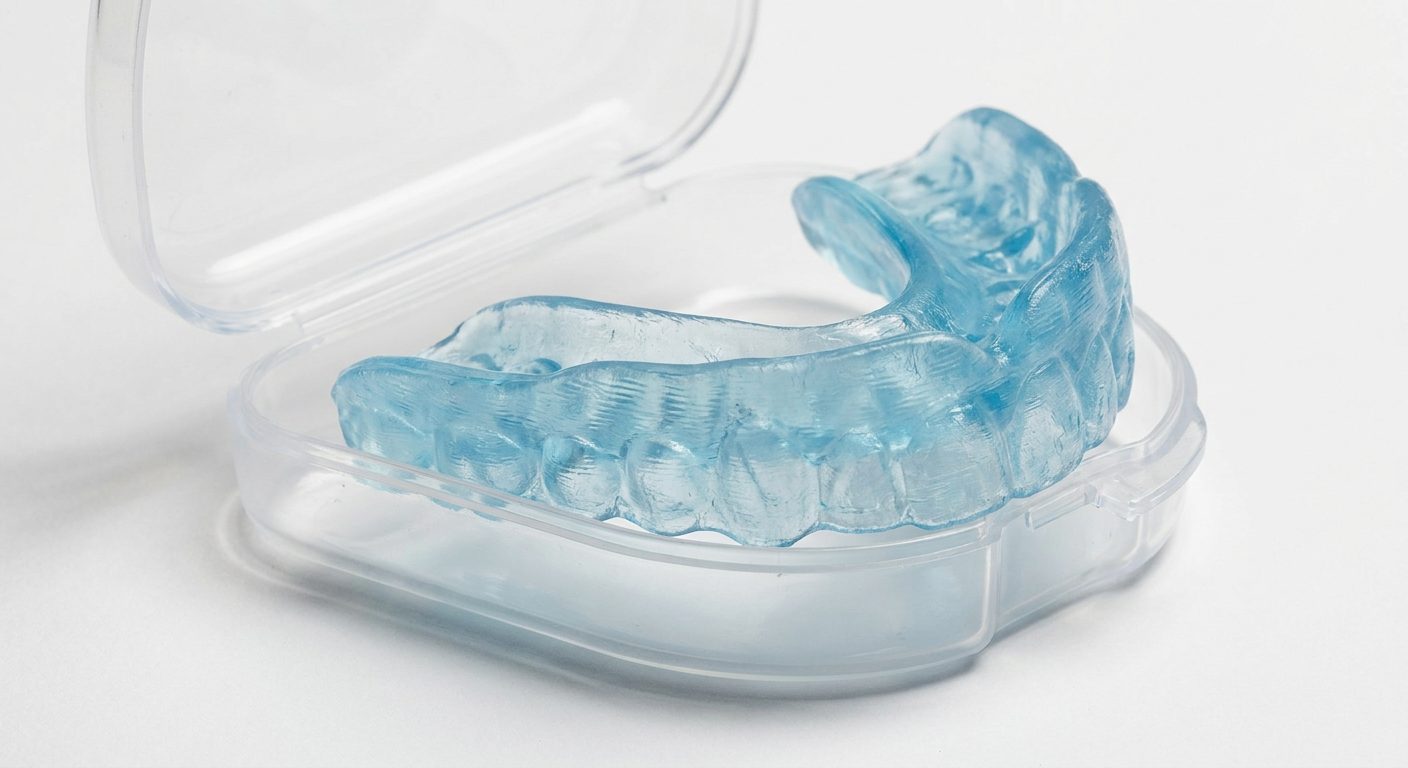
A dentist-made custom guard starts with a physical impression of your teeth, often using putty trays that capture every crown, gap, and ridge precisely. That impression gets sent to a dental lab where a guard is vacuum-formed or pressure-laminated over a stone model of your mouth. The result fits with a level of accuracy that no boil-and-bite process can match.
The difference you feel immediately: it doesn’t move. You open your mouth wide, take a shot to the jaw, talk to your corner, and the guard stays in place without any clenching effort. That relaxation of your jaw muscles across a full sparring session is not trivial. Jaw fatigue affects how you take shots and how you recover between rounds.
Cost range: $300-$800 from a general dentist, depending on whether they handle the lab work directly. Sports-specific dental labs like Gladiator Custom Mouthguards produce guards starting around $250 that you can order using an at-home impression kit, cutting out some of the dentist cost while retaining the lab-quality fabrication. The at-home impression kits are not as precise as an in-chair impression, but they’re substantially better than boil-and-bite.
Durability: custom guards, if made from quality materials, typically last 2-5 years of regular use before the material degrades enough to affect fit. Boil-and-bite guards need replacing more frequently, roughly every 6-12 months with regular sparring. Your dentist can also add customizations: dual-layer construction for higher-impact sports, lip guards, or a repositioner design if you have a TMJ issue.
Step 4: Match the Guard to How You Actually Train
Here is where most of the “just get custom” advice breaks down. The right choice depends on your training context.
If you spar hard and regularly (three or more sessions per week at meaningful contact intensity), a custom guard is the correct investment. The cost per sparring session over two years is negligible, the fit improvement affects how you breathe and recover, and the protection margin matters when you’re taking real contact consistently.
If you spar light, occasionally, or are still in your first few months of bag work and pad work before any sparring has started, a quality boil-and-bite is not the irresponsible choice. Getting a properly fitted Shock Doctor Gel Max or a SISU Aero and learning the boil-and-bite process carefully gives you protection that’s adequate for light contact training. Spend the money you save on the rest of your sparring gear checklist, which matters more at the beginner stage.
Age and dental history also matter. If you’re 40+ with crowns, implants, bridgework, or significant existing dental work, a boil-and-bite is a bad fit in the literal sense. The impression won’t capture the mixed contours accurately, and a poorly-seated guard over a crown can create a leverage point. Custom is the right call when you have complex dental work in your mouth.
If you’re a teenager or still in active orthodontic treatment, boil-and-bite guards are close to useless because your bite changes month to month. Your dentist or orthodontist should be making you a new custom guard or at minimum a sports guard that accounts for the current stage of treatment.
Step 5: Fit It Right, or It Doesn’t Matter
The most expensive custom guard in the world performs poorly if your dental impressions were taken badly. A boil-and-bite that’s properly fitted will outperform a custom guard made from a rushed impression or stored incorrectly.
For boil-and-bite, the step that gets skipped most often: reading the specific timing instructions for your guard’s material. Different thermoplastics have different optimal softening temperatures and holding times. The cheap supermarket guard and the Shock Doctor you bought from a boxing retailer are not the same material. What works for one may over-soften the other. Use a thermometer if you have one; most boxing guards want water between 70-80 degrees Celsius, not a rolling boil.
For custom, the step most dentists skip: tell your dentist what sport you’re doing and at what contact level. A guard made for a recreational hockey player is not the same as one for a boxer or Muay Thai fighter who sparring twice a week. Some dentists default to a 3mm thickness that’s fine for general sports; combat sport guards should typically be thicker on the sides and in the molar region where lateral jaw impact is most common. Specifying this upfront prevents you from getting back a guard that’s the wrong geometry.
Storage matters more than people think. Both guard types degrade faster when stored wet or in a closed case without airflow. Rinse after use, let it air dry briefly, then case it. Don’t leave it on a gym bag floor or in a hot car. UV-sterilizer cases (around $15-25) extend guard life and reduce bacterial buildup, which matters since you’re putting this thing in your mouth during intense exercise.
If you use a structured training schedule, keeping your gear consistent around sparring sessions matters. Building your sparring gear kit means you’re not scrambling for a mouthguard the morning of your first live round. Have two. Rotate them.
Step 6: The Real Decision Framework
Skip sparring? You don’t need a guard. Bag work, pads, and shadowboxing don’t put your teeth at risk.
Just starting sparring, light contact, no complex dental work? A quality boil-and-bite, properly fitted, covers you. Budget $20-40 for a Shock Doctor or SISU. Do the fitting twice if the first result feels off.
Regular sparring, two or more times per week, moderate to hard contact? Custom. Book the dentist appointment. The $300-500 spend is a single number compared to replacing one tooth, which runs $2,000-4,000 with an implant. The math isn’t close.
Complex dental work, history of jaw injury, or fighting in a sanctioned amateur bout? Custom. No discussion.
If you’re training with a boxing round timer setup at home doing heavy bag rounds before moving into sparring, that’s the right time to sort your guard so it’s ready when you are. The free round timer at heavybag.pro lets you run structured sessions, and once you move from solo training into partner work, your gear needs to be sorted before that first live round, not after.
For the full picture of what to bring to your first sparring session, the breakdown at Boxing Headgear: Protect Your Brain in Training covers head and face protection alongside your mouthguard choice.
What to Buy: Specific Picks
Boil-and-bite, budget under $30: Shock Doctor Gel Max. Dual-layer construction, gel liner, better retention than single-layer EVA. Fits most adult mouths well if you follow the heating instructions properly.
Boil-and-bite, thin profile preferred: SISU Aero 1.6mm. Popular in amateur boxing because it’s barely noticeable and easy to talk through. Not ideal for heavy contact sparring due to the thin profile, but for light sparring and technical rounds it holds up.
Custom, mid-range: Gladiator Custom Mouthguards. At-home impression kit, lab fabrication, $150-200 range. Better than boil-and-bite, not as good as in-chair impressions, a reasonable compromise if you’re not near a sports dentist.
Custom, full service: your local general dentist with a sports guard option, or a sports dentist if your city has one. Ask specifically for a boxing or contact sport guard, not a generic sports guard. Budget $300-500. Worth it if you spar weekly.
Whatever you choose, have a backup. Mouthguards get left in gym bags, dropped on floors, chewed up by dogs. Two guards in rotation means you’re never walking into a sparring session without one.