
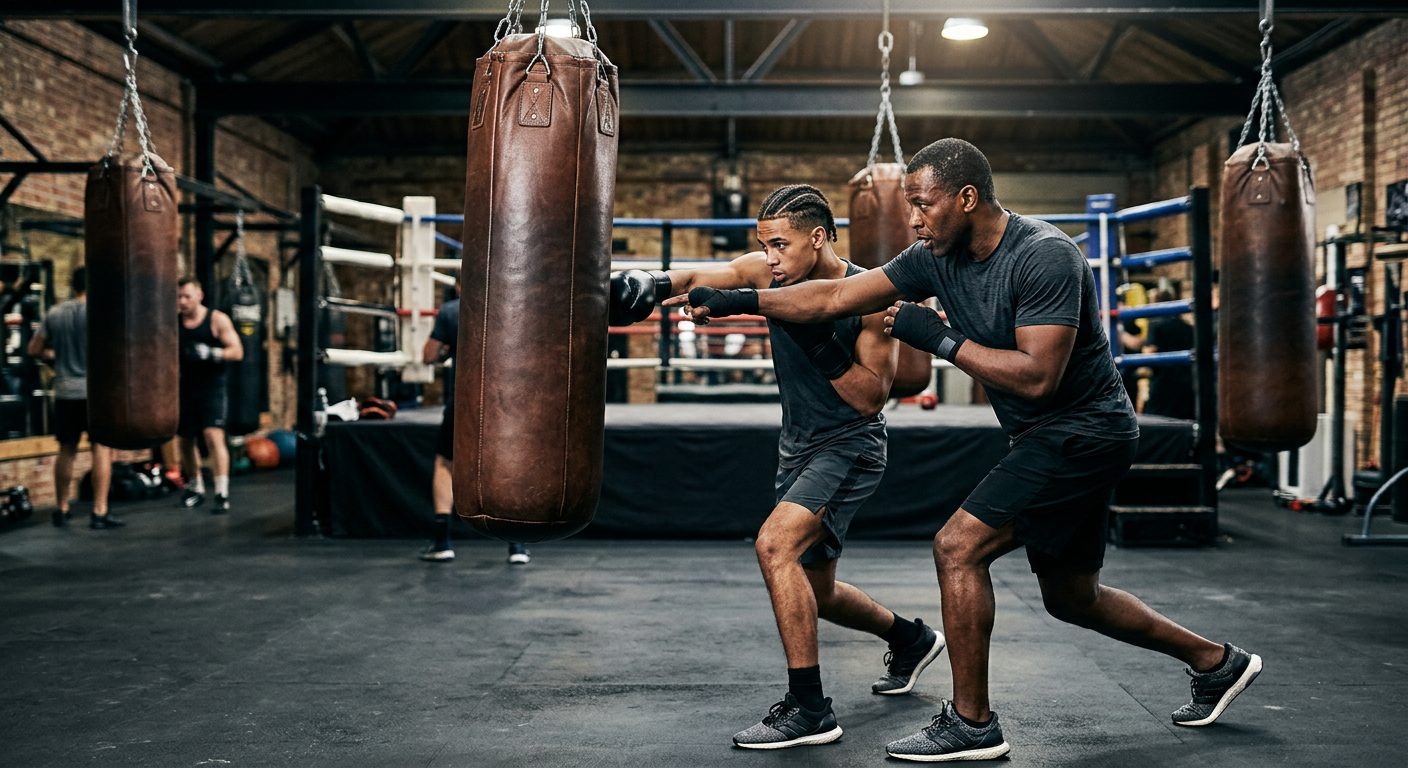
Ask fifty coaches what separates a good heavy bag session from a great one, and you’ll get fifty different answers. But spend enough time collecting those answers and patterns emerge. The same pieces of advice come up in gym after gym, continent after continent. That’s exactly what happened when this roundup was put together: coaches from amateur boxing clubs, Muay Thai camps, fitness gyms, and professional boxing programs all weighed in. The result is a distilled list of the most battle-tested heavy bag wisdom you’ll find outside of a paid coaching session.
Some of this will confirm what you already know. Some of it will challenge what you think you know. Either way, print this out, tape it to your bag, and refer to it when your sessions start feeling stale.
Before You Swing: Set the Session Up Right
The coaches who produce the best fighters are obsessive about preparation. The bag itself is almost an afterthought compared to what happens in the five minutes before gloves meet leather.
1. Know Your Goal Before You Start
“Walk in with a plan or go home,” says one coach who has trained amateur boxers for over twenty years. “I see people come in, wrap their hands, and just whale away for thirty minutes. They’re not training. They’re venting.”
Every serious coach says the same thing: define the session before you start it. Is today about power development? Footwork patterns? A specific combination you’re drilling? Cardio threshold? The answer changes everything — your rest times, your output level, and what you pay attention to mid-round.
2. Warm Up Like You Mean It
Cold muscles produce sloppy mechanics. Coaches unanimously agree that three to five minutes of shadowboxing at half-speed before touching the bag is non-negotiable. It gets your shoulders loose, your hips mobile, and — more importantly — starts activating the neural patterns you’re about to drill. A mechanically correct cold rep is still worse than a mechanically correct warm rep.
3. Structure Your Rounds With a Timer
Free-form hitting without a round structure is the single biggest mistake recreational boxers make. Without a timer, you naturally rest when you’re tired, push when you feel good, and end sessions when boredom hits. That teaches your body nothing useful. Real fights have fixed rounds. Your bag work should mirror that structure.
Apps like Heavy Bag Pro handle this automatically: you load up a session, set your round and rest durations, and the app manages your time so your brain can focus on hitting. That simple shift — handing the clock to technology — changes the quality of a session dramatically.
Stance, Guard, and Movement: The Fundamentals Most People Ignore
Here’s something counterintuitive that experienced coaches repeat constantly: the bag doesn’t care about your guard. The imaginary opponent you’re pretending is in front of you does.
4. Fight the Bag, Don’t Hit It
This is the most universally cited piece of advice in this entire roundup. The moment you start treating bag work as “punching practice” rather than “fighting practice,” your training starts to drift. Your guard drops because nothing is threatening it. Your head stops moving because nothing is coming back. You creep forward because the bag isn’t stepping back.
The best coaches make their athletes narrate the imaginary fight. Who are you fighting? What did they just throw? What are you responding to? That mental framing keeps the fundamentals honest.
5. Reset Your Stance After Every Combination
“Show me someone’s combination-ending position,” one coach says, “and I’ll show you their worst habits.” Most recreational boxers finish combinations leaning forward, weight distributed wrong, hands lowered. That’s fine on the bag because nothing punishes it. In sparring, it’s a disaster.
The fix: after every combination, consciously reset to your base stance before throwing the next sequence. Yes, it feels robotic at first. Yes, it slows everything down. That’s the point. You’re training the reset, not just the combination.
6. Move Your Head
The bag is stationary. You are not. Or shouldn’t be. A coach who has cornered world title fights says this is where recreational training diverges most from professional training: “My guys are always moving off the center line. They never throw from the same spot twice in a row. It’s a habit. And habits are built on a bag.”
Drill: after every combination, slip left or right before resetting. The slip doesn’t need to be dramatic — two to four inches off-angle is enough to build the neural groove.
7. Circle the Bag, Don’t Stand in Front of It
Related to the previous point: the bag is a target, but it’s also a training partner you can navigate around. Circling builds the footwork patterns that let you control angle in sparring and fighting. Coaches who produce technical boxers spend enormous time drilling lateral movement combined with bag work. It’s harder than it looks, especially when you’re fatigued.
Power, Technique, and the Speed Trap
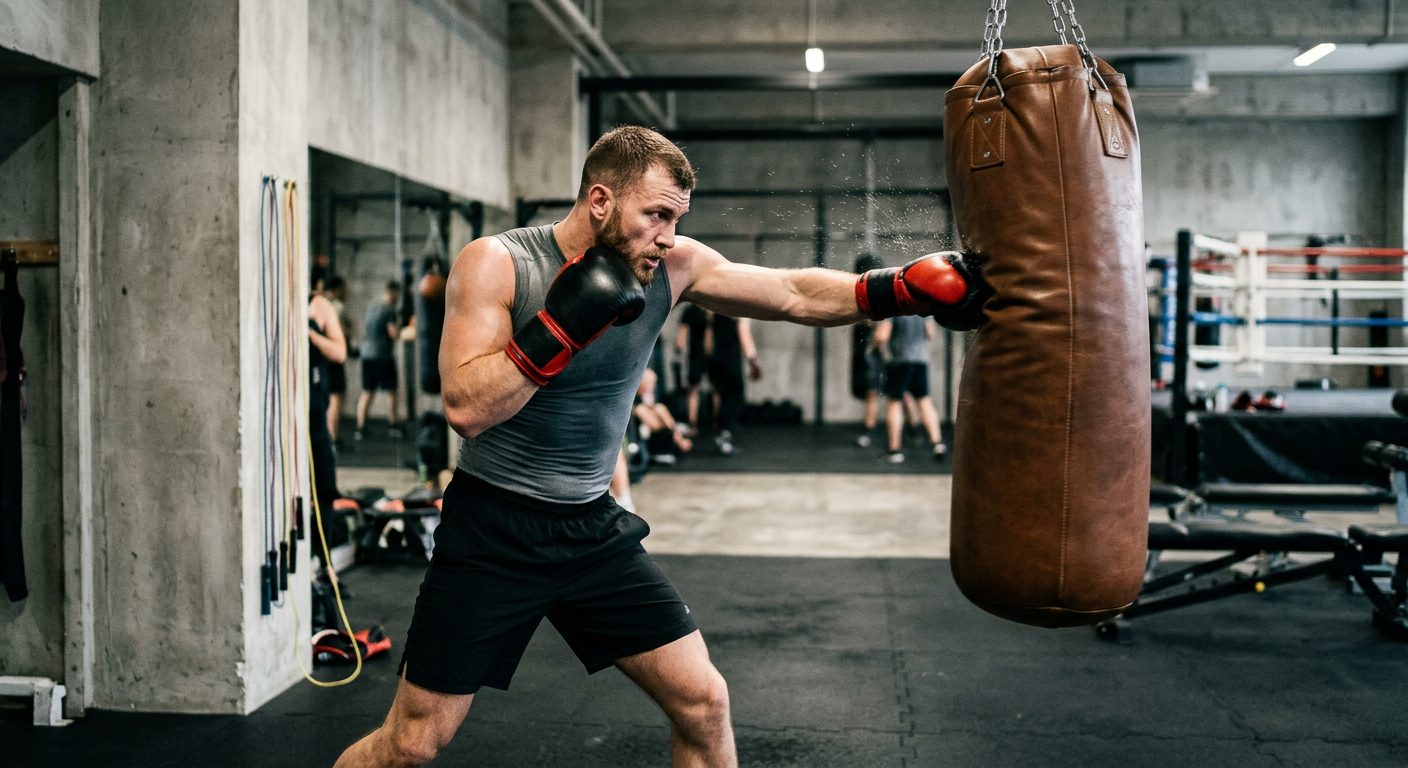
More than half the coaches surveyed had some version of the same complaint: recreational boxers go too fast, too hard, too early, too often.
8. Slow Down to Speed Up
“Speed is the reward for perfect mechanics,” says one strength and conditioning coach who works exclusively with combat sport athletes. “You don’t build speed by going fast. You build it by going slow and correct until the pattern is automatic.”
This is one of the hardest sells in coaching. Everyone wants to hit the bag fast. But slow repetitions at full technical accuracy build the motor pathways that eventually produce explosive, clean, fast punching. Speed sessions come later, after the mechanics are solid.
9. Don’t Muscle Your Punches
Power in punching comes from sequencing — feet, hips, torso, shoulder, arm — not from brute muscular force applied at the end. Coaches who train power-punchers are almost fanatical about this. The arm is the last thing engaged, not the primary mover.
A common drill: wrap a resistance band around your torso and throw combinations. The band makes you feel hip rotation without thinking about it, and suddenly punches that felt powerful start feeling efficient, which is even better.
10. Train at Multiple Intensities in the Same Session
One tactical error is treating every round the same. Coaches who build well-rounded fighters deliberately structure sessions with variation: a power round (40–50% output, maximum mechanical precision), a speed round (70–80% output, fast but controlled), and a conditioning round (85–90% output, sustained pressure). The variety trains different energy systems and prevents the kind of mechanical breakdown that happens when every round is just “go hard.”
11. Learn to Breathe
“Gas-outs on the bag almost always come from holding your breath,” says a Muay Thai coach who has run camps in Thailand for fifteen years. “Exhale on every punch. Short, sharp exhale. Your body automatically inhales on the recovery. You do that right and your cardio looks different overnight.”
The exhale on impact also engages your core, which stabilizes your body for the next movement. It’s a two-for-one: better endurance and better body mechanics from the same habit change.
Combination Design: What to Actually Drill
One of the most practical things coaches do is prescribe combinations. Not just “throw a jab-cross,” but specific sequences with specific purposes.
12. Master the Fundamentals Before Adding Complexity
Coaches who develop fighters for competition are ruthless about this. The 1-2 (jab-cross) is not a beginner’s combination that you graduate out of. It’s the foundation you return to constantly. Coaches with championship records still spend entire rounds doing nothing but jab-cross drills with their fighters.
“I can tell everything about a boxer from their 1-2,” one head trainer says. “Are they stepping into the jab? Is the cross generating from the hip? Is the guard up on the return? Fix those details and everything else gets easier.”
13. Add the Hook as Your Third Weapon
The three-punch combination — jab, cross, hook (1-2-3) — is where most training should live for beginners through intermediates. The hook is the most technically demanding of the three punches, which means it breaks down fastest under fatigue. Drilling it in combination teaches you to maintain form when you’re tired, which is exactly when you need it to work.
14. End Combinations With Footwork
Coaches from every discipline — boxing, Muay Thai, kickboxing — say the same thing: the exit from a combination is as important as the entry. Throwing a 1-2-3 and then standing in front of your opponent is bad training. Throwing a 1-2-3 and then stepping off at 45 degrees is good training. Do it on the bag so it becomes muscle memory.
15. Vary Your Targets
Human opponents don’t present a single target at chest height. Bags are often trained on as if they do. Coaches emphasize rotating between head-level shots, body shots, and combinations that flow between the two. Body work is especially underemphasized in recreational training, which leads to fighters who don’t know how to disguise or set up body shots under pressure.
16. Drill Your Jab as the Setup, Not the Afterthought
Technical coaches across multiple disciplines consistently rank the jab as the most important punch in the arsenal — not because it’s the most powerful, but because it controls distance, disrupts timing, and sets up everything else. Dedicating entire rounds exclusively to jab work is not unusual at high-level gyms. The bag is the perfect tool for this: it gives immediate feedback on whether your jab has extension, whether your guard is up on the return, whether your feet are involved.
Defense and Head Movement on the Bag
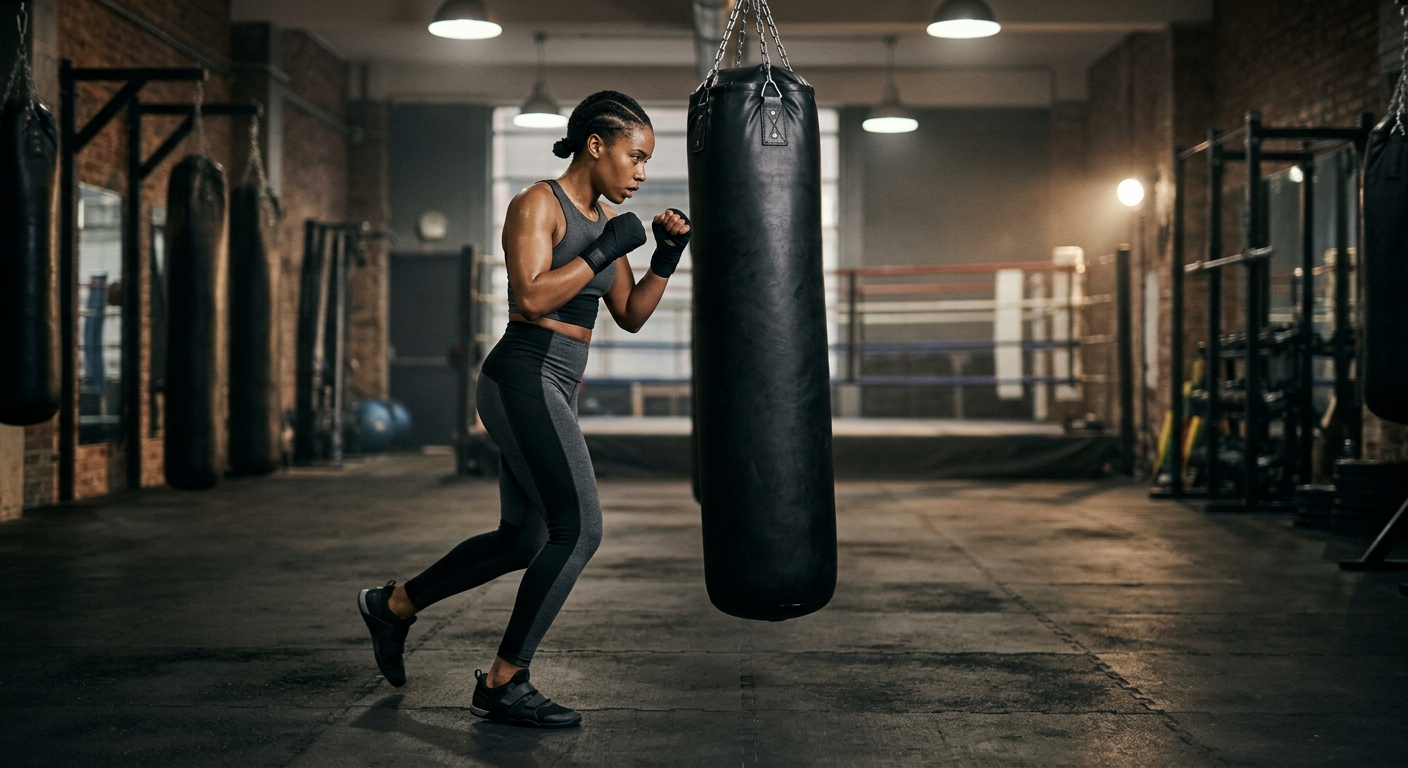
This section is where most recreational programs have the biggest gap. Defense cannot be trained on a bag the way offense can — the bag doesn’t threaten you — but coaches have developed clever workarounds.
17. Add Defensive Actions Between Combinations
After throwing your combination, practice specific defensive movements before the next sequence: a slip, a roll, a parry, a pull. Do it without an incoming shot. It feels strange initially but builds the defensive habit at a neural level. When you’re in sparring and your brain is flooded with adrenaline, these patterns are what you fall back on.
18. Use a Double-End Bag for Defensive Timing
Several coaches mention this transition: spend your first few rounds on the heavy bag for offense, then finish with a double-end bag for defensive timing. The double-end bag bounces back, requiring head movement and timing to avoid. It builds the reflex of not standing flat-footed that the heavy bag simply cannot teach.
19. The Pull-Back Is the Most Underdrilled Defensive Move
Coaches who train counter-punchers love the pull-back. Pull slightly out of range, let the punch miss, return with a counter. It’s the basis of Mayweather’s game and countless other defensive fighters. You can drill the pull-back timing on the heavy bag by throwing a punch, letting the bag swing back toward you, and pulling back before “returning” the shot.
Bag Work for Different Goals
One thing that separates intermediate from advanced practitioners is understanding that the bag serves different purposes depending on what you’re trying to build. A session designed for power development looks nothing like one designed for cardio.
20. For Power: Fewer Punches, Maximum Mechanics
A power development round looks almost boring from the outside: two or three punches at a time, long pause, two or three more. The focus is entirely on sequencing — foot drive, hip rotation, shoulder extension — at as close to maximum power as possible without breaking form. Volume is low. Intensity is high. Rest between sequences is generous.
21. For Cardio: Sustained Output, Short Rests
The conditioning round looks opposite. You’re not trying to be perfect; you’re trying to maintain output under fatigue. Short rest intervals (30–45 seconds), long work periods (2–3 minutes), and a sustained but not maximal punching rate. This trains your aerobic system to support continuous activity, which is what makes you survivable in late rounds.
This is also where a structured app shines. Heavy Bag Pro lets you configure round lengths and rest intervals precisely, so you can run conditioning intervals with short rests without watching the clock. Your job is to keep moving. The app handles the rest.
22. For Technique: Slow Work at Full Extension
This is shadowboxing-meets-bag-work. At 20–30% power, full extension on every punch, pause at extension to check your form. Head up, guard tight, opposite hand where it should be, weight balanced. It feels almost comical to trained athletes, but coaches who run technical camps describe it as indispensable for advanced practitioners who’ve accumulated bad habits.
23. For Mental Toughness: Surge Sets
Many coaches build surge sets into heavy bag training: thirty seconds of absolute maximum output, thirty seconds of technical slow work, repeat. The surge-to-recovery pattern builds the mental capacity to dig deep when you’re tired — an ability that’s more trainable than most people believe and more valuable than pure conditioning.
Common Mistakes That Waste Your Training Time
Coaches don’t just teach what to do. Some of their most valuable insights are about what to stop doing.
24. Stop Hugging the Bag
When fighters get tired, they creep closer to the bag. This shortens the punch, compresses the hips, and makes the strike functionally useless. It also trains you to fight at the wrong distance. Coaches set cones or markers to keep athletes at proper range. If you don’t have cones, periodically check your shoulder extension — it should be close to full on your power shots.
25. Stop Watching Your Hands
Eyes up, always. The bag is chest height, but where your eyes go in sparring is not down at your hands. Dropping your visual attention toward the bag trains exactly the wrong habit. One coach does an entertaining correction: he stands six feet to the side of an athlete’s bag and occasionally makes a gesture. If the athlete sees it, good. If they miss it, they’re looking at their hands. It’s a simple trick, but the lesson sticks.
26. Stop Using the Same Combination Every Round
Comfort is the enemy of development. Coaches note that most recreational boxers have three combinations they throw well and cycle through them endlessly. That’s not training; it’s practicing what you already know. Force yourself to drill unfamiliar sequences, even badly at first. That’s the actual practice part.
27. Stop Ending Sessions Without a Cooldown
Almost every coach mentions this and almost every recreational boxer ignores it. Three minutes of light shadowboxing, slow footwork, shoulder rolls, and deep breathing after a bag session matters for recovery, flexibility, and the neural wind-down that helps consolidate what you drilled. Skip it and you’re leaving adaptation on the table.
Advanced Concepts Worth Knowing
For athletes who’ve been training for a year or more, coaches offer more nuanced guidance.
28. Learn to Read the Bag’s Swing
A swinging bag is a gift if you know how to use it. Coaches who train technical fighters teach their athletes to time the bag’s return as if it’s a counter-punch: move off the center line as it swings back, counter as it comes back to neutral. It makes bag work dynamic in a way that flat, stationary drills can’t replicate.
29. Use Visualization Specifically, Not Generally
Vague visualization (“I’m fighting someone”) produces vague benefits. Specific visualization produces specific benefits. Coach the athlete to imagine a particular opponent type: a southpaw who likes to counter, a taller fighter who circles right, an aggressive brawler who overcommits. The combination selection and footwork changes dramatically based on the imagined opponent.
30. Track Your Rounds Over Time
Coaches who work with data-oriented athletes find that tracking session structure over time reveals training patterns and gaps. Are you always doing the same three round types? Are you avoiding body work? Are your technical rounds getting shorter as training progresses? Logging what you did — even briefly — creates accountability and insight that informal training never provides.
This is another area where Heavy Bag Pro adds value beyond just the timer: the session log keeps a record of what you’ve done, which over time shows you what you’ve been avoiding.
What the Coaches Agree On Most
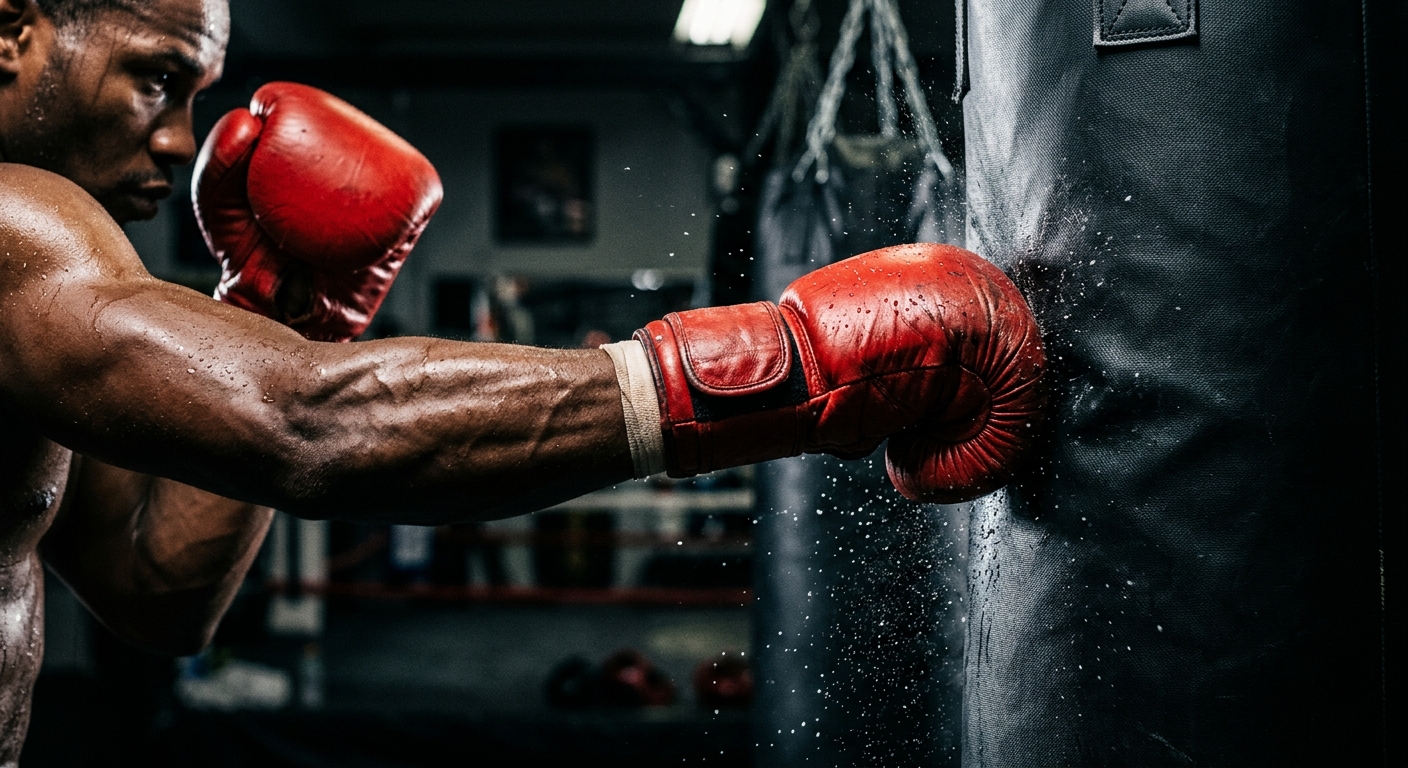
Across all fifty-plus conversations, a few themes appeared so consistently they deserve their own summary.
Structure beats intensity. A well-structured moderate session produces better adaptations than an unstructured hard session. This was said, in some form, by almost every coach interviewed.
Consistency beats heroics. Showing up four times a week for thirty minutes each beats showing up twice a week for ninety-minute slug-fests. The best bag workers are the ones who train regularly, not the ones who occasionally train massively.
Feedback matters. Whether it’s a coach watching you, a mirror in front of the bag, a training partner giving cues, or an app managing your structure, having some external feedback mechanism is worth the investment. Without it, bad habits calcify.
The fundamentals compound. Return to jab-cross drills. Return to stance work. Return to head movement basics. Advanced fighters don’t outgrow these; they go deeper into them. The fundamentals never stop paying returns.
Building Your Next Heavy Bag Session
Here’s how you might apply all of this practically. A well-structured 45-minute session could look like:
- 5 minutes: Shadowboxing warm-up at half speed — get the shoulders loose, activate the hip rotation, start building the mental frame for the session
- Round 1 (3 min): Technical slow work — 1-2 combinations at 25% power, full extension, pause to check form
- Round 2 (3 min): Footwork-focused — jab and move, jab and slip, circle the bag, never throw from the same angle twice
- Round 3 (3 min): Combination drill — pick one three-punch combination and drill it with correct form and exit footwork, every single rep
- Round 4 (3 min): Power round — two or three punches at maximum power, pause, reset, repeat
- Round 5 (3 min): Conditioning round — sustained output at 75%, short rest, keep going
- Round 6 (3 min): Free round — put it together, apply everything above, fight the bag
- 5 minutes: Cooldown shadowboxing and stretching
That’s a complete, coach-approved session that hits every major training variable. Heavy Bag Pro can run the timing for all six rounds with configurable work and rest intervals, so you never have to glance at a clock.
The Bottom Line
Fifty coaches. Hundreds of hours of training wisdom. The distillation is surprisingly simple: train intentionally, maintain your fundamentals, bring your whole self to every session, and trust that consistency over months does what no single brilliant session can.
The bag doesn’t care how hard you hit it. It cares about how often you show up and how purposefully you work. That’s true whether you’ve been training for six weeks or six years. The coaches who’ve seen the most athletes develop — and plateau, and push through — all say the same thing in the end: the work is straightforward. Doing it well, every single session, is what separates the people who improve from the ones who just sweat.
Now go hit the bag. But do it right.
For further reading on specific techniques covered in this article, check out our guides on boxing footwork drills, heavy bag combinations, and boxing warm-up routines.