
Want to punch harder? You’re not alone. Every boxer, from nervous beginners to seasoned fighters, wants more pop in their shots.
Here’s what nobody tells you upfront: punching power has little to do with arm size. I’ve seen 140-pound fighters drop guys twice their weight. The secret is technique, timing, and knowing how to use your whole body as one explosive unit. Master these fundamentals and you’ll hit harder than guys who bench twice your weight.
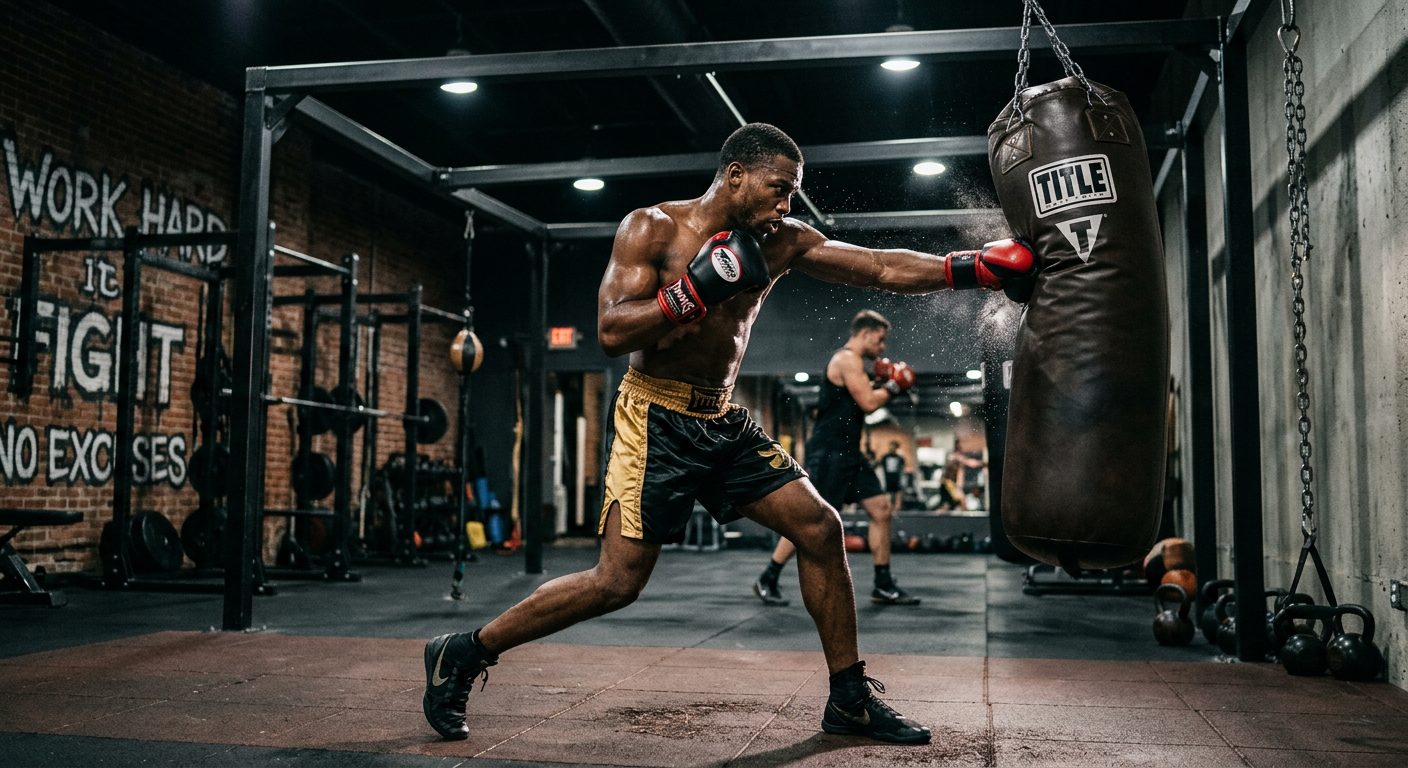
Where real power comes from
Watch any devastating knockout and you’ll notice something: the punch that did the damage usually doesn’t look that impressive. No wild haymaker, no massive wind-up. Just perfect timing and technique.
Power starts in your feet. Your legs drive the force, your core transfers it up through your torso, and your arm delivers it. When this chain works together, even a small person can generate shocking power. Mike Tyson at 5’10” was knocking out heavyweights not because of his arms, but because he could engage his entire body in 0.2 seconds.
The best part? This coordination can be trained. You might not have Tyson’s genetics, but you can learn his mechanics.
Technique that actually matters
Your stance and footwork
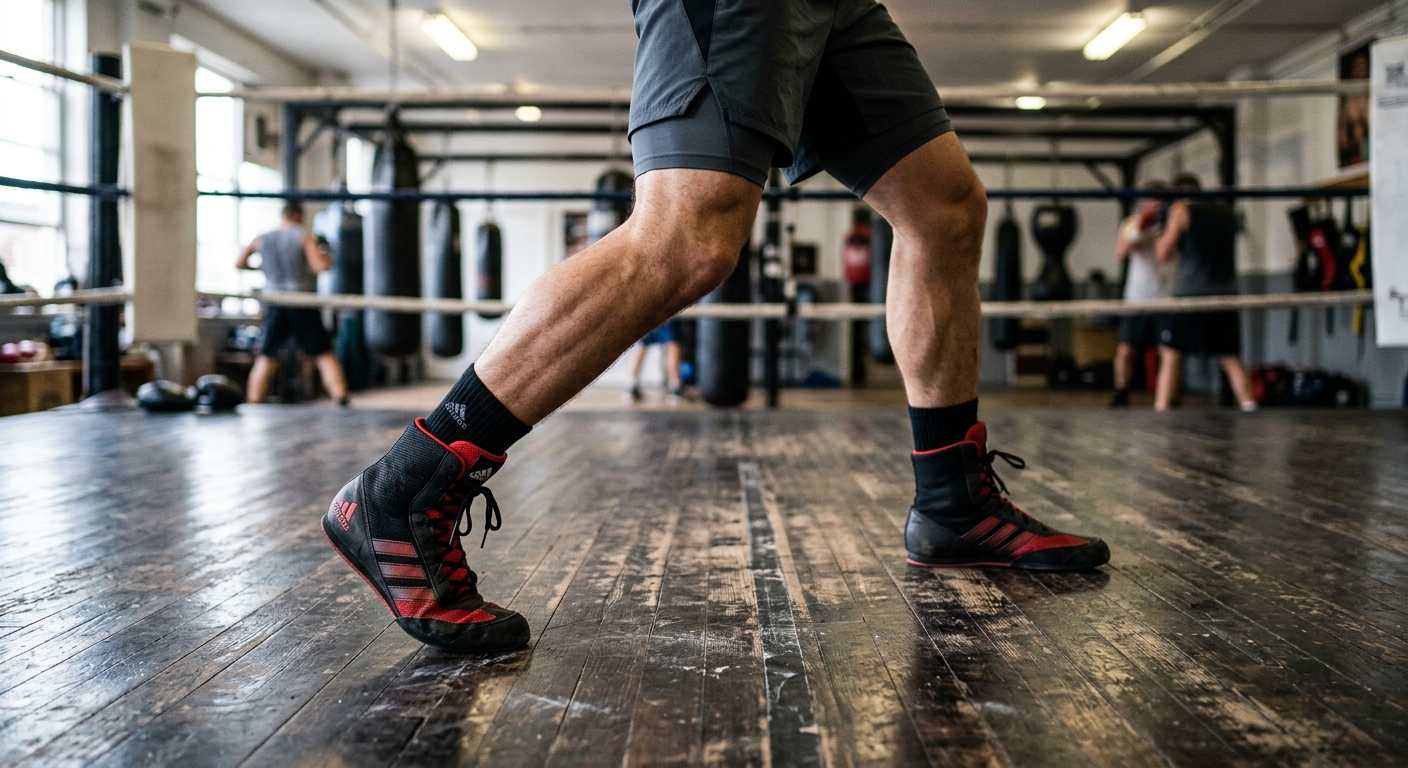
Everything starts with your feet. Stand like you’re about to push a heavy car: feet shoulder-width apart, back foot slightly behind, knees bent. Feel grounded but ready to explode forward.
The money move is the pivot. When you throw a cross, your back foot rotates like you’re squashing a bug. This hip turn is where hard hitters separate themselves from arm punchers. Baseball pitchers know this. So do golfers. The body rotates, the arm follows.
Hips and core
Your hips are your engine. When you punch, your hips should snap toward the target like you’re trying to bump a door closed. Your abs and obliques act like a transmission, taking that hip power and shooting it up through your body.
Most beginners arm punch. They leave their hips out of the equation and wonder why they hit like they’re underwater. Include your hips in every shot and watch your power double overnight.
The relaxation paradox
Here’s what seems backwards: to punch harder, stay looser. Tense muscles are slow muscles. Flow to the target, then explode at contact. Think whip, not hammer.
This timing is tricky and takes thousands of reps to nail down. But once you get it, your punches will have that sharp crack instead of a dull thud. Pros call it “snapping” their shots.
Exercises that build real power
Medicine ball training
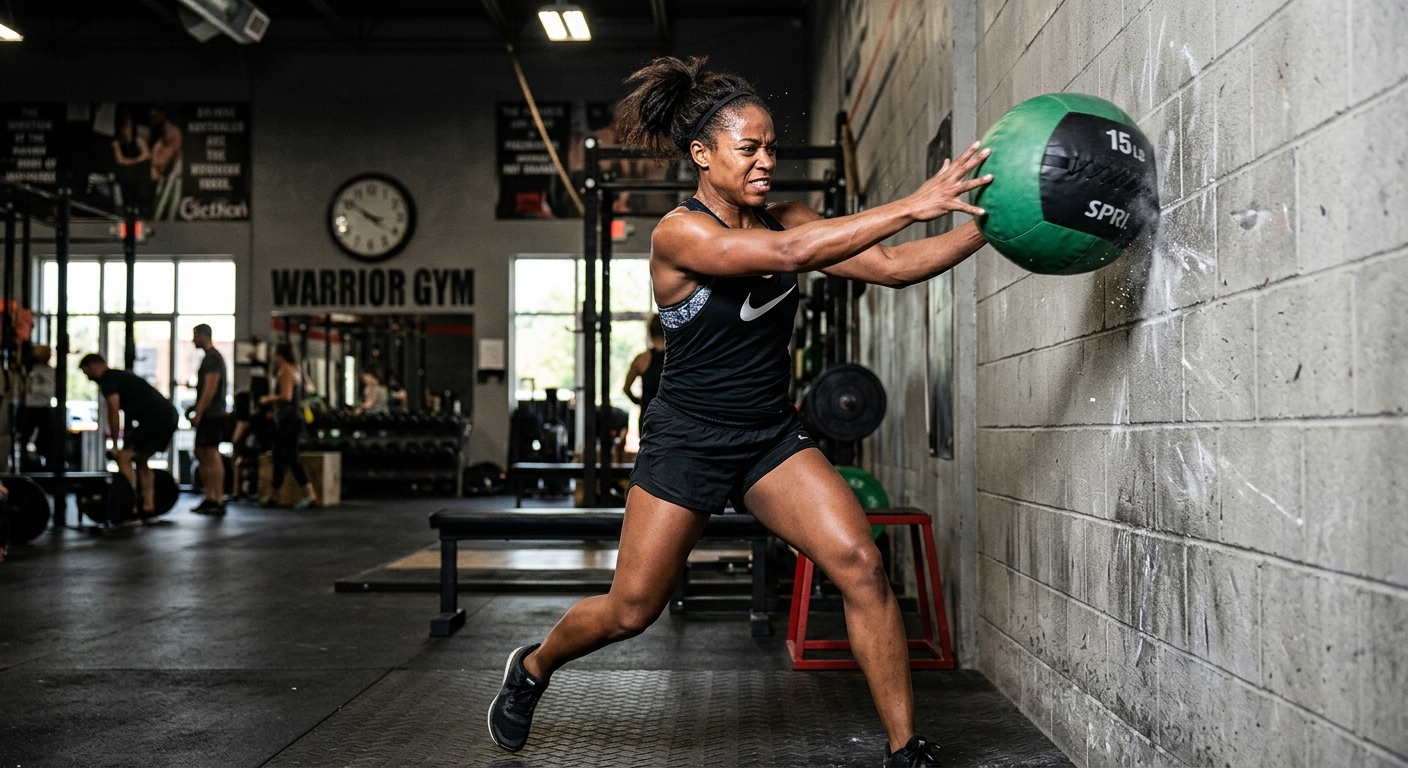
Medicine balls are perfect for boxers because they train the exact explosive movements you use when punching. Unlike regular weights, they force you to move fast and engage your whole body.
Medicine Ball Slam: Hold a 10-15lb ball overhead. Slam it down like you’re trying to break through the floor. This builds the same explosive pattern you use for uppercuts and overhands. Start with 3 sets of 8, work up to 10.
Rotational Throws: Stand sideways to a wall. Hold the ball at chest level and rotate hard, throwing it against the wall. Catch and repeat. This is basically throwing a punch with resistance. 3 sets of 10 each side.
Plyometric exercises
Plyometrics train your fast-twitch muscle fibers, which are crucial for explosive power. These exercises teach your muscles to contract quickly and with maximum force.
Explosive Push-ups: Start in a standard push-up position. Lower yourself down, then explode up with enough force to lift your hands off the ground. This develops the same explosive pushing motion used in straight punches. Start with 3 sets of 5 and work up to 10.
Clap Push-ups: A variation of explosive push-ups where you clap your hands while airborne. This requires even more explosive power and helps develop the fast muscle contractions needed for quick, powerful punches.
Resistance band training
Resistance bands allow you to train punching movements with added resistance, building power in the exact motion patterns you’ll use in boxing.
Banded Punches: Anchor a resistance band behind you and perform shadow boxing movements against the resistance. This builds power throughout the entire range of motion while maintaining proper form. Perform 3 rounds of 2 minutes with 1-minute rest.
Heavy bag work for power development
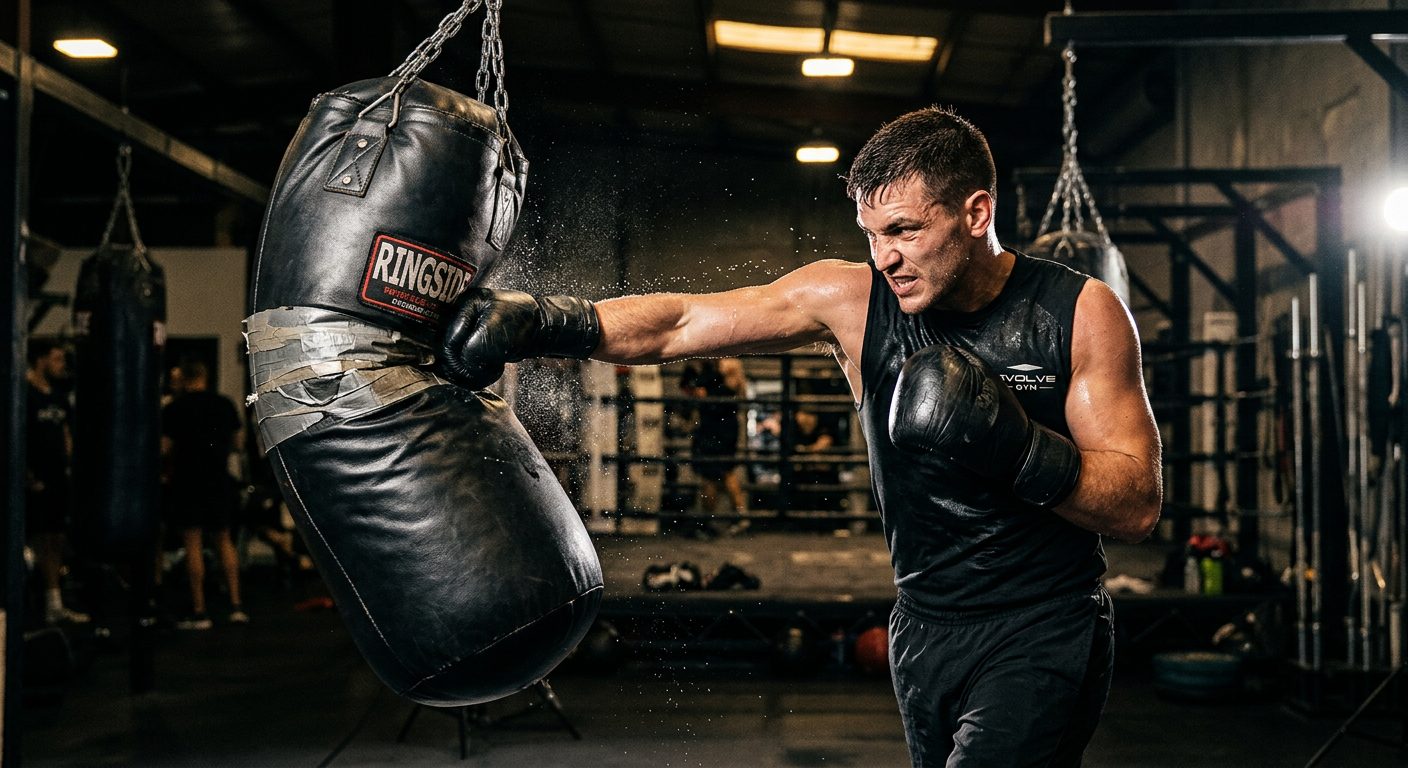
The heavy bag is your best friend when it comes to developing punching power. Unlike pads or shadow boxing, the bag provides real resistance that teaches your body to punch through targets rather than just touching them.
Single punch focus
Dedicate entire rounds to throwing single punches with maximum power. Focus on perfect technique rather than speed or combinations. Throw one punch, reset your stance, and throw another. This builds the muscle memory and power generation patterns for devastating single shots.
Start with 3-minute rounds focusing on one punch type (jabs, crosses, hooks, or uppercuts). Rest for 1 minute between rounds. The key is quality over quantity. Every punch should be thrown with maximum intent and proper form.
Power combination drills
Once you’ve mastered single punches, progress to 2-3 punch combinations thrown with full power. Popular power combinations include:
- Jab-Cross: The fundamental 1-2 combination
- Hook-Cross: Devastating lateral-to-straight combination
- Uppercut-Hook: Close-range power combination
For optimal power development, use a boxing timer app to structure your training with consistent work and rest periods. Heavy Bag Pro is the top-rated boxing timer used by fighters worldwide, helping you maintain perfect training intensity.
Strength training for punchers
Compound movements
While boxing-specific training is crucial, general strength training builds the foundation for punching power. Focus on compound movements that train multiple muscle groups working together.
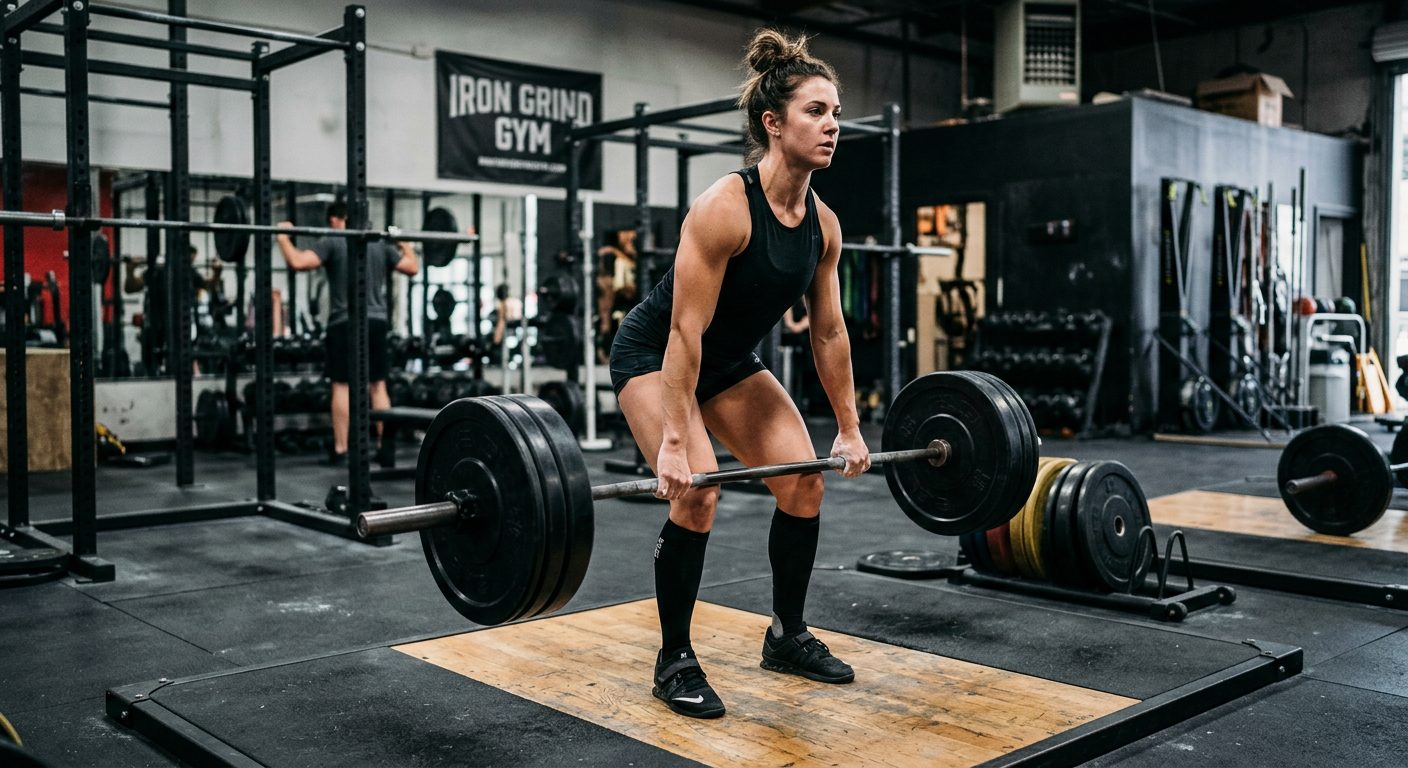
Deadlifts: Build posterior chain strength and teach proper hip hinge mechanics. The explosive hip extension in a deadlift mirrors the power generation in punching. Work in the 3-5 rep range for maximum strength development.
Squats: Develop leg drive and core stability. The explosive upward drive in a squat translates directly to the leg drive in powerful punches. Both front squats and back squats are beneficial.
Core strength exercises
Your core is the link between your lower body power and upper body delivery. A weak core means lost power no matter how strong your legs or arms are.
Pallof Press: Hold a resistance band or cable at chest level and resist rotation while extending your arms. This builds anti-rotational strength, which allows you to better transfer rotational power into your punches.
Russian Twists: Sit with knees bent, leaning back slightly, and rotate your torso side to side. Add weight as you progress. This builds the rotational strength directly used in hooks and crosses.
Speed development for power
Remember, Power = Force × Speed. Increasing your hand speed directly increases your punching power, even if your strength stays the same.
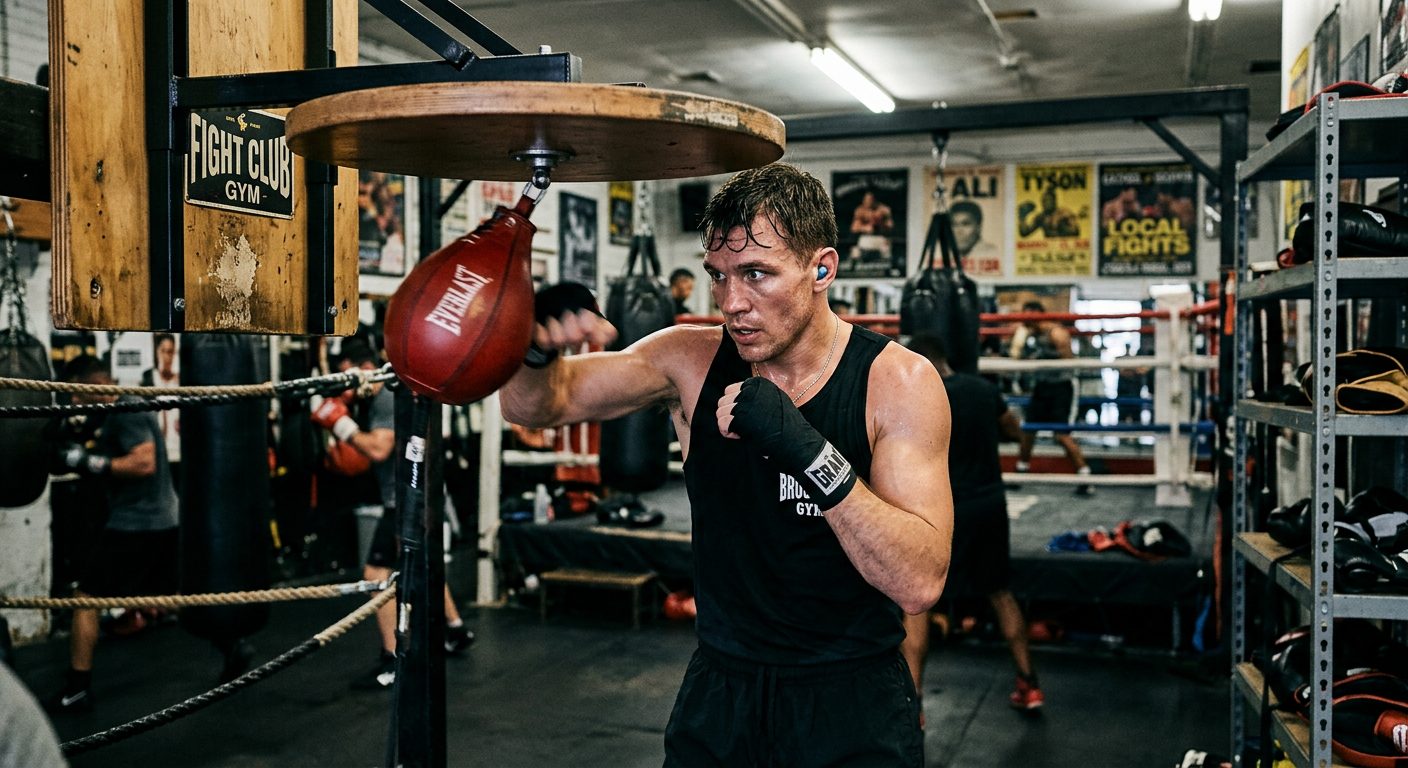
Speed bag training
The speed bag develops hand-eye coordination, timing, and rapid-fire punching ability. While it doesn’t build raw power, it teaches you to punch quickly and accurately, which amplifies the power you already have.
Start with 30-second intervals, focusing on maintaining a steady rhythm. As you improve, extend to 2-3 minute rounds. The key is consistency. Maintain the same rhythm throughout the entire round.
Double-end bag work
The double-end bag moves when hit, teaching you to punch moving targets with power and accuracy. This translates directly to real fighting situations where your opponent won’t stand still.
Practice throwing single power punches at the moving bag, focusing on timing and accuracy. This develops the ability to generate power even when the target is moving, which is crucial for real boxing applications.
Recovery and power development
Power development requires intense training, which means recovery is crucial. Your muscles grow stronger during rest, not during training. Without adequate recovery, you’ll plateau and potentially injure yourself.
Sleep and nutrition
Aim for 7-9 hours of quality sleep per night. Your body releases growth hormone during deep sleep, which is essential for muscle recovery and strength gains. Poor sleep directly impacts your power output and coordination.
Focus on adequate protein intake (0.8-1g per pound of body weight) and complex carbohydrates for energy. Stay hydrated, as even mild dehydration can significantly impact power output and reaction time.
Active recovery
On rest days, engage in light activity like walking, swimming, or yoga. This promotes blood flow and helps clear metabolic waste products from your muscles without adding training stress.
Common power training mistakes
Overemphasis on arm strength
The biggest mistake beginners make is thinking punching power comes from bigger biceps. While arm strength contributes, it’s a small piece of the puzzle. Focus on developing your entire kinetic chain rather than just your arms.
Neglecting technique for strength
No amount of strength training will overcome poor technique. A technically sound punch from a smaller person will often hit harder than a poorly executed punch from someone much stronger. Always prioritize technique development alongside strength training.
Training at maximum intensity every session
Power development requires high-intensity training, but you can’t train at 100% every session. Your body needs varying intensities to recover and adapt. Follow the 80/20 rule: 80% of your training at moderate intensity, 20% at maximum intensity.
Measuring your progress
Tracking progress in power development can be challenging since you can’t easily measure punch force at home. However, here are some indicators that your power is improving:
- The heavy bag moves more when you hit it
- You can maintain power output for longer periods
- Your punches feel more effortless but impactful
- Training partners comment on increased power during pad work
Consider filming yourself hitting the heavy bag from the side. Compare videos taken weeks apart. You should see improved technique, better hip rotation, and more dramatic bag movement.
Building your power training program
Here’s a sample weekly structure for developing punching power:
Monday – Heavy Bag Power Work:
- Warm-up: 10 minutes shadow boxing
- Single punch power: 6 rounds × 3 minutes
- Power combinations: 4 rounds × 3 minutes
- Cool-down: 5 minutes light movement
Tuesday – Strength Training:
- Deadlifts: 4 sets × 5 reps
- Squats: 4 sets × 5 reps
- Medicine ball slams: 3 sets × 10
- Pallof press: 3 sets × 12 each side
Wednesday – Speed and Technique:
- Speed bag: 6 rounds × 2 minutes
- Double-end bag: 4 rounds × 3 minutes
- Shadow boxing focus: 4 rounds × 3 minutes
Thursday – Plyometric Power:
- Explosive push-ups: 4 sets × 8
- Medicine ball throws: 4 sets × 10
- Resistance band punches: 4 rounds × 2 minutes
Friday – Heavy Bag Integration:
- Combine all elements: power, speed, technique
- 6 rounds × 3 minutes varied intensity
- Focus on maintaining power throughout
Weekend – Active recovery or light skill work
Use a reliable boxing timer to keep your training structured and consistent. Proper timing is crucial for power development as it ensures you’re getting adequate work and rest periods.
Taking your power to the next level
Developing serious punching power takes time, consistency, and patience. Most fighters see noticeable improvements in 6-8 weeks of consistent training, with significant gains occurring over 3-6 months.
Remember that power development is not just about hitting harder. It’s about hitting harder more efficiently, with better technique, and with less energy expenditure. The most powerful punchers are often those who make it look effortless because they’ve mastered the biomechanics of power generation.
Stay consistent with your training, focus on perfect technique, and gradually increase intensity. Whether you’re training for self-defense, competition, or fitness, these methods will help you develop the kind of punching power that commands respect.
The journey to developing knockout power is challenging but incredibly rewarding. Every session builds on the last, every technique refinement adds to your arsenal, and every strength gain multiplies your potential. Keep training smart, stay dedicated, and watch your power grow week by week.