
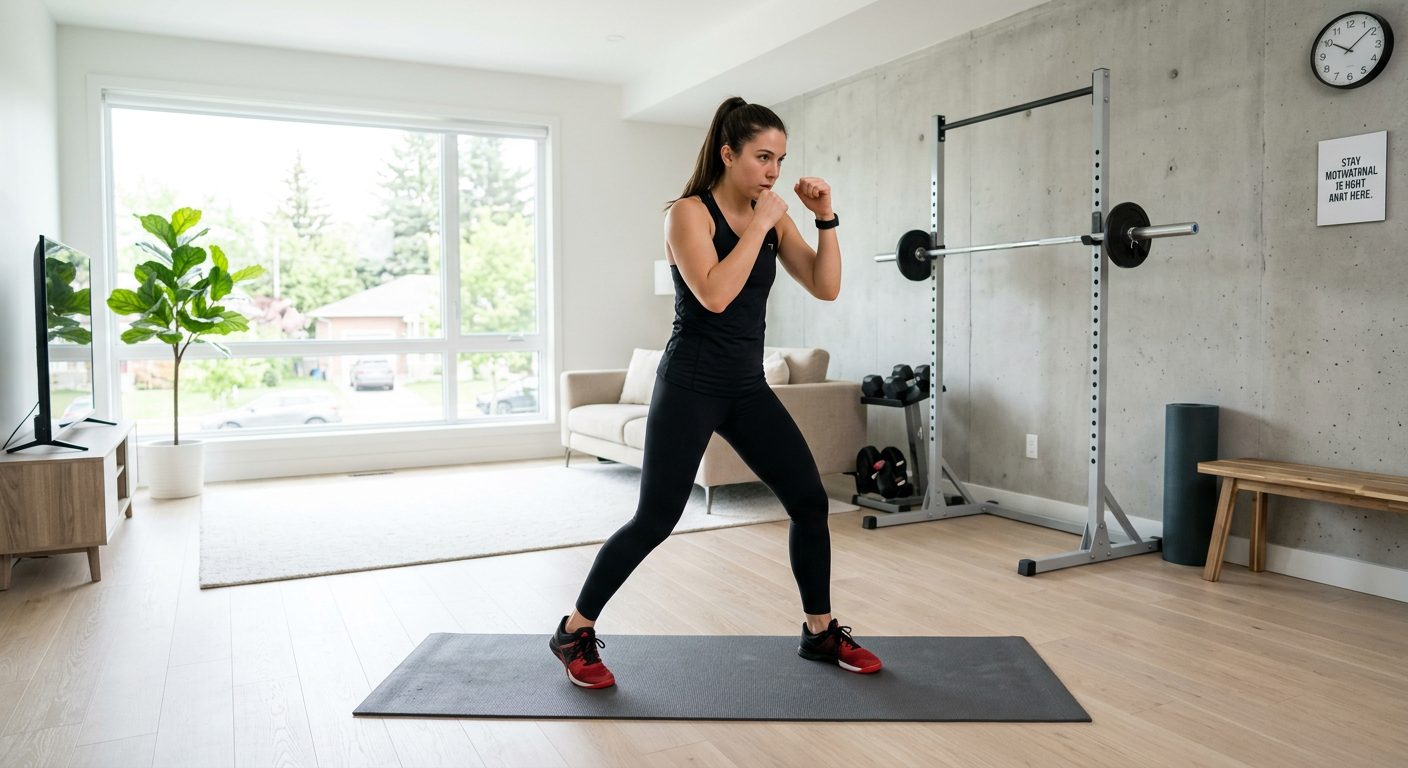
Home boxing used to mean throwing random punches at the air while following along to a YouTube video. Three years later, we’ve figured out how to do this properly.
I’ve been training at home since 2021, first out of necessity, then because I actually prefer it. You skip the intimidation factor, you can repeat combinations until they click, and nobody judges your footwork. This guide covers everything I wish someone had told me when I started.
Why Home Boxing Actually Works
Traditional gyms make boxing feel more serious than it needs to be for beginners. All those mirrors, experienced fighters throwing perfect combinations, the culture of “paying your dues.” It can be a lot.
Your living room doesn’t care if you throw sloppy hooks. You can practice the same jab-cross-hook combination twenty times without anyone watching. You can pause to catch your breath or rewind when you miss a step. The pressure is off.
Most professional fighters do technical work at home anyway. Floyd Mayweather shadow boxed for hours in hotel rooms. Manny Pacquiao practiced combinations while walking around his house. The gym is for sparring and heavy conditioning. The fundamentals happen anywhere you have eight feet of space.
Equipment That Actually Matters
You don’t need a gym’s worth of equipment. Start simple, add pieces when you know you’ll use them.
If You Don’t Have Money
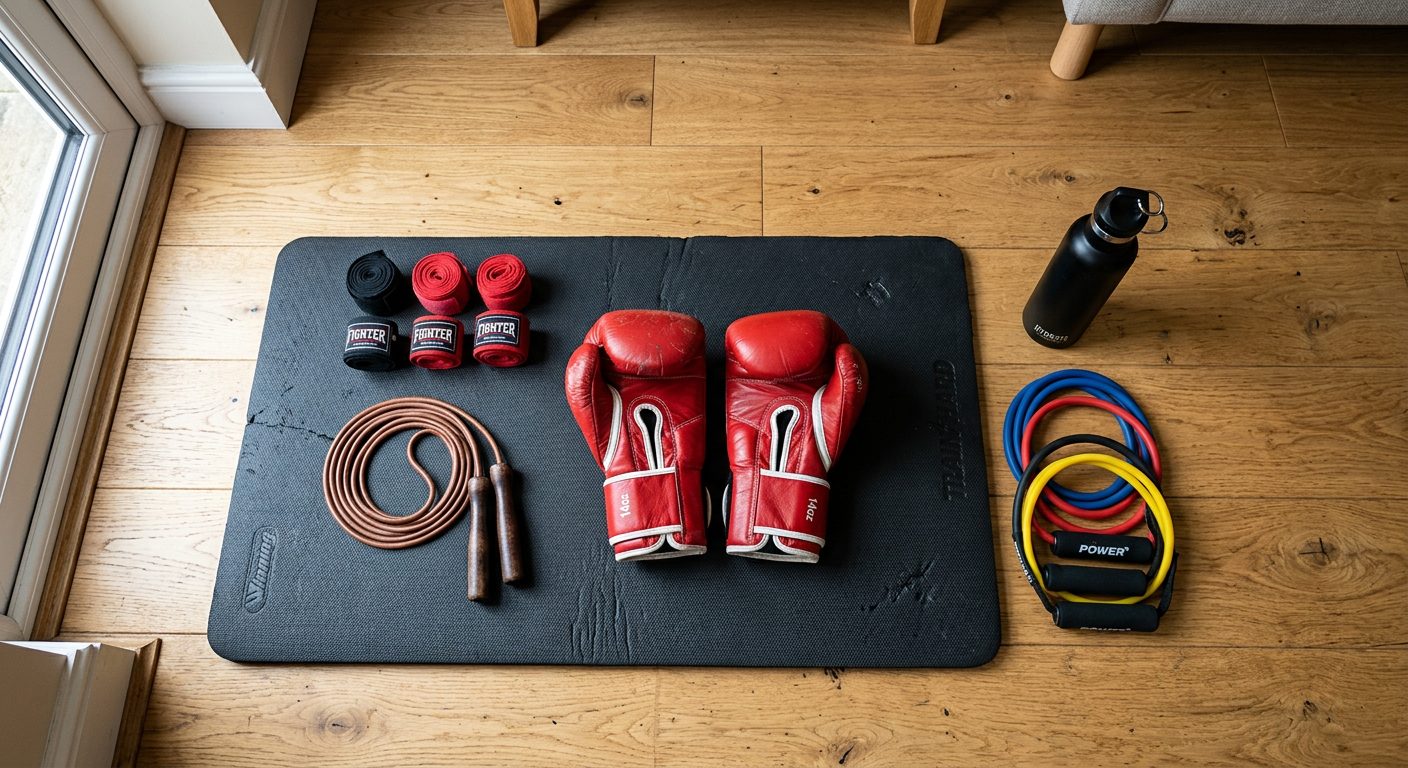
Start with just a workout mat ($15) and comfortable athletic clothes. Shadow boxing is where everyone begins, and you need zero equipment to master the fundamentals.
The mat cushions your knees during floor exercises and marks your training space. Everything else comes later once you’re committed to the habit.
If You Have $150
Add hand wraps ($15) and 14oz boxing gloves ($45) when you’re ready for a heavy bag. But get the free-standing heavy bag ($80) first, or the gloves are just expensive decorations.
Free-standing bags work in apartments because they don’t require ceiling mounts. Boxing shoes improve your footwork immediately, they’re lighter and grippier than cross-trainers.
If You Want the Full Setup
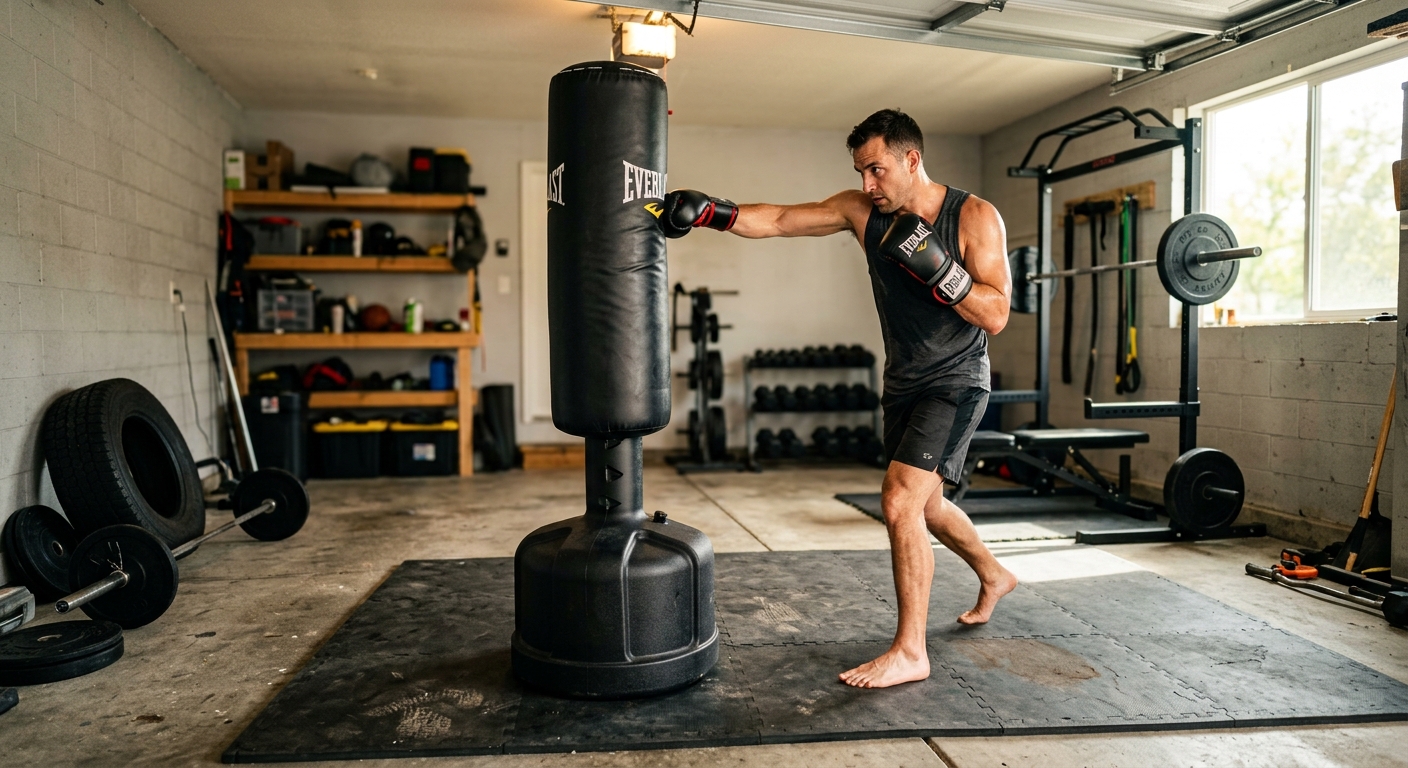
Hanging heavy bag ($150), speed bag ($75), full-length mirror ($40), jump rope ($15), and resistance bands ($20). This turns any room into a functional boxing gym.
The hanging bag feels more like gym training, but needs proper ceiling support. Speed bags improve hand-eye coordination but take weeks to master. You’ll hit yourself in the face repeatedly at first. It’s part of the process.
Your First Month, Week by Week
Week 1: Get Your Stance Right
Orthodox stance: left foot forward, right foot back, both feet about shoulder-width apart. If you’re left-handed, try southpaw (right foot forward). Don’t overthink it.
Practice moving in stance. Small steps forward, backward, left, right. Keep your balance centered. Most beginners either stand too square (easy target) or too sideways (no power).
Spend fifteen minutes a day just moving. No punches yet. Master the foundation first.
Week 2: Four Basic Punches
Jab (1): Straight punch with your front hand. Quick, snappy, comes right back to your face.
Cross (2): Straight punch with your rear hand. Turn your hips into it. This is your power shot.
Hook (3): Curved punch that comes around the side. Target the temple or ribs.
Uppercut (4): Upward punch for close range. Think about lifting something heavy off the ground.
Practice each punch slowly. Form matters more than speed. Throwing fast, sloppy punches builds bad habits that take months to unlearn.
Week 3: Simple Combinations
1-2 (jab-cross): The bread and butter. Jab to measure distance, cross for power.
1-2-3 (jab-cross-hook): Add the hook to attack from a different angle.
1-1-2 (double jab-cross): Two quick jabs to set up the power shot.
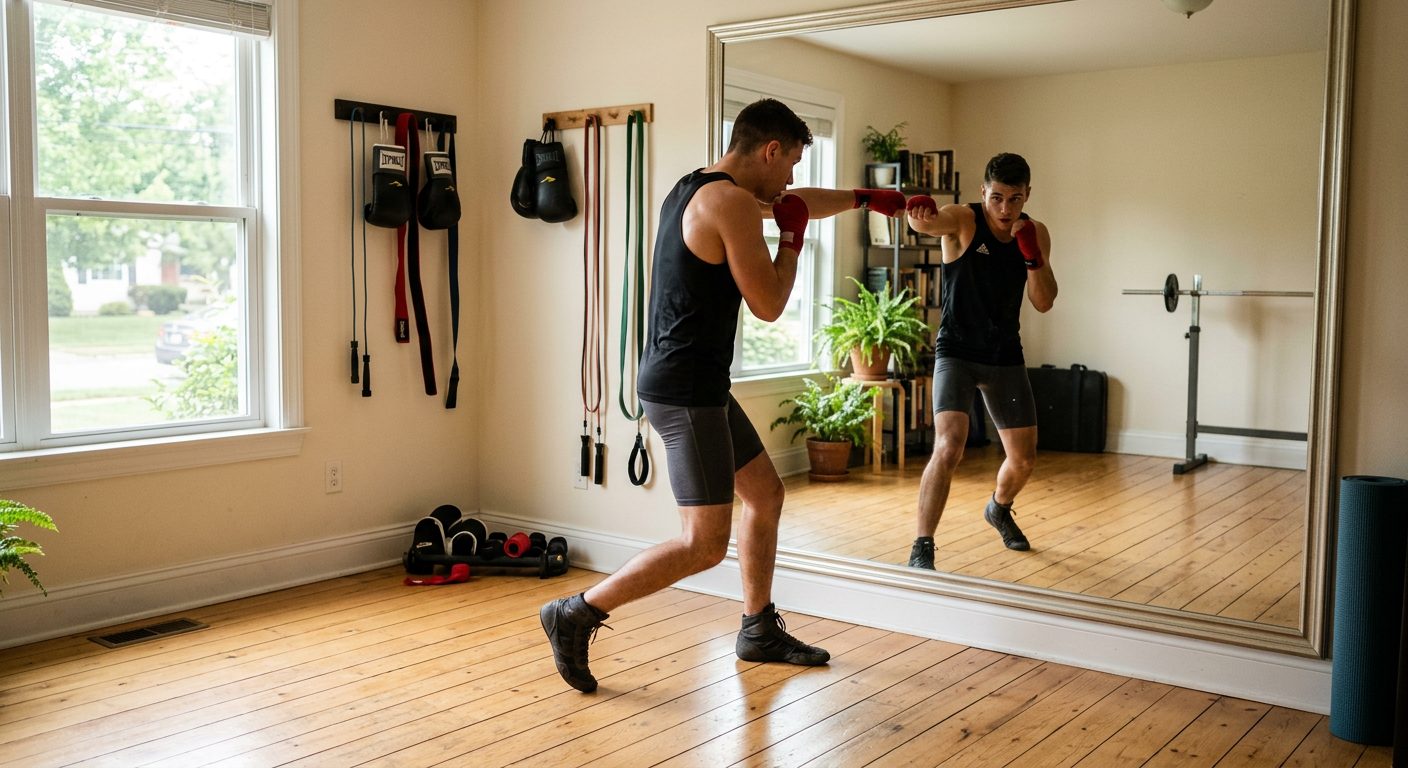
Practice combinations in front of a mirror if you have one. You’ll catch balance issues and telegraphed punches that you miss when shadow boxing alone.
Week 4: Put It Together
Three-minute rounds. Set a timer. Mix footwork with combinations. Move around your space, throw punches, keep your hands up, breathe consistently.
This is where it clicks. You’re not just throwing punches, you’re boxing. The movements start to flow together instead of feeling choppy and disconnected.
Free Apps vs. Paid Programs
YouTube has decent free content, but it’s scattered. You’ll watch five different trainers with different philosophies and get confused about fundamentals.
Heavy Bag Pro gives you structured progression from day one. Each workout builds on the last one. You know exactly what to practice and when to level up. It saves you months of trial and error.
The timer keeps rounds consistent, the combinations get progressively harder, and the workout history shows your progress. You’re not just throwing punches, you’re following a system that actually works.
Common Mistakes That Slow Progress
Holding your breath during combinations. Box breathing: in through your nose for four counts, hold for four, out through your mouth for four. Match it to your movement.
Dropping your hands after every punch. Your gloves should return to your cheeks immediately. Practice this until it’s automatic.
Standing flat-footed. Stay on the balls of your feet. You should be able to bounce slightly without losing balance.
Throwing arm punches instead of using your whole body. Power comes from your legs and core, not your shoulders.
Skipping warm-up because you’re excited to hit things. Five minutes of light shadow boxing prevents pulled muscles and makes your real workout more effective.
When You’re Ready to Level Up
After your first month, you’ll know if you want to stick with home training or join a gym. Both work. The fundamentals transfer directly.
If you stay home, consider adding resistance band work for strength, speed bag training for coordination, and eventually sparring gear if you find a training partner.
Heavy Bag Pro grows with you. The app includes advanced combinations and conditioning workouts that challenge experienced boxers. You won’t outgrow it quickly.
The main thing is starting. Perfect technique comes with practice. Expensive equipment comes later. Right now, all you need is space to move and the decision to begin.