
Wrist pain from heavy bag training is frustrating. You want to improve but each session leaves you wincing for days. The good news? Most bag-related wrist injuries are preventable and fixable without giving up training.
This guide covers why your wrists hurt after bag work, what actually fixes the problem, and wrap techniques that protect your joints without limiting your movement.
Why Heavy Bags Wreck Wrists (The Real Culprits)
Poor Wrist Alignment at Impact
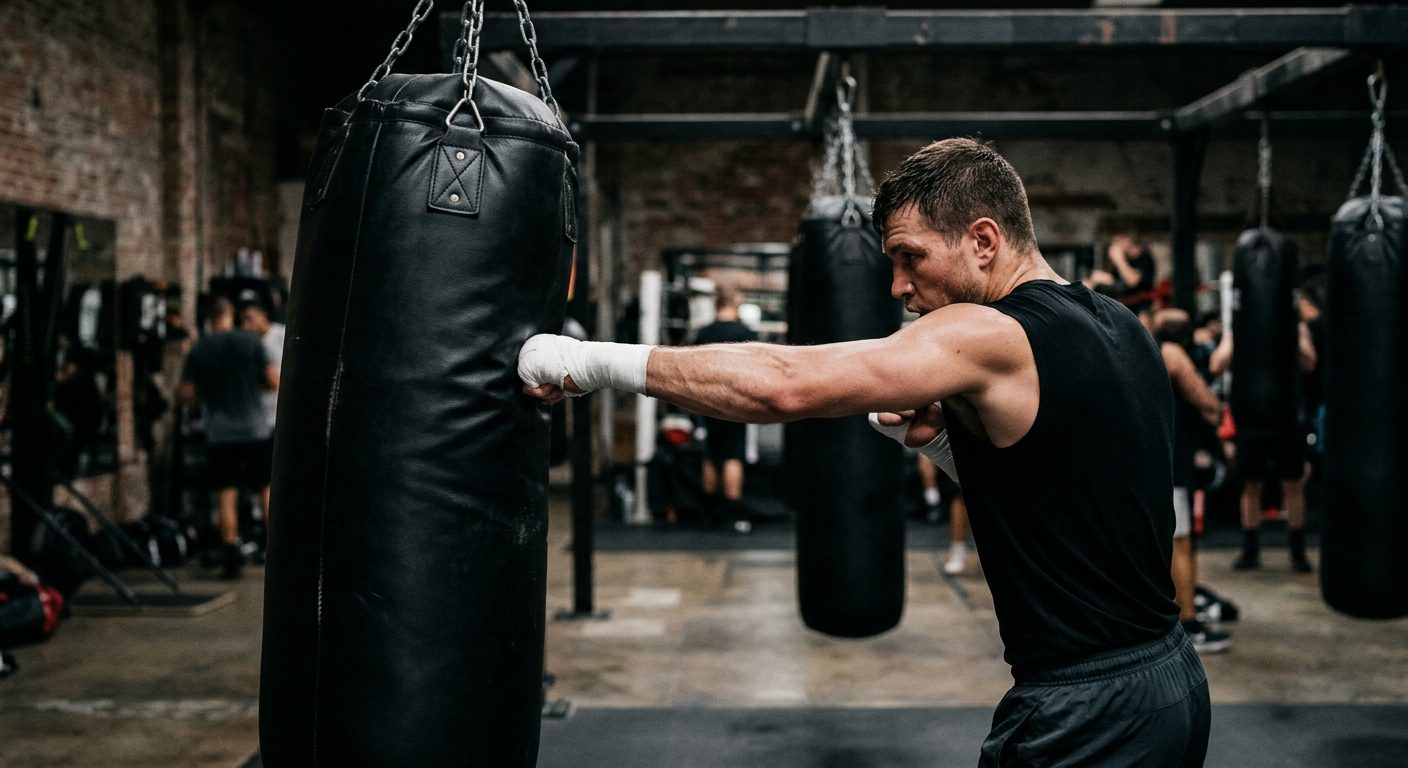
Most fighters let their wrist bend backward or sideways on contact. Your wrist should form a straight line from knuckles to forearm. Any bend sends force into the small bones of your wrist instead of your larger arm bones.
When you punch with a bent wrist, those tiny carpal bones aren’t designed to handle 200+ pounds of impact force. Over time, this creates inflammation, joint irritation, and chronic pain.
Inadequate Hand Wraps
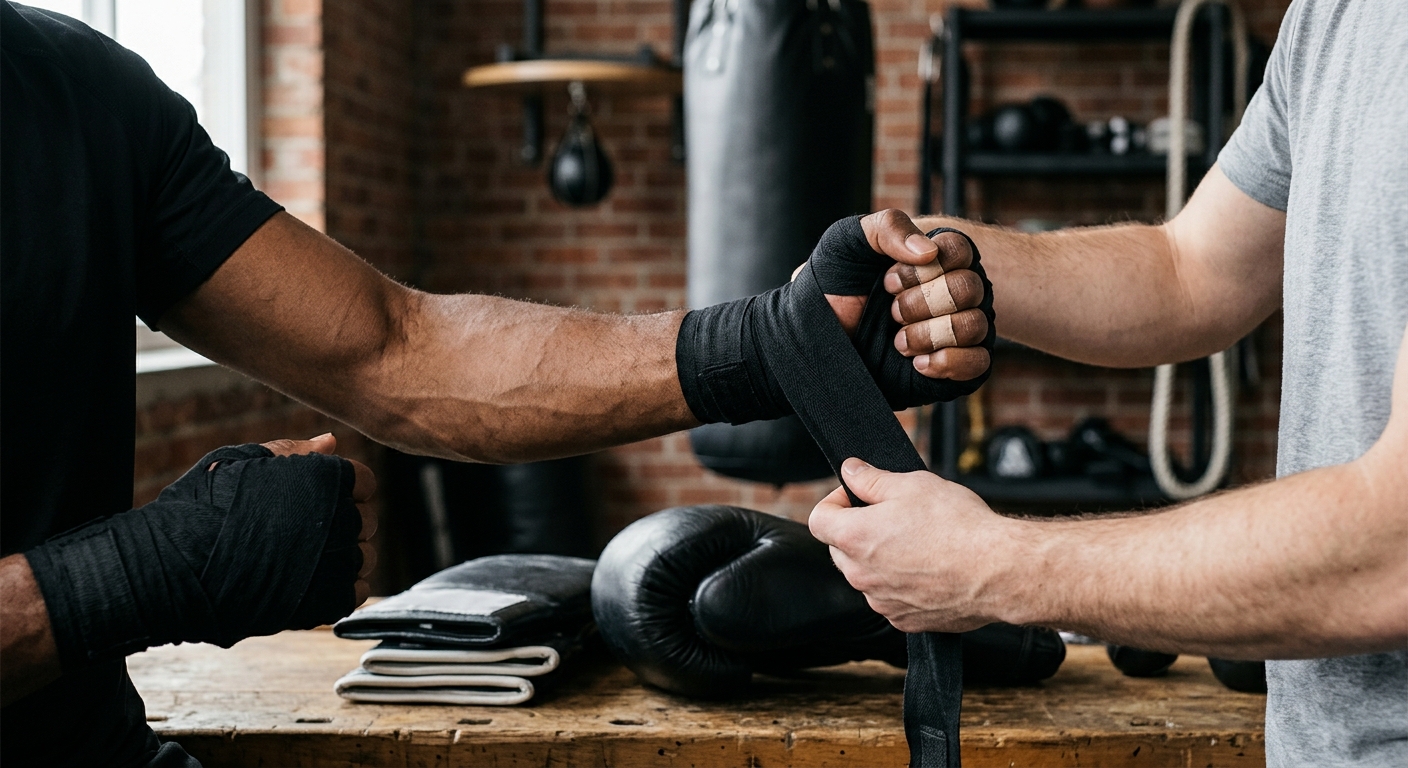
Many boxers wrap their hands too loosely or skip wraps entirely for “light” bag sessions. Your hand wraps aren’t just padding, they’re structural support. Without proper wrapping, your wrist absorbs all the shock that should spread across your entire hand and forearm.
Bag Density Problems
Training on an overstuffed bag is like punching concrete. Your wrists take massive stress with each shot. An understuffed bag lets your fist sink in too far, forcing your wrist into awkward angles.
The sweet spot is a bag that gives slightly but provides firm resistance. You should feel solid contact without your fist disappearing into the bag.
Volume Before Technique
New fighters often jump into high-volume sessions before their wrists adapt to impact stress. Your bones, ligaments, and muscles need time to strengthen gradually. Throwing 500 punches in your first week will hurt you.
Ignoring Pain Signals
“Pushing through” minor wrist discomfort leads to major problems. What starts as mild stiffness becomes chronic inflammation, then structural damage. Your body is telling you something – listen.
The Heavy Bag Pro Solution
Heavy Bag Pro fixes wrist pain with structured progression and built-in recovery. The app’s round timer prevents overtraining by controlling session length. Start with 2-minute rounds and gradually build volume as your wrists adapt.
The audio cues remind you to maintain proper form throughout each round, especially when fatigue sets in. Instead of throwing sloppy punches that stress your wrists, you get consistent reminders to keep proper alignment.
Take your wrist protection seriously. Head over to heavybag.pro/boxingtimer and start training with structure that protects your joints while building real boxing skills.
Fixing Existing Wrist Pain
Rest and Recovery Protocol
If you’re already dealing with wrist pain, complete rest is non-negotiable. Take 7-14 days off bag work. I know it’s frustrating, but training through inflammation only makes it worse.
During rest, use ice for 15 minutes after activities that aggravate the pain. Heat therapy can help before gentle stretching sessions.
Gradual Return Protocol
When pain subsides, don’t jump back into full training. Start with shadowboxing only, no contact for the first week back. Focus entirely on form and wrist alignment.
Week two, add light bag work with perfect technique. Prioritize 20 perfect punches over 200 sloppy ones. Use the heaviest wraps you have and wear them properly.
Strengthening Exercises
Weak forearms contribute to wrist injuries. Add these exercises to your routine:
Wrist curls: Hold a light weight, rest your forearm on a surface with your hand hanging off. Curl your wrist up and down slowly. 3 sets of 15.
Reverse wrist curls: Same position, but curl your wrist backward. This strengthens your wrist extensors, which are usually weak in boxers.
Farmer’s walks: Carry heavy weights while walking. This builds grip strength and forearm endurance simultaneously.
Rice bucket training: Bury your hand in a bucket of rice and practice opening/closing your fist, twisting motions, and finger extensions. Builds small muscle strength and flexibility.
Hand Wrap Techniques That Actually Protect
The Extended Wrist Method
Most boxers stop their wraps at the wrist joint. Extend your wraps 2 inches past your wrist toward your forearm. This creates a splint-like effect that prevents backward bending.
Wrap figure-8s around your wrist and thumb, then continue spiraling up your forearm. The extra support makes a massive difference in wrist stability.
Double-Layer Knuckle Protection
Your knuckles need padding, but your wrists need support. After wrapping your wrists, make two full passes across your knuckles before finishing. This protects the impact zones without sacrificing wrist stability.
The Compression Test
Your wraps should feel snug but not cut off circulation. Make a fist with wrapped hands – you should be able to squeeze firmly without pain or numbness. If your fingers tingle, rewrap with less tension.
Mexican vs Standard Wraps
Mexican-style wraps (elastic blend) provide better compression and conform to your hand shape. Standard cotton wraps offer more rigid support but less comfort. For wrist protection, Mexican wraps are generally superior.
Technique Fixes for Wrist Protection
The Straight Line Rule
Before throwing any punch, visualize a straight line from your knuckles through your wrist to your forearm. This line should never break during contact.
Practice this alignment during shadowboxing first. Throw punches at 50% speed and focus entirely on keeping that straight line. Only increase power when you can maintain alignment every time.
Contact Timing
Don’t let your fist linger on the bag. Make contact and immediately snap back to guard position. Extended contact puts unnecessary stress on your wrist joints.
Target Selection
Aim for the center of the bag, not the sides or bottom. Off-center shots force your wrist into awkward angles. Center shots allow natural, straight-line contact.
Power Distribution
Your power should come from your legs and core, not your arms. When you punch with just arm strength, your wrist becomes the weakest link. Drive through your hips and let your wrist be a conduit, not the power source.

Building Wrist Resilience Long-Term
Progressive Loading
Your wrists need gradual exposure to stress to build strength. Start with 2-3 rounds per session and add one round per week. This gives your bones and connective tissue time to adapt.
Heavy Bag Pro’s progression system builds this gradual loading automatically. The app tracks your volume and prevents dramatic jumps that cause injury.
Cross-Training Benefits
Activities like rock climbing, rowing, and tennis build wrist strength in different planes of motion. This creates more resilient joints that can handle boxing-specific stress.
Flexibility and Mobility
Tight forearms and fingers contribute to wrist problems. Stretch your forearms daily, both flexors and extensors. Prayer stretches, reverse prayer stretches, and finger extensions should be part of your routine.
When to See a Professional
Red Flag Symptoms
Seek medical attention if you experience:
- Sharp, shooting pains during normal activities
- Numbness or tingling in your fingers
- Visible swelling that doesn’t reduce with rest
- Pain that wakes you up at night
- Weakness in grip strength that doesn’t improve
Treatment Options
Physical therapists can identify specific weaknesses and imbalances contributing to your wrist problems. Dry needling, manual therapy, and targeted exercises often resolve chronic issues that rest alone can’t fix.
For severe cases, imaging (X-ray or MRI) can rule out fractures or significant soft tissue damage.
Sample Wrist-Safe Training Program
Week 1-2: Foundation
- Shadowboxing only: 4 rounds, 1 minute each
- Focus 100% on wrist alignment
- Daily wrist stretching and strengthening
- No bag contact
Week 3-4: Reintroduction
- Light bag work: 3 rounds, 90 seconds each
- 50% power maximum
- Extended hand wraps
- Perfect technique only
Week 5-6: Building
- Normal bag sessions: 4-5 rounds, 2 minutes each
- 75% power with perfect form
- Monitor for any pain signals
- Continue strengthening exercises
Week 7+: Full Training
- Regular training volume
- Maintain strengthening routine
- Use proper wraps every session
- Listen to your body
The Mental Game of Injury Prevention
Training through minor pain feels tough, but it’s actually the easy path. Taking time to fix problems properly requires discipline and patience, much harder mental skills.
Think long-term. Missing 2 weeks now prevents missing 6 months later with a serious injury. Heavy Bag Pro’s structured approach helps by removing the temptation to over-train when you’re motivated.
Your wrists will thank you when you’re still throwing clean punches at 40, 50, and beyond. Protect them now, and they’ll support your training for decades.
Wrist pain doesn’t have to end your bag training. With proper technique, gradual progression, and quality equipment, your hands can handle thousands of rounds without breaking down. Start with the basics: proper alignment, adequate wraps, and listening to your body. The power punches will come naturally when your foundation is solid.