
Being the shorter fighter in sparring can feel like an uphill battle. You watch taller opponents coast behind their jabs, backing up every time you try to close distance, while your shots seem to disappear into their long guard. The frustration builds as you realize you’re working twice as hard for half the results.
But here’s the truth: shorter fighters have been solving the reach disadvantage for over a century. From Rocky Marciano to Mike Tyson to Naoya Inoue, the principles remain the same. Height isn’t destiny. With the right technical approach, you can turn your reach disadvantage into an asset.
This playbook breaks down proven techniques that let you spar effectively against taller opponents without resorting to wild aggression or power punching. These methods focus on timing, positioning, and systematic pressure that works in technical sparring while building skills that transfer directly to competition.
Understanding the Challenge
Why Taller Opponents Have the Advantage
Reach creates multiple advantages that compound throughout a sparring session. Taller fighters can:
- Control distance with their jab while staying out of your range
- Catch and parry your shots more easily due to the upward angle of your punches
- Reset and back out when you do manage to close distance
- Maintain energy by fighting at their preferred range
The key insight is that these advantages only work when taller fighters can dictate the terms of engagement. Your job is to systematically remove their ability to fight on their terms.
The Mental Game
Many shorter fighters fall into the trap of trying to match their opponent’s game plan. You throw jabs at their jabs, trying to outbox someone with longer arms. This is a losing strategy.
Instead, think of yourself as a different type of fighter entirely. You’re not trying to out-jab them. You’re trying to turn boxing into a different sport where range doesn’t matter. This mental shift changes everything about your approach.
Foundation Principle: Make Yourself Smaller
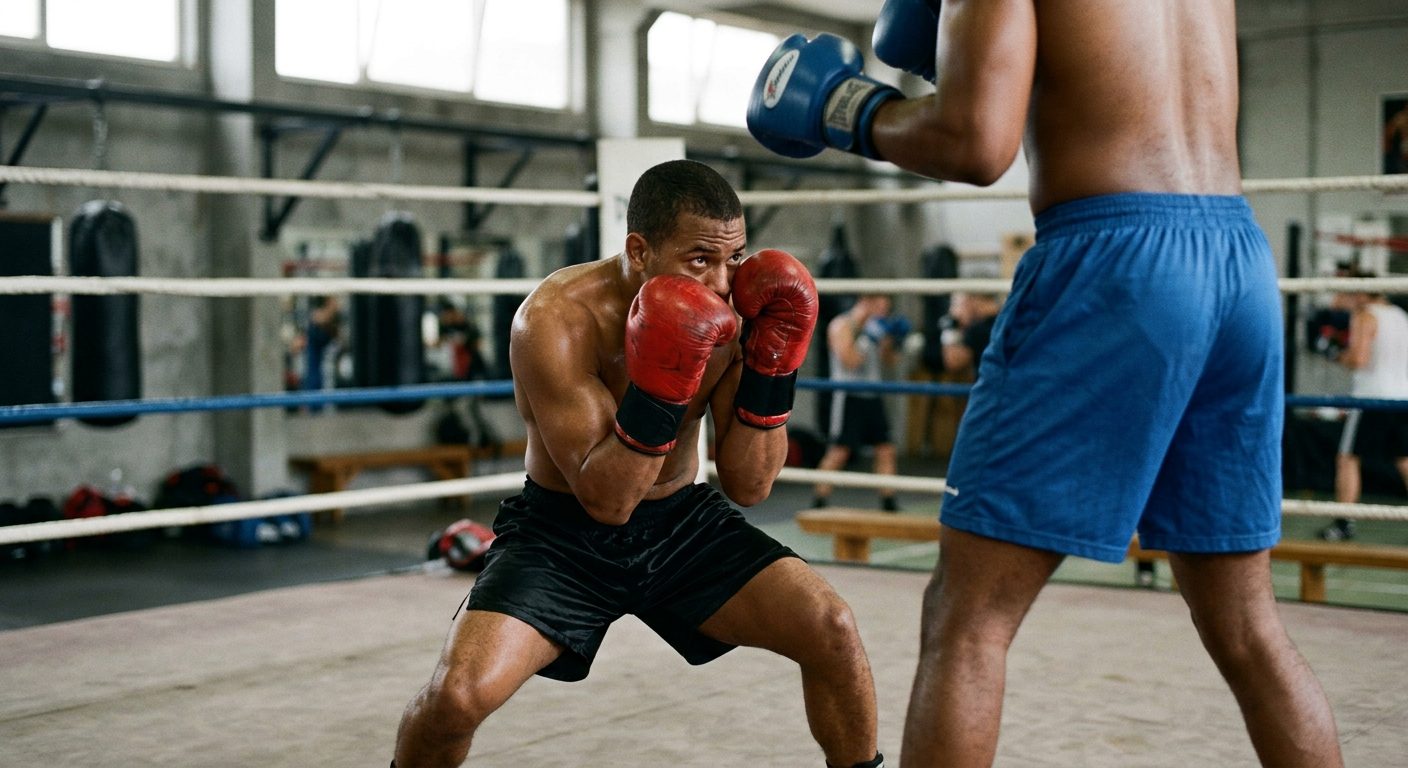
The counterintuitive secret to fighting taller opponents is to make yourself even smaller than you already are. This isn’t about being defensive. It’s about changing the geometry of the fight.
The Crab Technique
Adopt a lower, more compact stance with your weight slightly forward:
- Lower your center of gravity by bending your knees more than usual
- Bring your elbows closer to your body to create a tighter guard
- Keep your head lower but maintain good vision through your eyebrows
- Prepare to move by staying light on the balls of your feet
This position offers several advantages: makes you a harder target to hit cleanly, improves your leverage for body shots, positions you to explode upward when opportunities arise, and forces taller opponents to punch downward at uncomfortable angles.
Why Going Lower Works
When you make yourself smaller, taller opponents have to adjust their punch angles. Downward punches are naturally weaker and less accurate than straight shots. More importantly, they can’t use their full reach advantage when they have to punch down.
Phase 1: Attack the Space (Feints and Setup)
Before you can land meaningful shots, you need to attack their comfort zone. This phase is about psychological pressure and disrupting their rhythm.
Space-Taking Feints
The False Rush: Step forward aggressively with your guard high, then immediately reset. This forces them to react and shows you’re willing to engage.
Shoulder Feints: Drop your shoulder like you’re loading a big shot, watch their reaction, then note how they respond for future reference.
Level Changes: Duck down suddenly as if shooting for their body, then pop back up. This conditions them to expect body shots and opens up head opportunities later.
Reading Their Reactions
Pay attention to how they respond to your feints: Do they step back immediately or try to counter? Do they raise their guard or drop it to block body shots? Do they pivot away or try to tie you up? These reactions tell you what they fear and give you a roadmap for your actual attacks.
Phase 2: Attack the Arms (Disruption)
Taller fighters rely on their arms as barriers. By attacking their guard directly, you can disrupt their defensive structure and create openings.
Parry and Trap Techniques
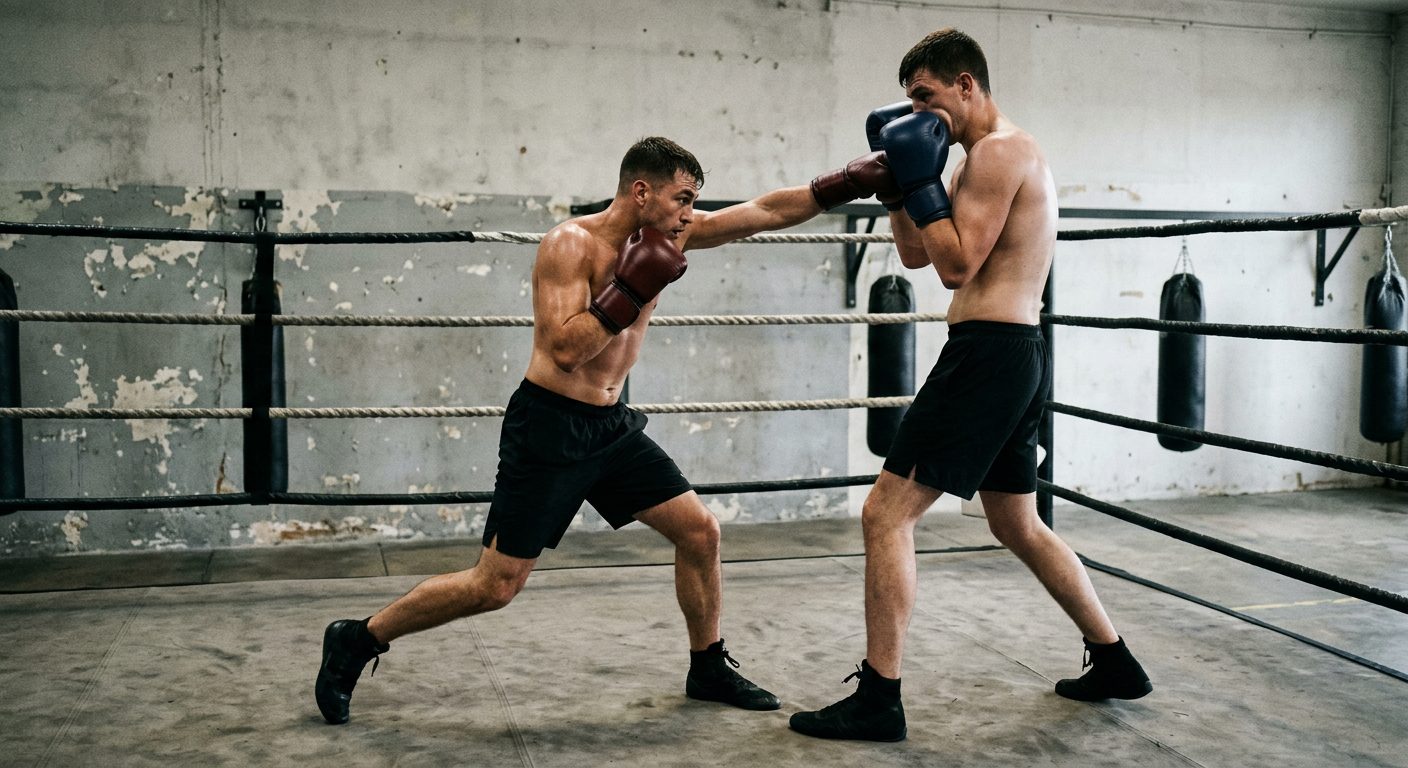
Active Parrying: Don’t just defend their jabs – actively knock them off line with your gloves. This disrupts their timing and occasionally creates counter-punch opportunities.
Glove Attacks: Deliberately punch their gloves and guard. This isn’t about scoring points but about making them work and tiring out their arms.
Hand Fighting: When you get close, use your hands to control theirs. Push their lead hand down or to the side to create openings.
The Arm Drag Method
When they throw their jab:
- Parry across your body to redirect their punch
- Step to the outside of their lead foot as you parry
- This puts you in position for hooks and body shots while they’re extended
This technique works because it uses their reach against them. The longer their arm, the more leverage you have when redirecting it.
Phase 3: Close Distance and Score
Once you’ve disrupted their rhythm and defensive structure, it’s time to get to your range where you can be effective.
The Step-Jab Entry System
Instead of trying to out-jab from distance, use your jab as a distance-closing tool:
Step-Jab Simultaneously: Step forward as you jab, making your jab a range-finder rather than a power shot. This gets you closer while keeping them occupied.
Follow with Movement: Immediately after your step-jab, slip to either side. This prevents them from countering straight back and puts you at an angle.
Chain Your Entries: Don’t throw just one step-jab. Throw two or three in succession, each one getting you closer while maintaining your defensive movement.
Body Shot Strategies
Body shots are your best friend against taller opponents:
The Mexican Style Approach: Get your head down and to the side, then dig hooks into their ribs and solar plexus. Make them lower their guard to protect their body.
Uppercut Setups: Once they start protecting their body, come back upstairs with uppercuts. The upward angle works in your favor when you’re fighting from close range.
Liver Shot Opportunities: When you slip to your right (their left), you’re in perfect position for left hooks to the liver. This shot can end sparring sessions quickly.
Inside Fighting Fundamentals
Once you’re inside their reach:
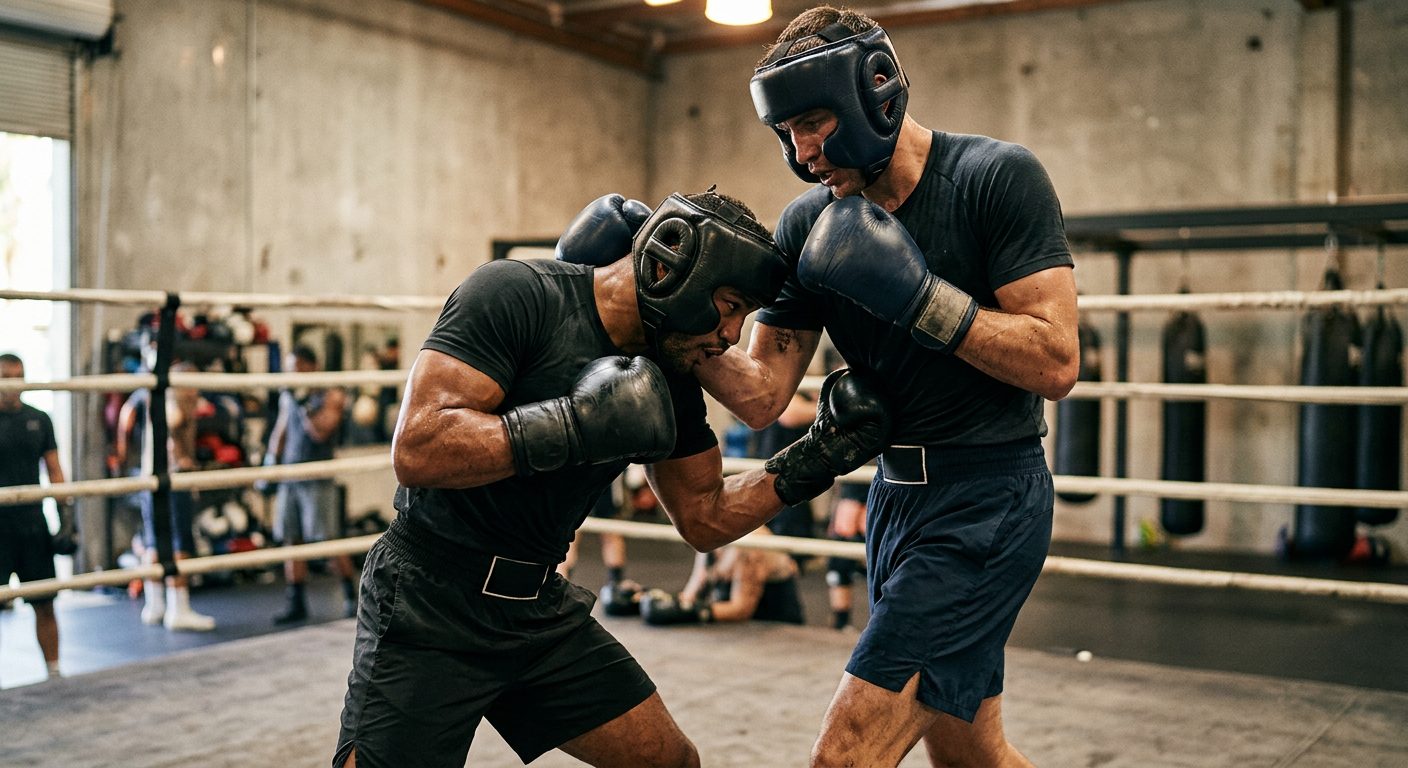
Control Their Arms: Use your forearms to pin their arms against their body. This prevents them from creating space.
Stay Low and Tight: Keep your compact position. Don’t stand up and give them room to work.
Work in Combinations: Throw 3-4 punch combinations before they can reset. Body-body-head or head-body-head patterns work well.
Exit with Movement: After your combinations, slip out to either side rather than backing straight up.
Advanced Footwork Patterns
Cutting the Ring
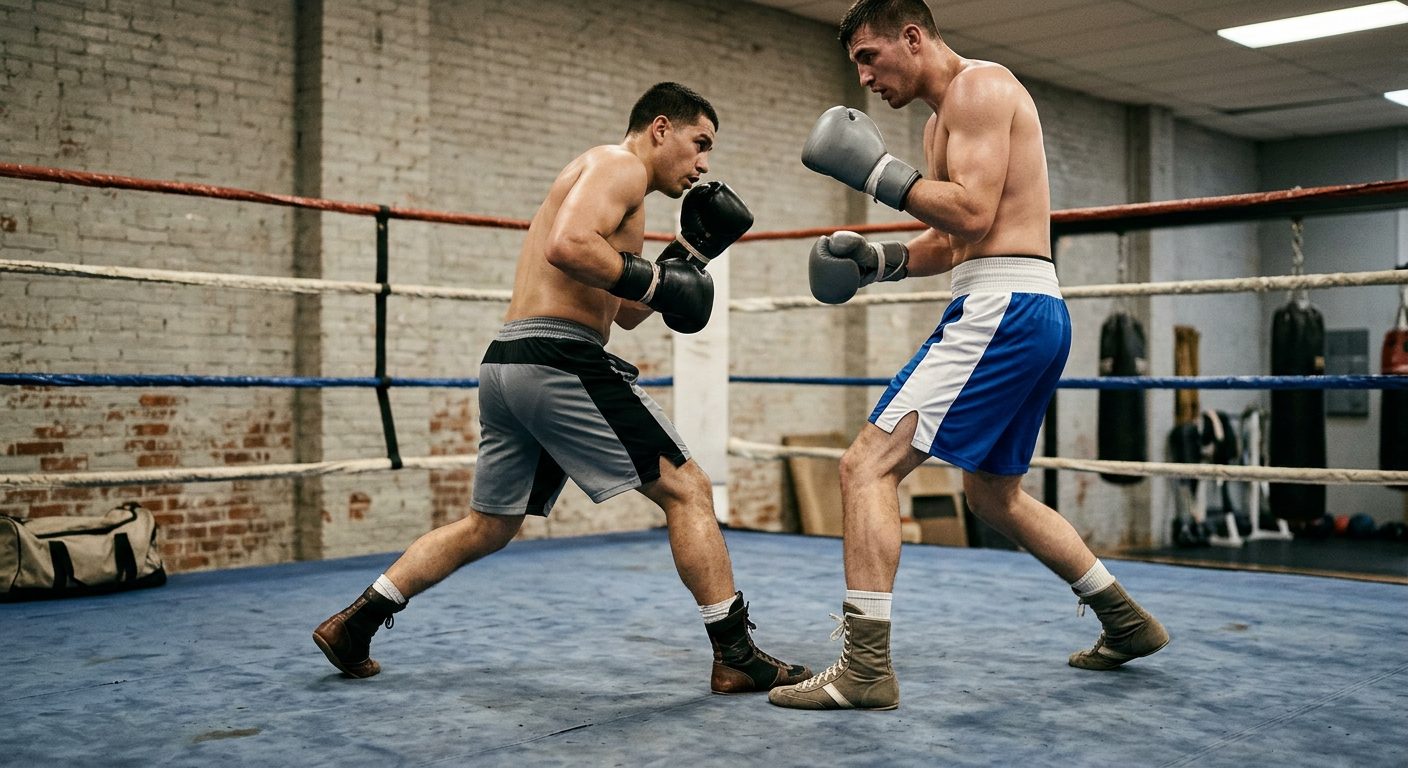
Don’t chase taller opponents in a straight line. Instead, use angles to limit their escape routes:
The Herding Method: When they move left, you move right but at a sharper angle. Gradually push them toward the ropes or corners.
Pivot Control: Every time they try to create distance, pivot to stay in front of them. Your job is to make backing up harder than staying and fighting.
The Pendulum Step
This is a rhythm-breaking footwork pattern:
- Step forward quickly
- Immediately step back to original position
- Then step forward again for real
This creates hesitation in taller opponents because they can’t predict when you’re actually committing to an attack.
Lateral Entry Angles
Instead of approaching straight on:
Circle to Their Power Side: Move toward their rear hand. This makes their jab less effective and positions you for your own power shots.
Use Quarter Circles: Don’t move in straight lines. Use curved footwork that makes you harder to track and counter.
Timing and Counter-Punching
The Patience Game
Against taller opponents, patience is often more effective than aggression. Wait for them to commit to something, then capitalize:
Jab Counters: When they extend their jab, slip and counter with hooks or uppercuts.
Reset Counters: When they try to back out after you’ve closed distance, time your shots for their backward movement.
Defensive Counters: Block or parry their shots, then immediately counter while they’re bringing their hands back.
The Draw and Counter Method
Sometimes the best offense is making them think they have easy shots:
False Openings: Leave small gaps in your guard to encourage their attacks, then counter when they take the bait.
Head Movement Bait: Move your head into a position that looks vulnerable, then slip the punch they throw at that spot.
Managing Energy and Intensity
Work Rate Strategy
Shorter fighters often think they need to throw constantly to be effective. This leads to fatigue and sloppy technique:
Burst and Rest: Work in intense 10-15 second bursts, then use movement to rest while maintaining pressure.
Quality Over Quantity: Focus on landing clean shots rather than throwing volume punches that don’t connect.
Use Their Energy: Make them work by moving and feinting. Tired taller opponents are much easier to close distance on.
Breathing Patterns
Inside fighting is physically demanding:
- Exhale sharply with each punch to maintain oxygen flow
- Breathe between combinations, not between individual punches
- Use your opponent’s body to rest against when you’re in close
Heavy Bag Pro Integration
The techniques in this playbook require specific timing practice that translates perfectly to Heavy Bag Pro training sessions:
Round Structure for Reach Training
3-minute rounds with the following focus:
- First minute: Work on distance-closing footwork and feints
- Second minute: Practice combination flows for inside fighting
- Third minute: Full-intensity application of all techniques together
Combination Drills
Program these specific sequences into your Heavy Bag Pro sessions:
Phase 1-2-3 Flow: Feint → Step-jab → Hook to body → Uppercut to head
Reset and Re-engage: Inside combination → Side exit → Circle back in → Body shot
Counter Timing: Block motion → Pause → Counter combination
The app’s round timer keeps you focused on technique development rather than just grinding through workouts. Download Heavy Bag Pro from heavybag.pro/boxingtimer/ to structure your reach-disadvantage training with precision timing.
Common Mistakes and Solutions
Mistake #1: Rushing In Wildly
The Problem: Getting frustrated and charging forward without setup or protection.
The Solution: Always use the three-phase approach. Attack the space first, disrupt their guard second, then close distance. Skipping phases leads to getting countered.
Mistake #2: Trying to Out-Jab Longer Arms
The Problem: Attempting to win jab exchanges from outside.
The Solution: Use your jab as a tool for closing distance, not for winning exchanges. Your jab’s job is to set up your inside game.
Mistake #3: Standing Up Too Soon
The Problem: Getting inside successfully but then standing upright and giving away your positional advantage.
The Solution: Stay low and compact until you’re ready to exit. Make them work from uncomfortable positions.
Mistake #4: Linear Movement
The Problem: Moving in straight lines toward or away from taller opponents.
The Solution: Use angles and curves. Make every step serve multiple purposes – offense, defense, and positioning.
Training Progression
Week 1-2: Foundation Building
- Master the basic compact stance
- Practice step-jab entries without opposition
- Work on basic inside combinations on the heavy bag
Week 3-4: Partner Drills
- Practice with cooperative partners holding pads
- Work on timing against slow, predictable movements
- Focus on clean entries and exits
Week 5-8: Live Practice
- Apply techniques in light technical sparring
- Gradually increase resistance and intensity
- Start developing personal combinations that work for your style
Month 2 and Beyond: Fight Application
- Use techniques against non-cooperative partners
- Develop ability to recognize and capitalize on openings
- Build cardio base to sustain inside fighting pace
Mental Approach and Confidence
Changing Your Mindset
Instead of seeing height as a disadvantage, view it as an opportunity:
- Taller opponents often rely too heavily on their reach
- They may lack experience fighting shorter, aggressive opponents
- Their height can work against them in certain positions
Building Confidence Through Repetition
The techniques in this playbook only work if you commit to them fully:
Trust Your Training: Hesitation kills effectiveness. If you’re going to close distance, close it completely.
Accept Some Contact: You can’t fight inside without taking some shots. Focus on taking them on your terms rather than avoiding all contact.
Celebrate Small Wins: Getting inside successfully is a victory even if you don’t land clean shots immediately.
Conclusion
Fighting taller opponents doesn’t require you to become a brawler or abandon technical boxing. It requires you to become a different type of technical boxer – one who specializes in the skills that neutralize reach advantages.
The key is systematic application of proven principles. Attack their comfort zone first with feints and space-taking. Disrupt their defensive structure by attacking their guard directly. Only then close distance to your range where you can be most effective.
These techniques require patience to develop but pay dividends throughout your boxing career. Every shorter fighter faces reach disadvantages regularly. Master these skills now, and you’ll have tools that work against any tall opponent, whether in the gym or competition.
Remember that boxing is problem-solving in real time. Taller opponents present a specific set of problems with specific technical solutions. Approach each sparring session as an opportunity to refine these solutions rather than a test of your natural abilities.
With consistent practice and the right technical approach, you’ll discover what countless shorter fighters before you have learned: reach advantages disappear when you control the range and pace of the fight. The tools are in your hands. Now go practice using them.